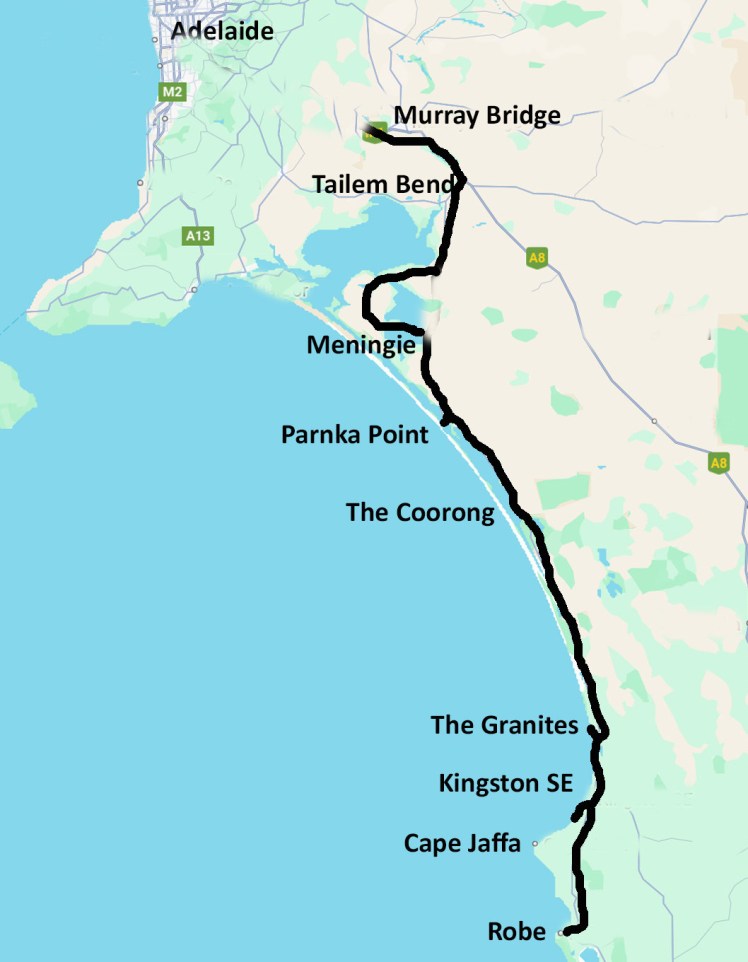
We leave Murray Bridge and take a back road to Wellington before a ferry crossing, one of two for today.
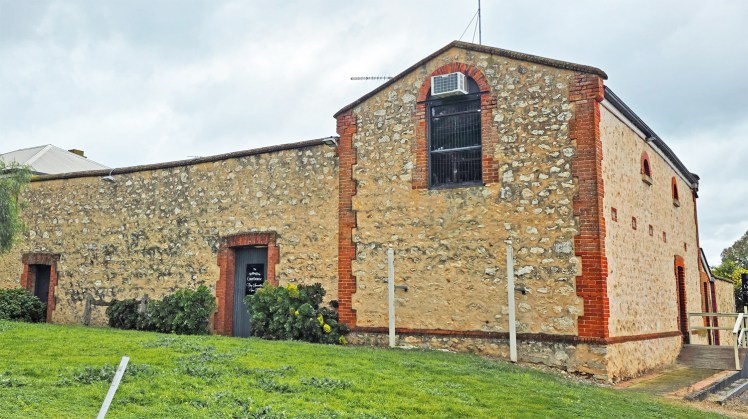
Wellington Court House complex was built in 1859 and has become a landmark in the township. It contains two courtrooms, two rooms for the magistrates and constables, a telegraph room and the two old jail cells.
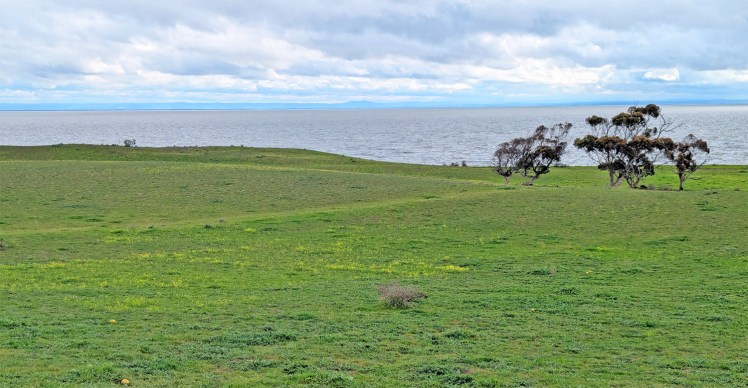
The vast Lake Alexandrina from the eastern shore
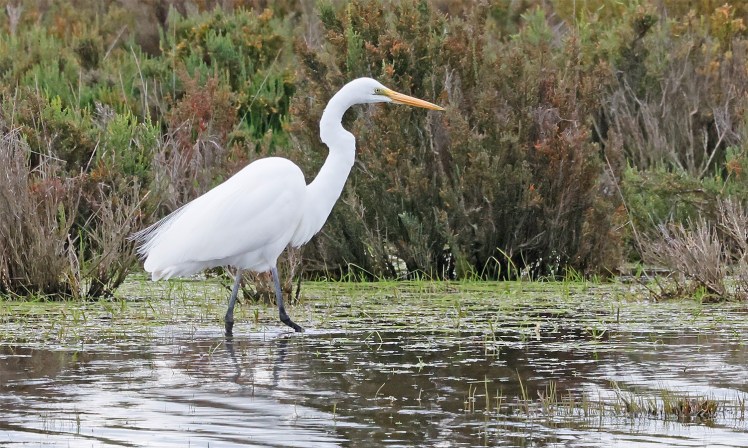
Great egret
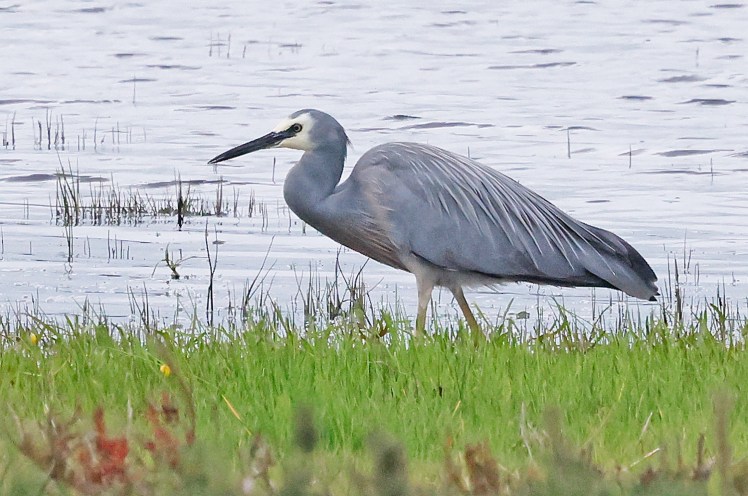
White-faced heron
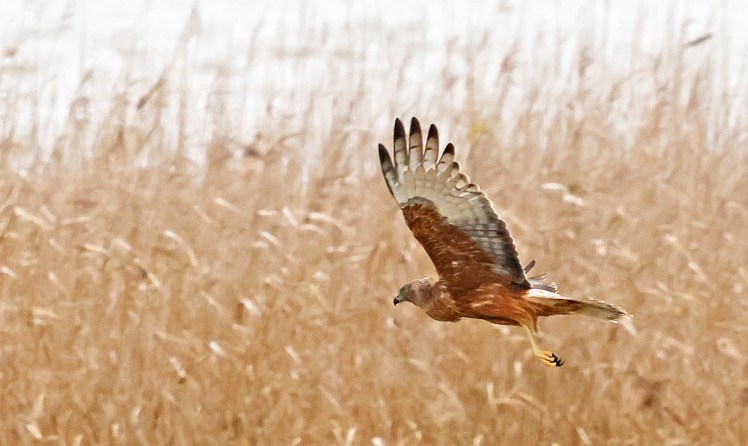
Swamp harrier
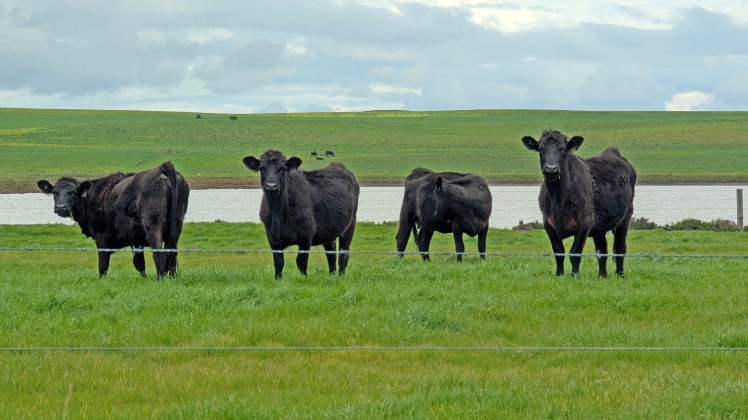
Angus, Angus, Angus…and Angus.
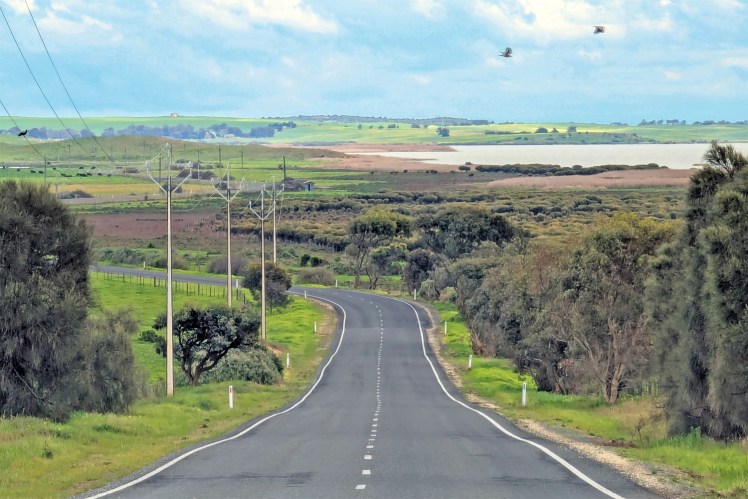
Road at Portalloch
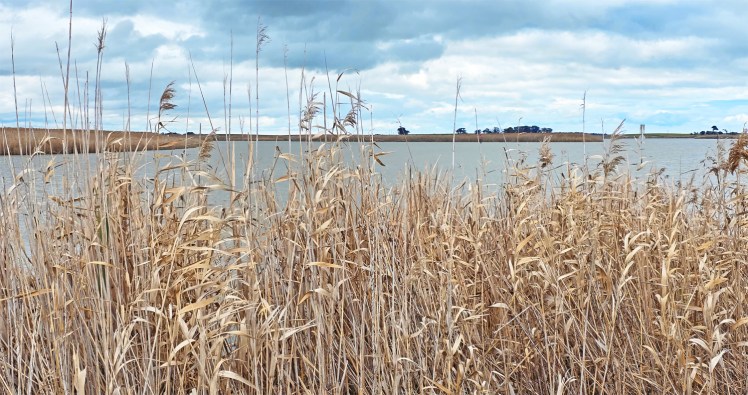
Narrung – entrance from Lake Alexandrina to Lake Albert
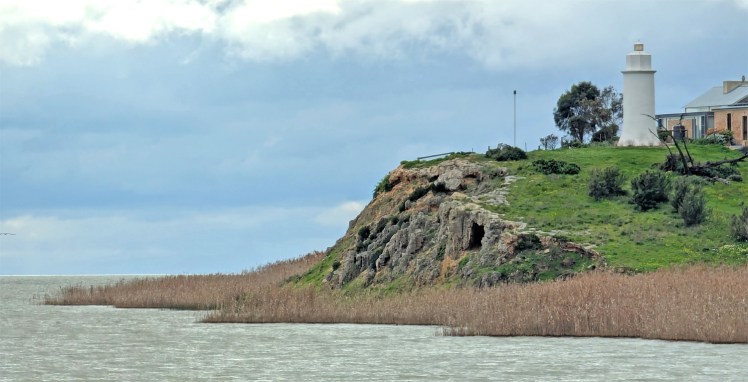
Point Malcolm Lighthouse is the only inland lighthouse in Australia. The lighthouse was built in 1878 to assist ships that were passing through Lake Alexandrina on their way to Lake Albert or the ports on the Murray River.
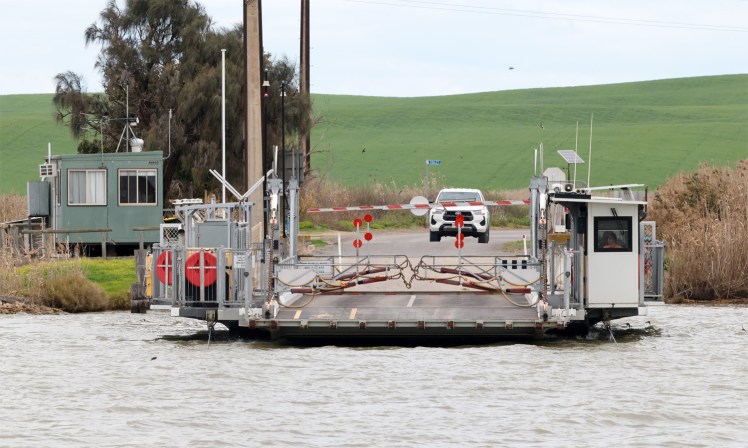
Narrung Ferry
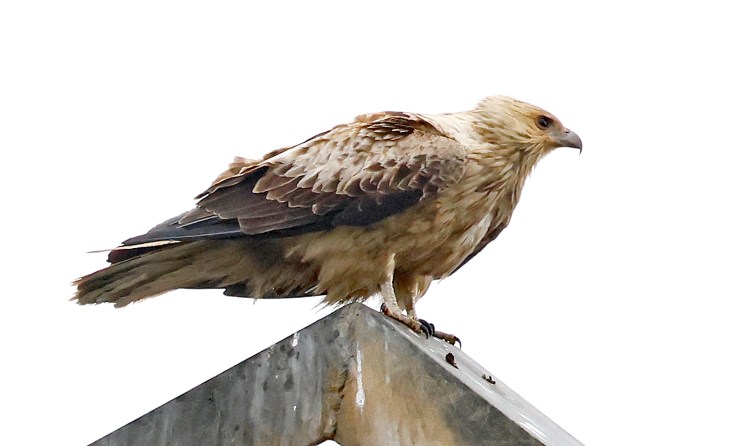
Whistling kite
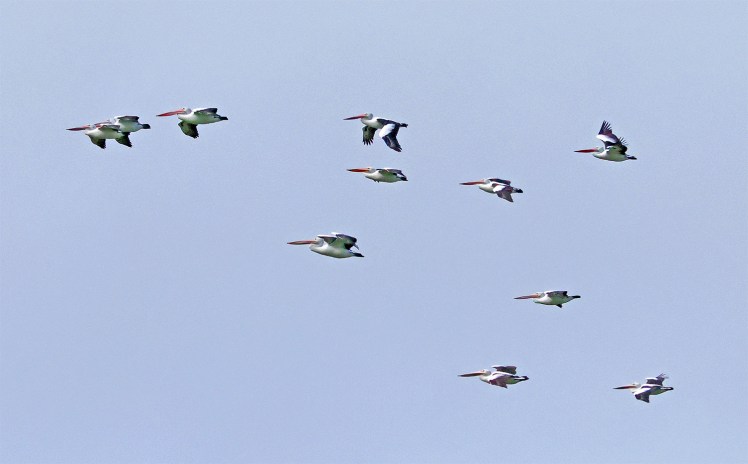
Pelicans are very common here.
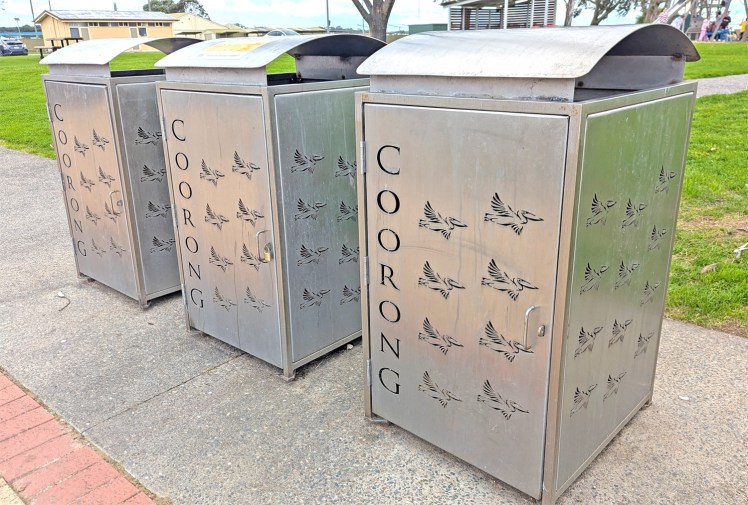
Meningie is mad about pelicans. They adorn many shops, banners, and imagery around the small town. Despite the cold, there were mosquitoes around. With signs warning of mosquito-borne viruses and the town’s name sounding awfully like meningitis, we didn’t stay too long.
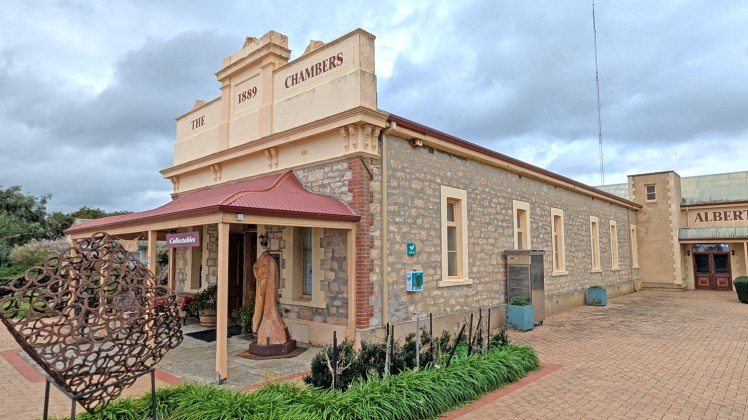
Cubism at its finest – The Chambers 1889 with a very avant-garde horseshoe cube.
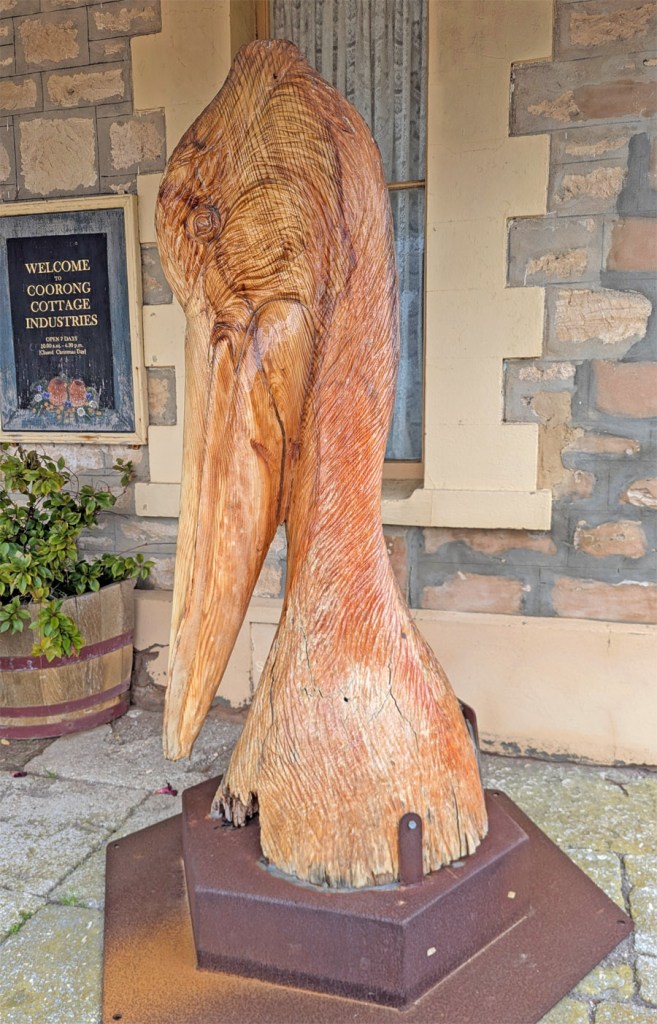
The Big Pelican at Meningie – this pelican wanted to work in the restaurant and issue big bills but another bird got the job – it was a wader. The bottom half of the Big Pelican was eaten by termites.
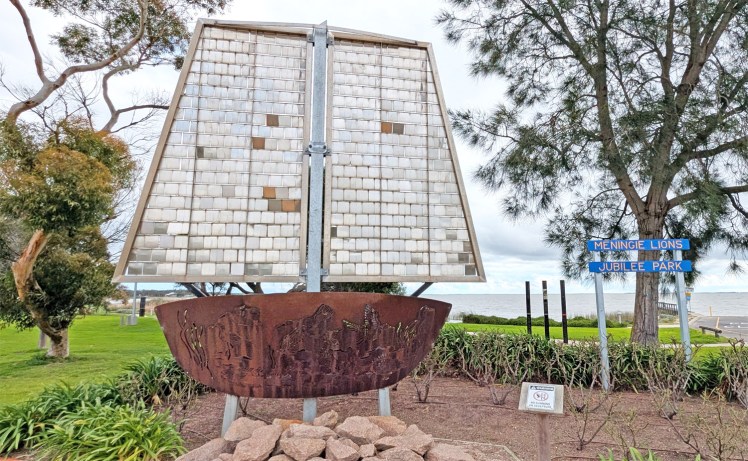
Boat sculpture in Meningie – Seas the day!
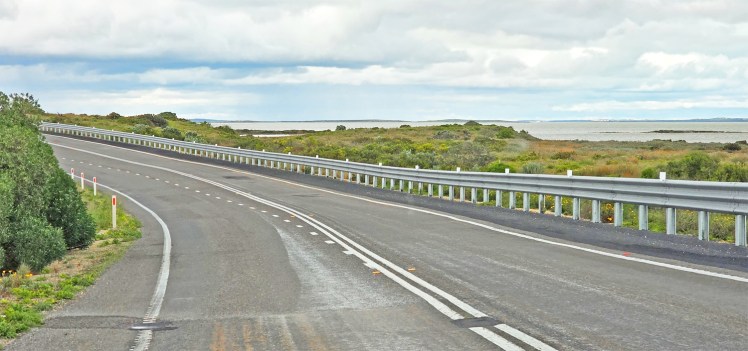
The Coorong – a wetland of international importance with an unspoilt coastal wilderness and rugged coastline. The saline lagoon behing the narrow strip of coastal dunes extends for 140km. The road is never far from the water.
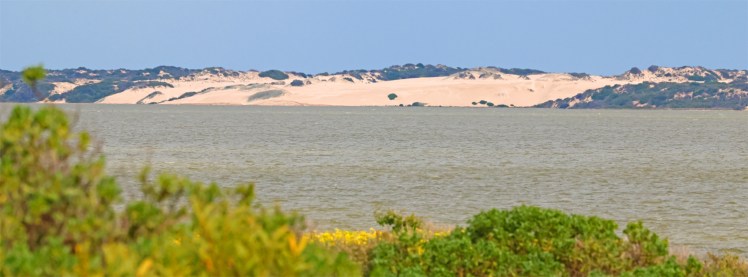
Sand dunes on the narrow strip of land.
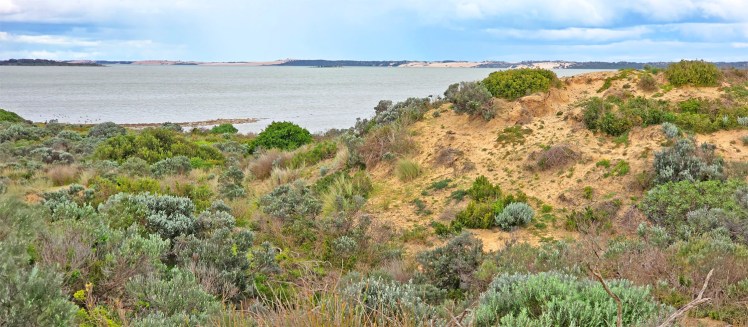
On the path to Jack Point
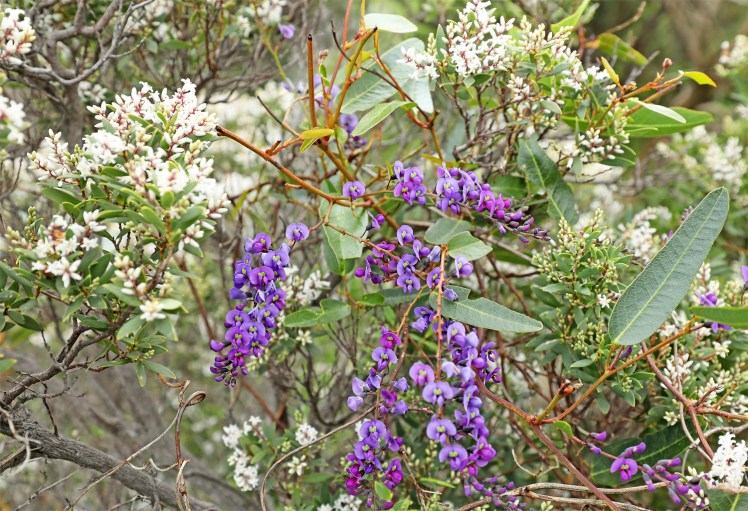
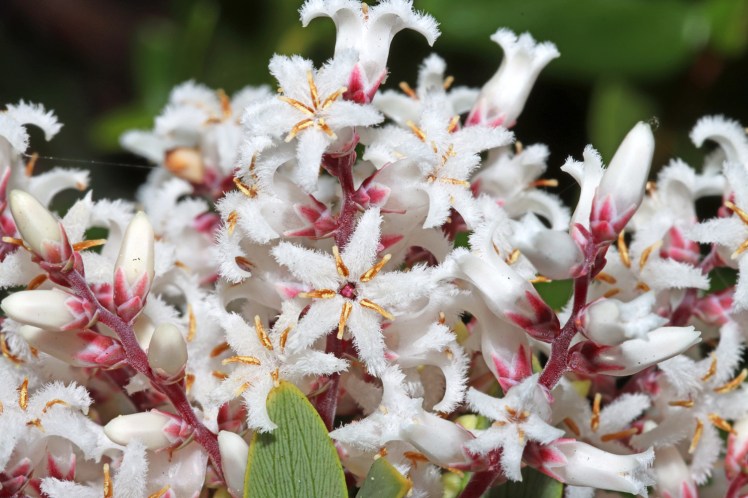
Coastal Beard-heath (Leucopogon parviflorus)
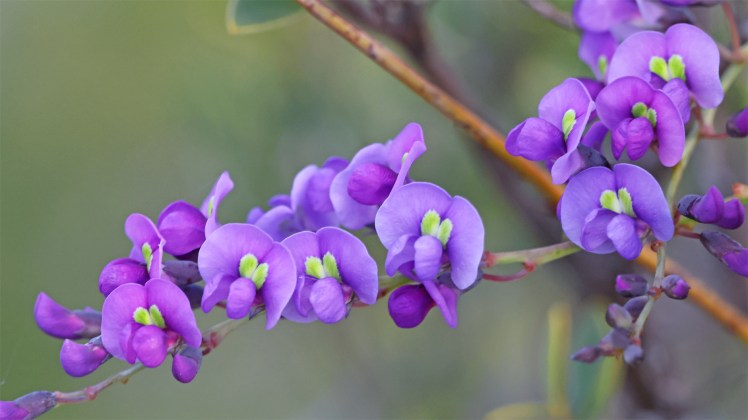
Hardenbergia violacea
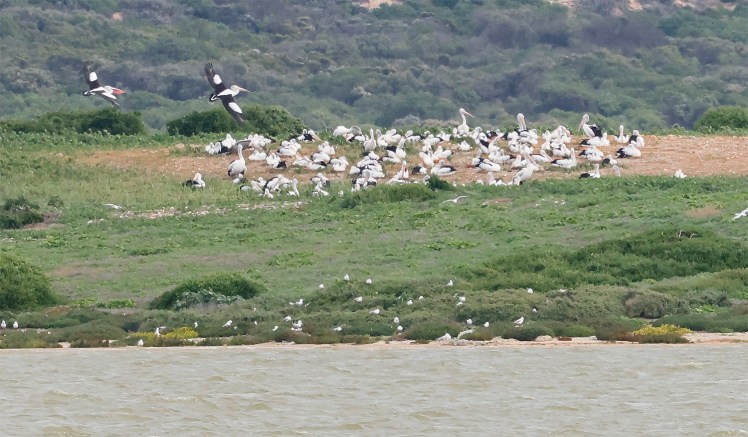
Small islands in the Coorong out from Jack Point are home to the largest permanent Australian Pelican breeding colony in the country. This year, many have gone to Lake Eyre,
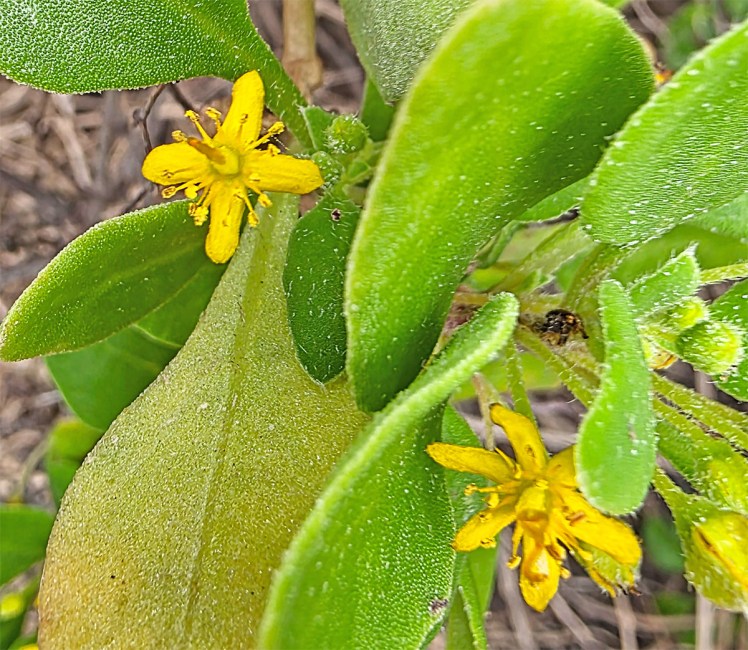
Bower spinach (Tetragonia implexicoma)
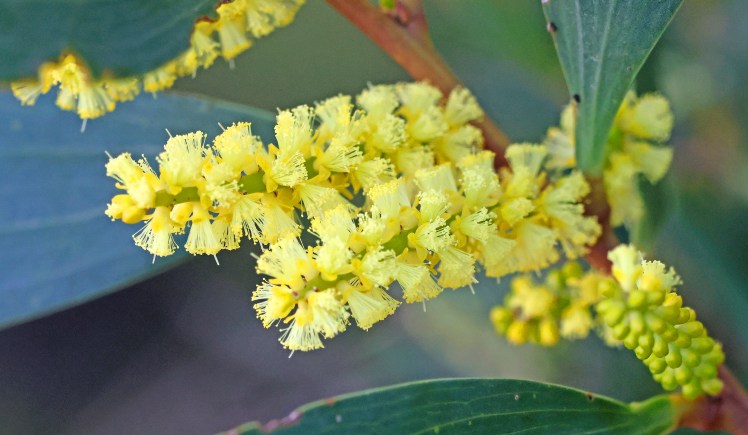
Wattle (Acacia longifolia)
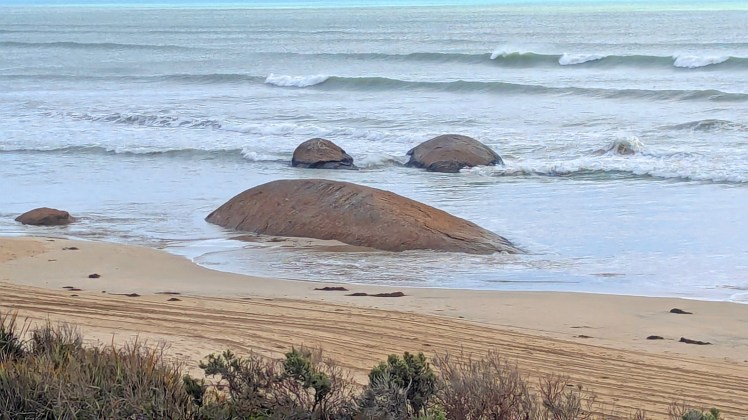
The Granites at the southern end of the Coorong
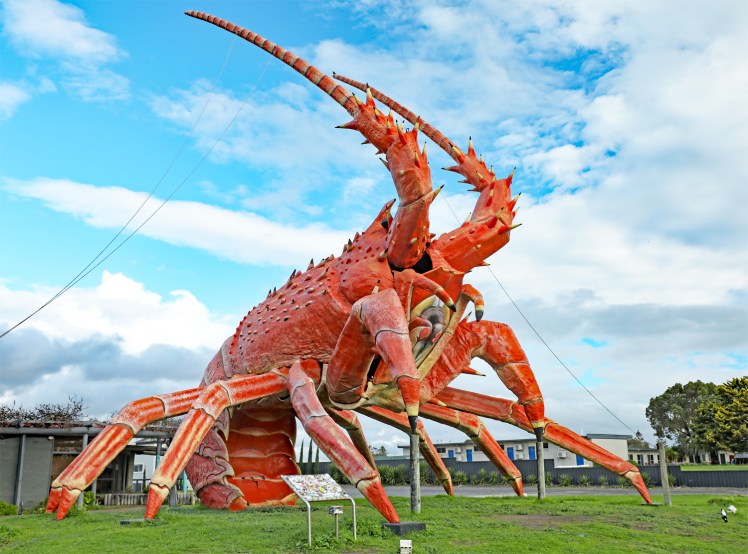
Larry the Lobster at Kington SE – one of the greatest of all of Australia’s Big Things. It is 17 metres high, 15.2 metres long and is 13.7 metres wide, with an approximate weight of 4 tonnes.
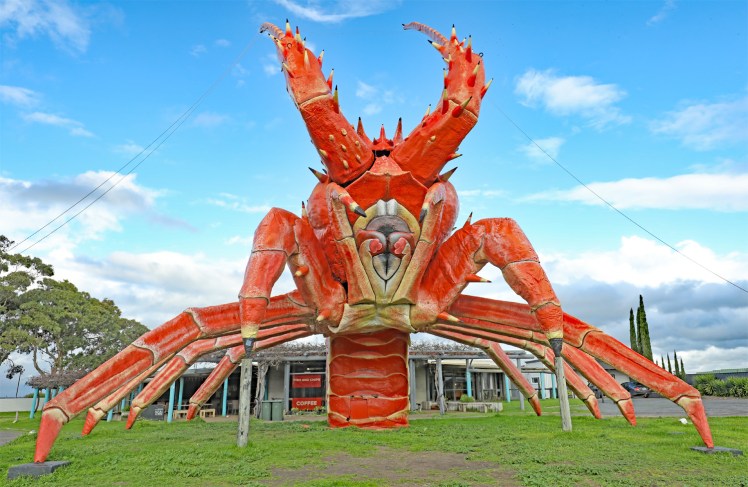
The locals call the Big Lobster Larry. Alliteration nomenclature like all great superheroes.
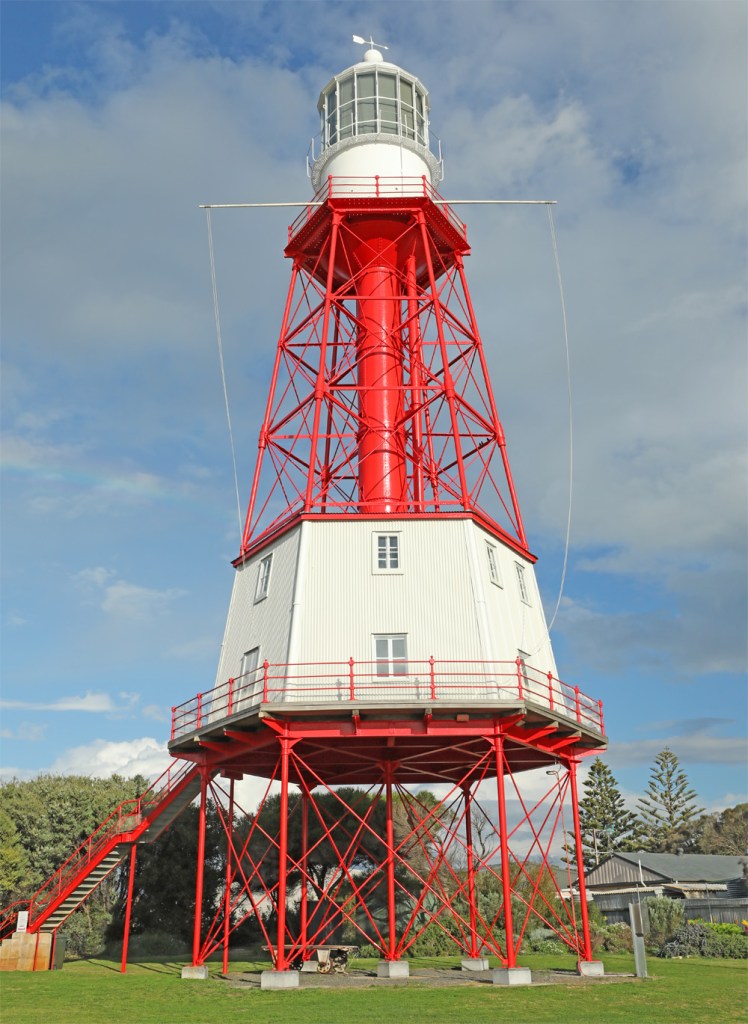
Cape Jaffa historic lighthouse was originally built out to sea from the Cape Jaffa on the Margaret Brock Reef and opened in 1872. It originally was 41 metres high. In 1973, the Federal Government de-commissioned the light station and it was moved to the Kingston SE shorefront.The lantern could be seen for a distance up to 40 kilometres.
The 8 roomed dwelling accommodated two lighthouse keepers and families with enough stores to last several weeks.
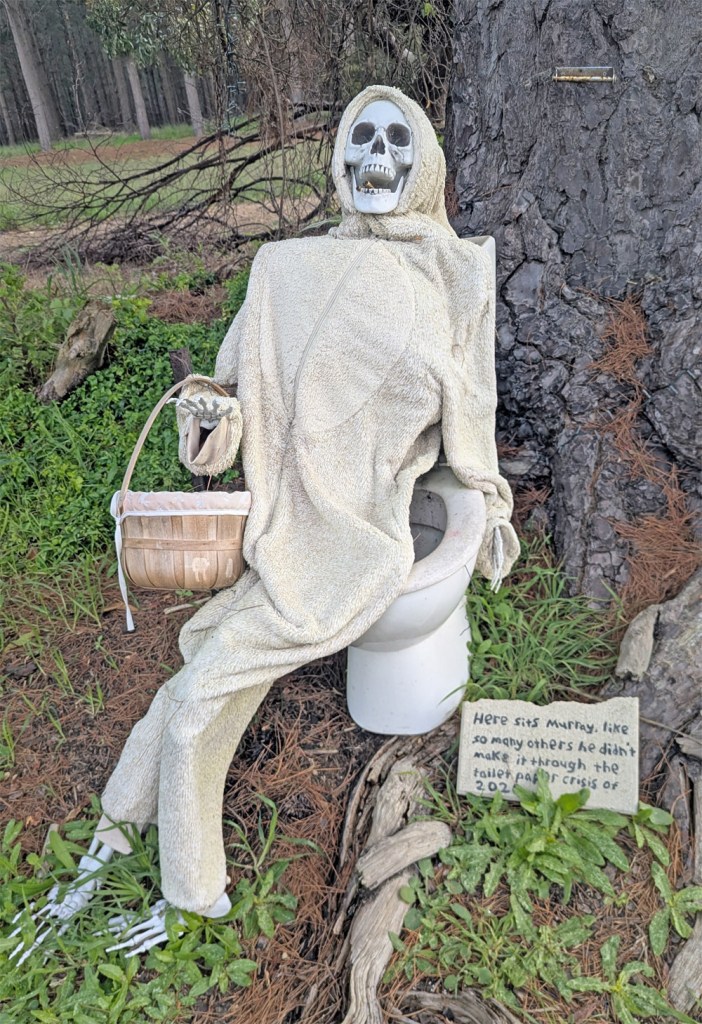
On the road to Robe, we experienced country tourism at its finest. We meet a local identity, Murray the Skeleton.
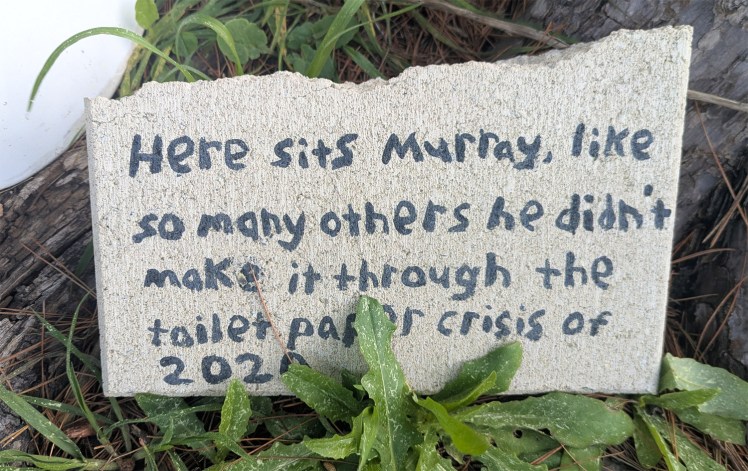
We can all relate to this. Murray used to get agitated about the state of the world but is quite calm these days – nothing gets under his skin.
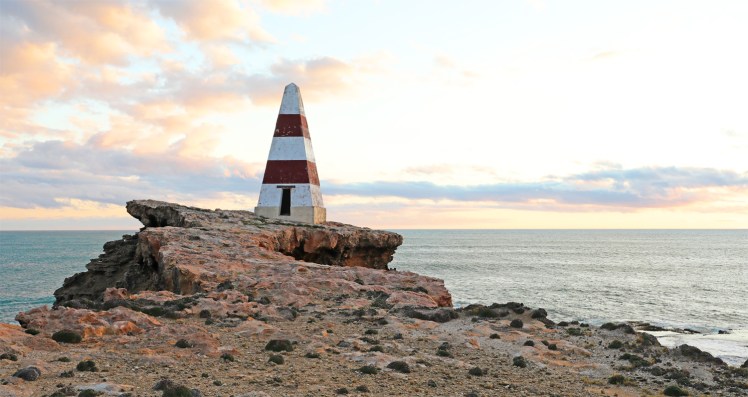
Robe is a fishing port located in the Limestone Coast region. It was founded as a European settlement in 1846 and by the 1850’s was South Australia’s second busiest port after Port Adelaide. This is the Robe Obelisk – a day beacon on the headland for fisherman to use as a marker for Robe harbour. Its artistic creator said it was a relief when it was finished.
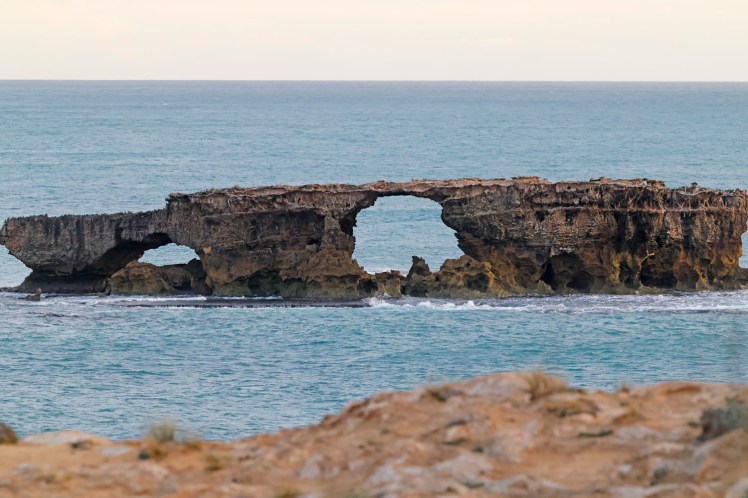
Archway Rock on the Robe coastal walk – some people are waiting for it to collapse – they are arch enemies.
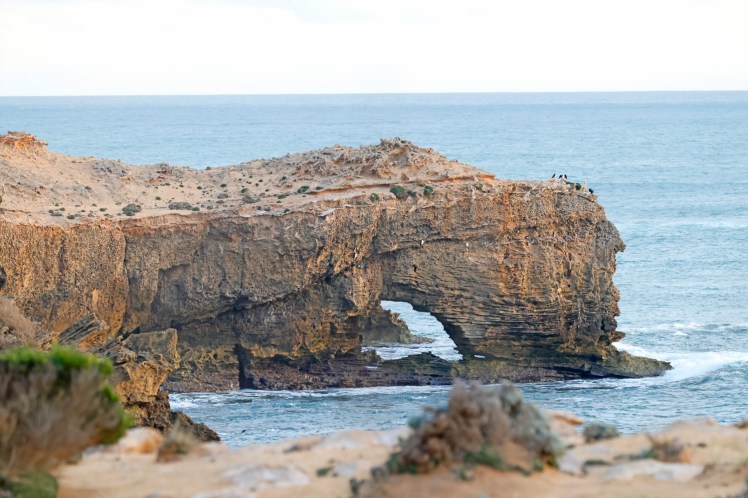
Another arch on the Robe coast
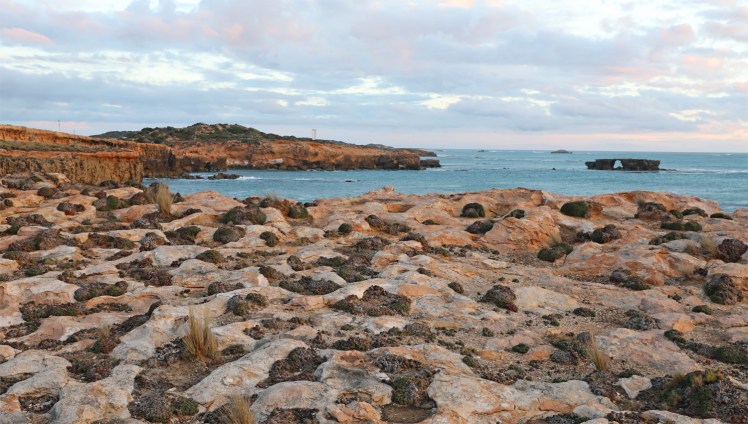
Limestone above the cliff line
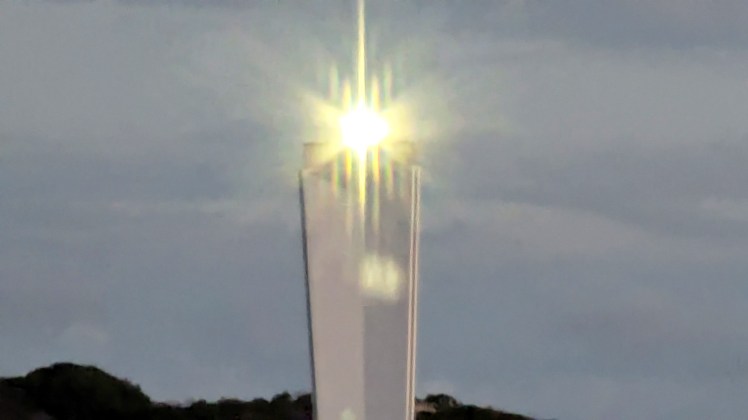
Robe Lighthouse 1972
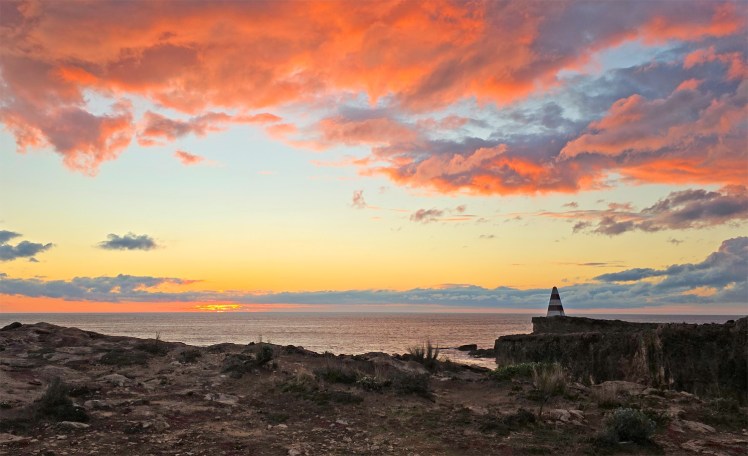
Robe coast
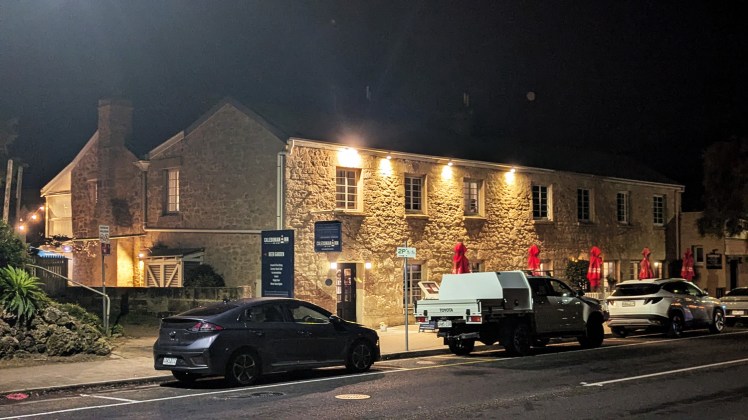
The Caledonian Inn – our dinner venue. It was built and first licensed in 1858. Known locally as “The Cally,” the historic English-style pub was constructed by a Scotsman named Peter McQueen using timbers and doors salvaged from shipwrecks in nearby Guichen Bay.
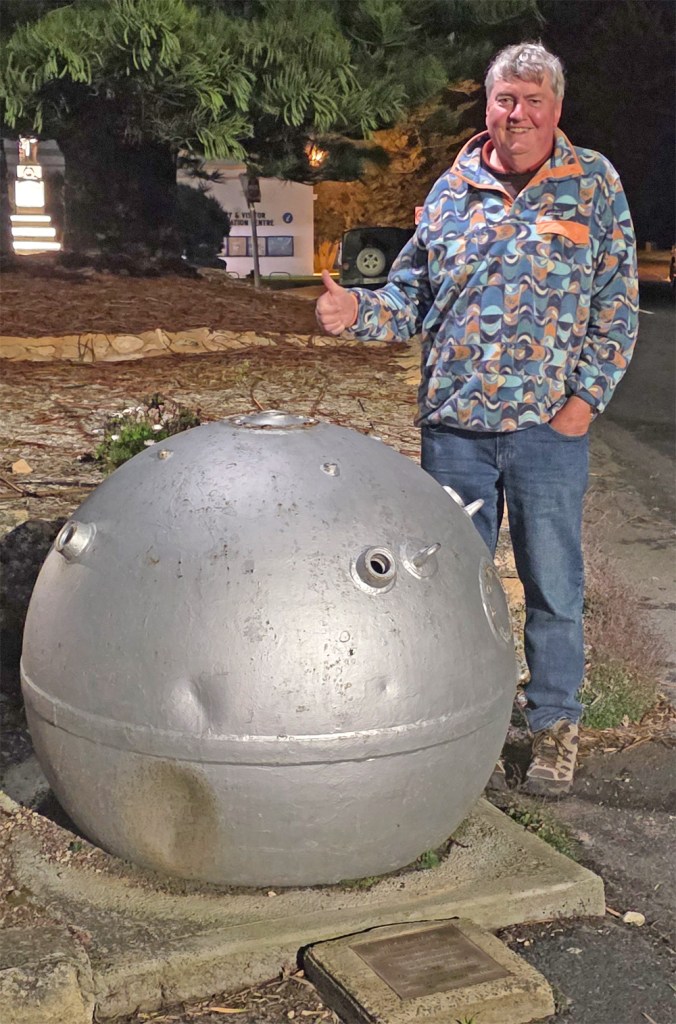
“And what is this?” “Sea mine!” One of four German mines found on the SE South Australian coast in 1941.

