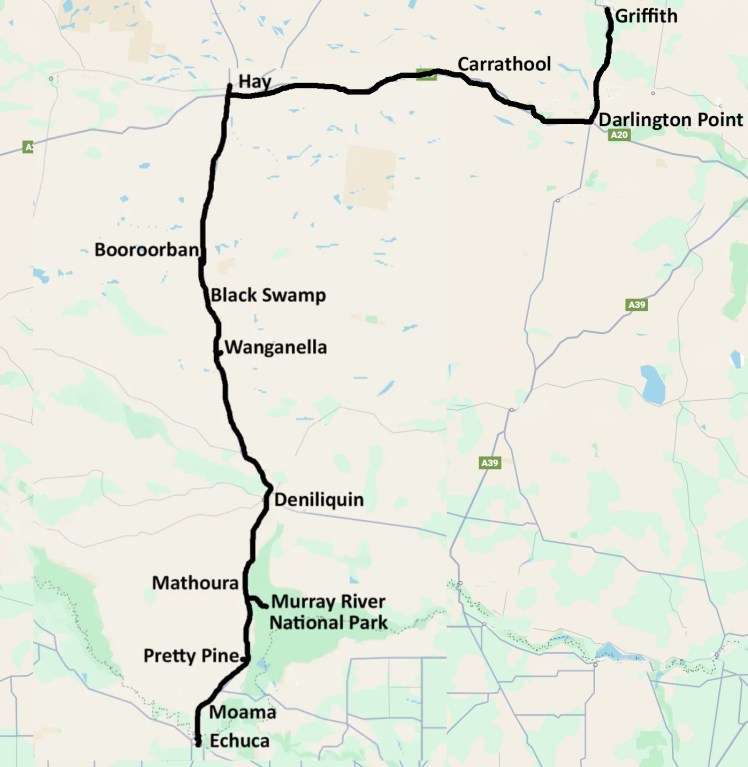
The morning is spent on the floodplain of the Murrumbidgee River with the highway never far from the river for about 200km.
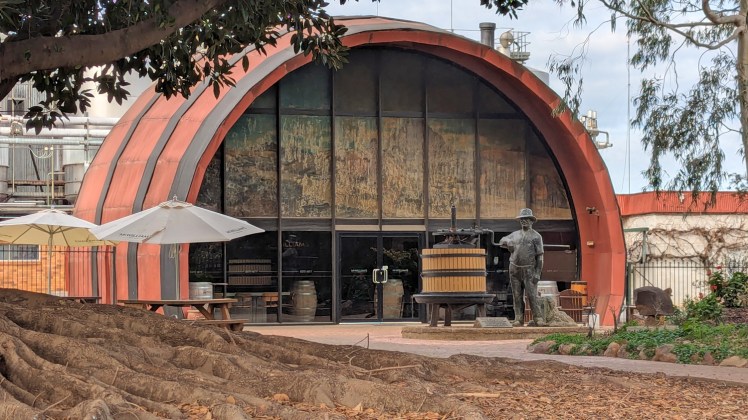
A short drive south from Griffith to Hanwood brings us to McWilliams Wines and its Big Barrel. By the way, what did the contestant of the Griffith Edition of The Bachelor say to the young lady? “Will you accept this rosé?”
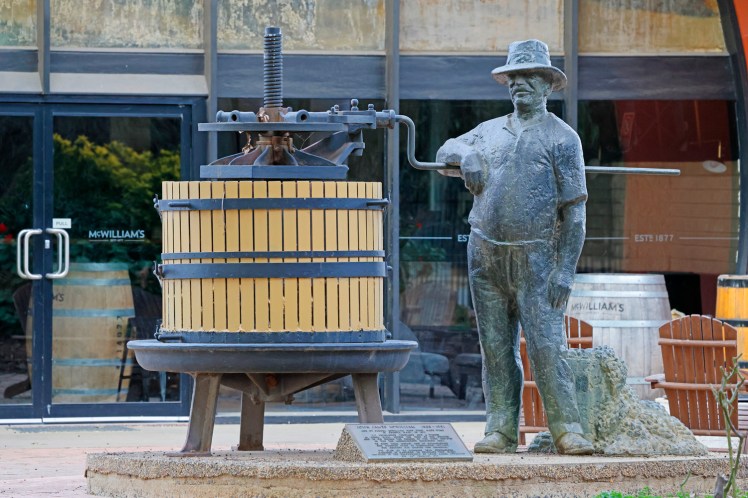
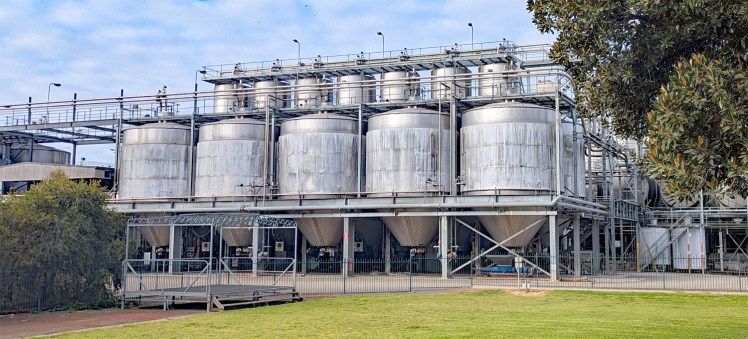
McWilliam’s Wines at Hanwood in the Riverina region was established in 1913 when JJ McWilliam and his son Jack carted 35,000 vine cuttings to the newly opened Murrumbidgee Irrigation Area. Producing its first vintage in 1917, the Hanwood Estate grew into a cornerstone of Australian winemaking.
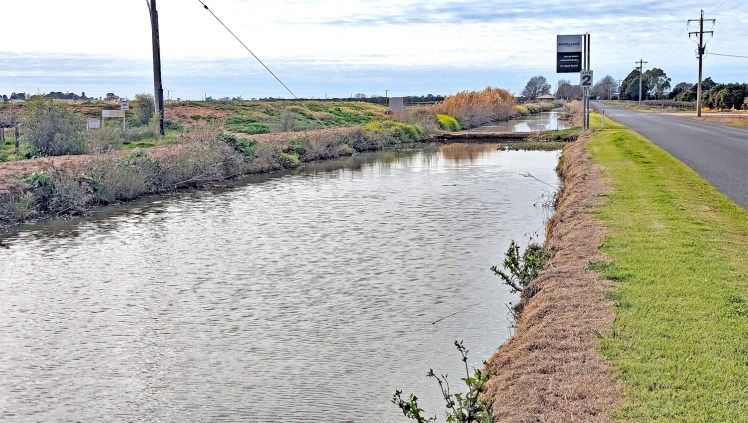
One of the myriad of irrigation channels in the Murrumbidgee Irrigation Area.
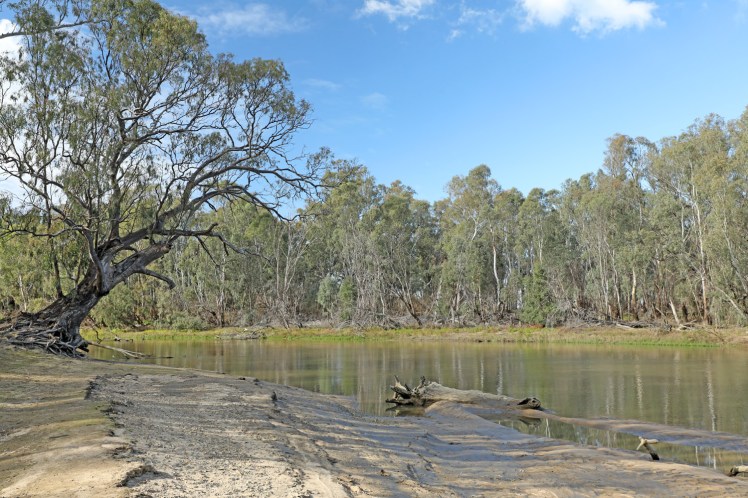
Murrumbidgee River at Darlington Point
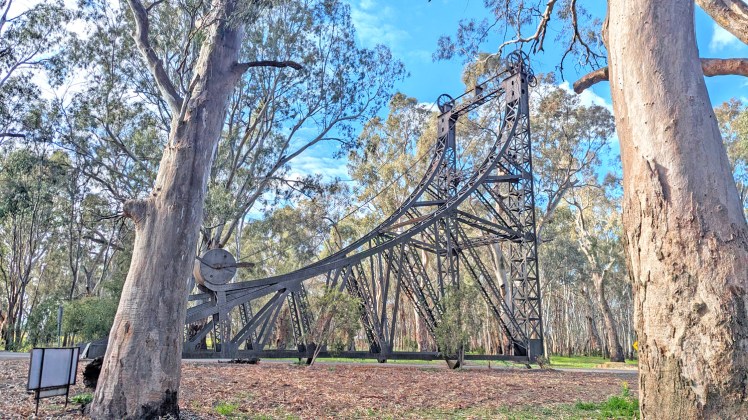
Part of the old bridge at Darlington Point
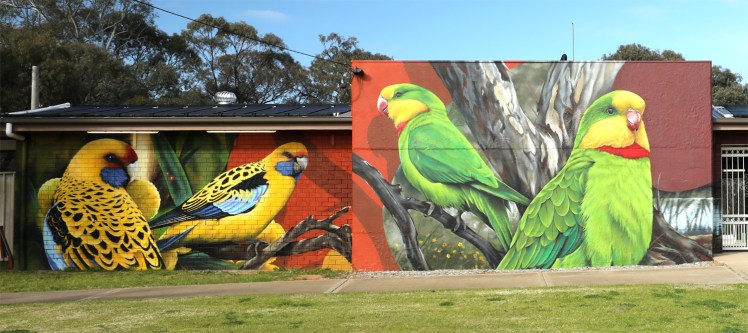
Beautiful mural of Yellow rosellas and Superb parrots – two species with a narrow range in Australia found locally.
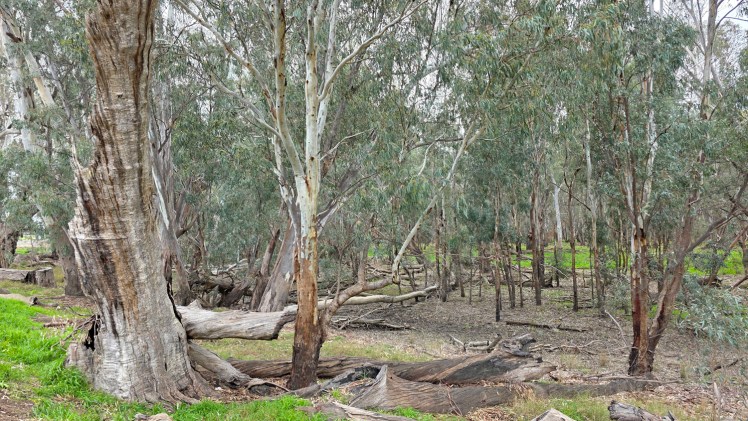
Birdcage East Rest Area beside Eunanbrennan Lagoon which is a billabong adjacent to the Murrumbidgee River.
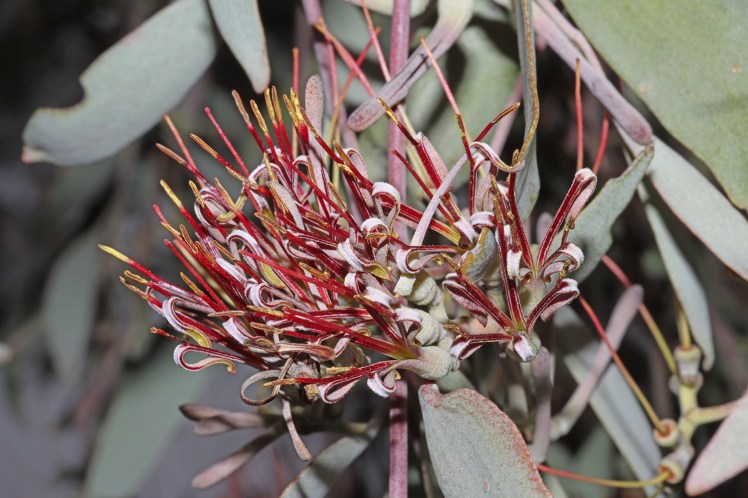
Grey mistletoe (Amyema quandang), a parasitic plant on host trees, at Eunanbrennan Lagoon
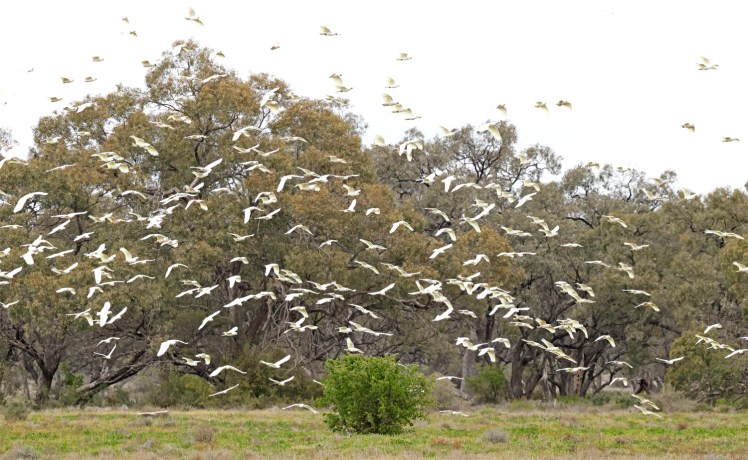
Huge flocks of Sulphur-crested cockatoos and Corellas were in the paddock and by the roadside.
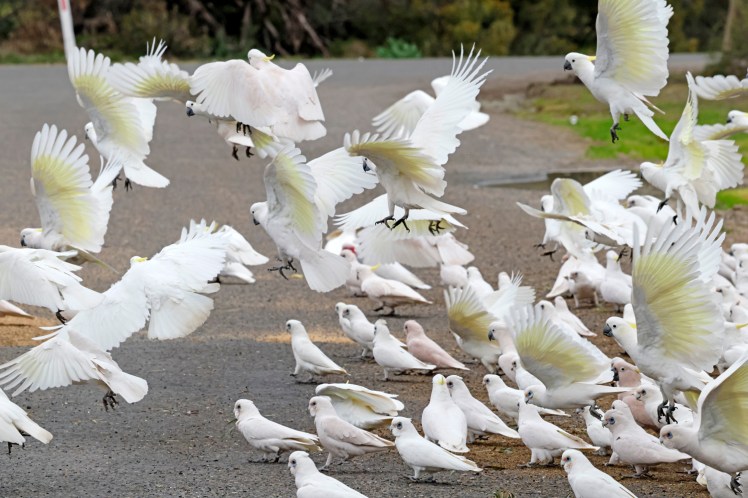
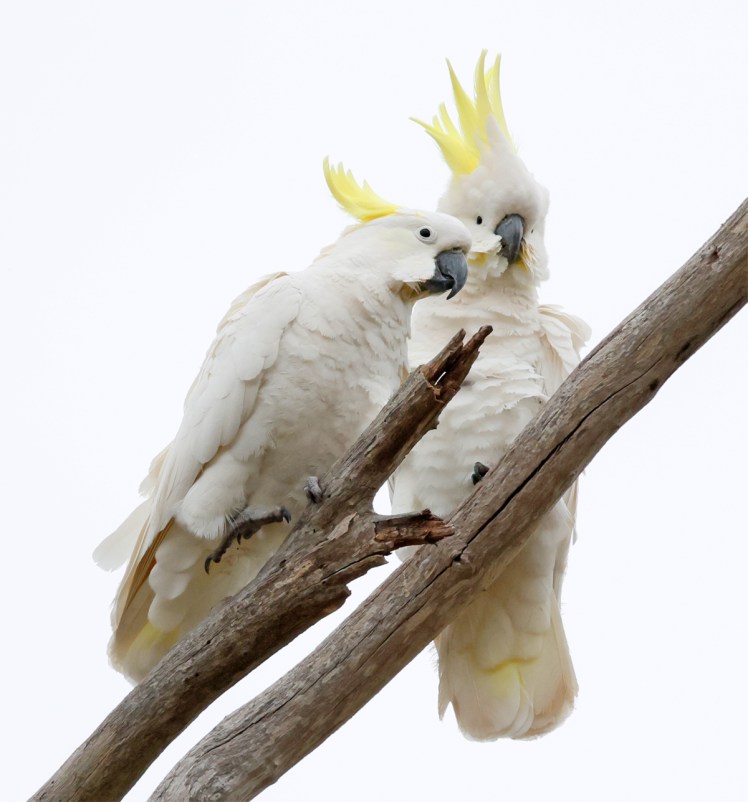
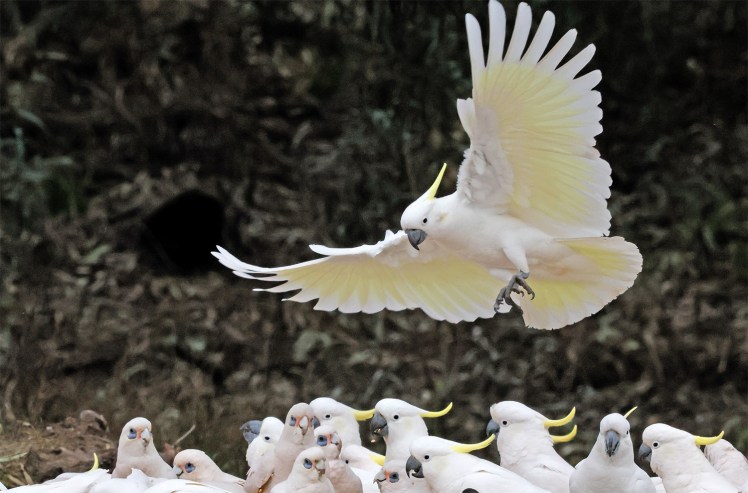
Sulphur-crested cockatoo
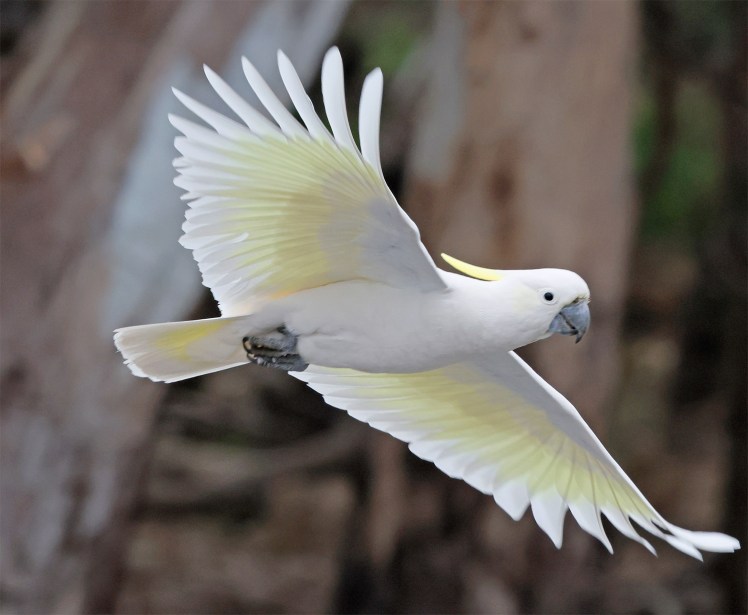
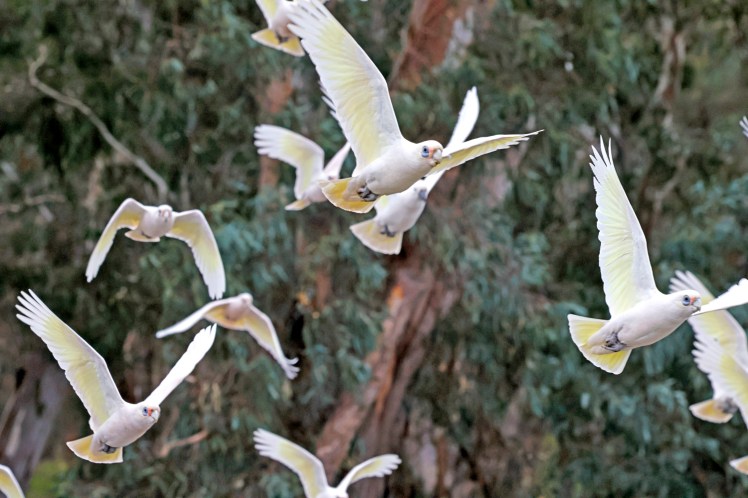
Corellas
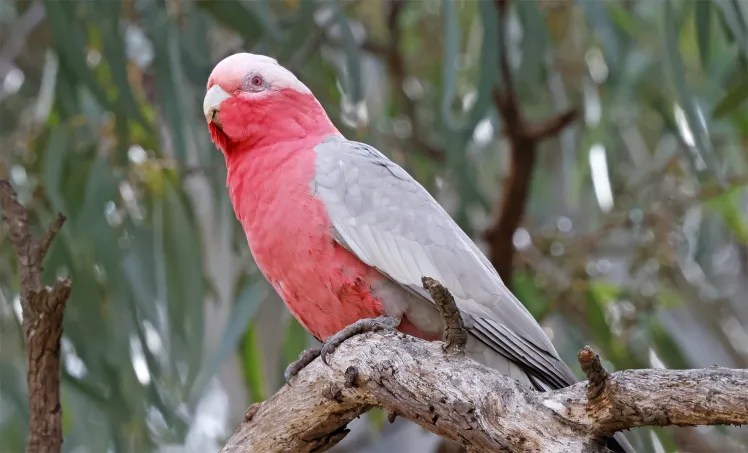
More vibrant galahs
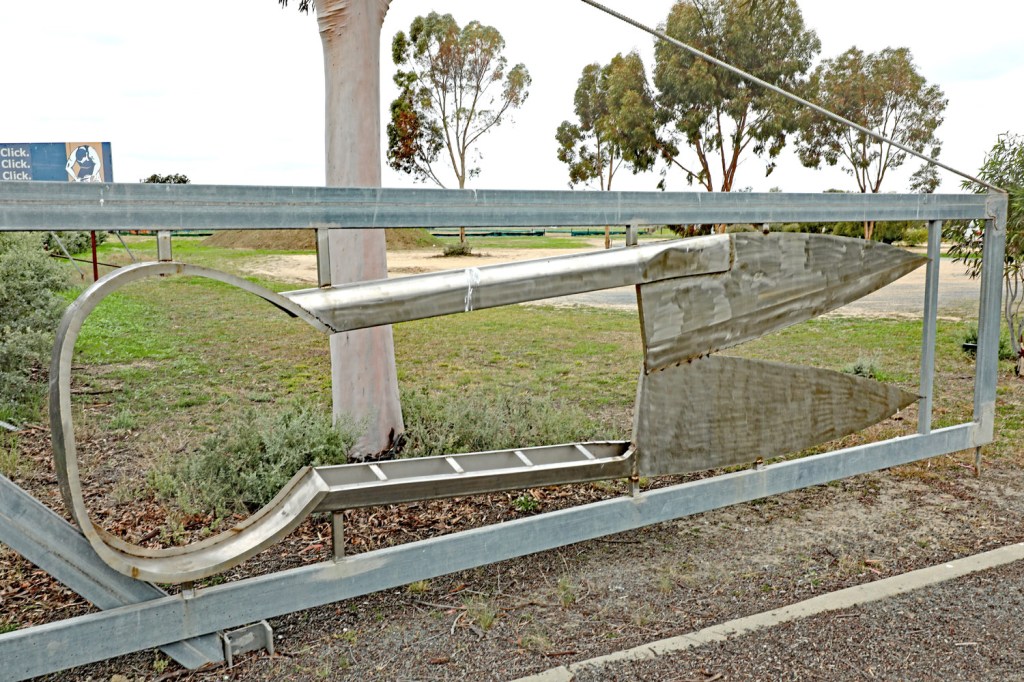
Wool you look at this! The Big Shears on the gate of Shear Outback at Hay.
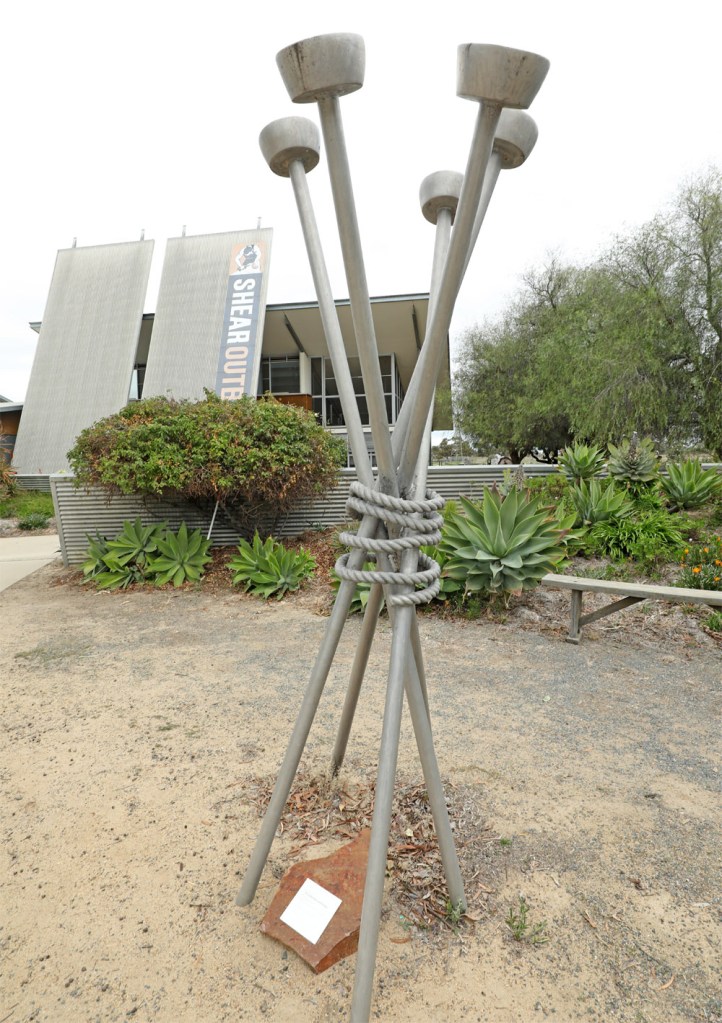
Also at Shear Outback are the Big Pins. Pincredible!
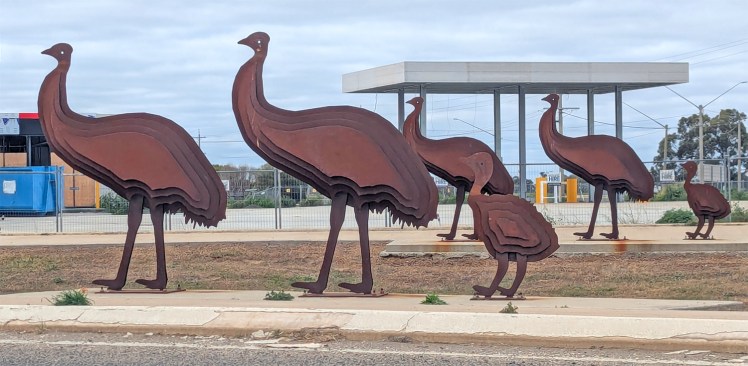
Emu Sculptures in Hay
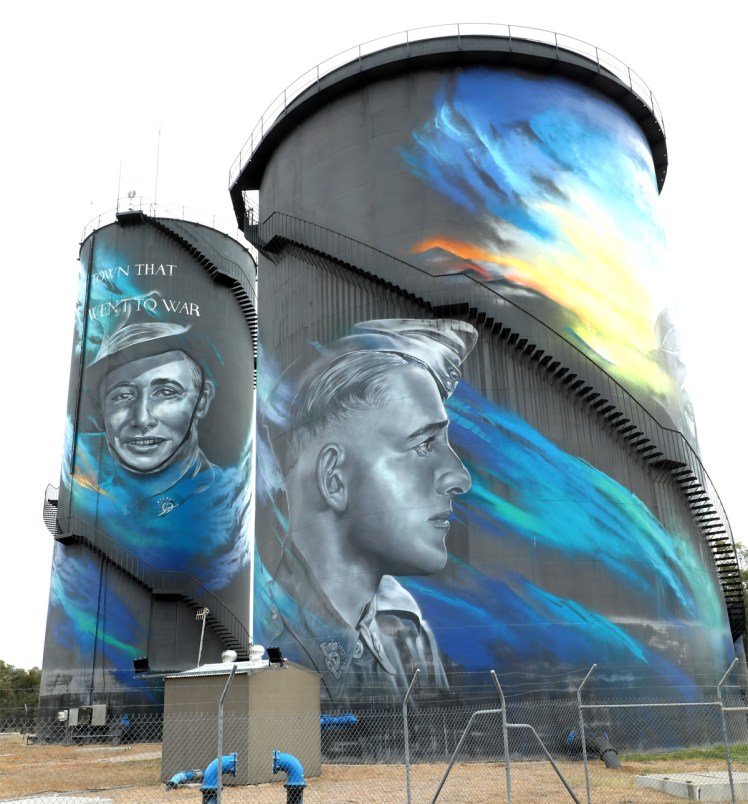
Hay Water Tower Art is a lasting tribute to the many servicemen and women that left their small Riverina town on Hay Plains to serve in World War II .
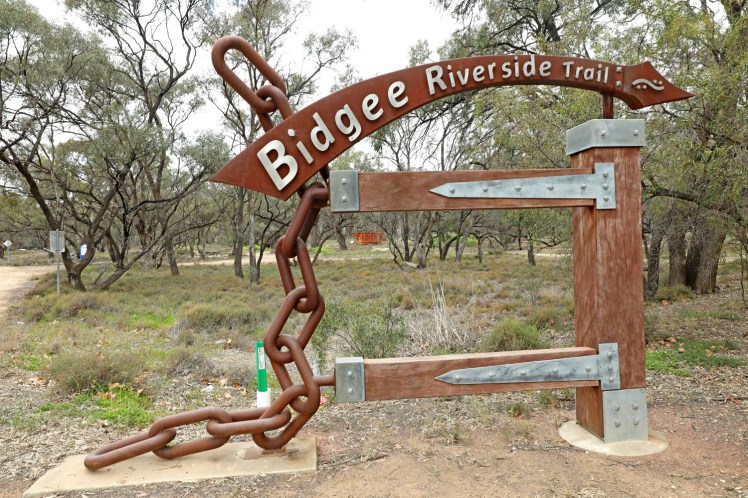
The Big Chain beside the Bidgee Riverside Trail. I had a chain reaction to this one.
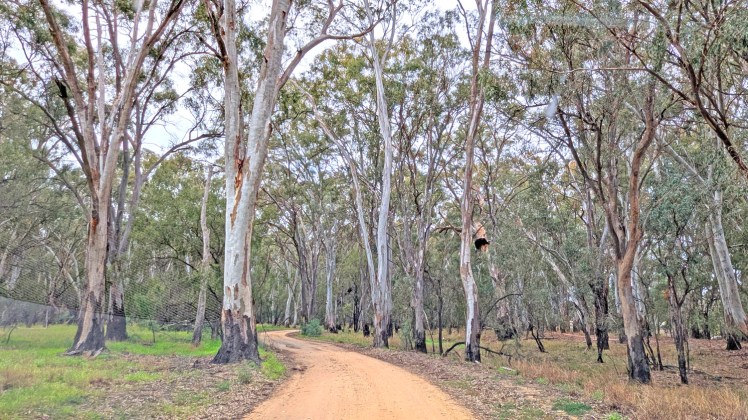
The Bidgee Reserve riverside drive
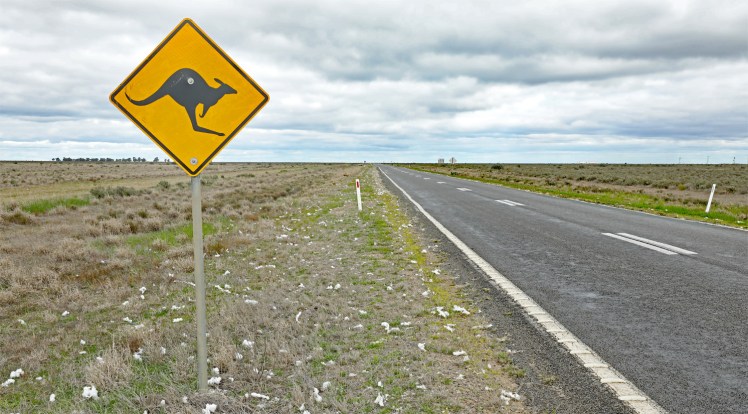
We head south along the southern part of the Long Paddock, also known as the Cobb Highway, following a historic stock route that traversed the plains from Echuca on the Murray River in the south to Wilcannia on the Darling River in the north. The white on the ground is cotton that has blown off bales on trucks during transportation.
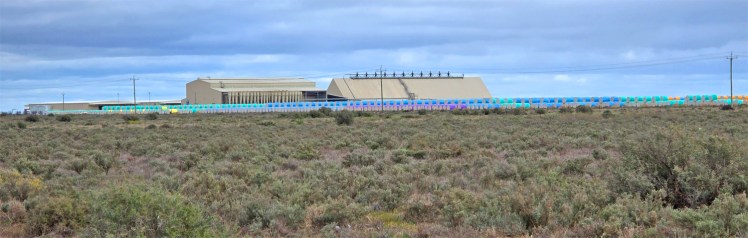
Along the road was a Cotton Gin.
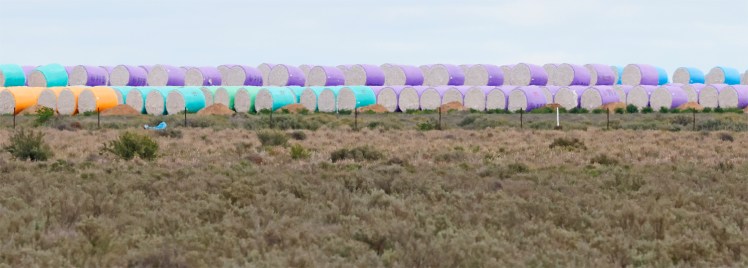
Cotton bales waiting for processing.
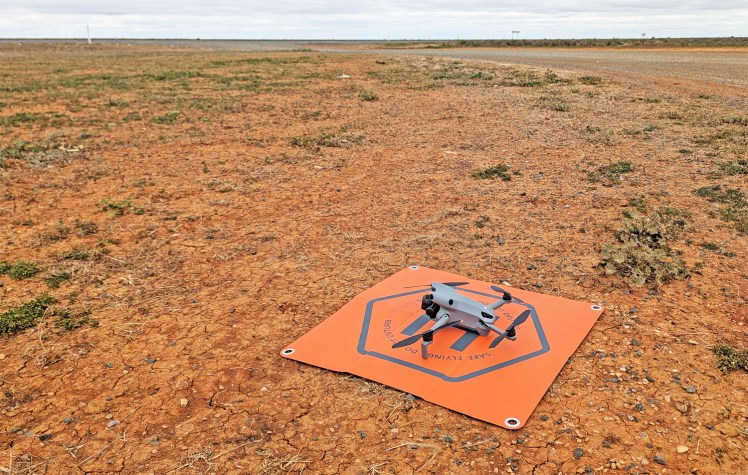
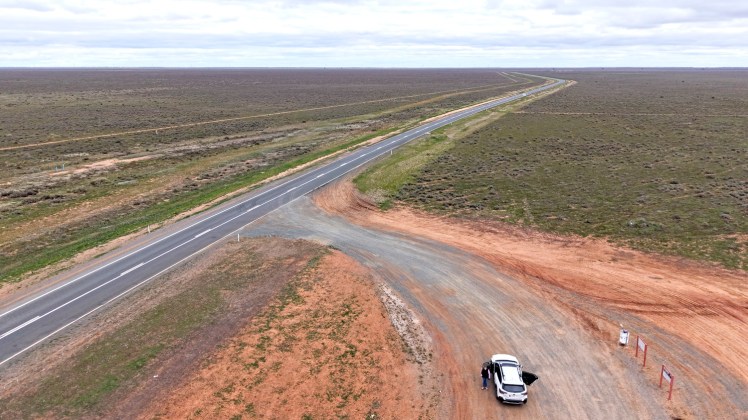
A new addition to my photographic tools is the DJI Mini 5 Pro drone.
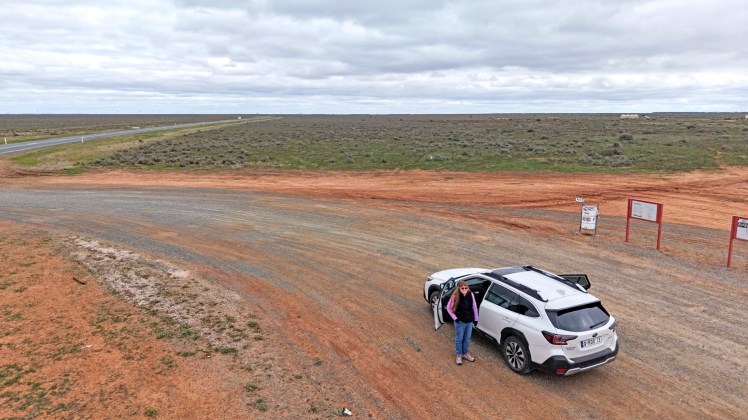
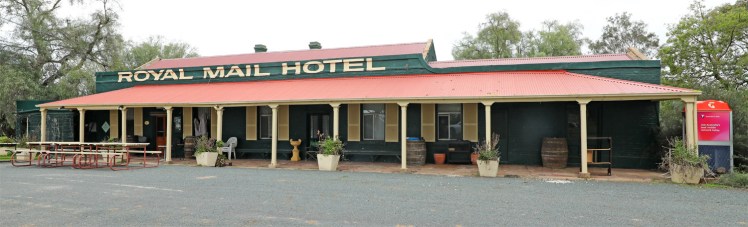
Royal Mail Hotel at Booroorban built in 1868 was an original Cobb and Co stop on the Long Paddock stock route.
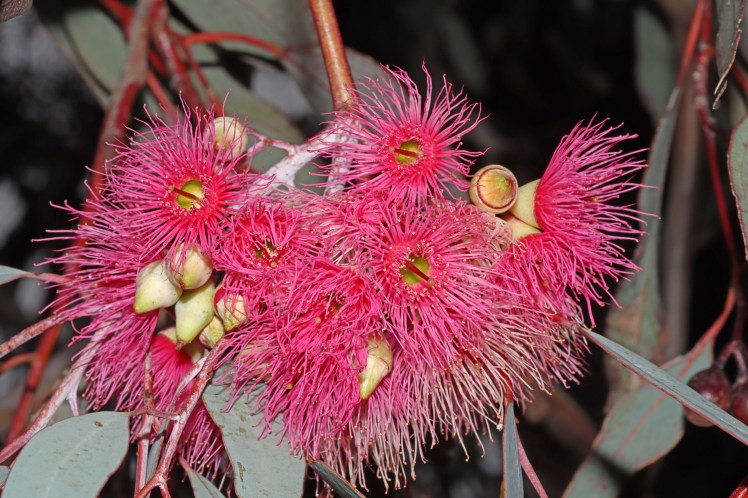
Pink flowering Eucalyptus at Booroorban
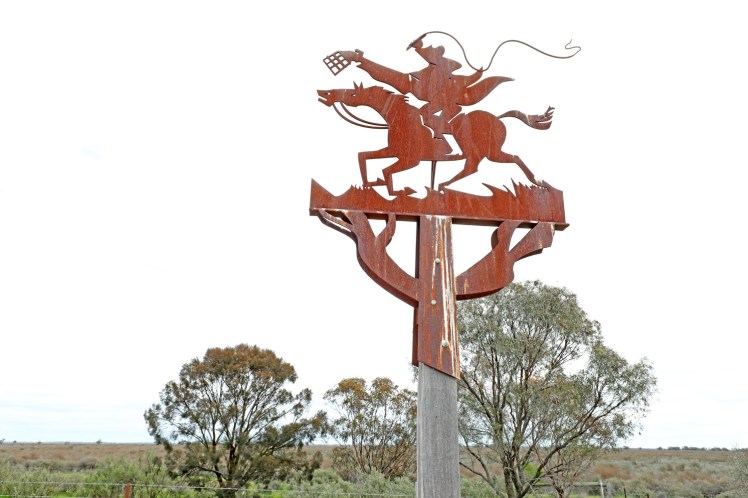
The Black Swamp is the setting for a local legend of the Headless Horseman. The legend tells of a drover who died at the swamp and whose ghost appears as a headless horseman, sometimes seen on a grey horse. The bullock drivers would avoid staying overnight here.
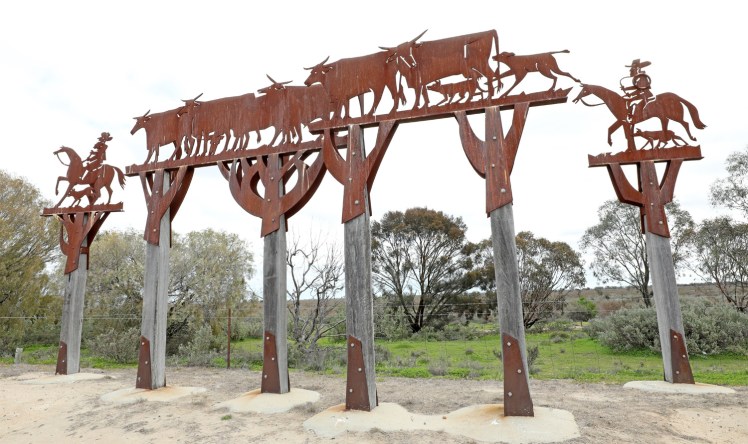
“When the lands were wide and fences few, uneasy was the stockman when the sun was down and his thousand charges were scattered for miles around his campfire, he would remember the story they were telling around Bourke that the Headless Horseman was again haunting the plains at the Black Swamp near the border and he would appear suddenly, mounted on a cob, with a cloak wrapped around him – but without a head! He passed through the camp like a phantom causing the cattle to rush and the dogs to shrink away. Terror would follow with cattle, dogs, drovers all in a wild stampede.” – Jack Bushby wrote in his Deniliquin district history book, Saltbush Country. There is conjecture it may have been a local enterprising butcher who used this ruse to steal cattle and supply his shop. (A cob is a horse of stout build with a steady disposition, and capable of carrying considerable weight).
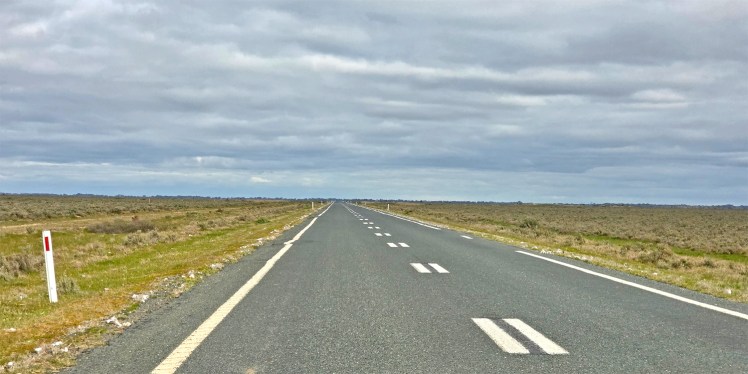
Old Man Plain between Wanganella and Hay
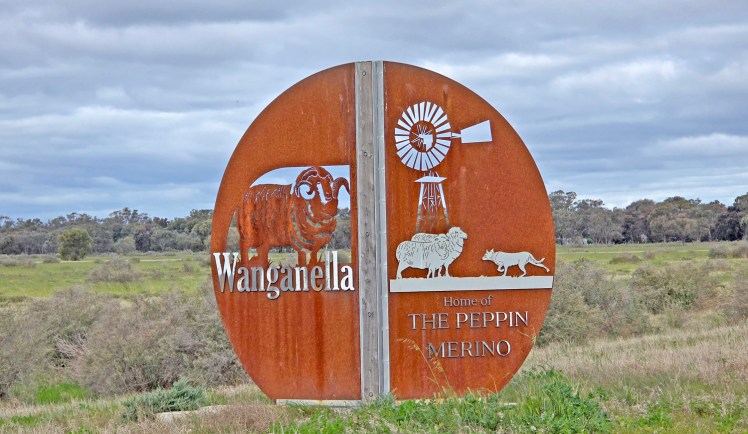
In 1861, George Peppin and his two sons, experienced English sheep breeders, established a Merino stud at Wanganella Station, north of Deniliquin.
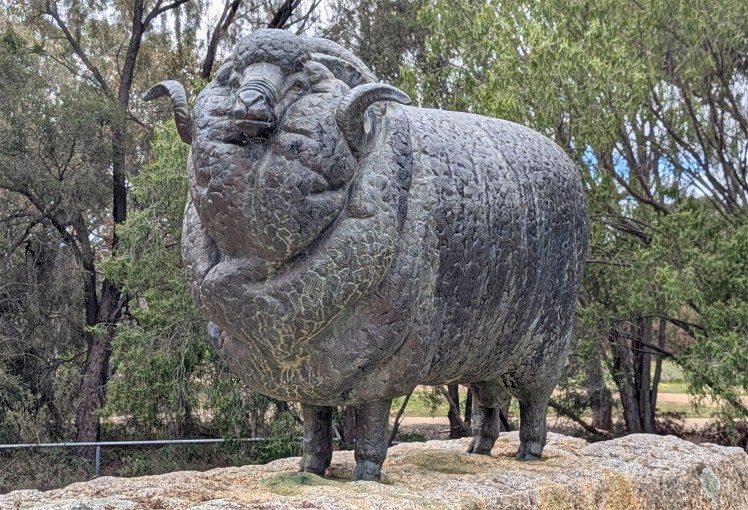
They developed the Peppin Merino, able to thrive in drier inland regions. Today, as many as 70% of Merinos in Australia are said to be directly descended from these sheep. This guy rambled on about the quality of his wool. He is also occasionally on the rampage about not being on standard Australian currency. The ram appeared on the shilling (replaced by the 10 cent piece) from 1938 until pre-decimal currency ended in 1966.
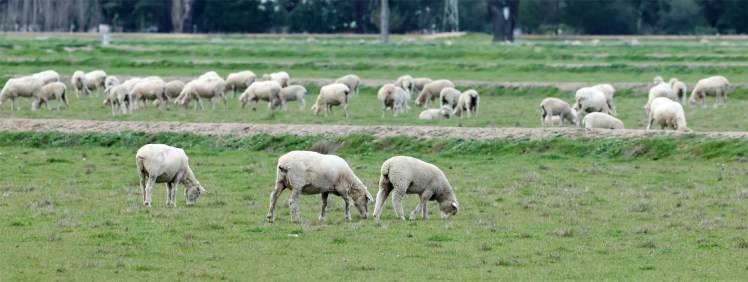
Sheep south of Wanganella
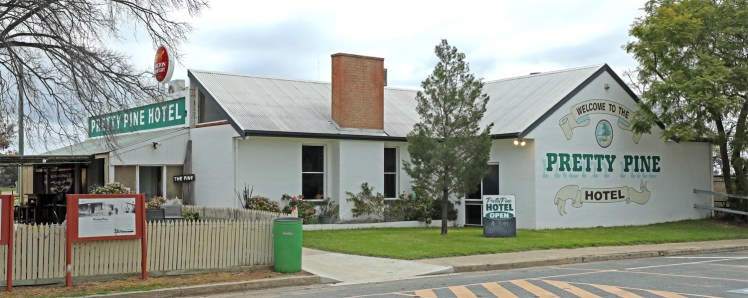
Pretty Pine Hotel, north of Deniliquin, was established around 1875, originally operating as a change station for Cobb & Co coaches. It has been renovated with additions since.
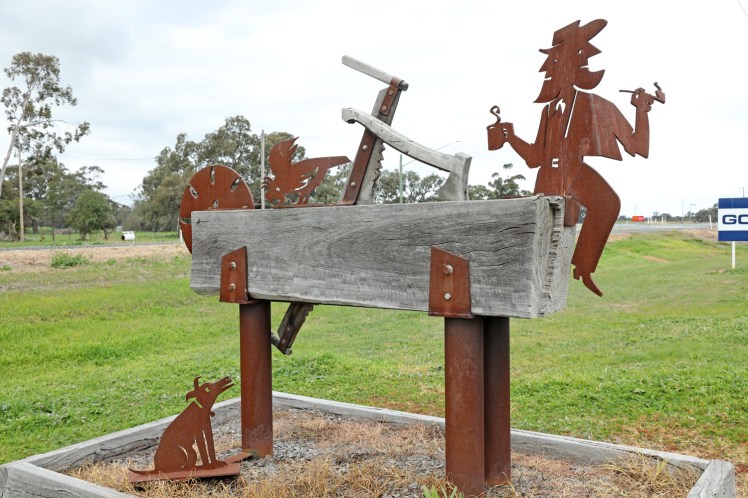
“I’m on smoko – Leave me alone; I’m on smoko – leave me alone!” Smoko sculpture –The sculpture at Pretty Pine shows a timber cutter taking his break – a smoko – seated on the log he has been working, having a cup of billy-tea and having a smoke. The large redgum tree has been cut square. The tools of the trade: cross-cut saw, broad-axe and circular saw all rip into the noble tree. The woodcutter is a double-headed Janus figure (the Roman god of beginnings and endings), looking both forward and back, to the uncertain future of his industry and to the glory days of the past. (text from Discover River Country website).
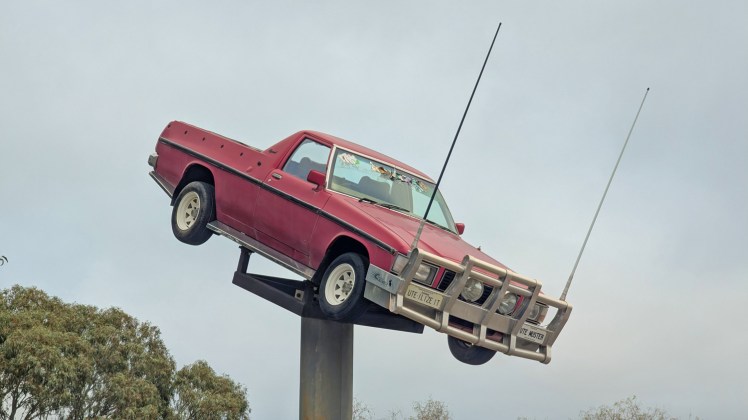
Deni Ute Muster site – an annual Festival attracting 20 000 people with a love of utes. Deniliquin lays claim to being the Ute Capital of the World and erected a Ute on the Pole in celebration of the festival’s success.
It was a tricky thing to do but they had a manual, although working on the internal combustion engine was exhausting.
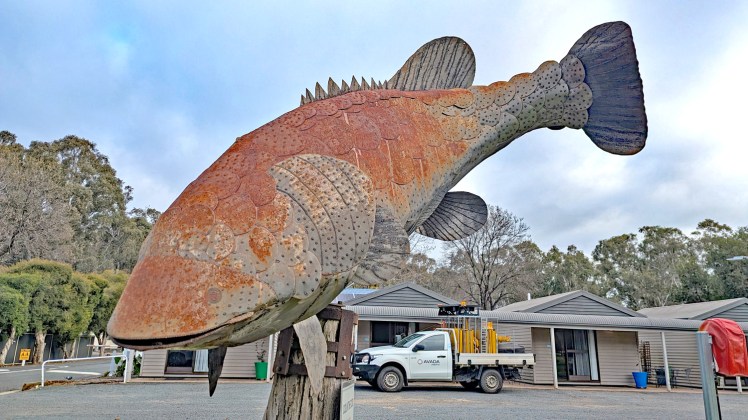
Yet another Big Cod!
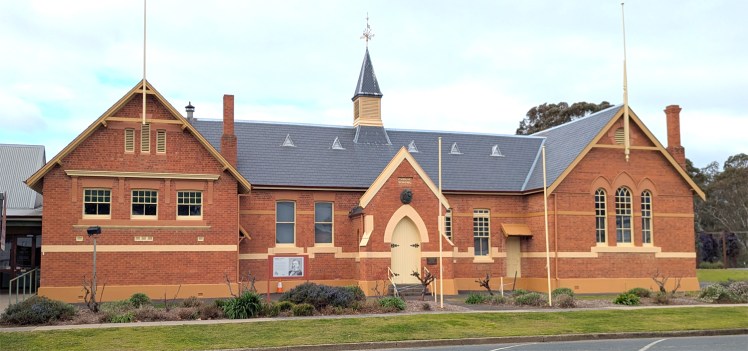
Deniliquin Peppin Heritage Centre was the 1879 Deniliquin Public School and School Masters Residence. Deniliquin seems like a nice town, no Delinquints at all.
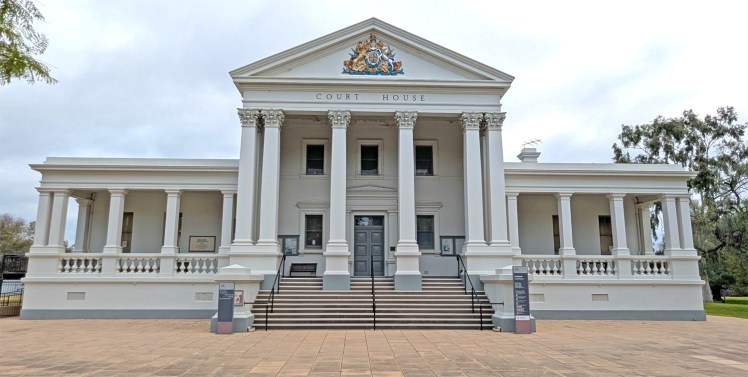
The impressive Court House at Deniliquin (built 1885).
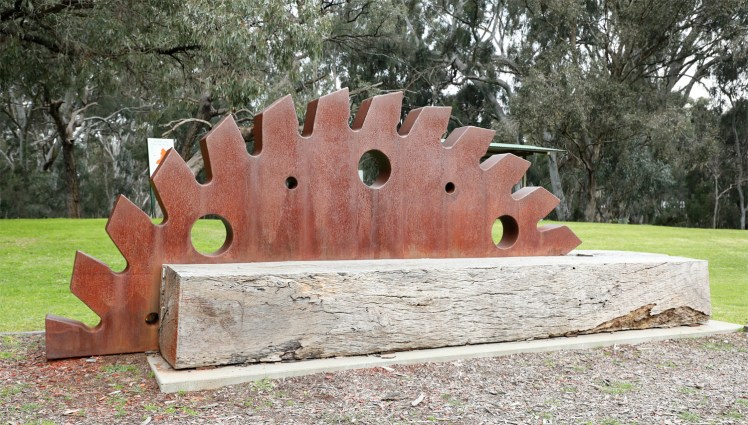
The Cut sculpture – sawmills began operating near Deniliquin around 1860 when the value of red gum timber for construction purposes was realised. Its rot-resistant and insect-resistant qualities made it an ideal choice for various construction projects, including bridges, wharves, houses, and commercial buildings.
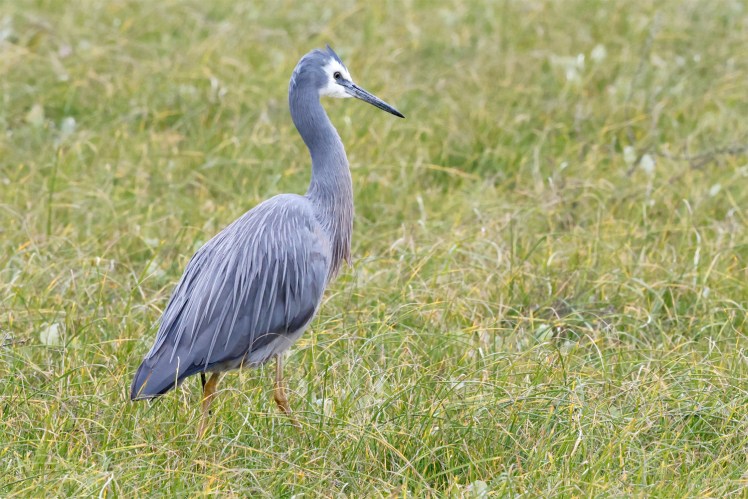
White-faced heron at Deniliquin
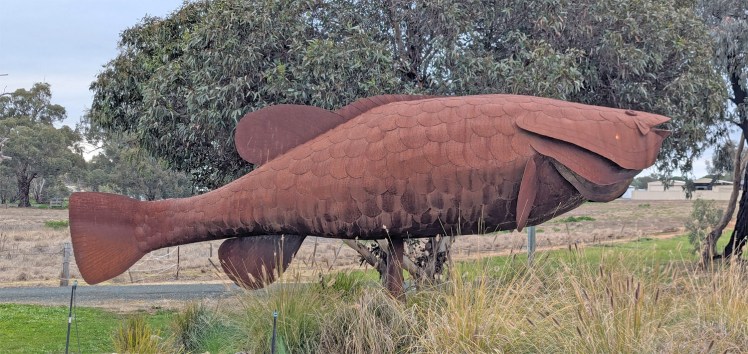
The Cobb Highway extends southward to Mathoura. Here is another Big Cod! This is the 6th Big Cod we have seen in our travels. The clean-living locals say, “Cleanliness is next to codliness“.
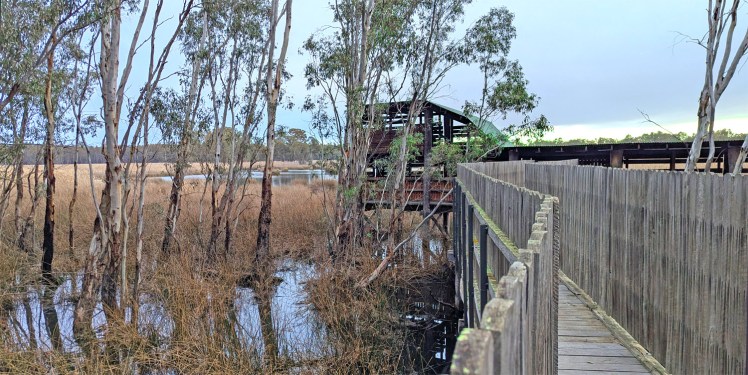
Reed Beds Bird Hide is in Murray Valley National Park just east of Mathoura. A boardwalk and double story bird hide allow close access to a flooded area adjacent to the Murray River. The wetlands here were once a huge lake when the Murray River was dammed by a series of earthquakes along the Cadell Fault that lifted the western side of the land here up by 10 to 20 metres. This caused the river to overflow the dam and flow along what is now the Edward River (through Deniliquin). After a time, the river cut through to the south on its current course. This national park and the adjoining Barmah National Park in Victoria protect the largest forest of River red gums in Australia (and the world).
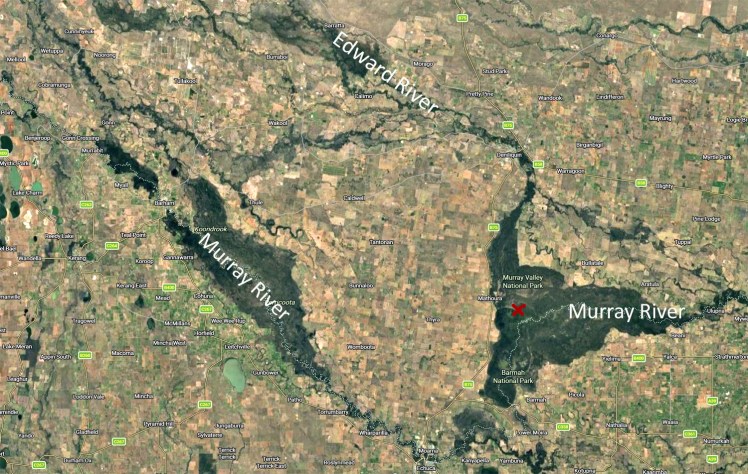
The red X marks the Reed Beds in the Murray Valley National Park. This park and Barmah NP make up the green triangle shape. (Image: Google Maps)
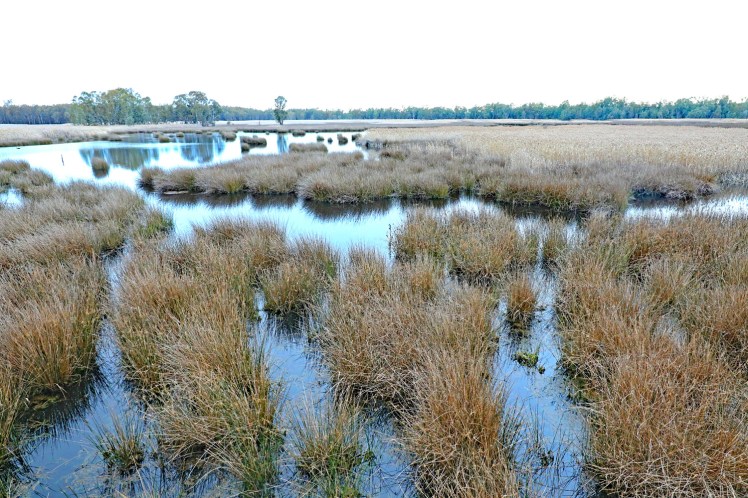
Reed Beds in Murray Valley National Park
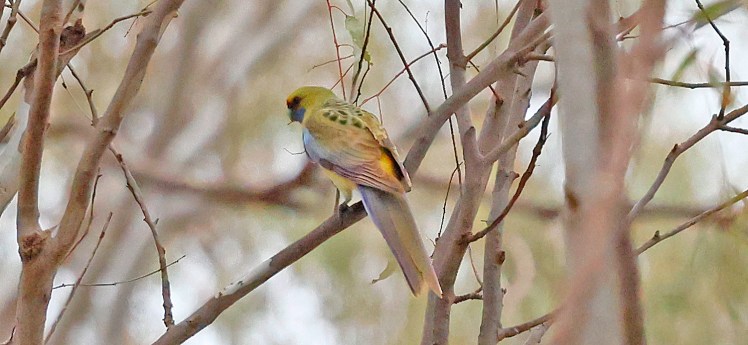
Yellow rosella in fading light in the River red gum forest in Murray Valley National Park. The rosellas were plentiful but shy and elusive – this image at the limit of my long zoom lens.
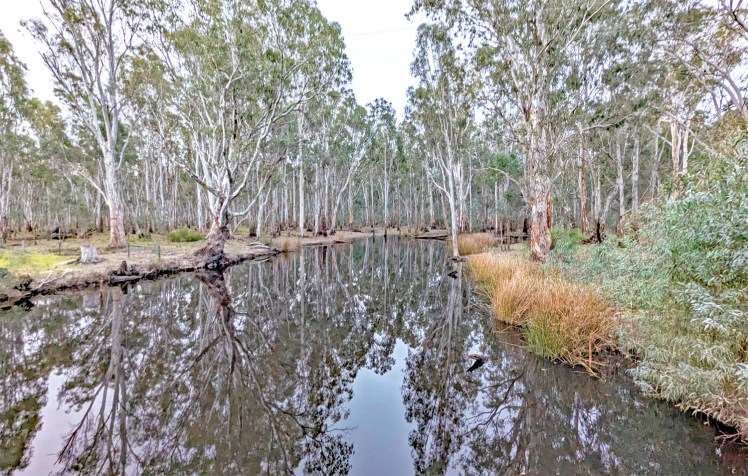
Deadman’s Creek in Murray Valley NP
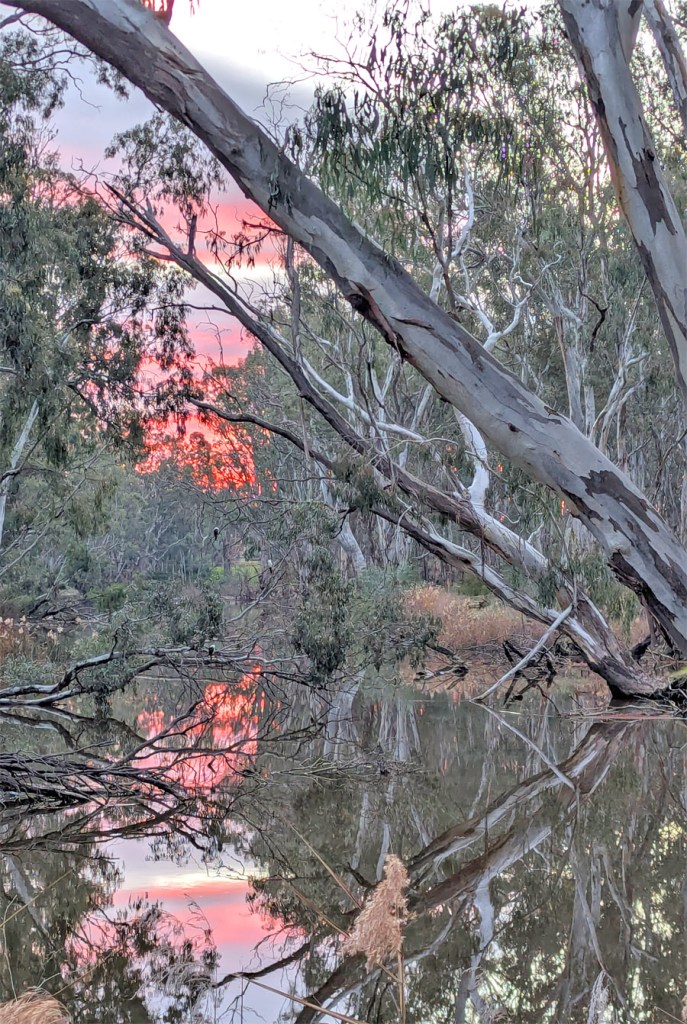
Sunset through the River red gums
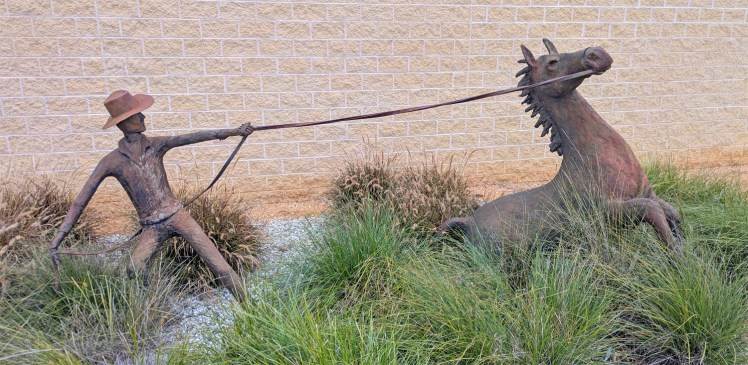
This Long Paddock sculpture – The Drover and Horse portrays a stockman grappling with the challenge of extracting his horse from a swamp highlighting the hardships faced by overlanders (drovers) as they herded large flocks of sheep and cattle through the region. The wetlands in the forest east of Mathoura were notorious obstacles, especially during Murray River floods.
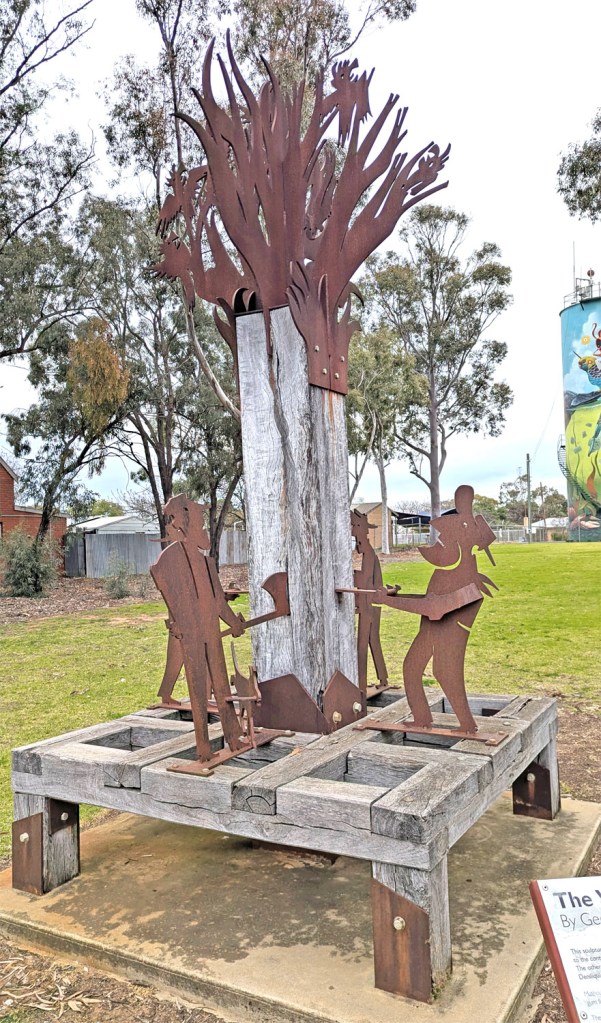
Also at Mathoura is The Woodcutters
We cross the Murray River into Echuca, Victoria – the latest State We’re In.
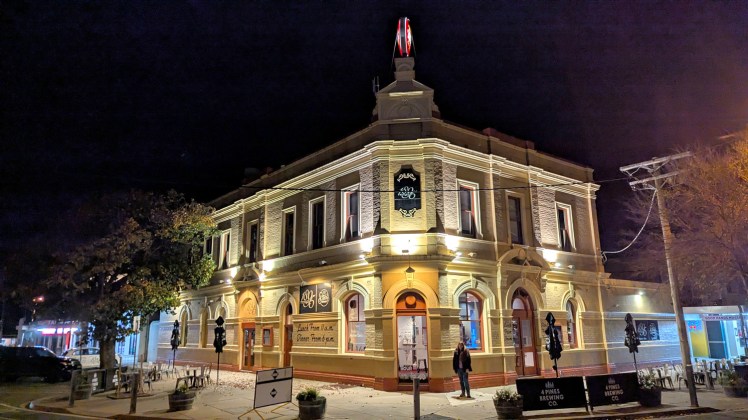
The Royal 1895 Hotel – our dinner venue

