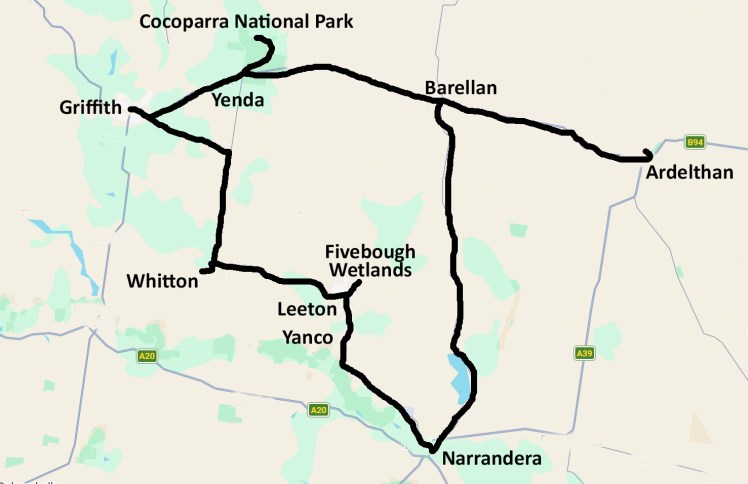
Today we explore the Riverina area with Griffith as our base.
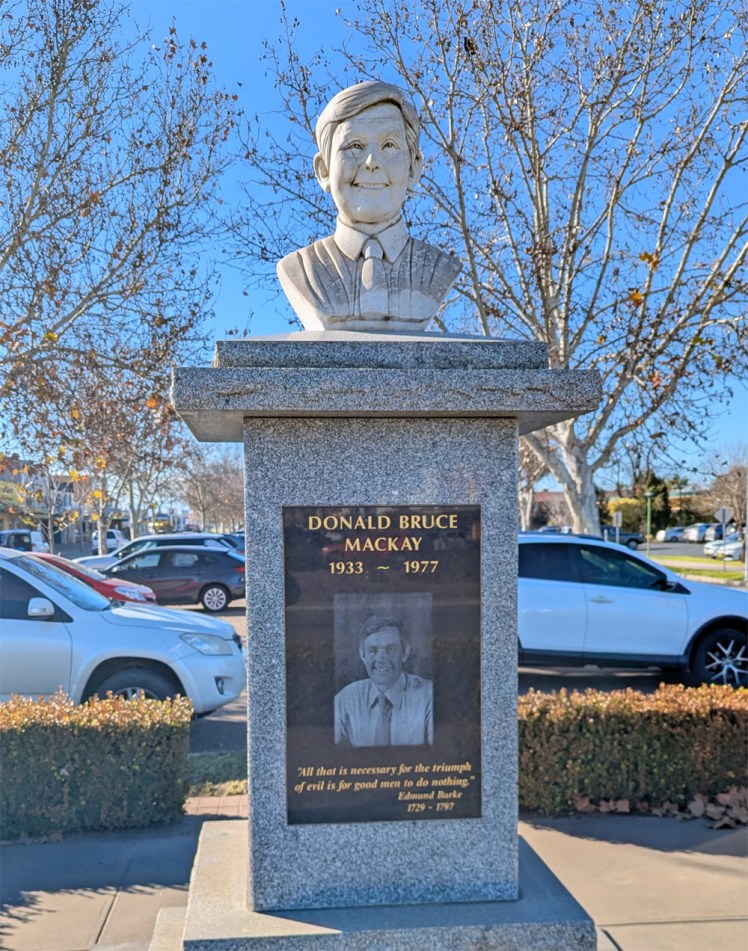
Donald Mackay was an Australian businessman and anti-drug campaigner from Griffith. Concerned about the growing illegal drug trade in his local area, and learning of a large crop of marijuana in nearby Coleambally, Mackay informed Sydney drug squad detectives, resulting in several arrests and the conviction of four men. At the trial of the arrested men, Mackay was identified as the whistleblower. He disappeared in 1977, but his body has never been found. (source: Wikipedia)
The memorial has the quote, ” All that is necessary for the triumph of evil is for good men to do nothing.”
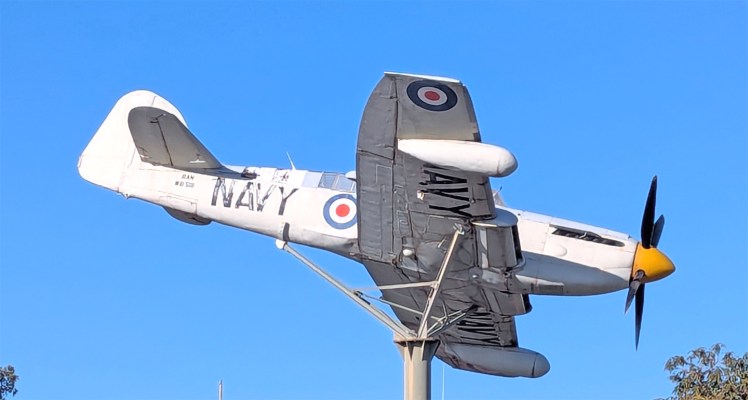
This Fairey Firefly aircraft was in action in the Korean War. It was donated by the citizens of Griffith as a memorial to our Airmen.
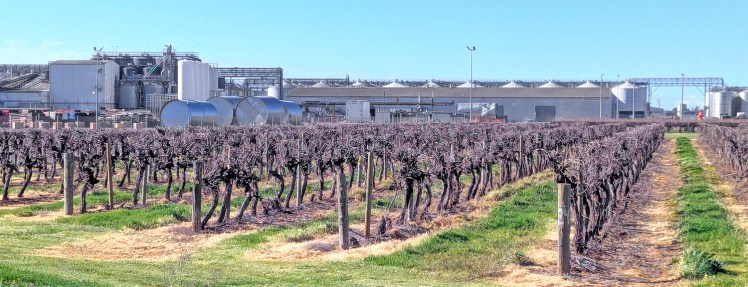
Grape vines and Casellas Winery, home of Yellow Tail wines.
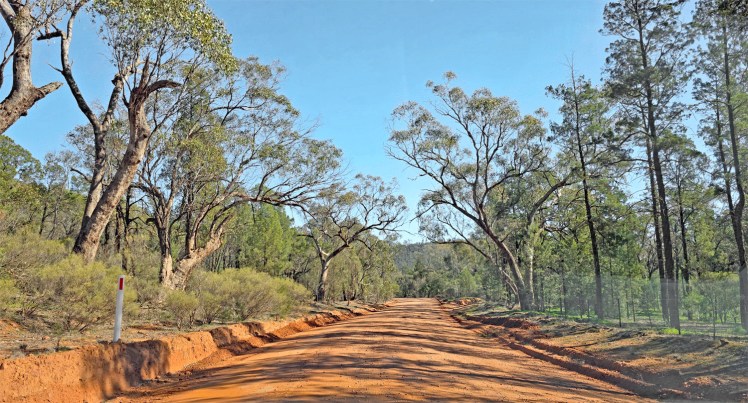
Cocoparra National Park is just east of Griffith. The name of the park comes from the Wiradjuri word cocupara, or kookaburra. The Binya-Cocoparra area is classified by BirdLife International as an Important Bird Area because of its relatively large population (of up to 50 individuals) of the near threatened Painted honeyeater, as well as the Diamond firetail.
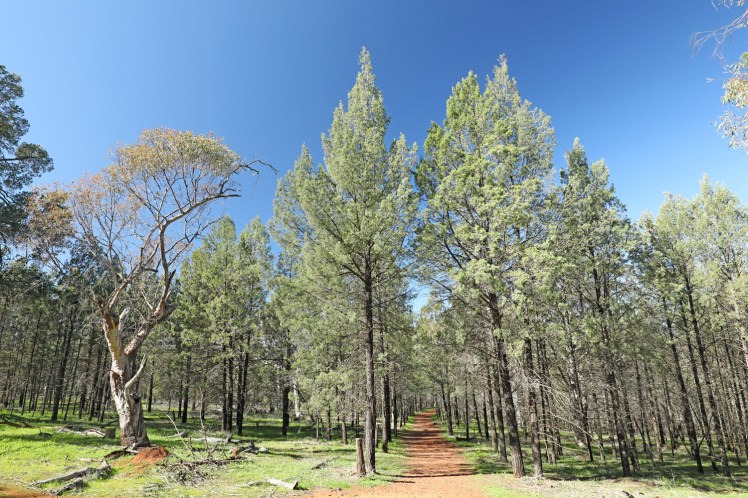
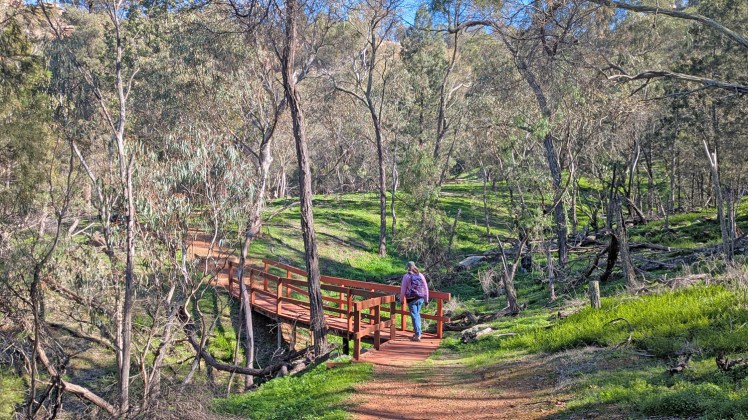
There are only two marked trails in the park, one was closed. So we set out on the Falcon Falls track.
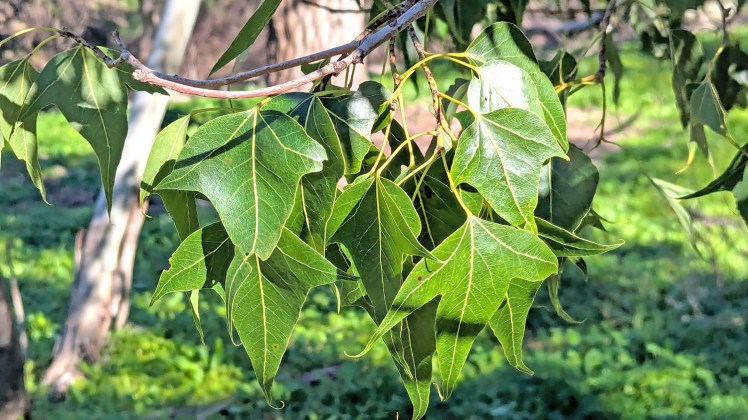
A variety of Kurrajong, Brachychiton populneus var. trilobus
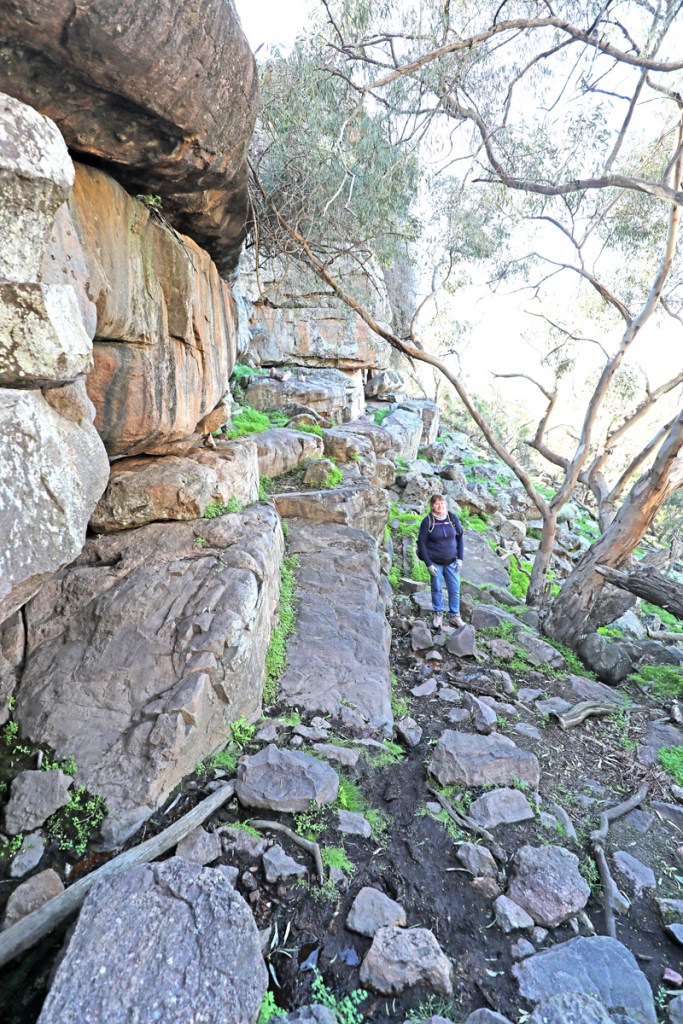
I leave my travelling companion at the end of the well-graded track and scramble to the top of the escarpment.
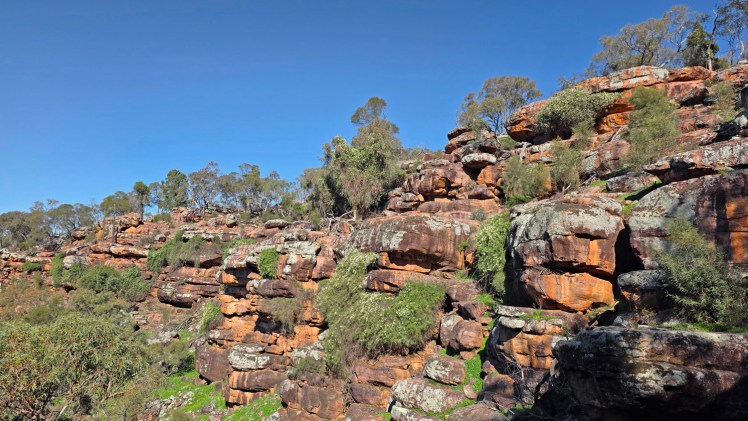
Escarpment near Falcon Falls – Peregrine falcon habitat
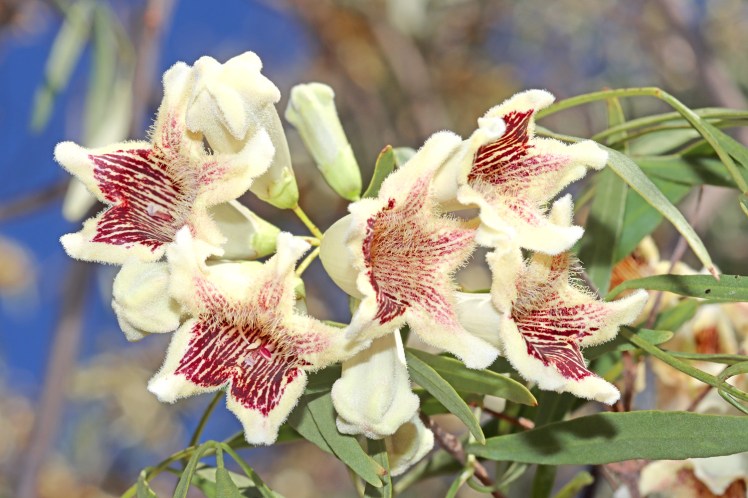
Pandorea pandorana flowers – a common scrambling vine in the park.
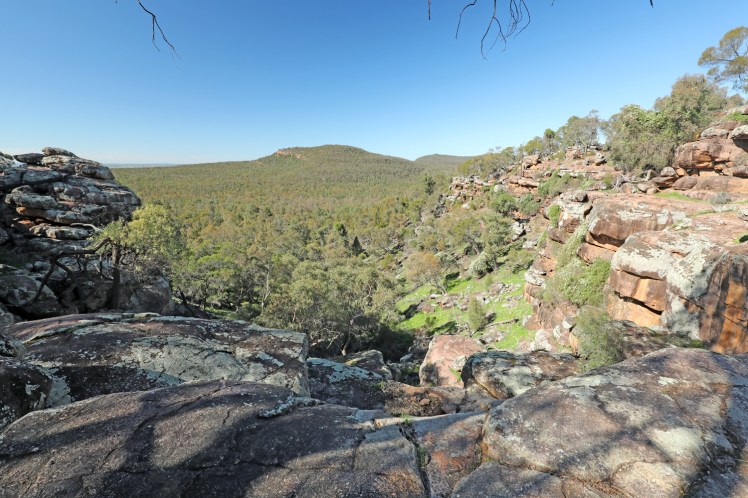
The view from the top of the escarpment
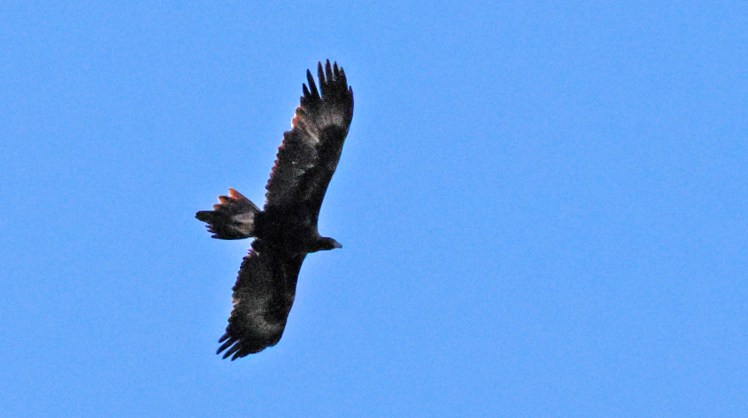
Wedge-tailed eagle soaring high in the sky above Cocoparra.
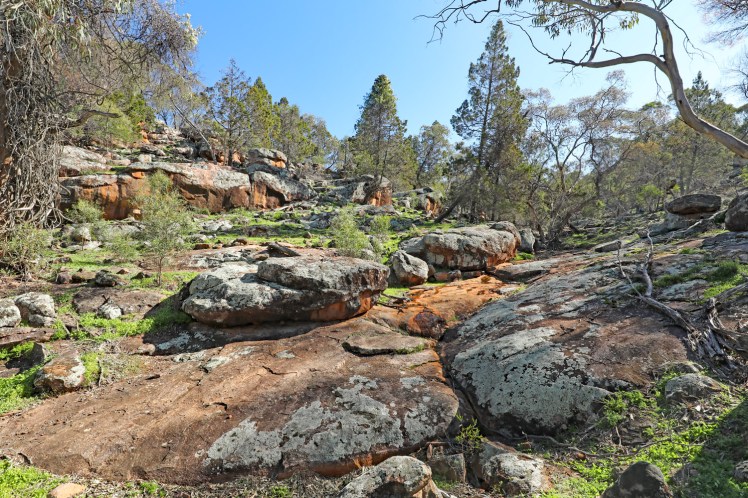
Gully on the escarpment
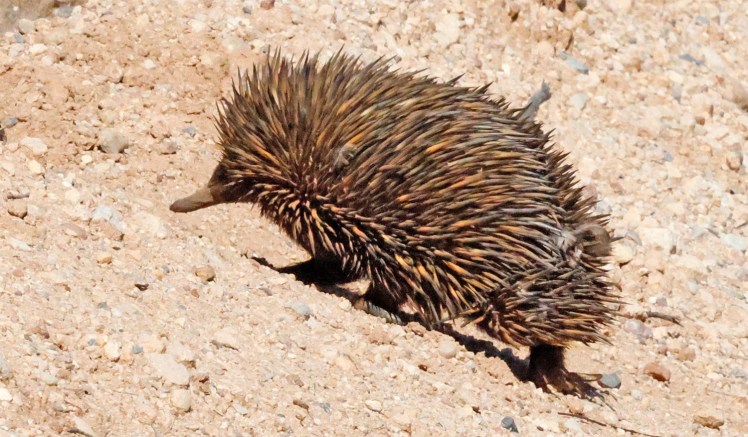
On the way back out of the park, I stopped for an echidna crossing the road.
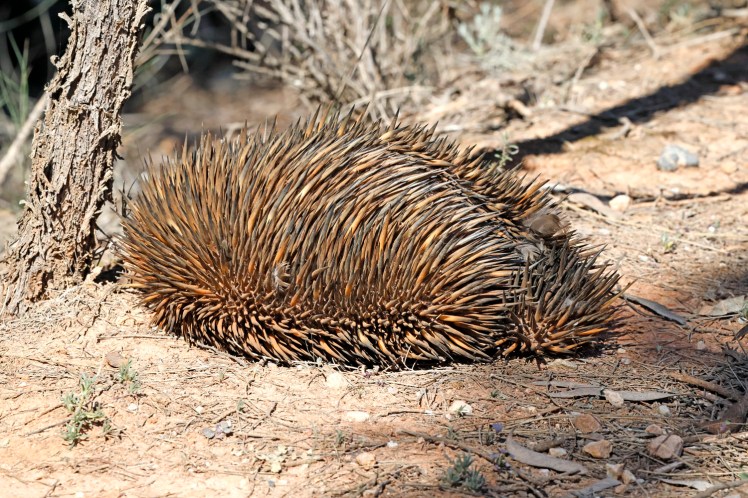
Safely off the road in defensive position – spiketacular!
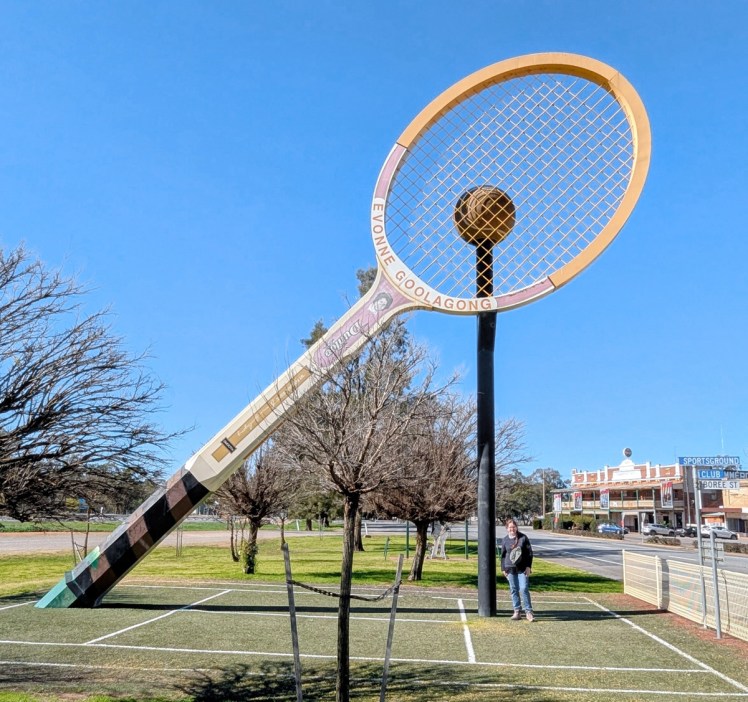
The Big Tennis Racquet at Barellan (Evonne Goolagong Cawley’s home town) – honouring her remarkable achievements (including winning Wimbledon in 1971 and 1980). It is an exact 20:1 scale replica of her famous Dunlop wooden racquet. Despite the widespread disadvantage and prejudice Aboriginal people experienced in Australia, Evonne Goolagong was able to play tennis in Barellan from childhood, thanks to an area resident, Bill Kurtzman, who saw her peering through the fence at the local courts and encouraged her to come in and play.
Evonne Goolagong grew up during the time of the stolen generations in Australia and was directly impacted by it. In an SBS interview in 2021, she said, “Lucky not to be taken away by the stolen generation because I’ve had to hide a few times under the bed. We visited my cousin in Griffith, which is where I was born, in the mission there. Every time a shiny car would come down the road, my mum used to say, “You better run and hide, the welfare man’s going to take you away.” So I remember hiding very nervously under the bed, ’cause I didn’t want to get taken away.”
I was a reasonable tennis player once but never liked the backhanded comments about my playing style.
Also did you hear about the orange and apple that signed up for a tennis tournament. No one was surprised to find out they were both seeded.
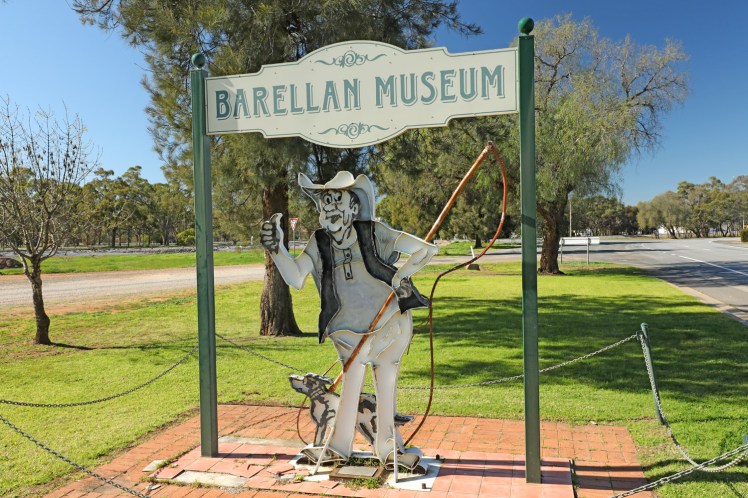
We met a local by the side of the road. Old Mate does a whip around for those in need.
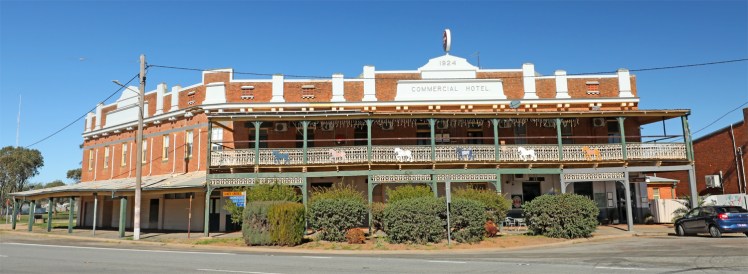
Commercial Hotel at Barellan – 1924 classic Australian rural hotel.
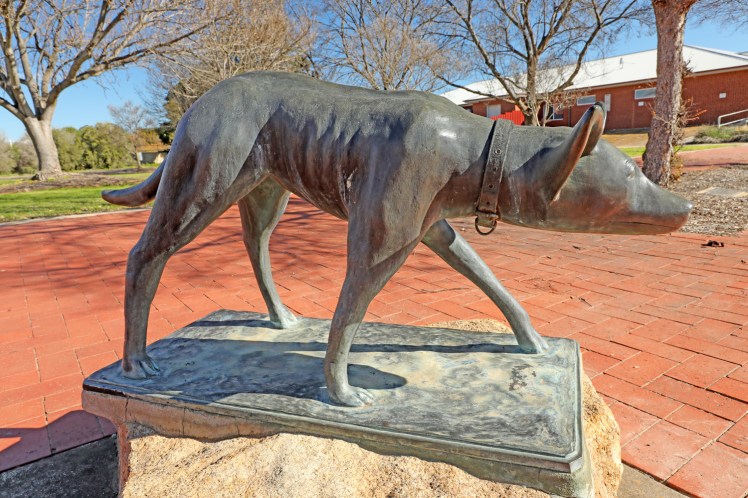
Ardelthan lays claim to be the birthplace of the Australian kelpie. The first Kelpie was born near Casterton in Victoria and the refinement of the breed occurred near Ardlethan.
The Robertsons in Casterton had highly regarded Collie dogs working on their property. Jack Gleeson, a drover, obtained a pup called “Kelpie” by swapping his horse for it. This unremarkable little dog would one day make Australian history as the founding member of a great breed. Gleeson left Victoria in 1870 and moved to a property 20km from Ardlethan. Along the way, he called in to see a friend, who gave Gleeson a young dog named ‘Moss’, who was imported from Scotland. ‘Moss’ mated with Kelpie, who whelped the nation’s first kelpie pups shortly after.
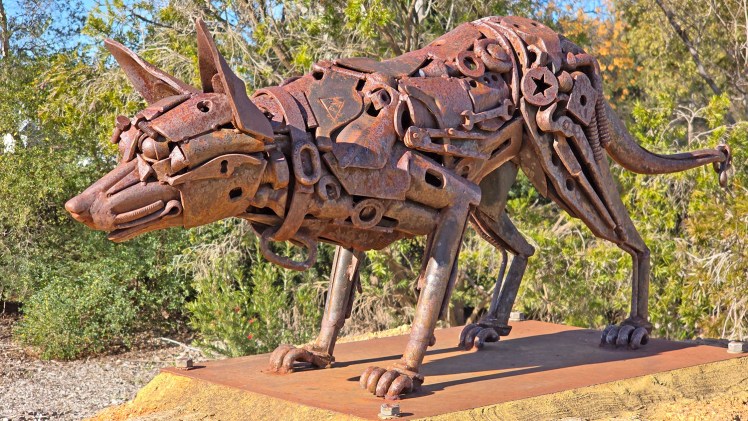
Another Kelpie tooled up for the job.
Did you hear about the dog that gave birth to puppies in the park and was fined for littering?
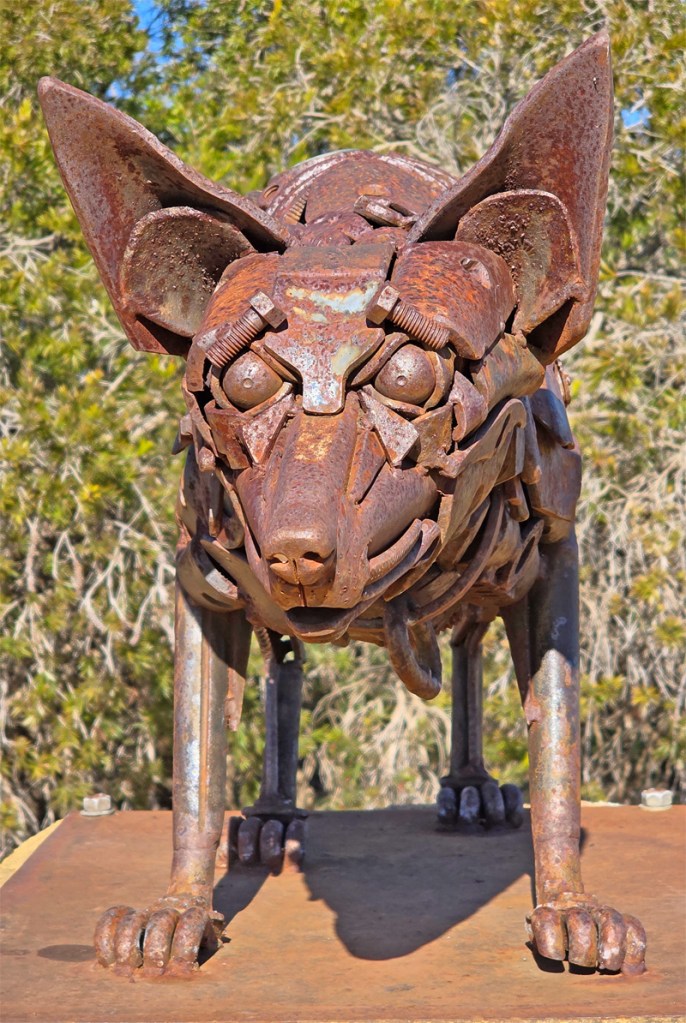
Lucky I got this image, it could bolt any minute.
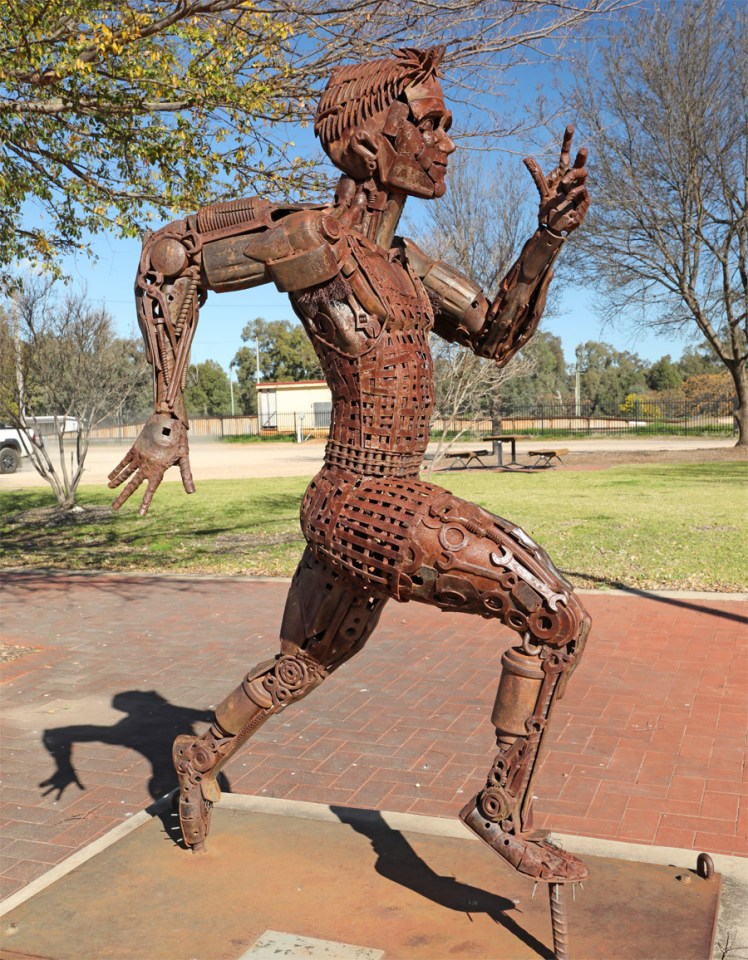
Frank Bradley Statue – Frank was a Stawell Gift Winner in 1937. He was Frank and fast.
(Since 1878, the Stawell Gift is Australia’s oldest and richest short-distance running race held annually in Stawell, Victoria.)
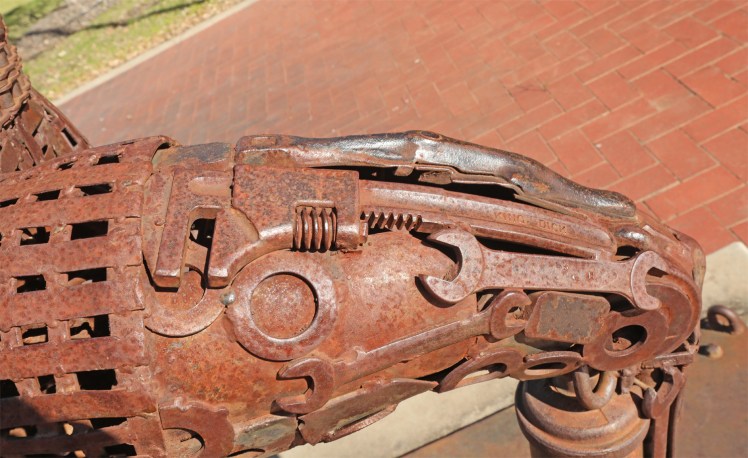
Frank knew how to shift a gear when running.
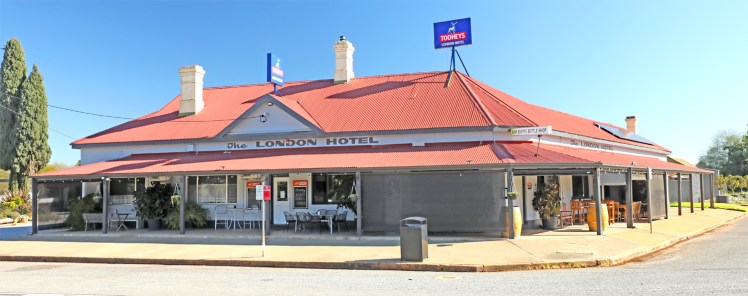
The historic London Hotel at Ardlethan was built in the 1860s.
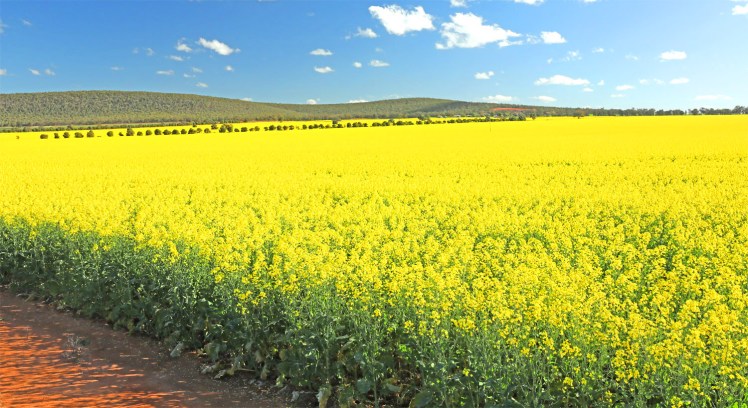
Canola crop between Barellan and Narrandera
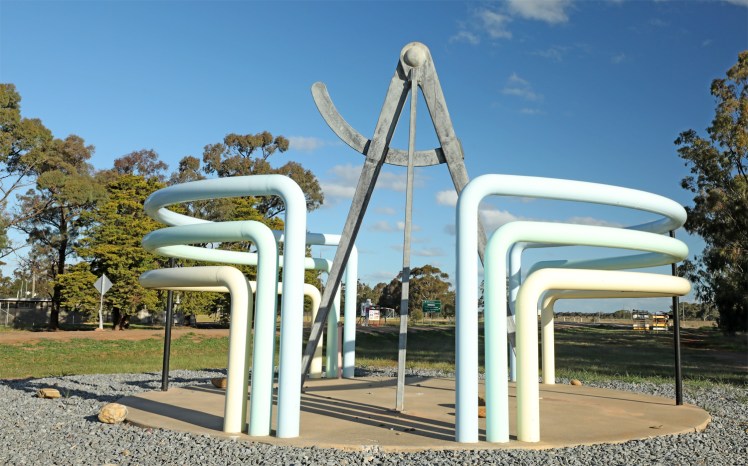
The Big Pair of Compasses at Yanco – Weapons of Maths Instruction. Actually it was built to honour the engineers of the Murrumbidgee Irrigation Area.
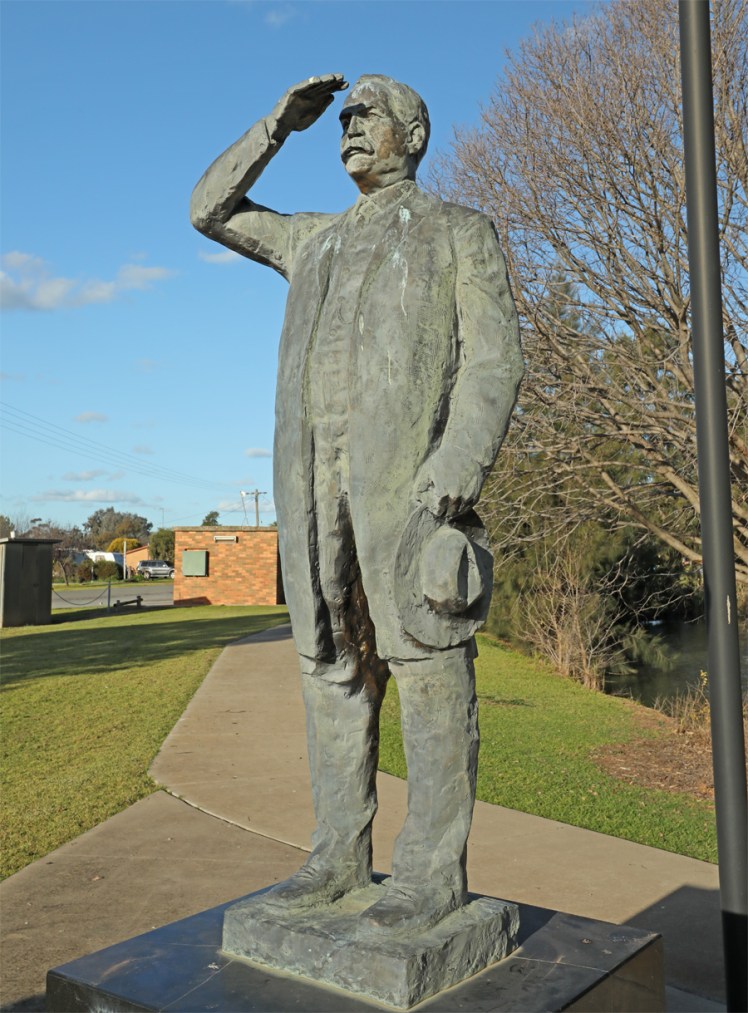
Samuel McCaughey statue. McCaughey was the Father of Irrigation in the Riverina. In the 1860s, he sunk bores for artesian water and constructed large tanks on his Coonong Station which suffered greatly from drought conditions. In 1900, McCaughey bought North Yanco Station and at great cost constructed about 200 miles of channels and irrigated 40,000 acres (160km²). Put your hat on, Sam.
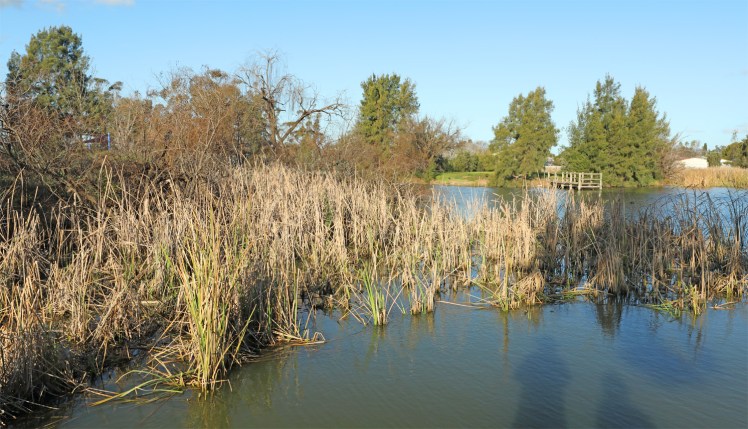
Bicentenniel Park at Yanco – a natural spring fed lake.
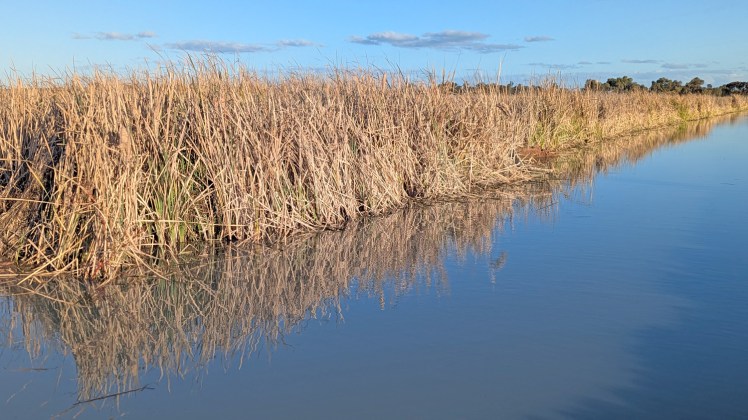
Fivebough Wetlands near Leeton.
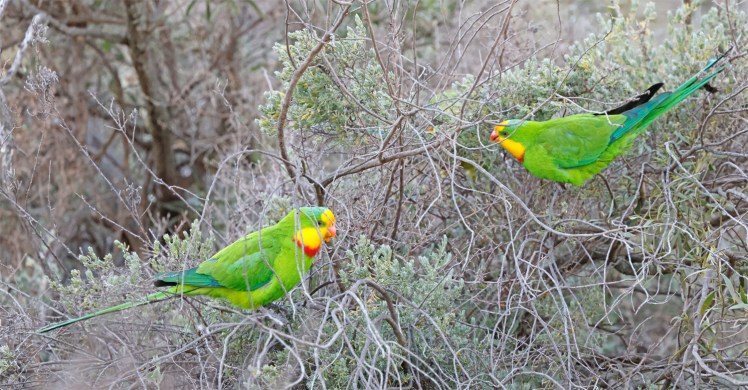
A small group of Superb parrots were feeding close to the track leading to the wetland. They are officially listed as Vulnerable.
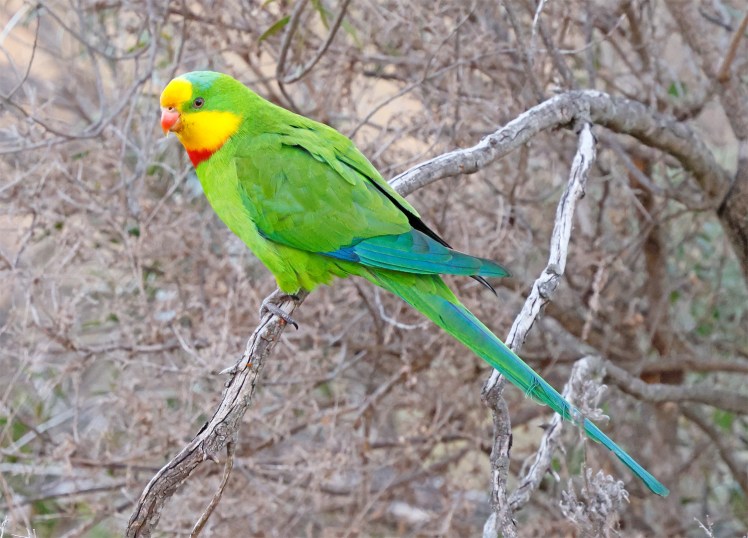
The superb Superb parrot is found along timbered waterways and nearby well-watered woodlands of the Riverina especially in River red gums along the Murray and Murrumbidgee Rivers.
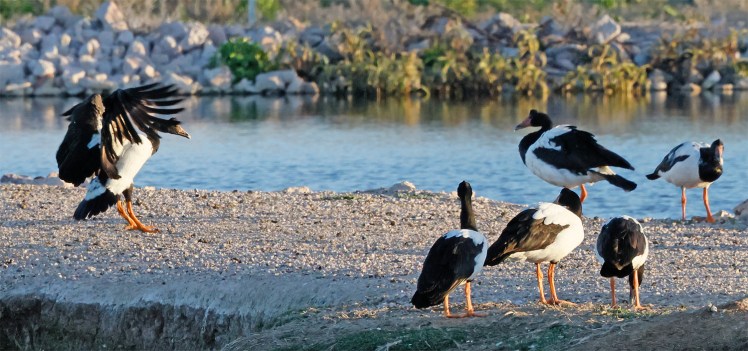
Magpie geese. They are primarily found in northern Australia.
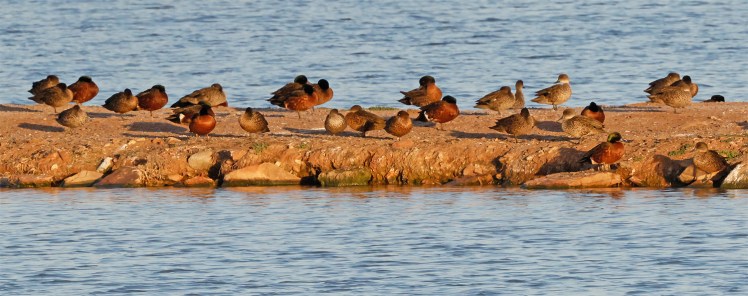
Hardheads and Grey teal
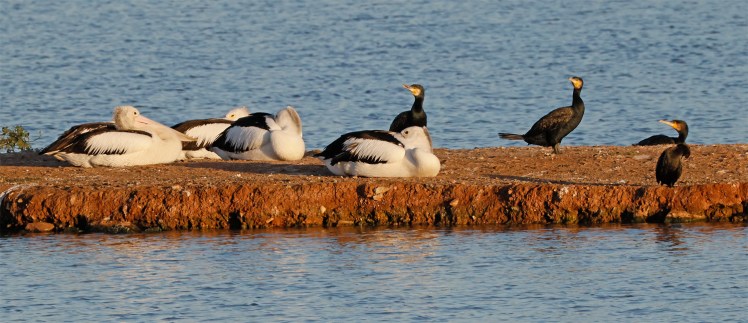
Pelicans and Great cormorants
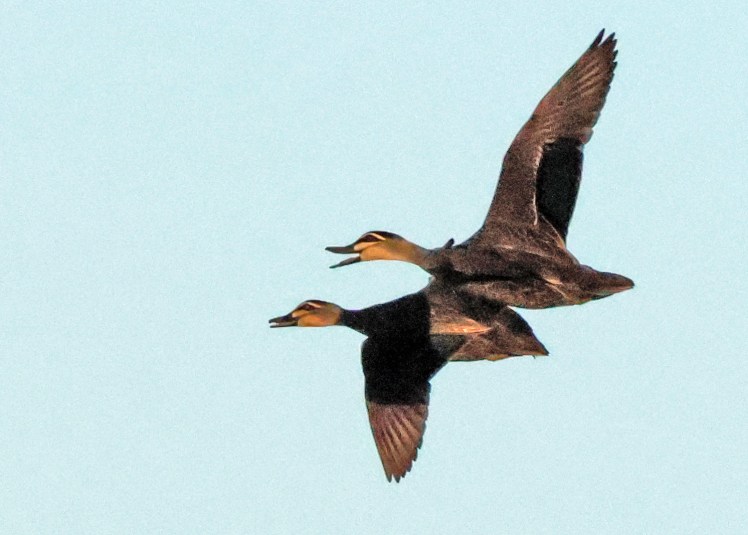
Pacific black ducks
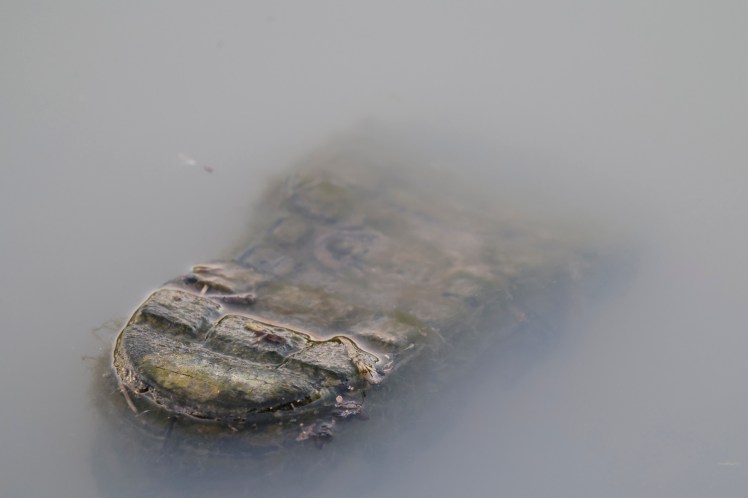
A rare sighting of Crocodylus bootus in the swamp.
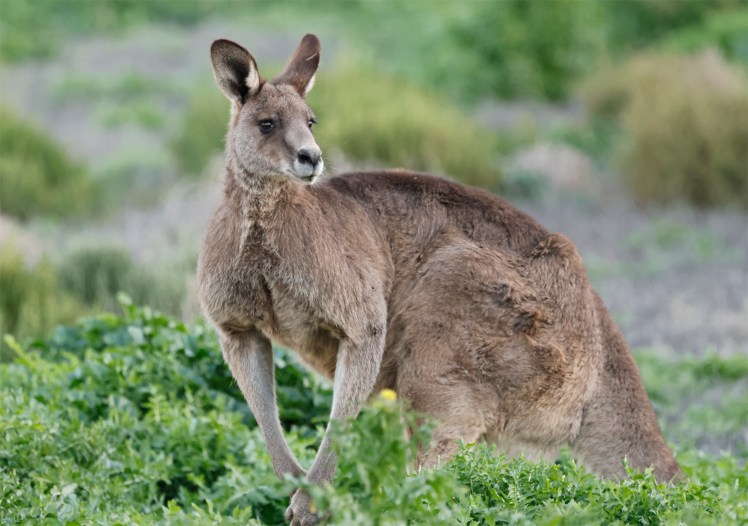
Eastern Grey kangaroo at Fivebough.
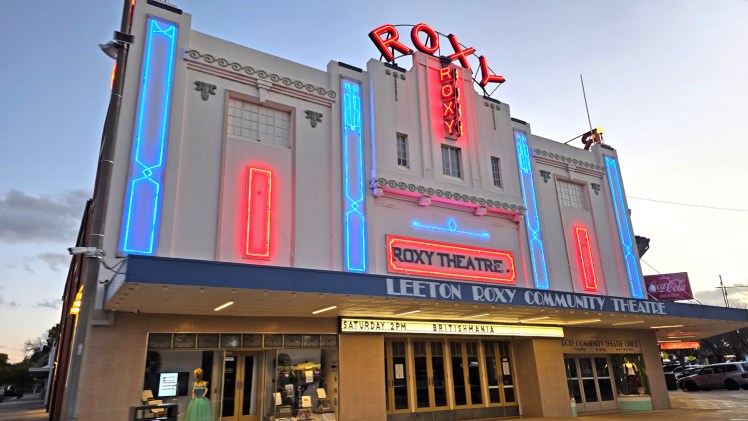
Leeton was the home of the old Letona fruit preserving factory. Letona was a common brand in my younger days and disappeared in the early 1990s. The locally famous Roxy Theatre has been operating continuously in Leeton since 1930.
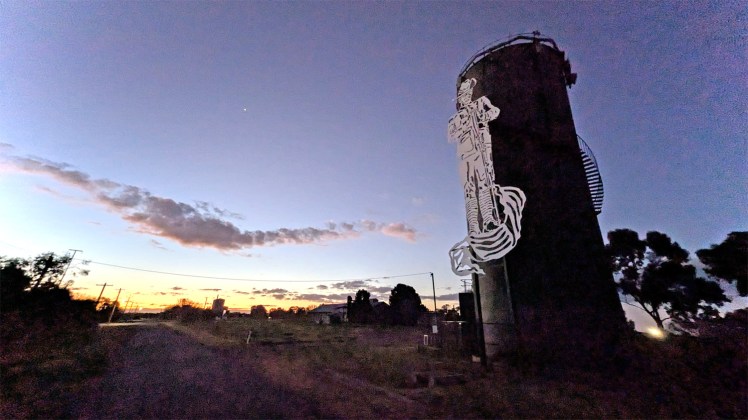
The ANZAC sculpture at the Whitton water tank.
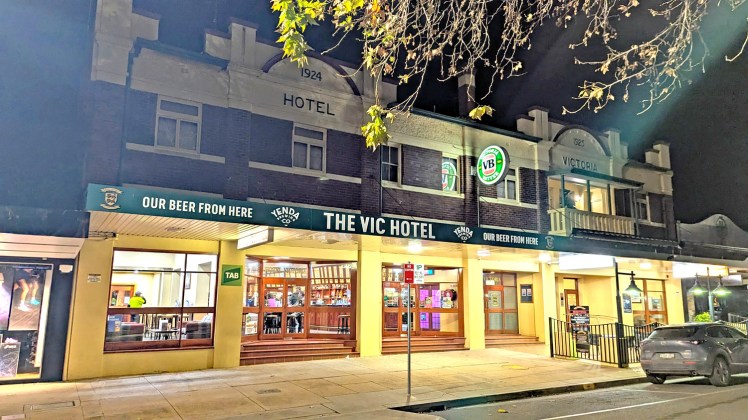
Back to Griffith for another night. Dinner at the Vic Hotel. Highly recommended.

