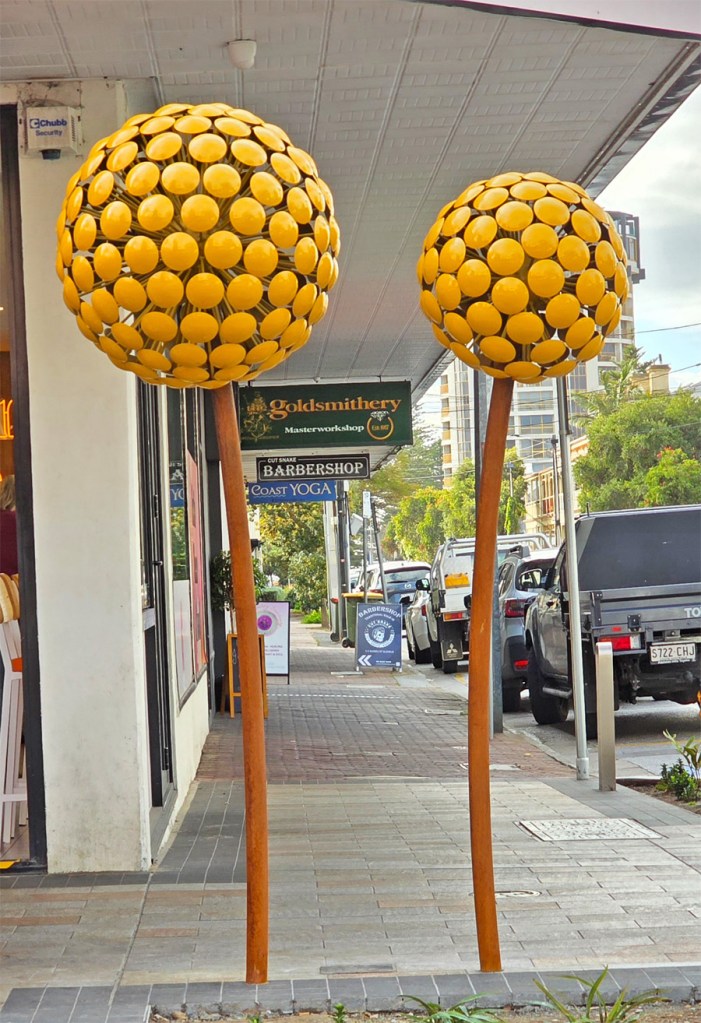
Passing through Glenelg after checking out some accommodation, we saw the Big Billy Buttons.
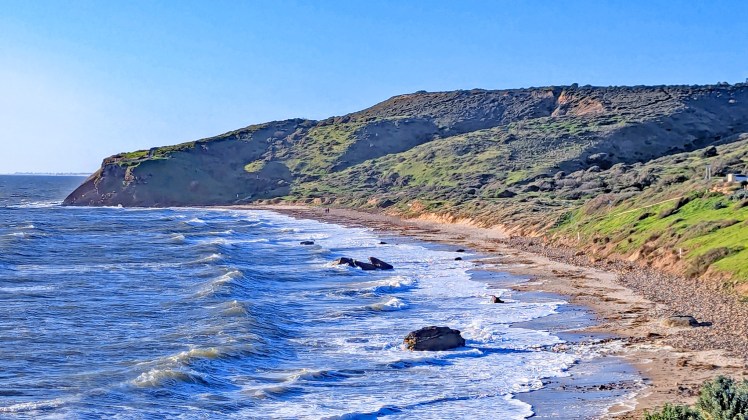
Hallett Cove has evidence of an Australian ice age about 280 million years ago. The rocks in the surf are glacial erratics – huge rocks carried by a glacier from another location.This piece of granite has been transported by glacial activity all the way from Port Elliott (near Victor Harbour) and deposited on Hallett Cove beach.
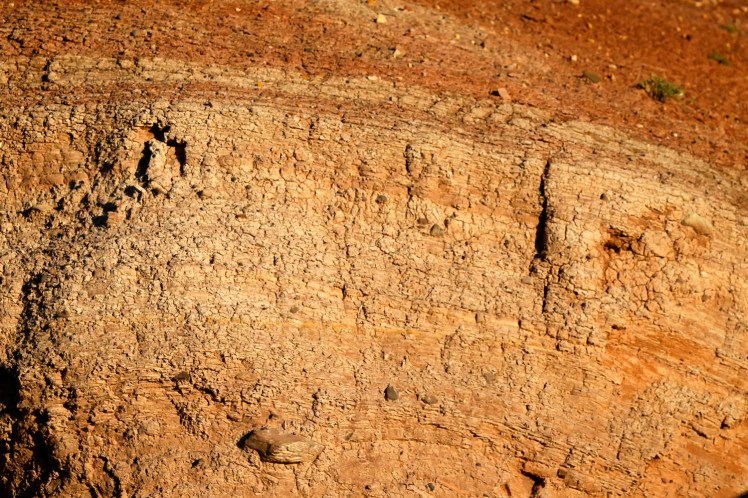
Dropstones in Permian sediment are evidence of a glacial lake where ice melts dropping rocks into the sediment at the bottom of the lake.
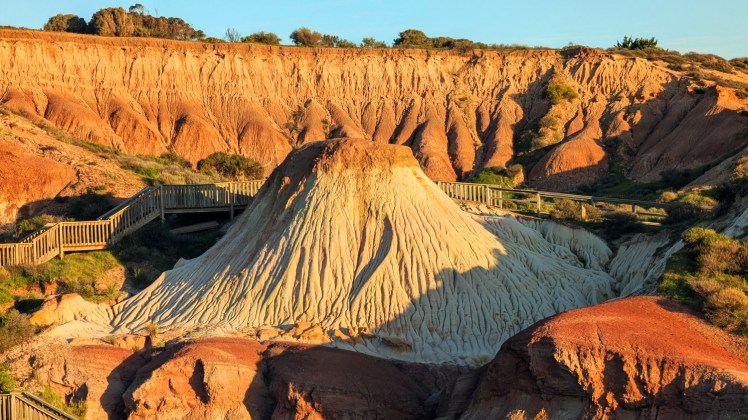
The Sugarloaf at Hallett Cove
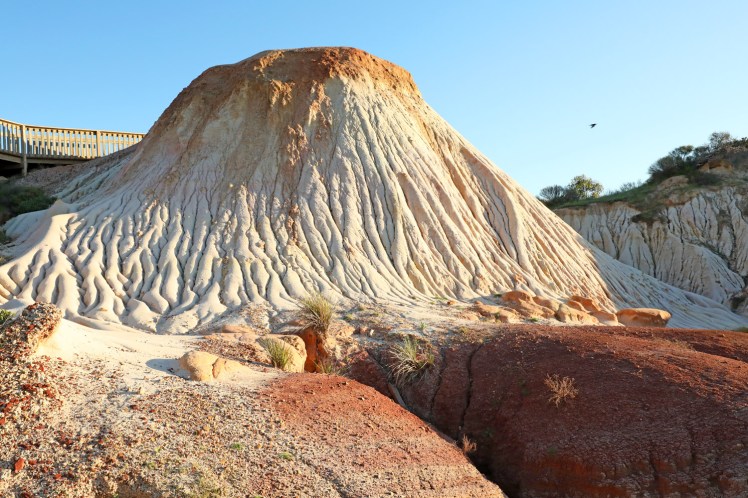
Named for its look of hard refined sugar, it features distinct colored sediment layers from an ancient glacial lake that melted 280 million years ago.
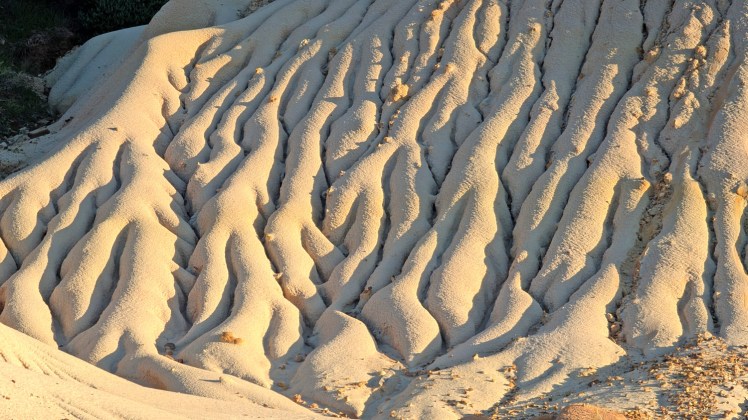
Erosional feature at the base of the Sugarloaf.
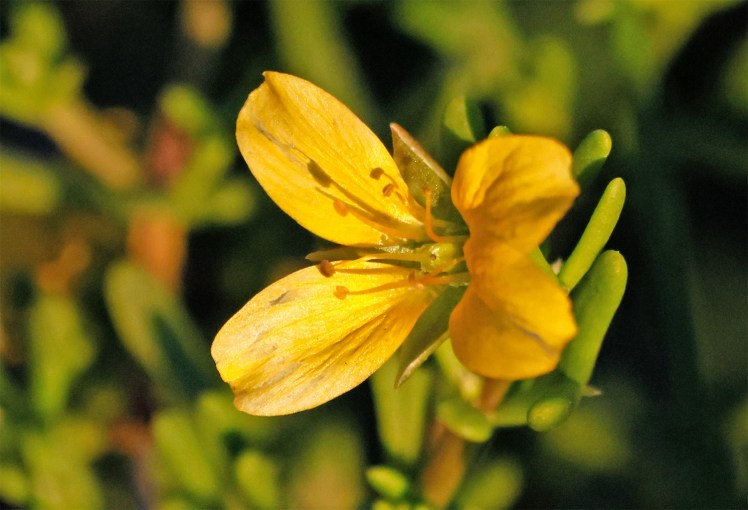
It was a bit early for the wildflowers but a few species were starting their flowering. This is a Coastal twinleaf.
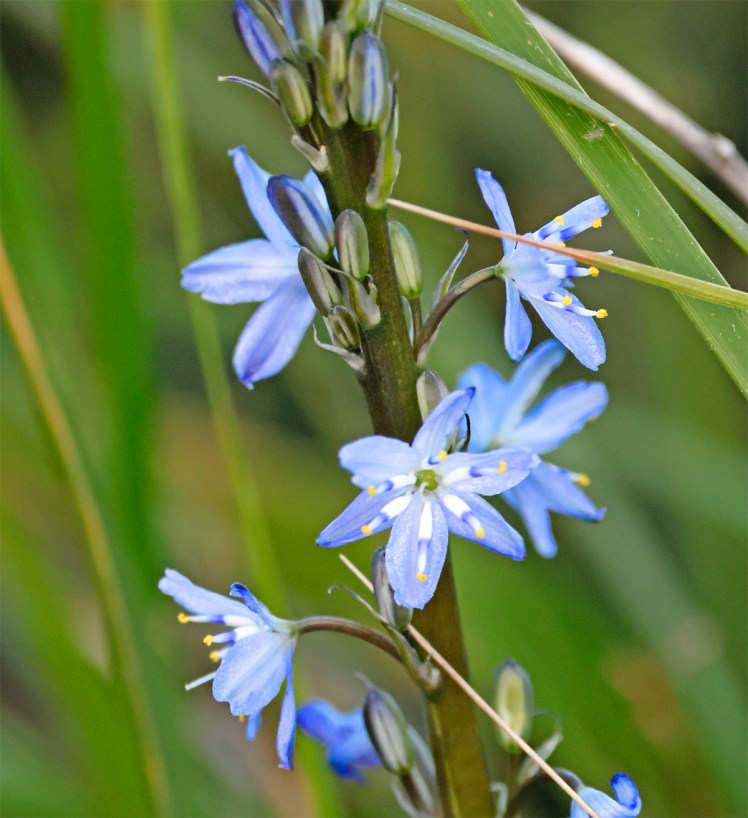
Squill
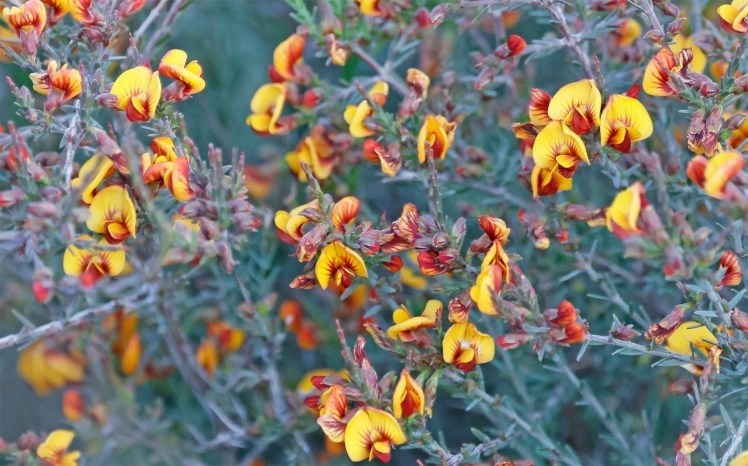
Native pea
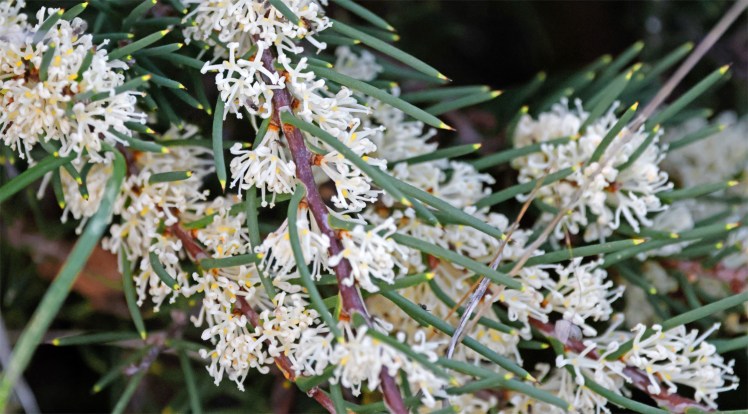
Hakea
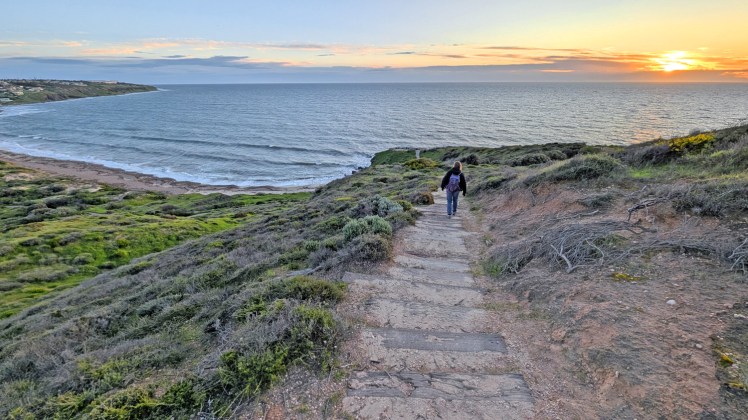
Returning to the coast from the plateau
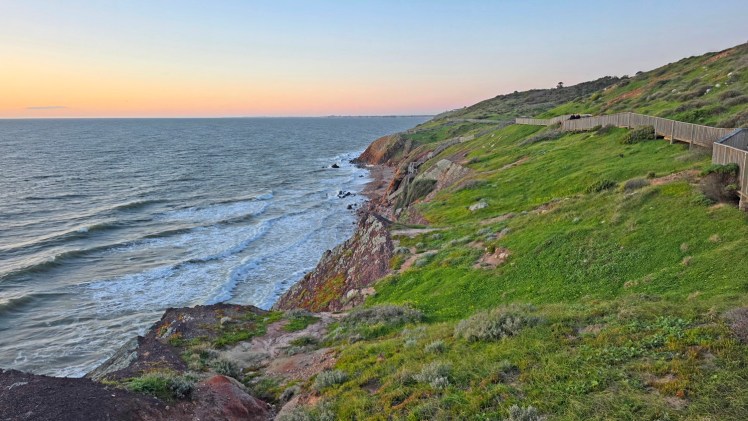
Coastal walk

Australian kestrel on the cliff edge overlooking the ocean.
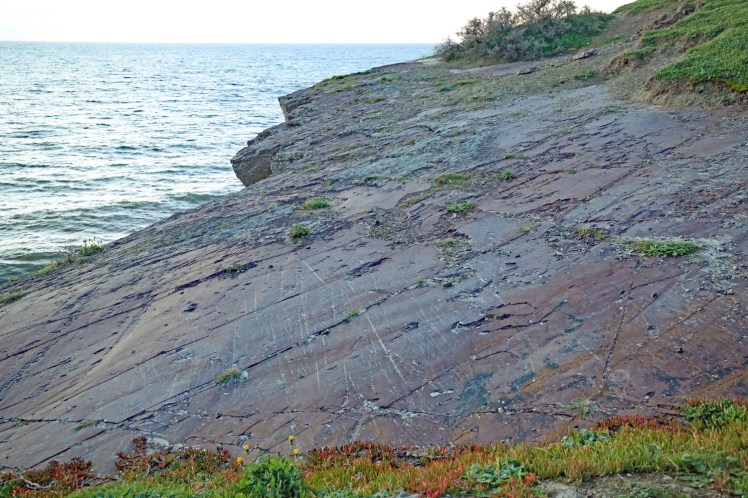
Glacier walk at Hallett Cove. The glacial pavements along the cliff tops are recognised as the best record of Permian glaciation in Australia and have international significance.

Back in Adelaide, the wait staff at our dinner venue – bringing dinner, one byte at a time.

