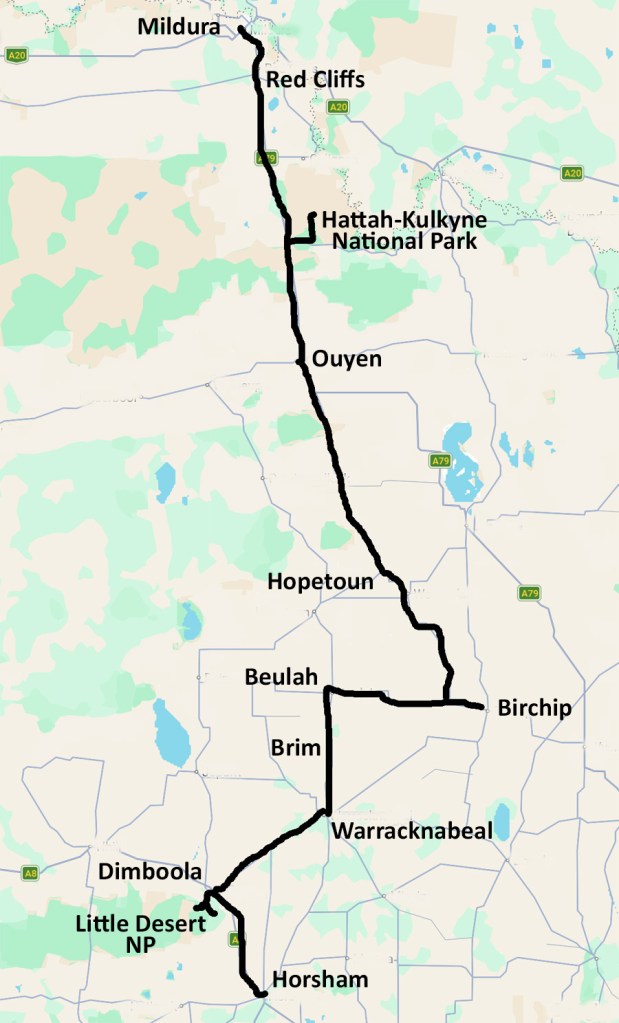
Today we visit two national parks, some small Victorian towns, canola fields, silos and eat Australia’s best Vanilla Slice. This morning we return to the eastern block of Little Desert National Park.
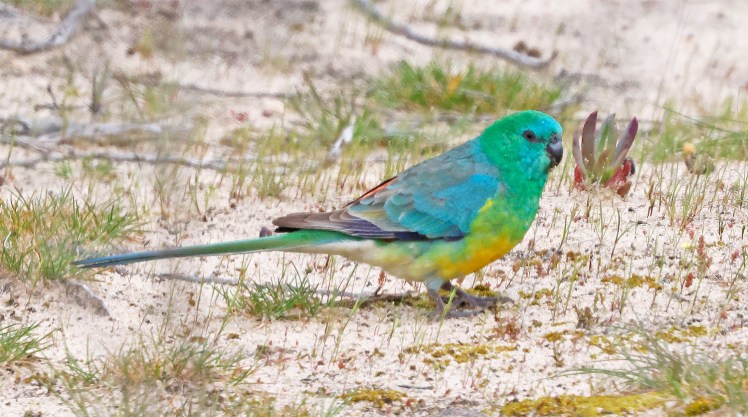
We were greeted by some Red-rumped parrots as we entered the park.
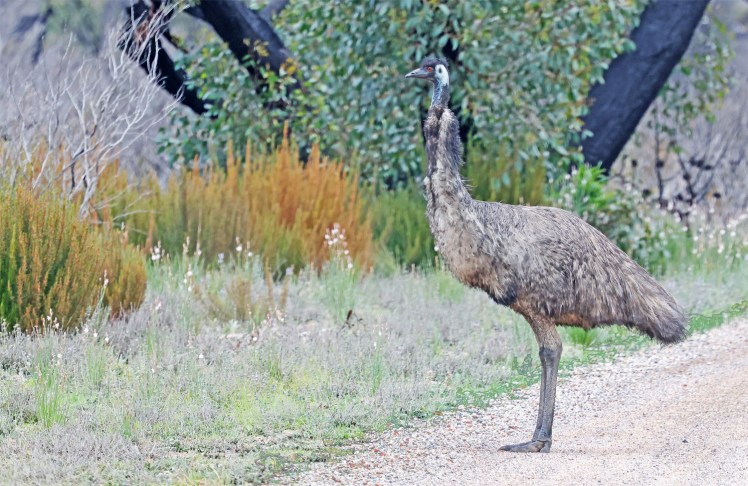
The next section of road had a much bigger bird.
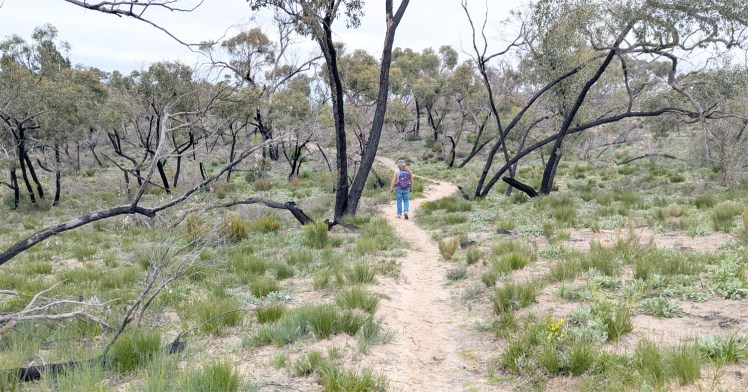
Pomponderoo Hill Nature Walk- loops around typical desert vegetation with lookout.
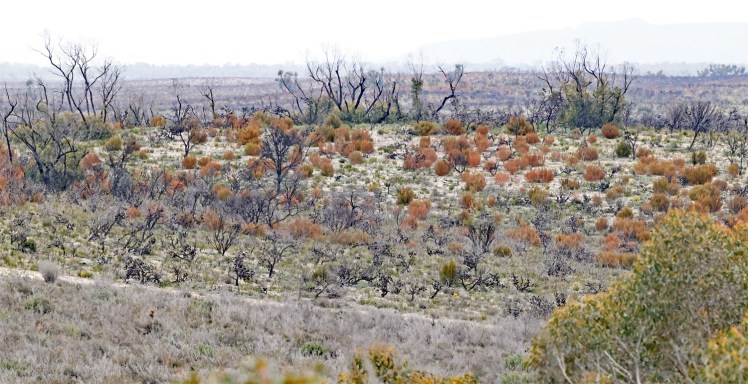
Looking west over areas badly affected by bushfire
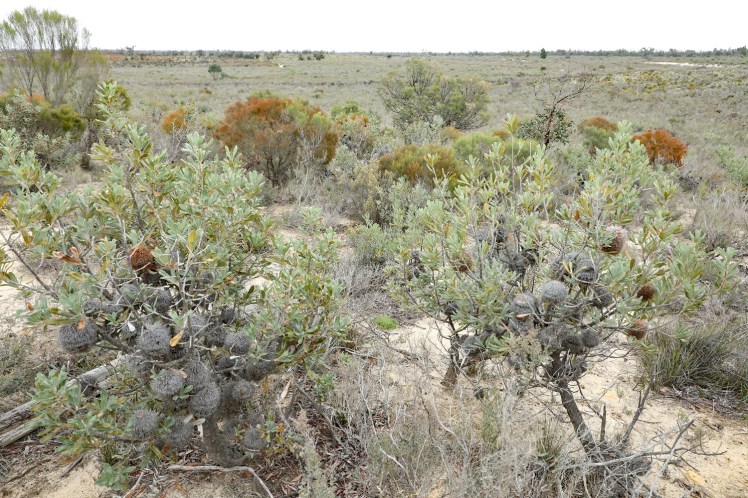
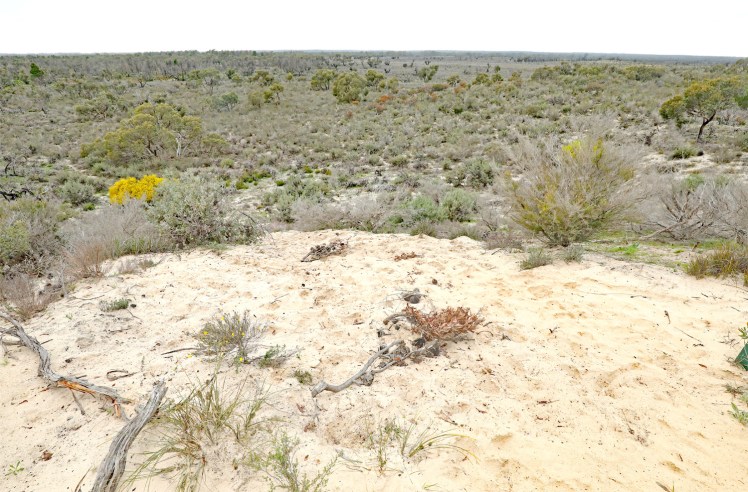
Views over the park from the sandhills.
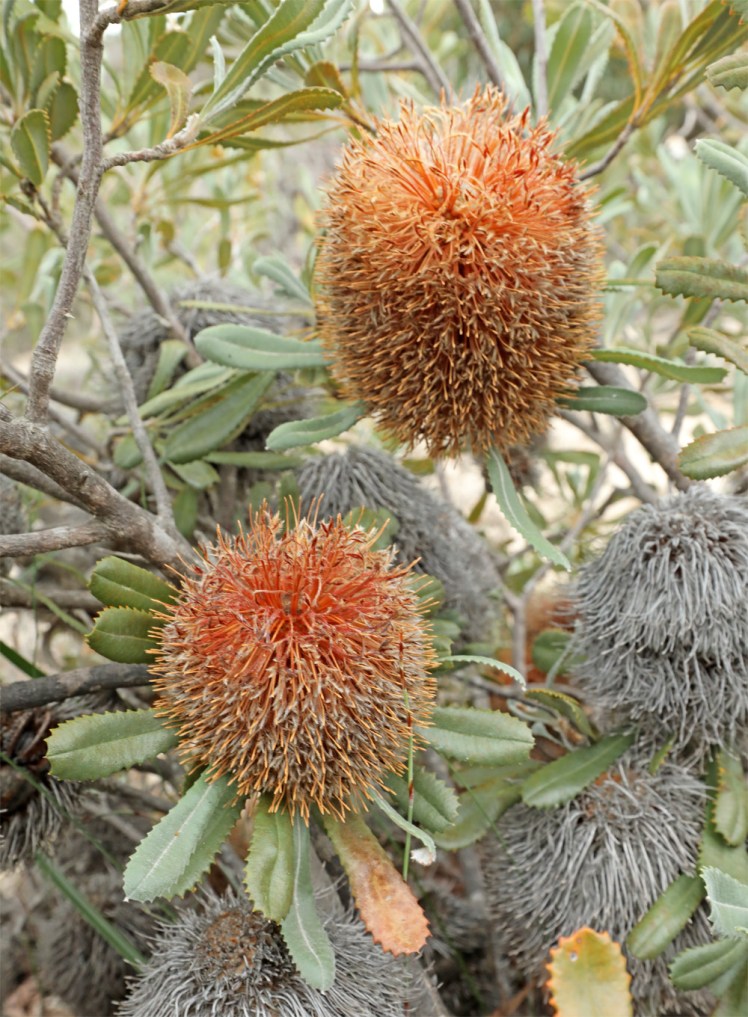
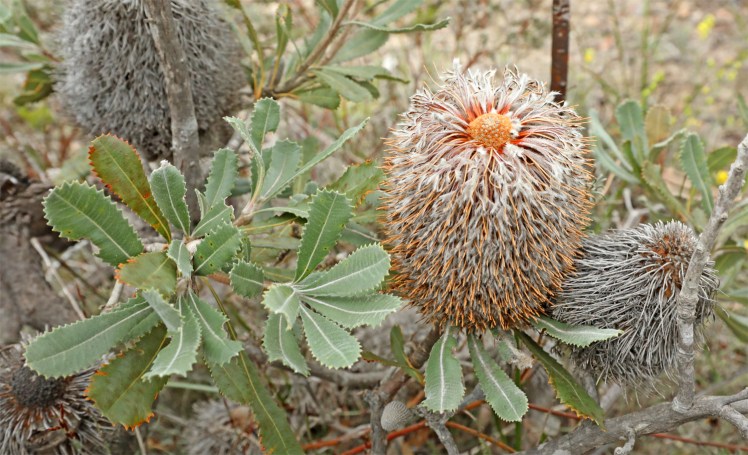
Desert banksias
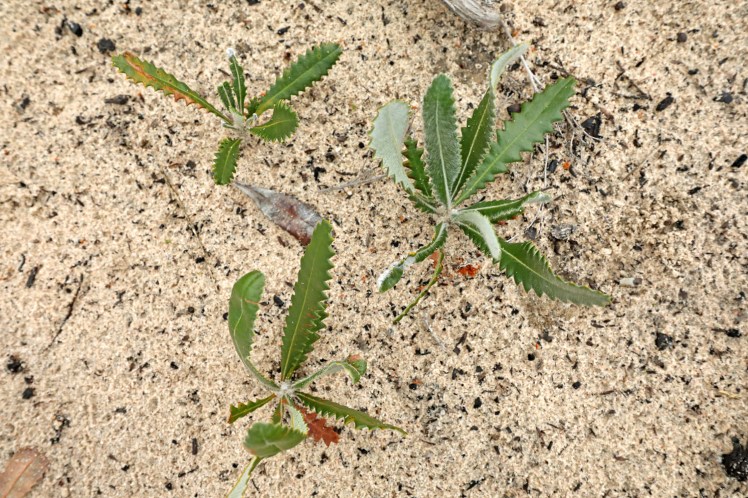
Banksia seedlings in a fire-affected area.
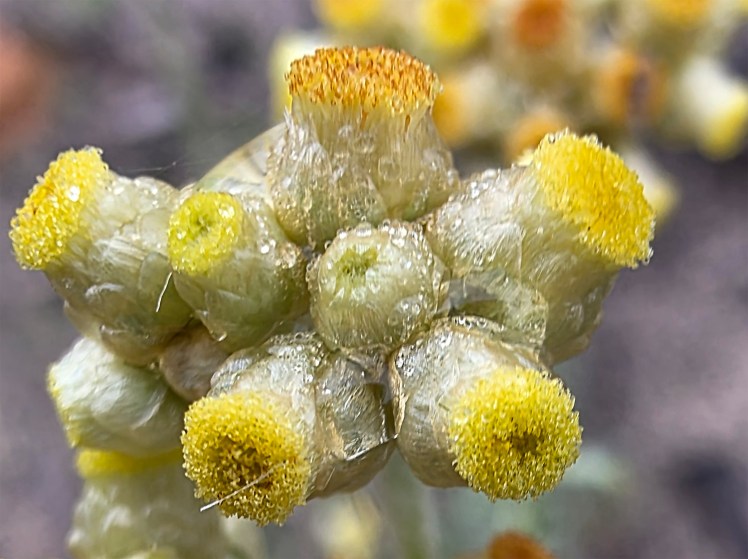
Clustered everlasting (Chrysocephalum semipapposum)
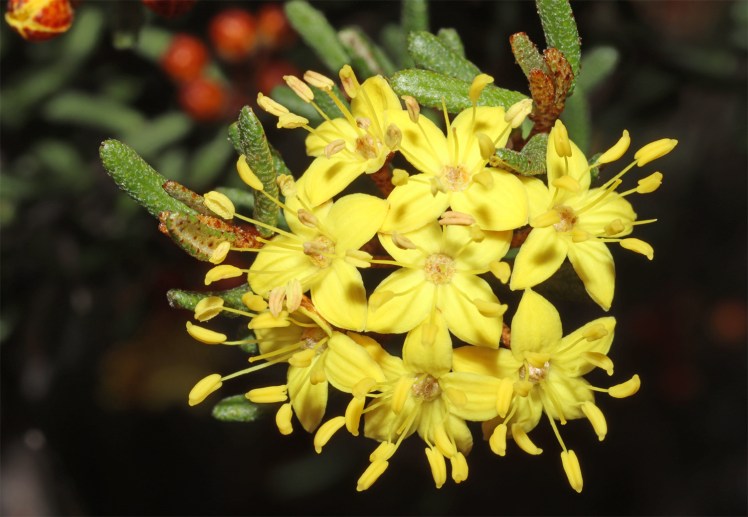
Narrow-leafed phebalium (Phebalium stenophyllum)
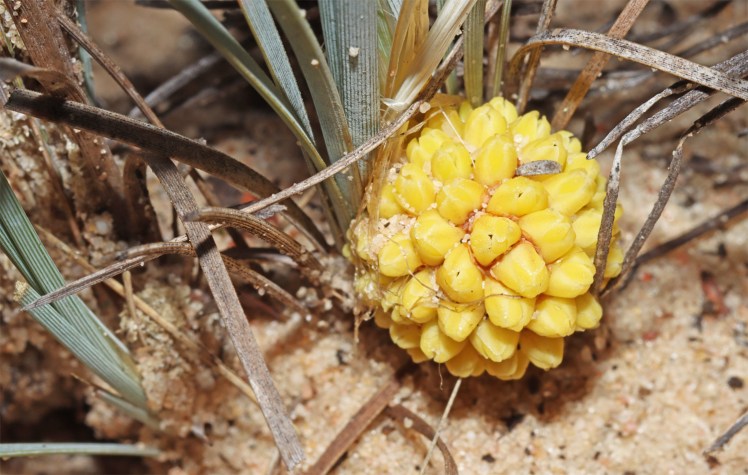
Lomandra collina
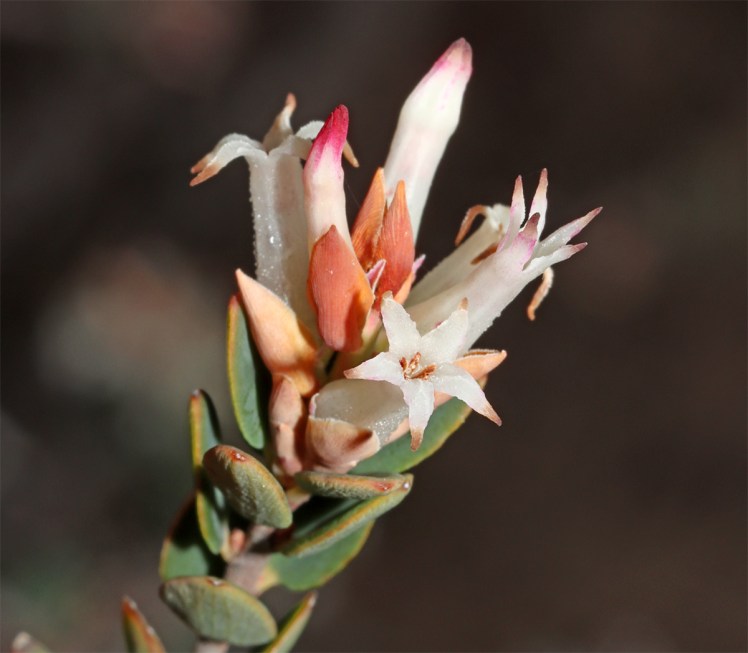
Daphne heath (Brachyloma daphnoides)
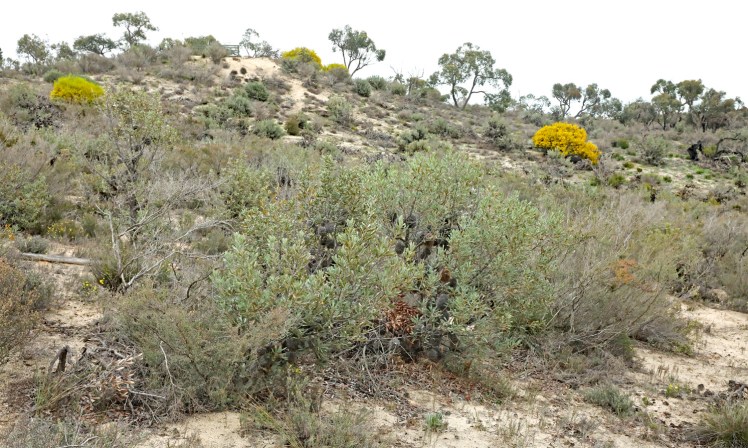
Pomponderoo Hill
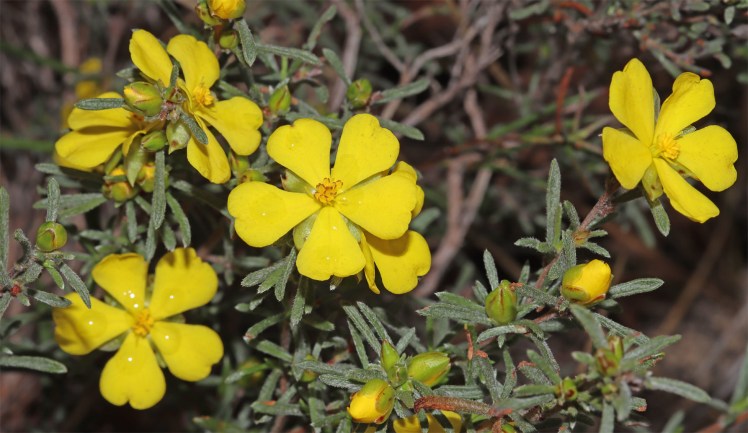
Hibbertia sp.
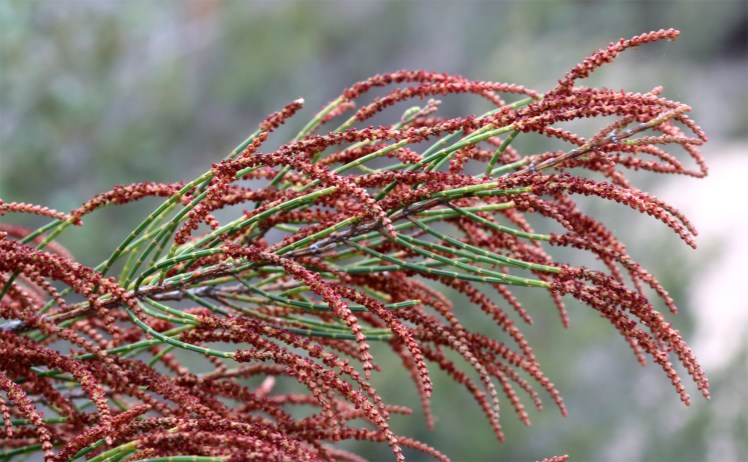
Male Casuarina
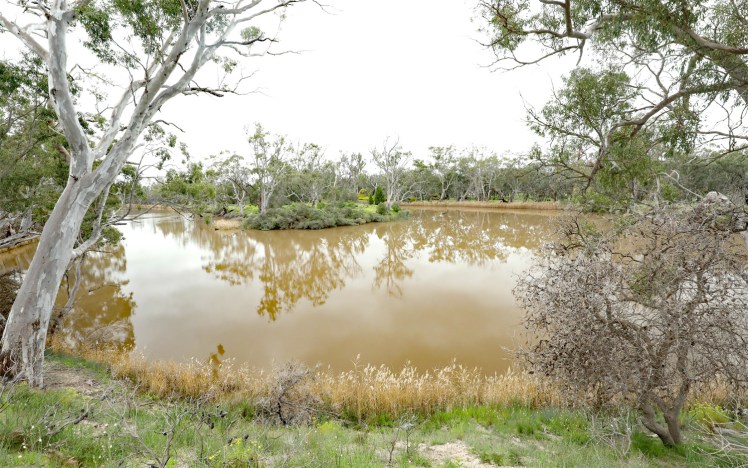
Horseshoe Bend on Wimmera River
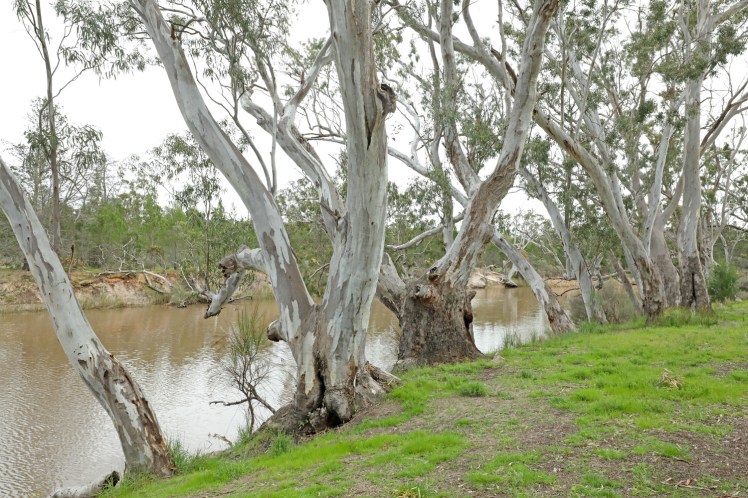
River red gums (Eucalyptus camaldulensis) on the bank of the Wimmera River.
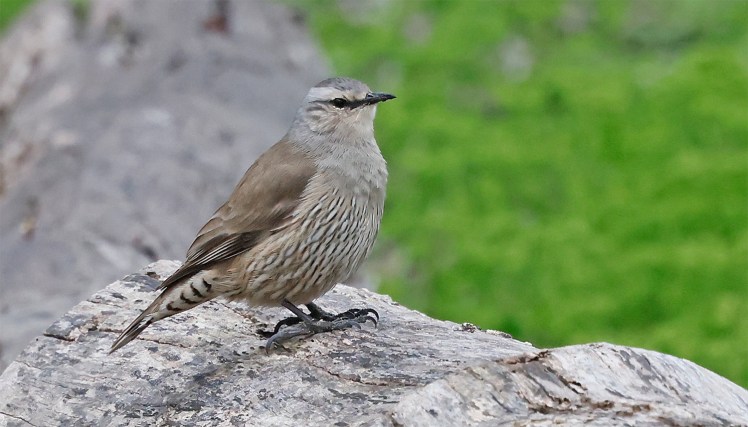
The Brown treecreeper is the largest of Australia’s treecreepers. It spends a lot of time climbing the trunks and limbs of trees searching for a meal but unlike other treecreepers spends almost as much time searching for food on the ground.
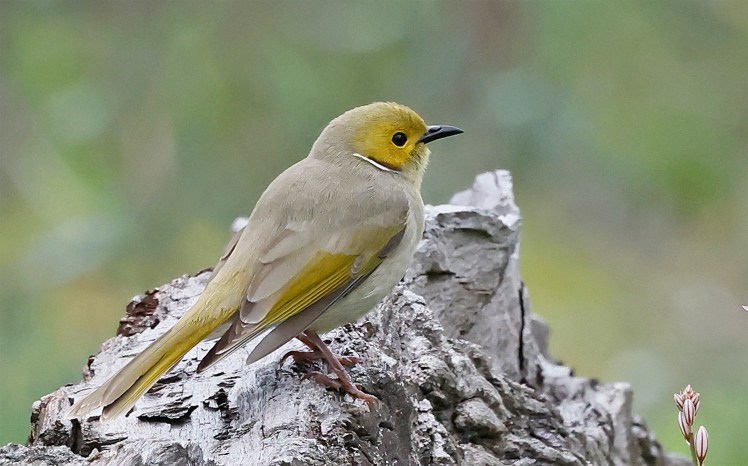
White-plumed honeyeater
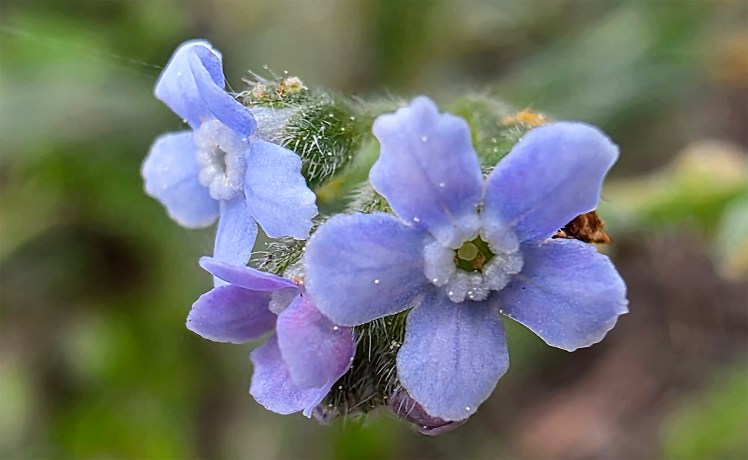
Australian hounds-tongue (Cynoglossum australe)
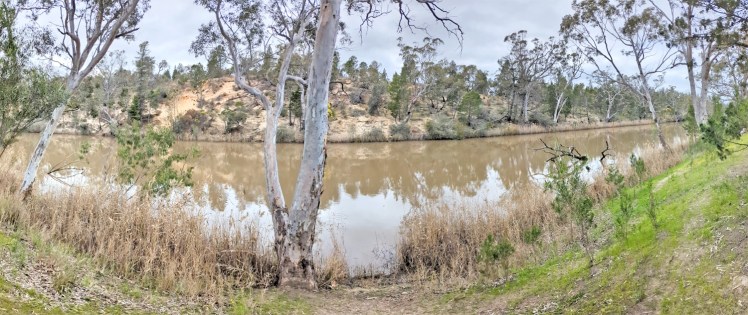
Wimmera River
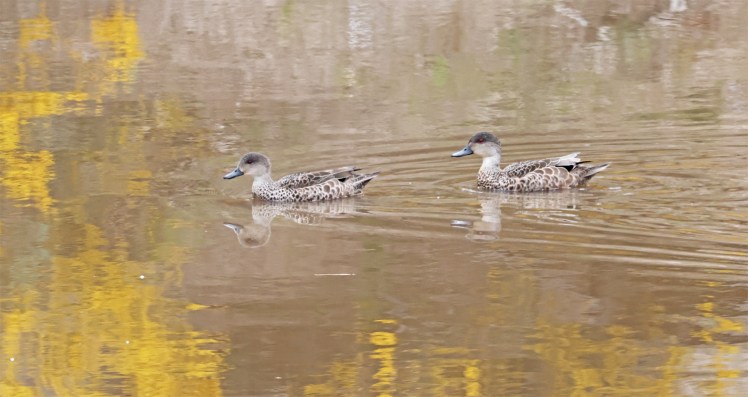
Grey teal with wattle reflected in the water from the far bank.
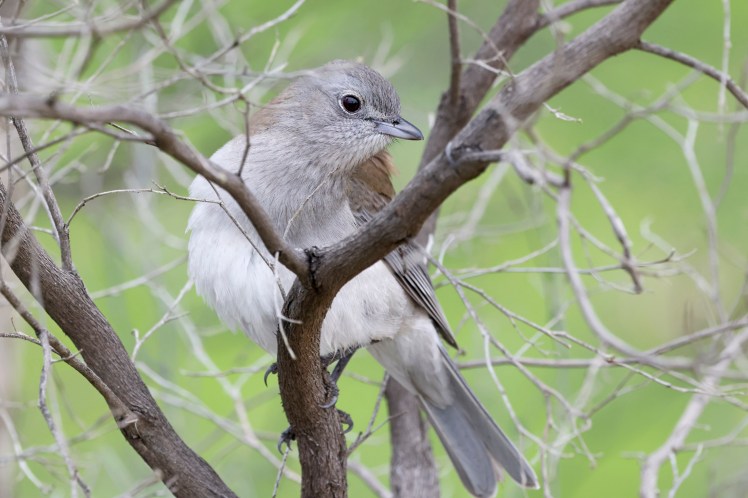
Grey shrike-thrush
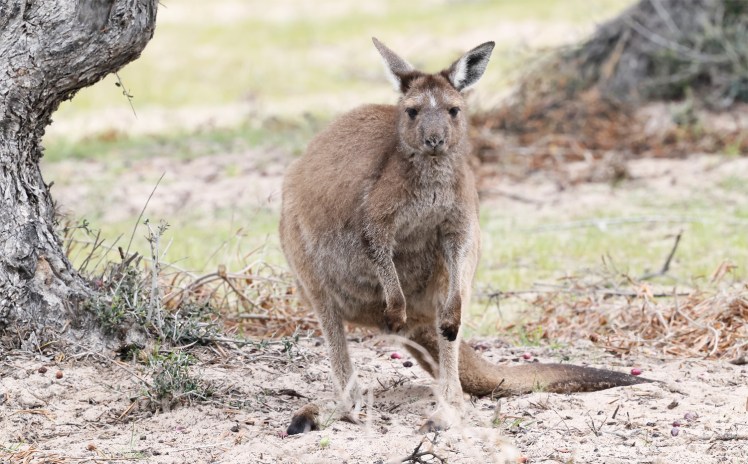
Small roo in an olive grove at the edge of the national park.
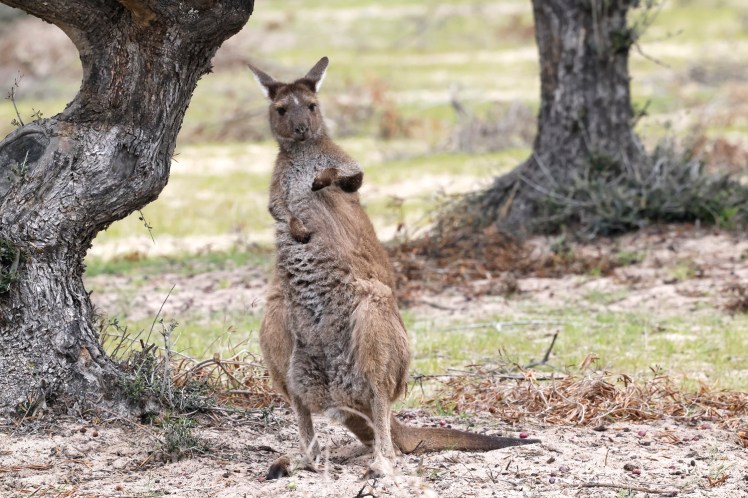
“Back off buddy, I have a strong left jab.”
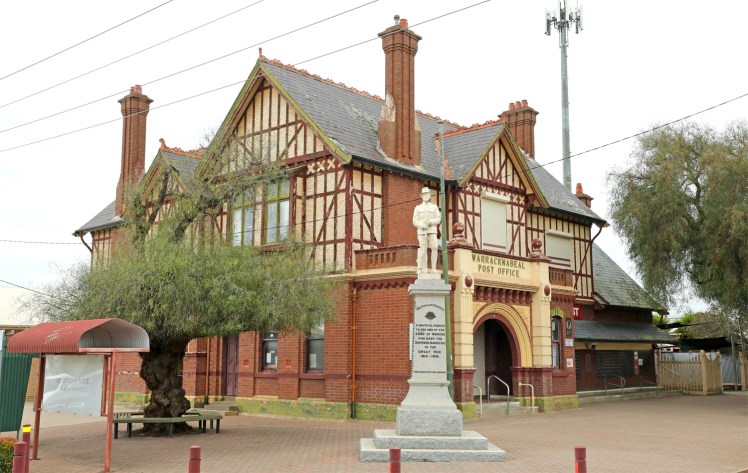
We leave Little Desert and head to Warracknabeal, a town of the Wimmera region. Above is Warracknabeal Post Office.
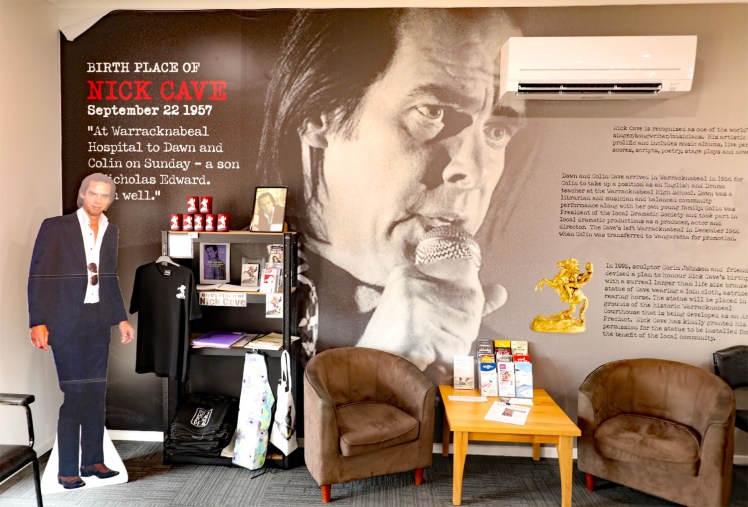
One of Warracknabeal’s claims to fame is being the birth place of Nick Cave. There is a tribute Cave cave. But no-one in town could tell me where the wild roses grow.
There are three roundabouts in town, each with a dog sculpture. Its a pawsible idea.
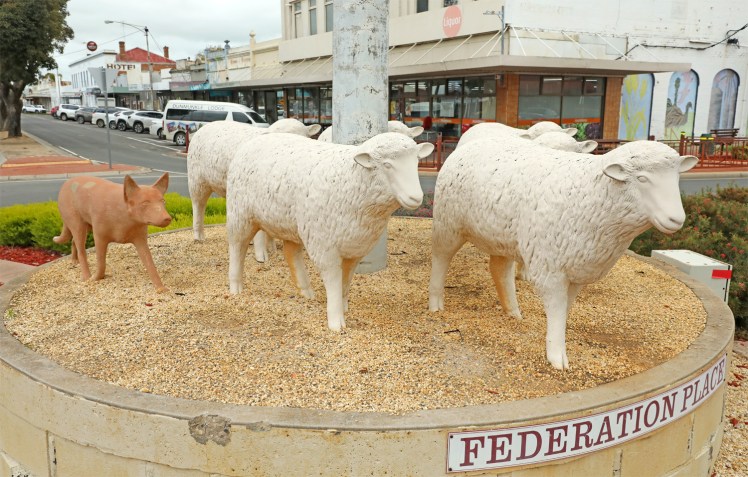
Dog and Sheep sculpture
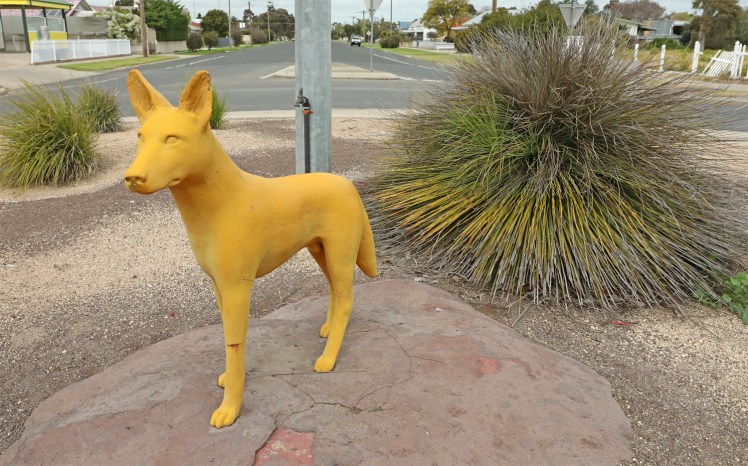
Dingo sculpture
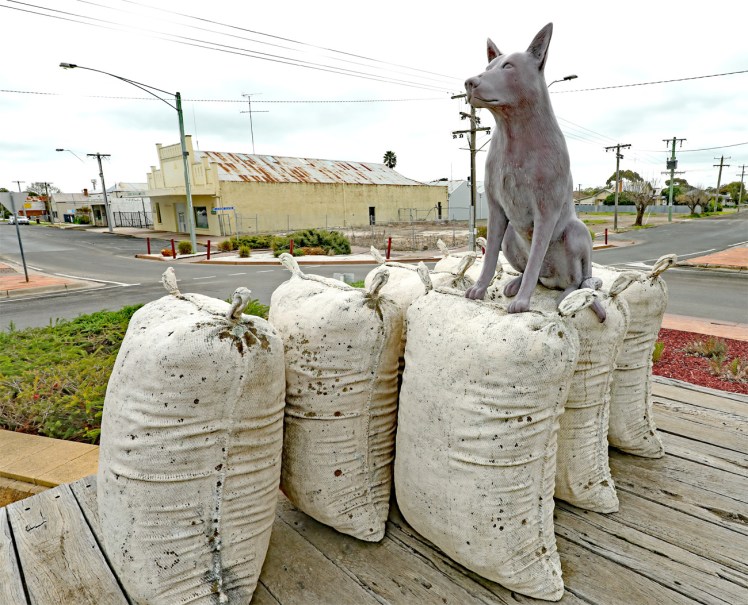
Dog with wheat bags. How many times a day does a dog bark? About 100, but that’s just a ruff estimate.
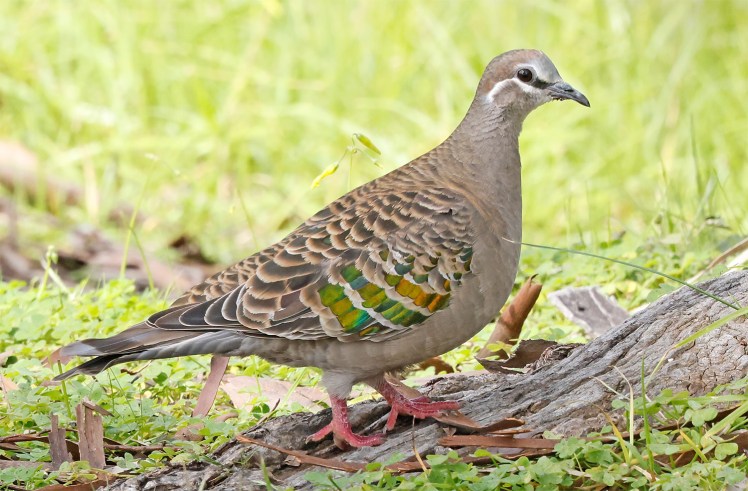
Common bronzewing near a lake at the edge of town.
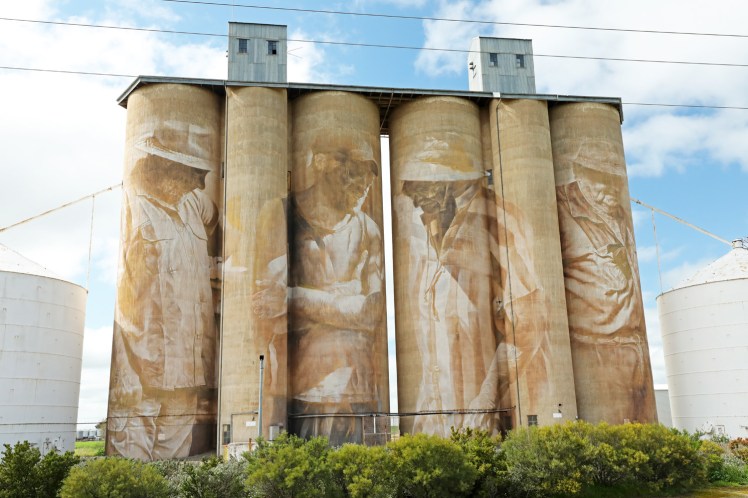
Brim Silos – “the faces on the mural are anonymous, but portray a multi-generational quartet of farmers who show the strength and resilience that is required to be a country Victorian farmer.” This was the first silo art project in Victoria. The silo is usually full to the brim.
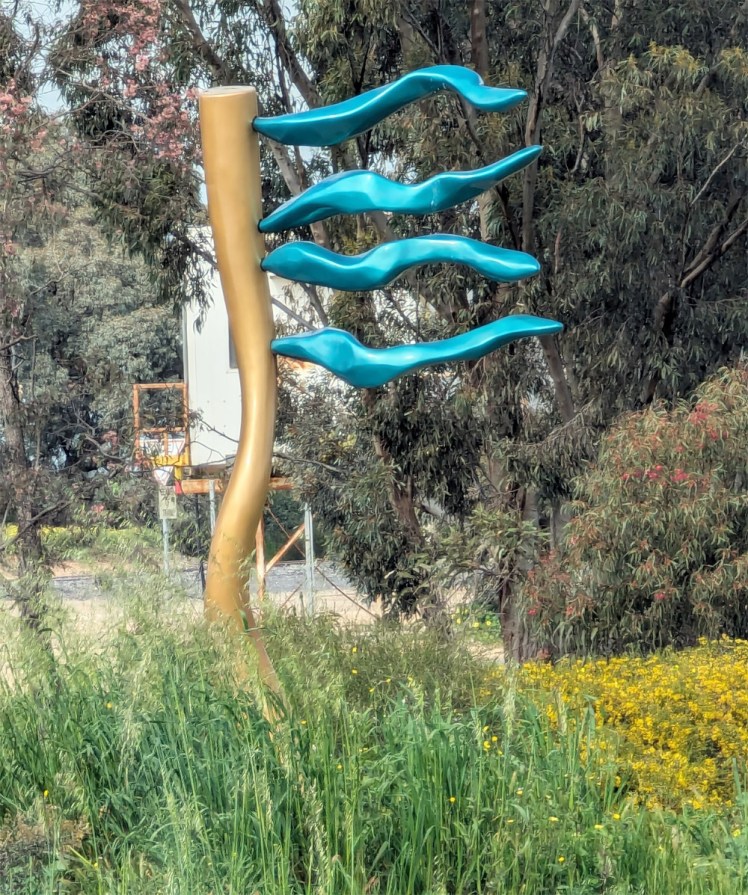
Oral hygiene is important in Brim? … in reality, no idea.
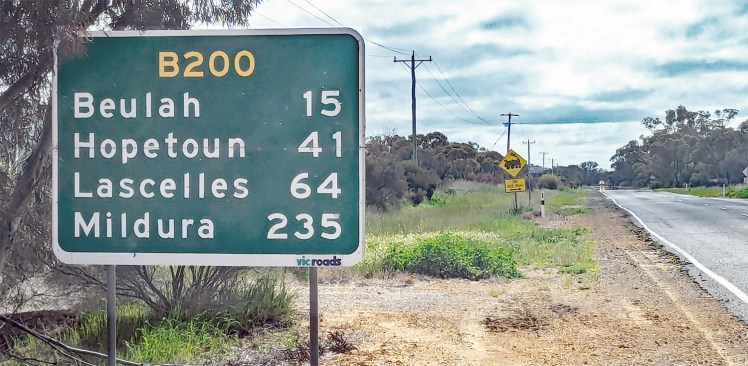
Next stop Beulah.
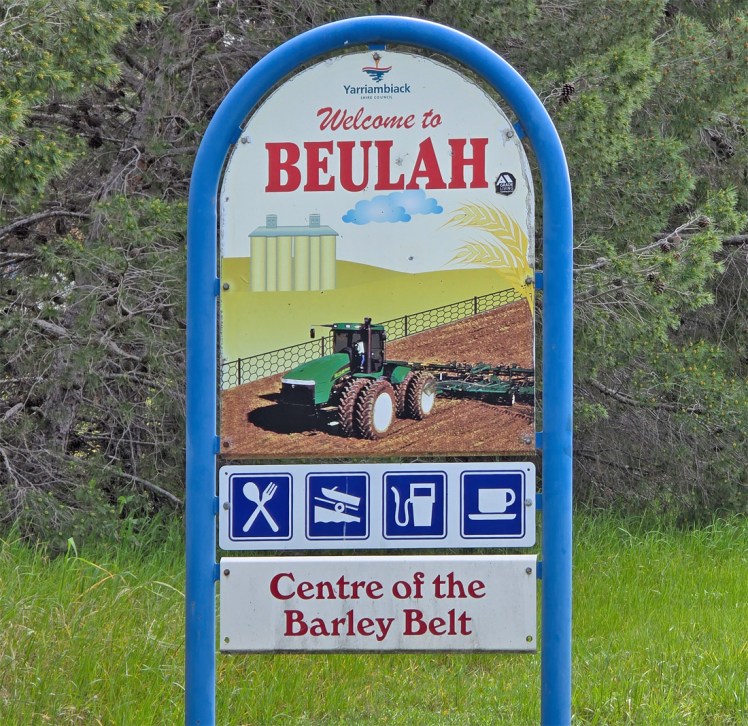
Beulah … Beulah … Beulah….
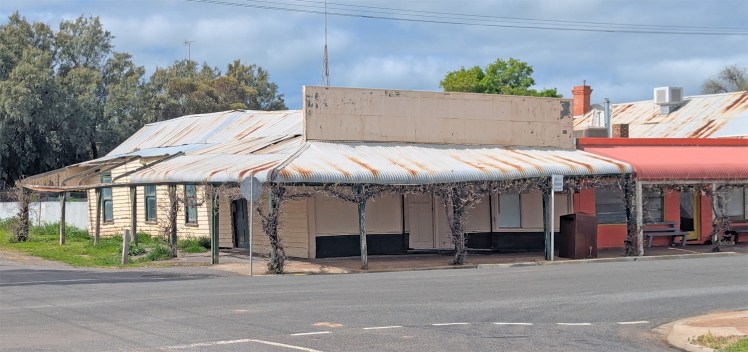
“Life moves pretty fast. If you don’t stop and look around once in a while, you could miss it.”
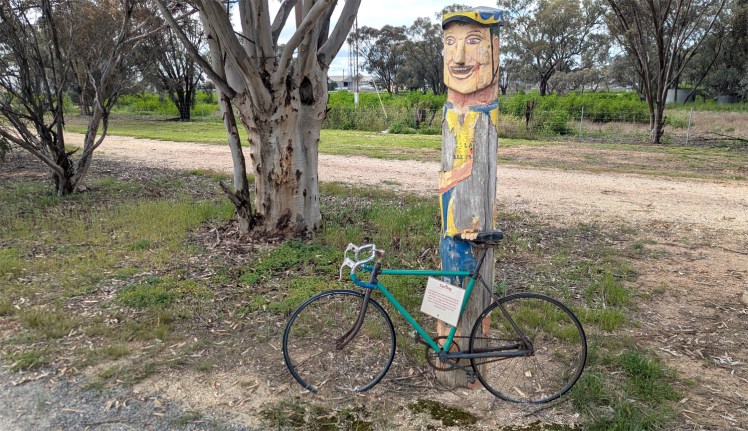
There were bike wheels in Beulah, but no Ferris wheel. This cyclist always has pole position.
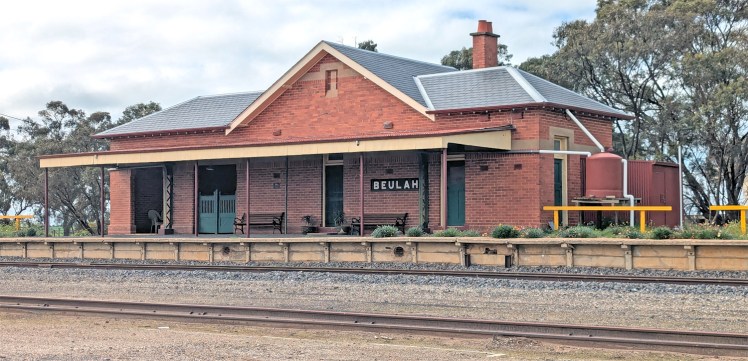
Beulah Railway Station (1893). Beulah was the location for the fictional town Kiewarra in the 2019 film The Dry, starring Eric Bana.
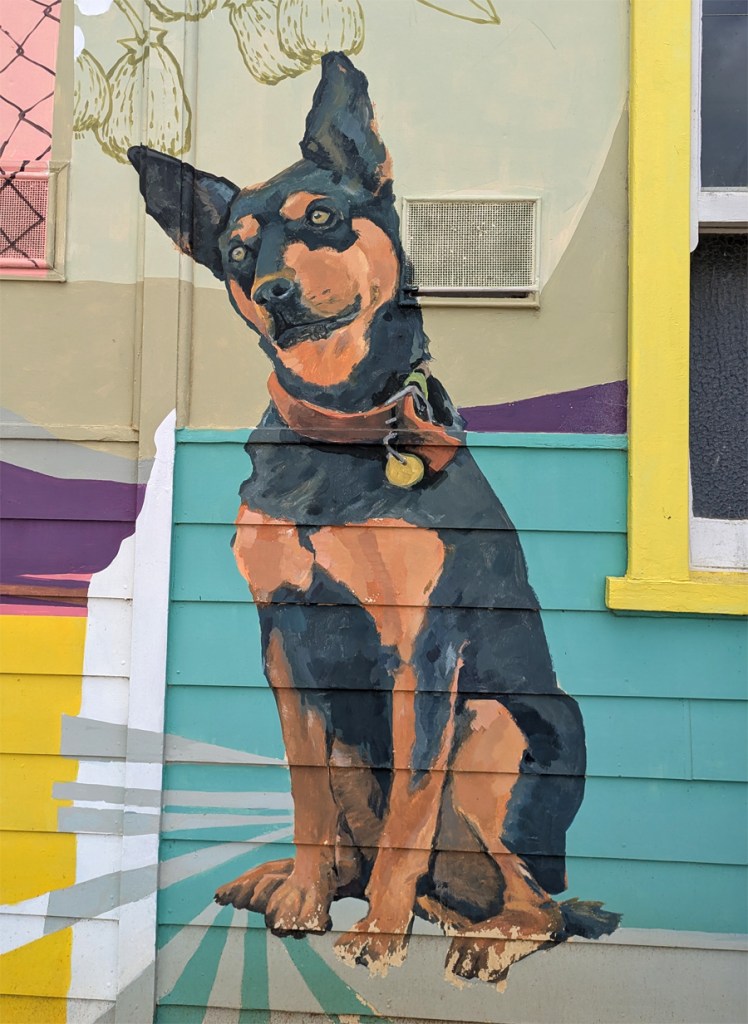
There are a few nice murals in town.
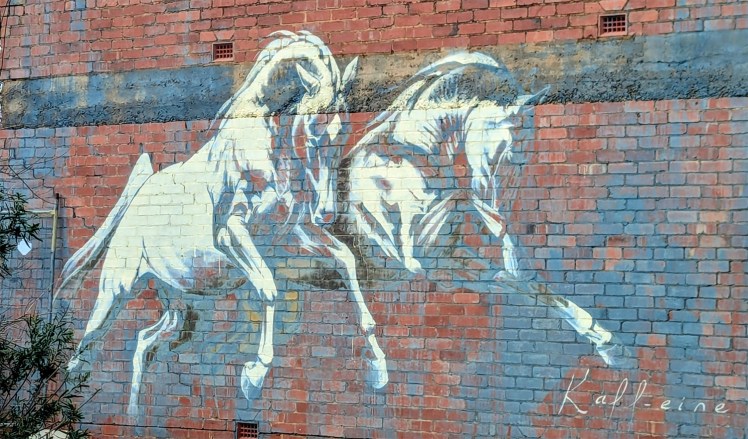
“Wild horses couldn’t drag me away…..”
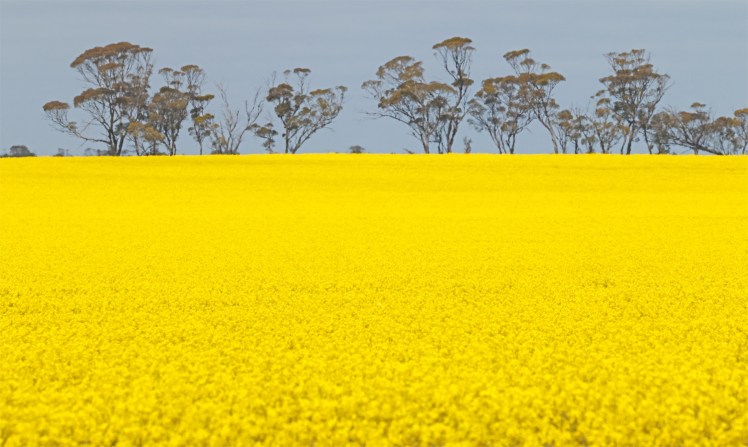
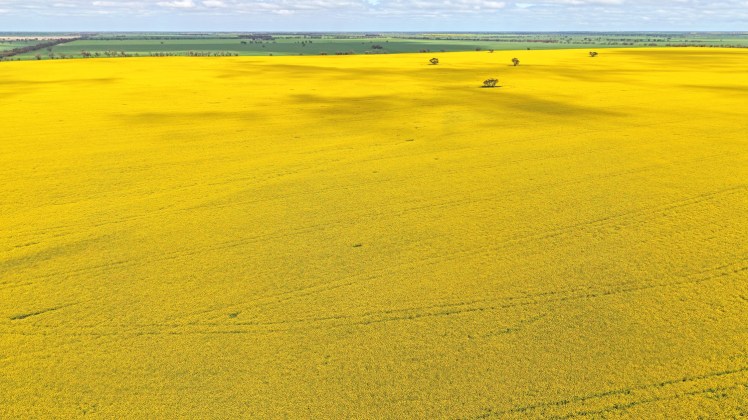
But we departed and headed east past canola farms.
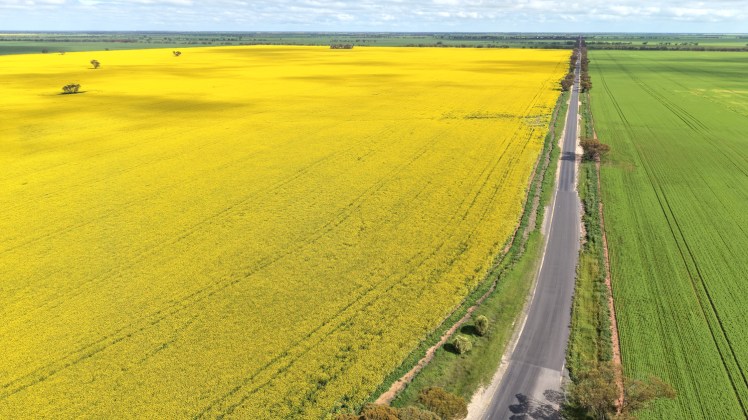
I put the drone up to get a view of the extent of the crop.
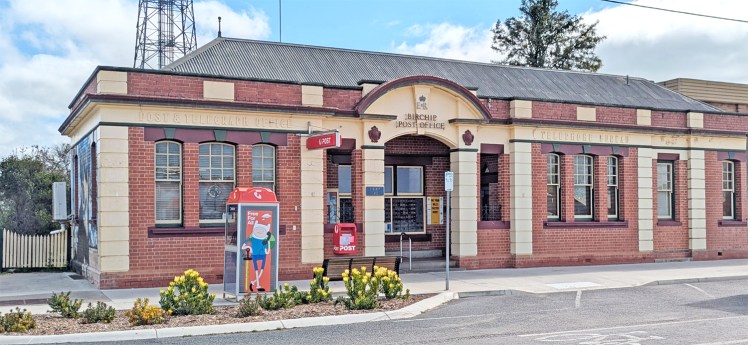
Birchip is a centre for farms in the area typically growing wheat, barley, canola, and other cereals. The Sunraysia Highway passes through town.
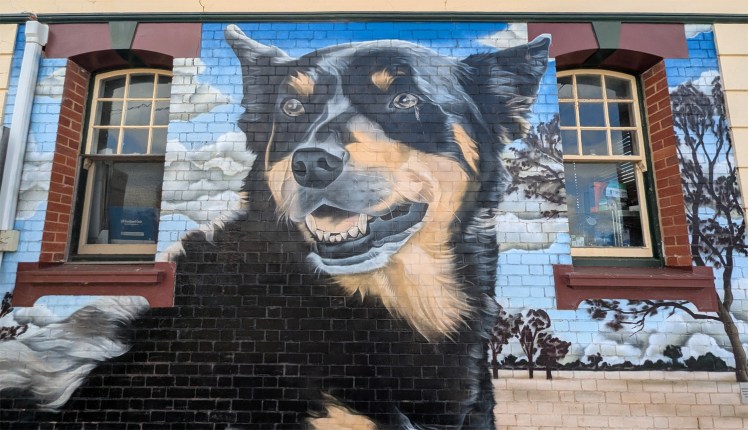
There are several murals in town – this one on the Post Office wall. The kelpie used to collect sticks from up to 5 kilometres away but that seems a little far-fetched.
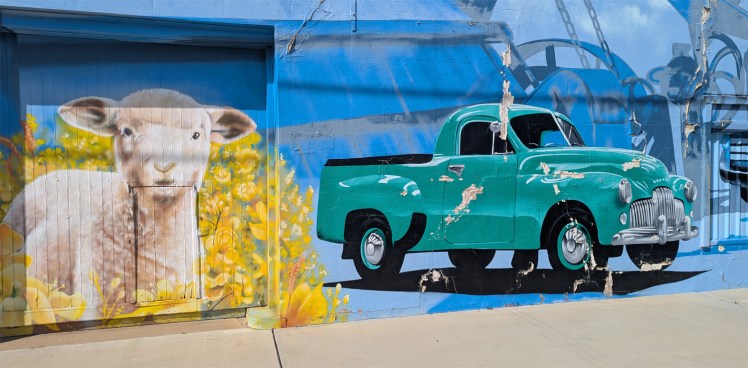
Lamb and Holden mural over the road.
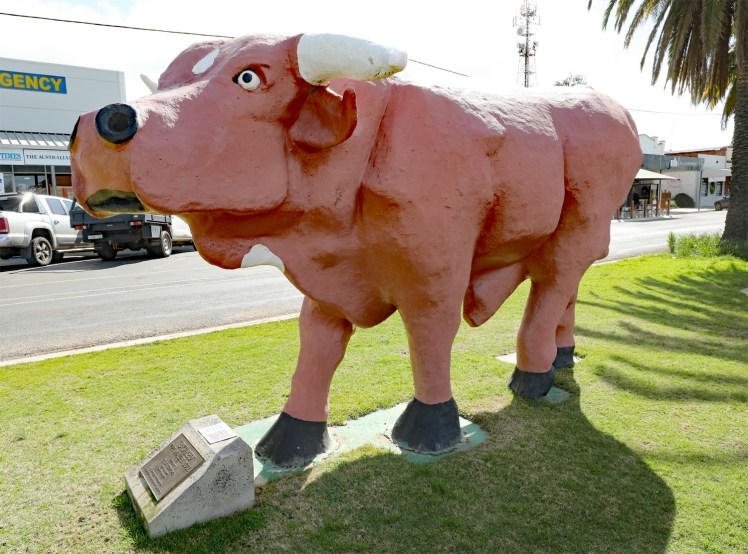
But the real attraction in town is the Big Mallee Bull Statue. As one of the earliest settled areas of the Mallee, Birchip can justifiably lay claim to “Home of the Mallee Bull”. Legend has it that “Big Red” was the king of a local herd and put fear into the hearts of the locals. “Big Red” was a magnificent creature, strong of physique, colourful and resourceful with a cunning which enabled him to survive droughts, the elements, his hunters and his rivals. The saying “Fit as a Mallee Bull” embodies all of Big Red’s characteristics. This legend, like all other legends, is part truth, part fiction. As such it contains “a lot of bull”.
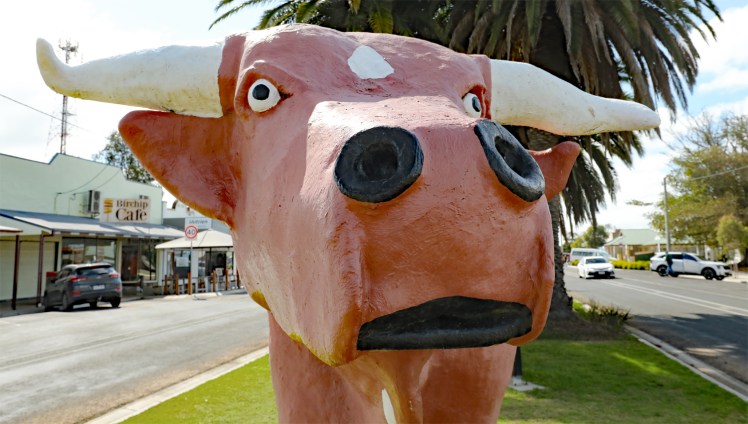
The expression on Big Red’s face looks like he is about to be steer-ed to a new stage of life.
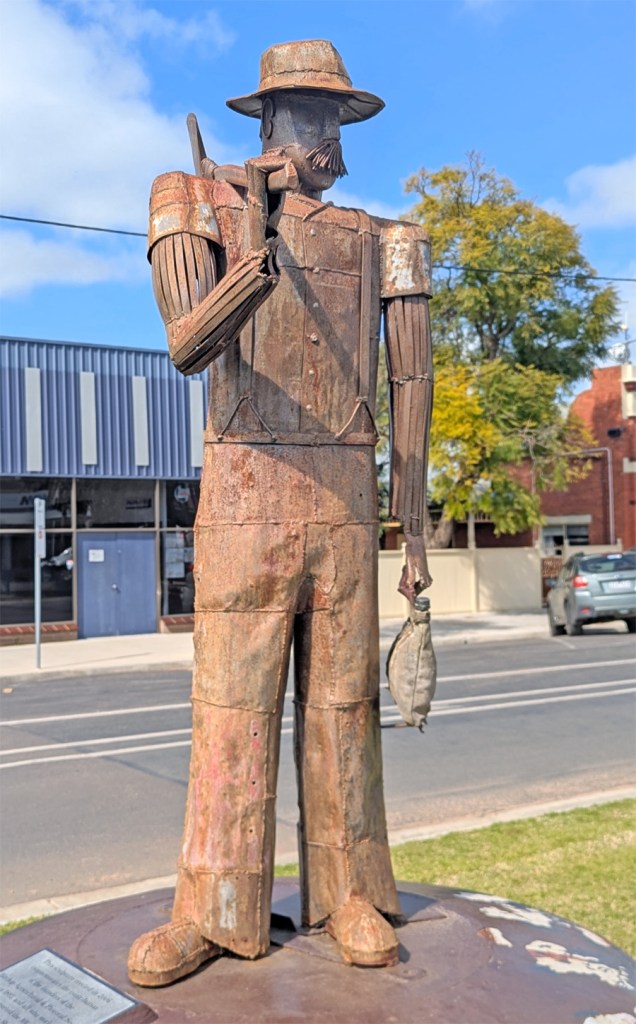
Statue of Man with Axe – A sculpture commemorates the contribution of the founders of the Birchip Agricultural & Pastoral Society in 1893, and all who have worked on the 101 annual Birchip Shows from 1893 to 2000. This guy has an axe to grind as the Mallee Bull got a better position in town.
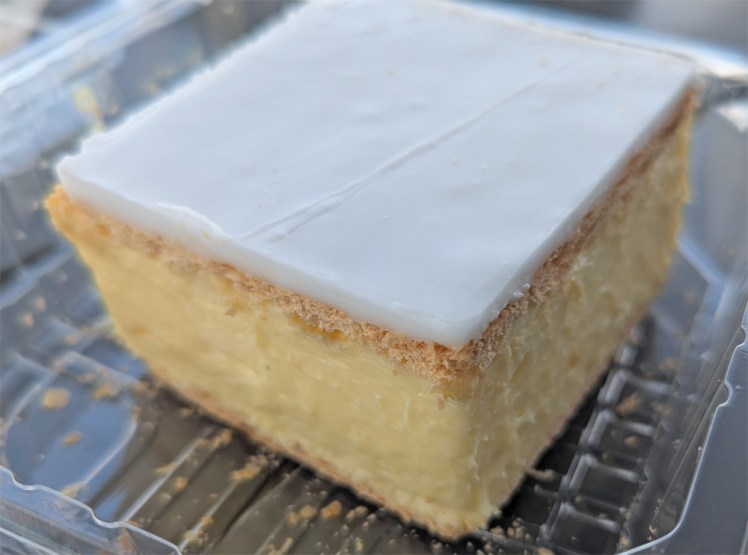
Birchip – Sharp’s Bakery has 4.8/5 from 459 Google reviews at the time of writing. So after all our walking of late, we treated ourselves to their famous Vanilla Slice.
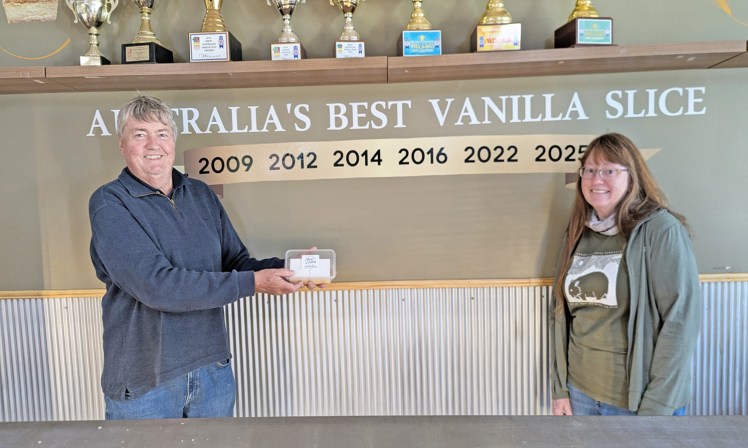
Highly recommended if you are in this part of the world. Their Bee Sting is considered by many to be just as good.
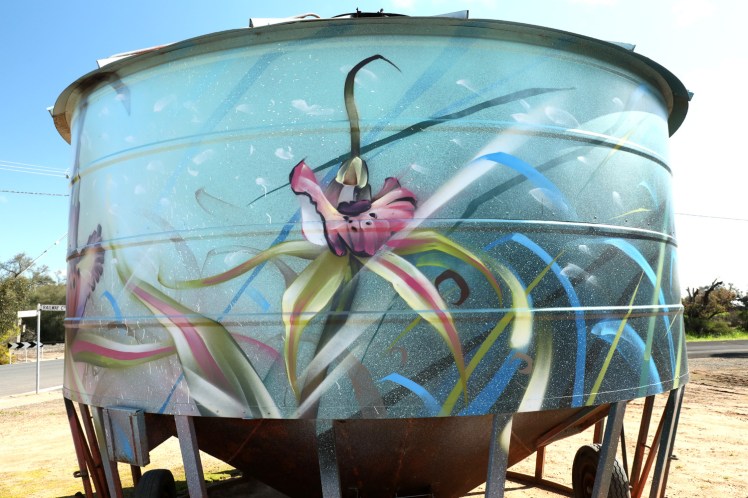
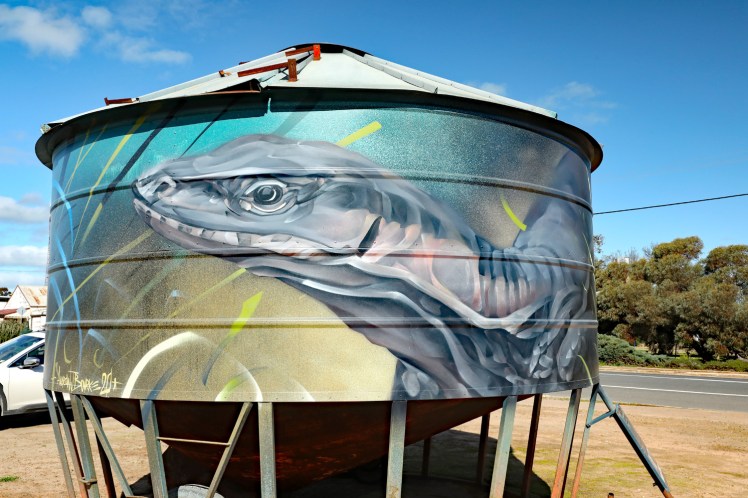
Woomelang has a Field Bin Art Trail. Here are two of them – a local orchid and a goanna.
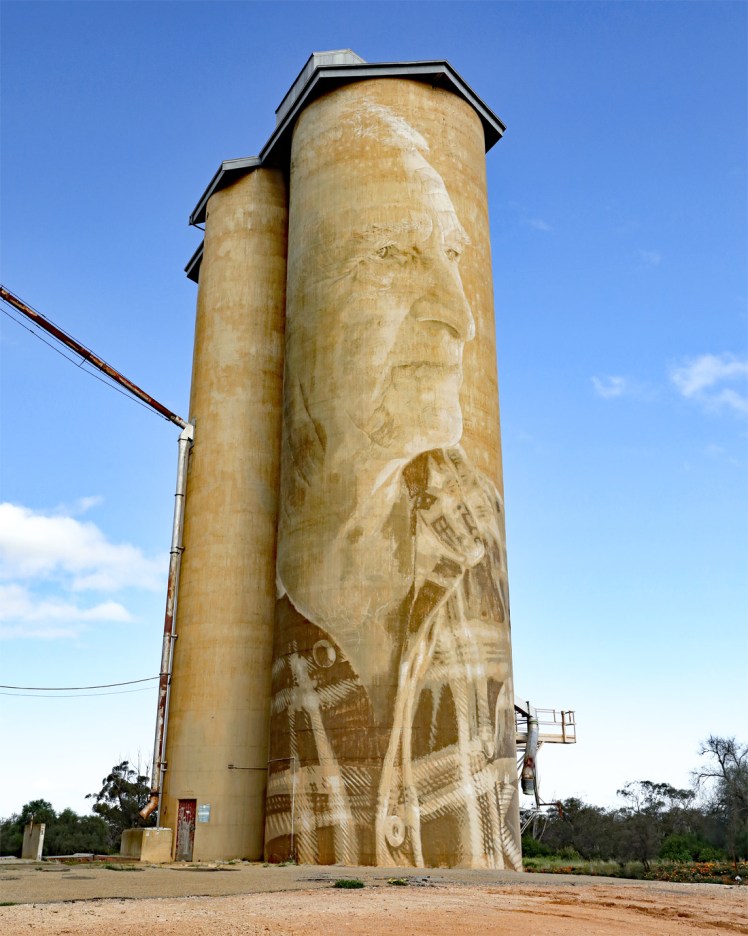
Lascelles silo art depicts local farming couple Geoff and Merrilyn Horman, part of a family that has lived and farmed in the area for four generations.
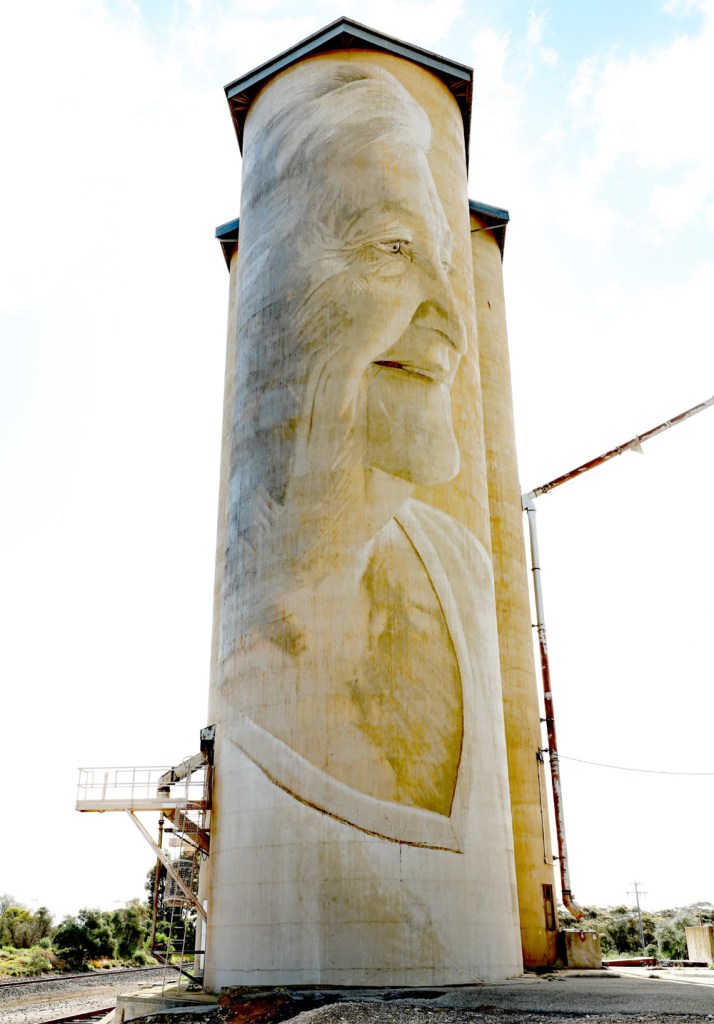
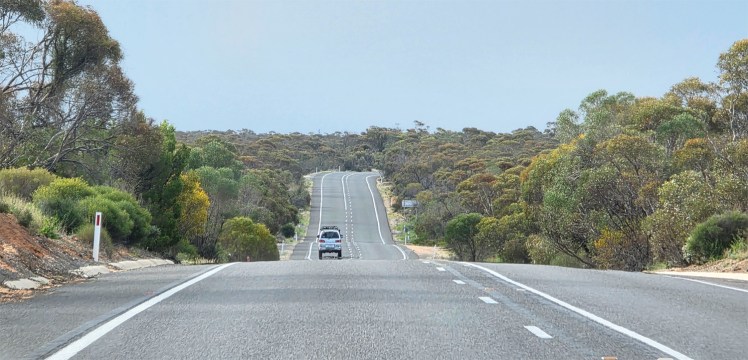
Sunraysia Highway
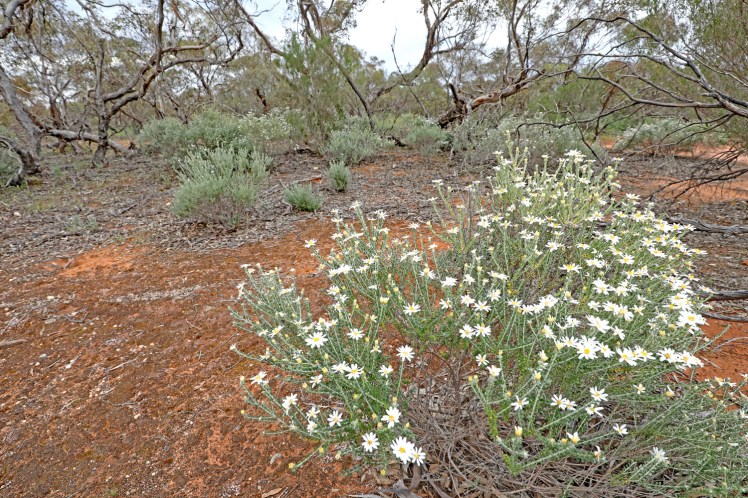
Hattah-Kulkyne National Park
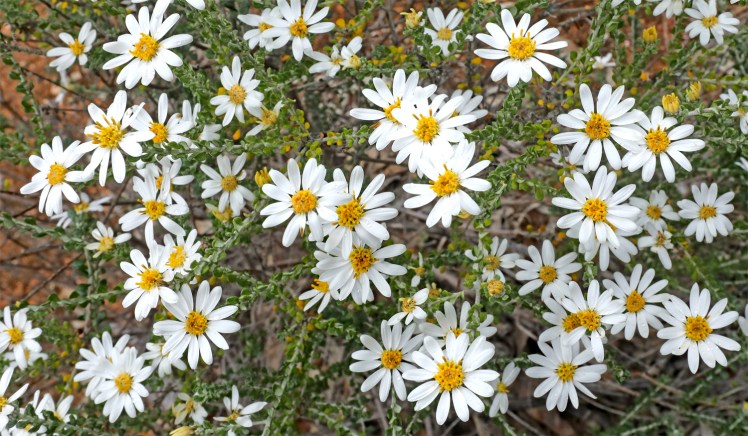
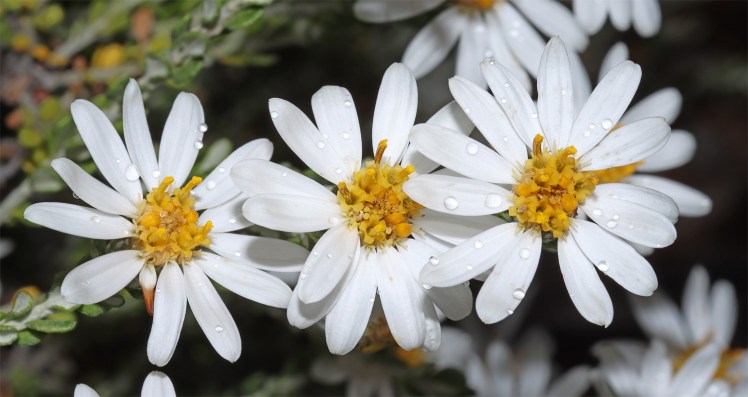
Daisy bush (Olearia teretifolia)
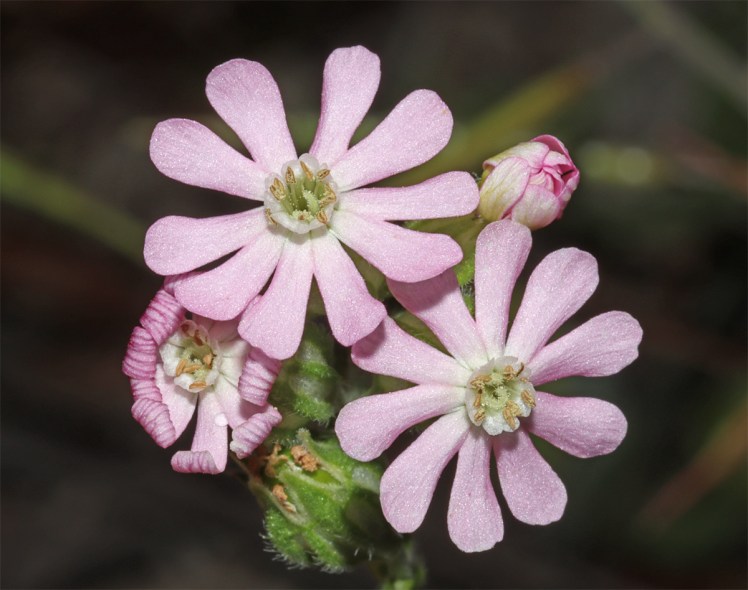
Silene – pretty, but a weed. Common in Melbourne – it has made its way up here.
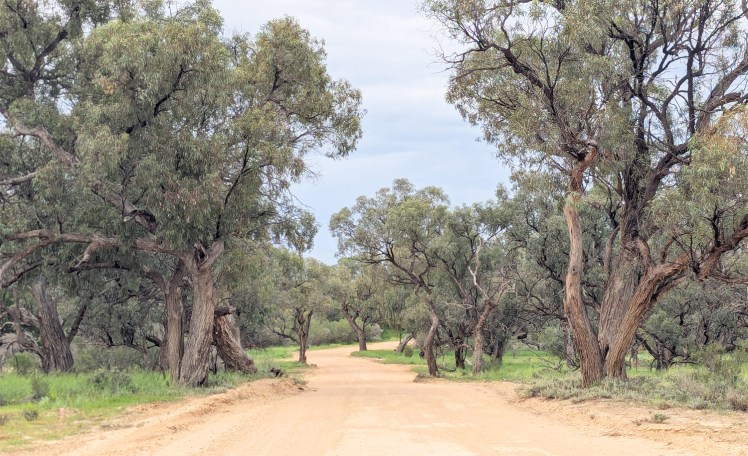
Mournpall Track in the park
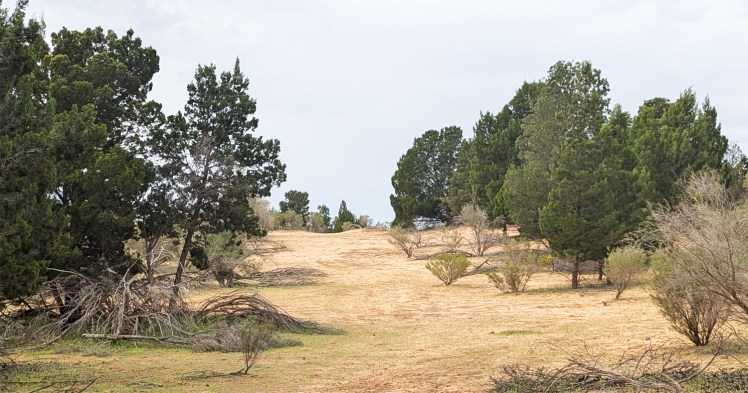
Callitris growing on old dunes.
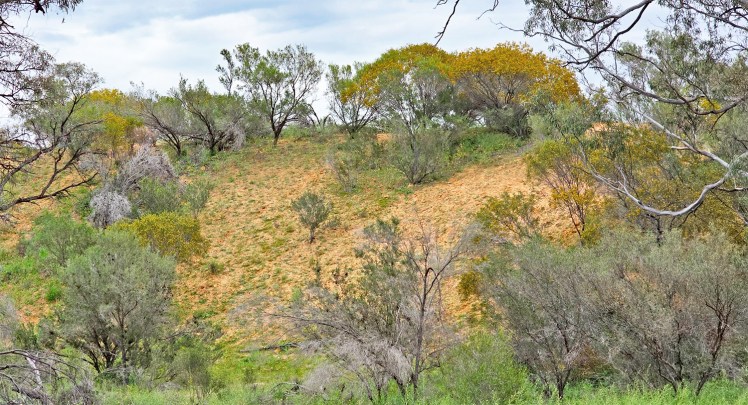
It’s the wet season here so everthing looks green. It will be a different picture in late summer on this vegetated sand dune.
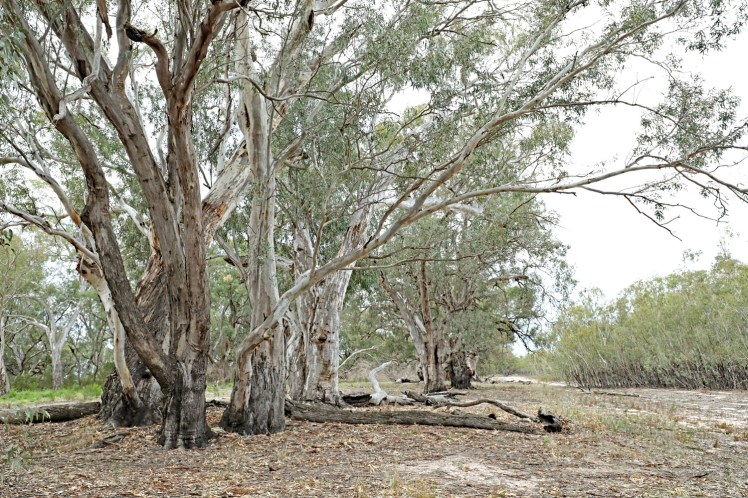
River red gums mark the edge of the lake when it is full.
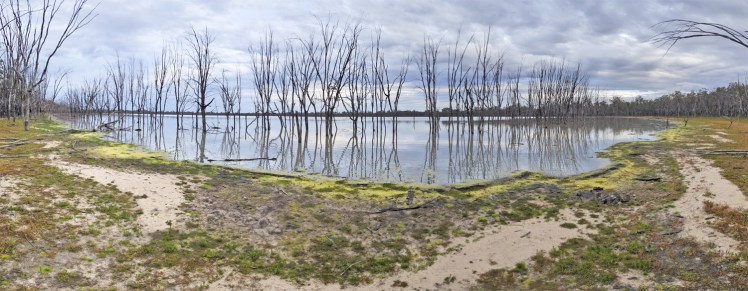
Lake Mournpall – I renamed it Lake Mournful. We only saw two Grey teal in an area meant to be an ornithological wonderland.
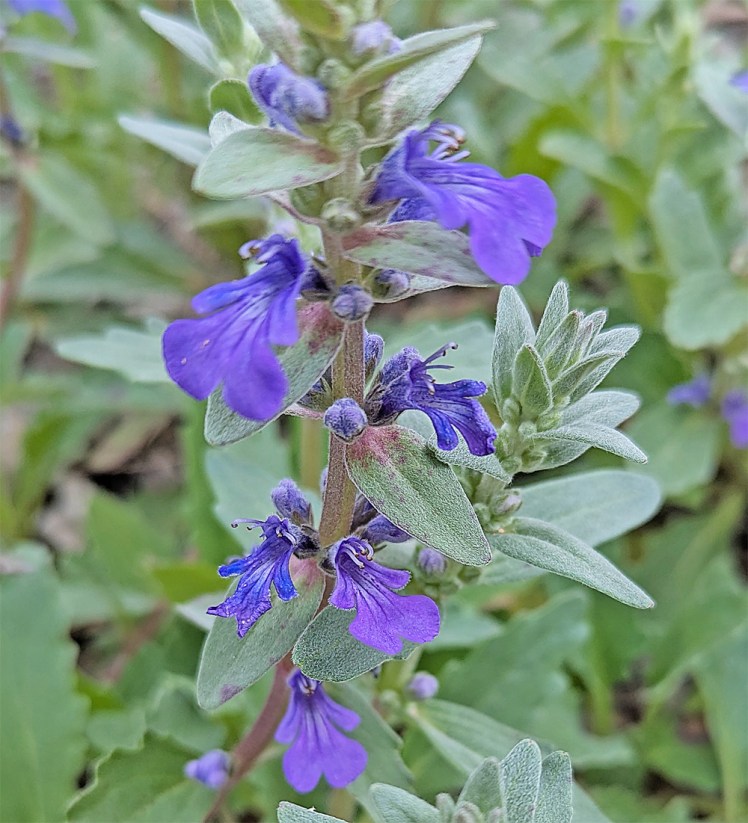
Austral bugle (Ajuga australis)
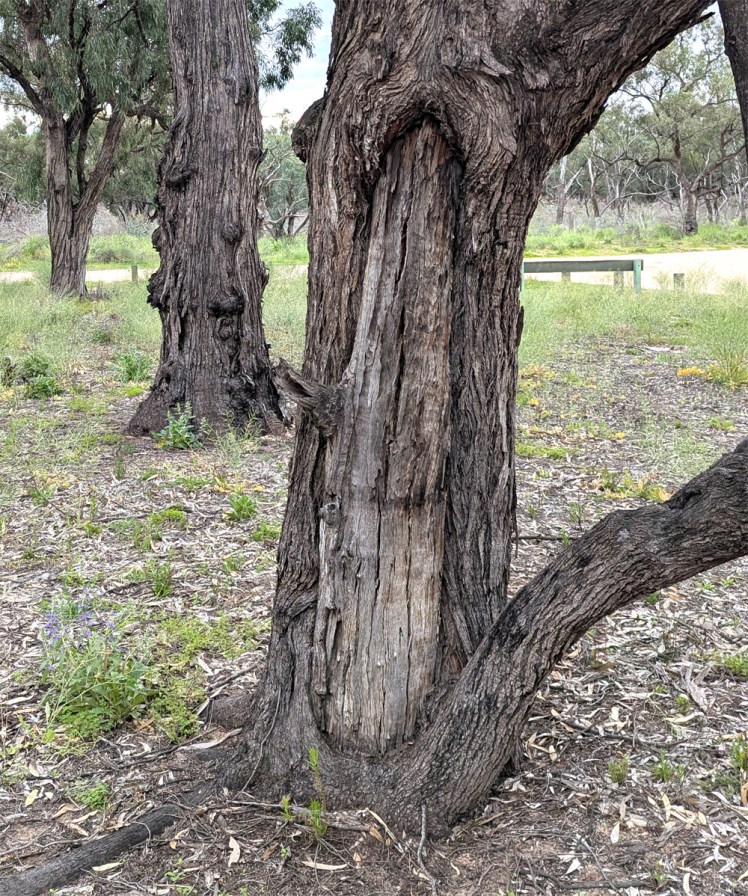
More than 1,000 archaeological sites including scar trees, burial sites, and shell middens have been registered in the Hattah Lakes region, testifying to tens of thousands of years of Indigenous occupation.
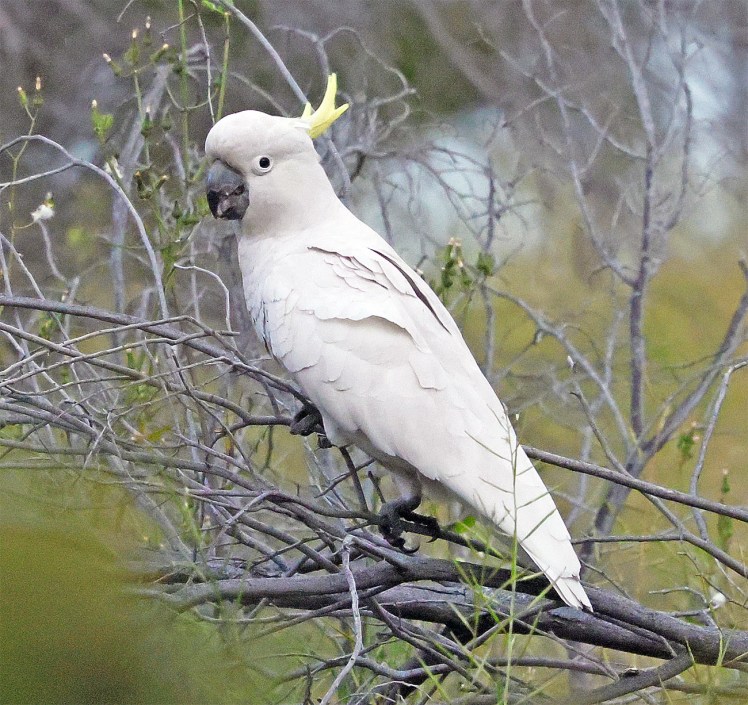
Sulphur-crested cockatoo
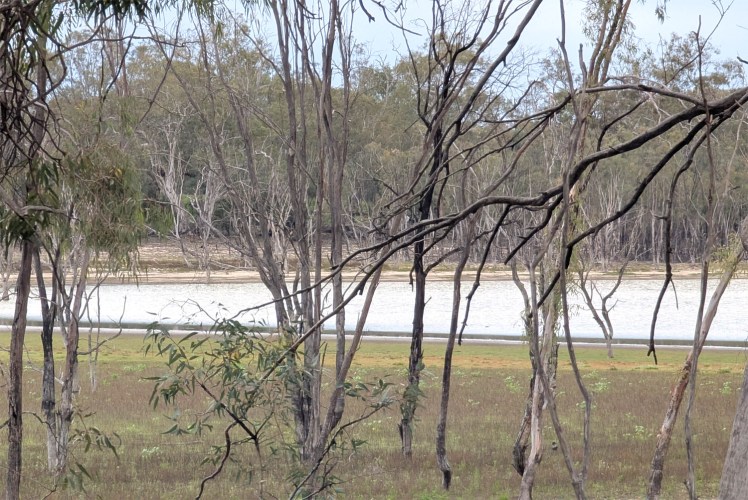
Hattah Lake
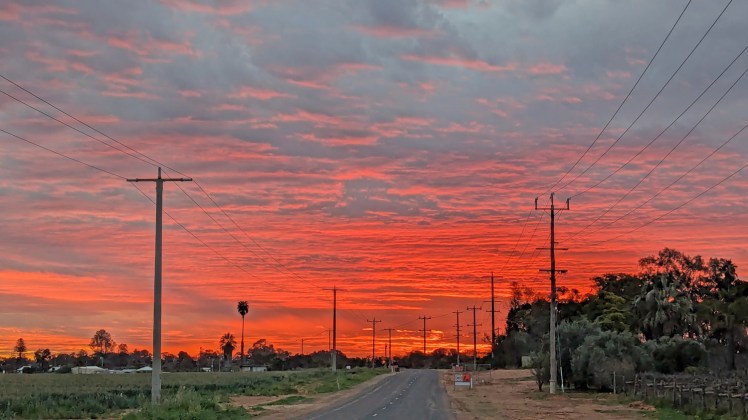
Sunset at Red Cliffs
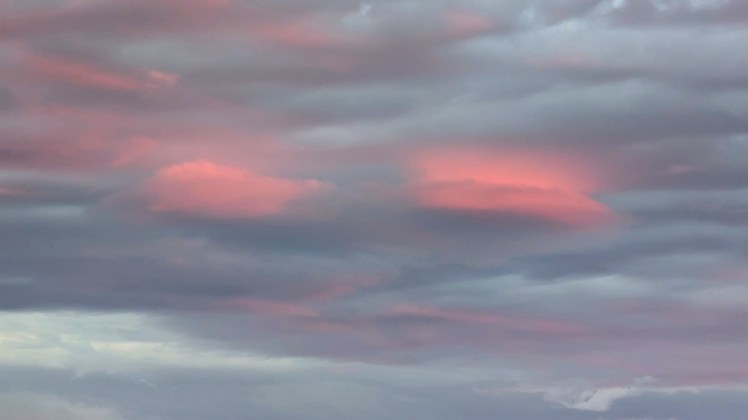
We felt like we were being watched as headed into Mildura for the night.

