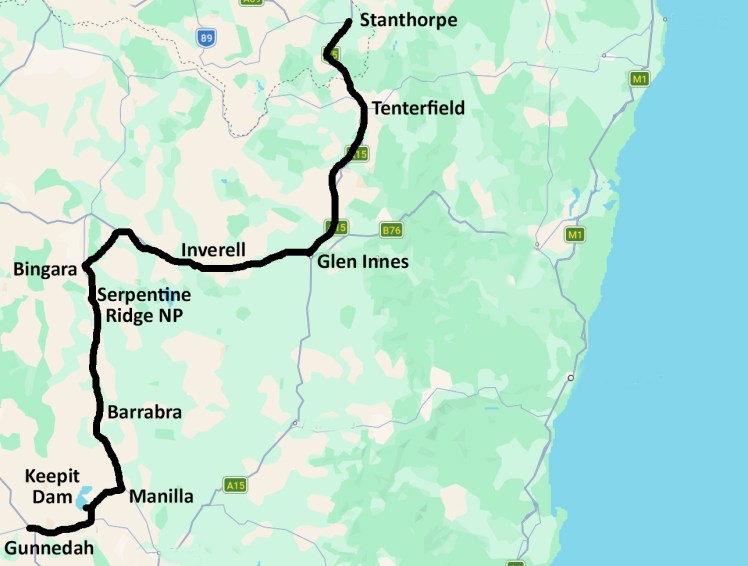
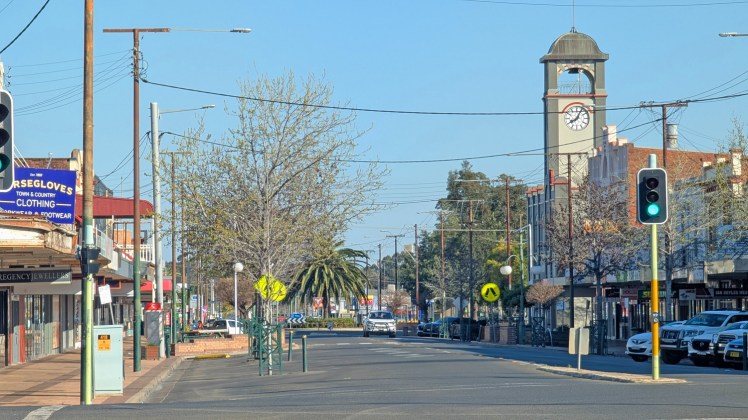
Good morning Gunnedah!
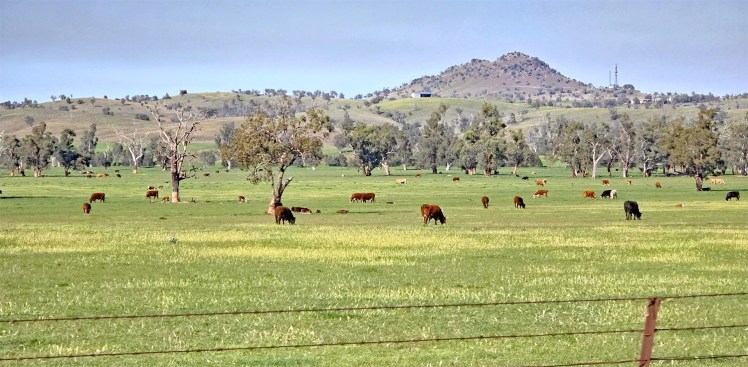
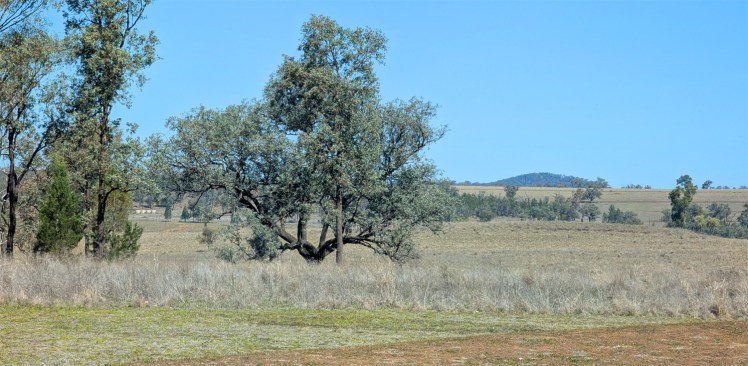
Countryside near Gunnedah
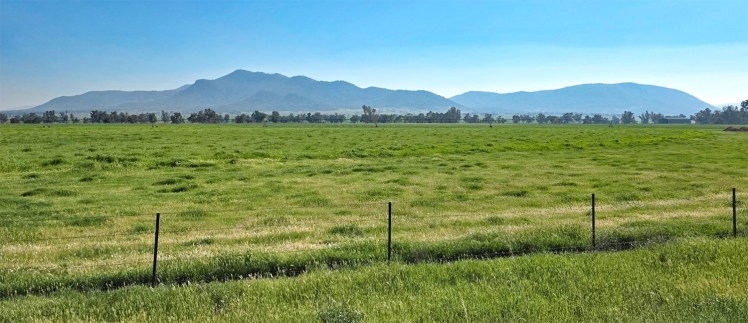
Mount Baldwin, north-east of Gunnedah
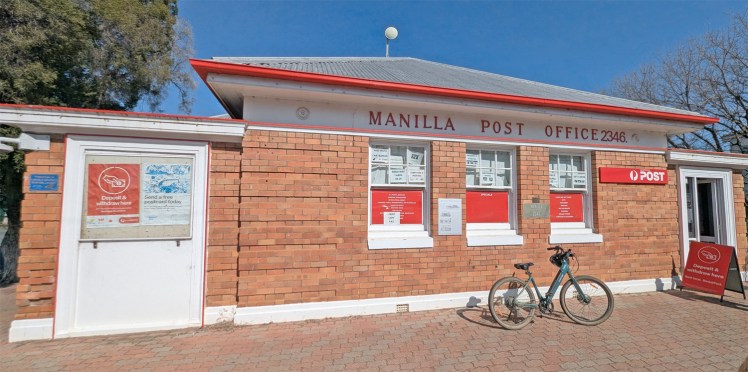
Manilla in New South Wales. Not the other one.
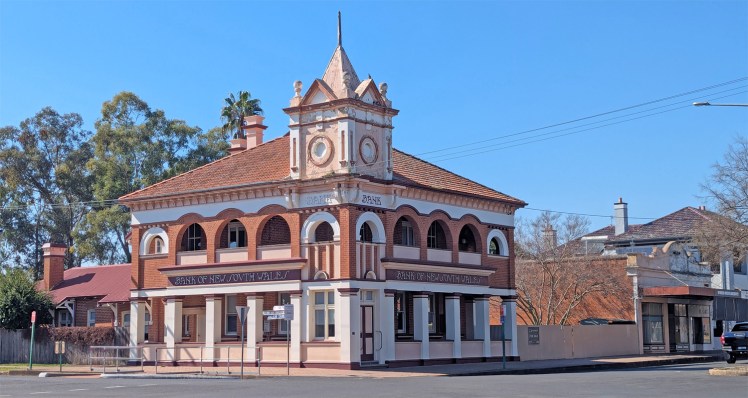
Bank of NSW historical building in Manilla (1910). When first built, the manager lived upstairs.
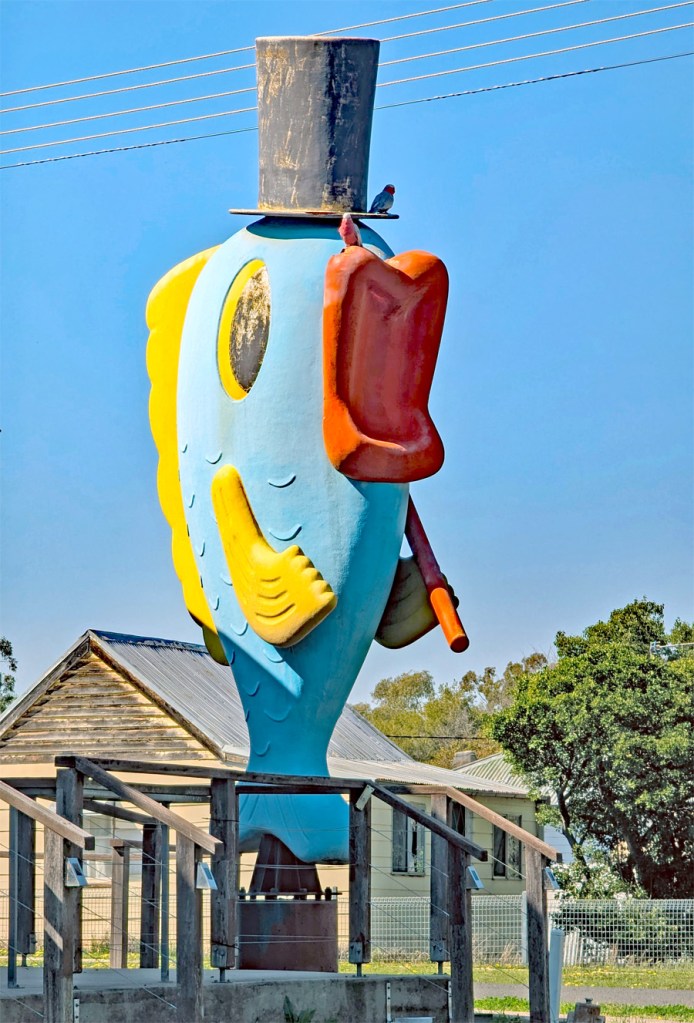
They’ve put their heart and sole into this one! The Big Fish at Manilla – I’m not sure about it…. let minnow what you think.
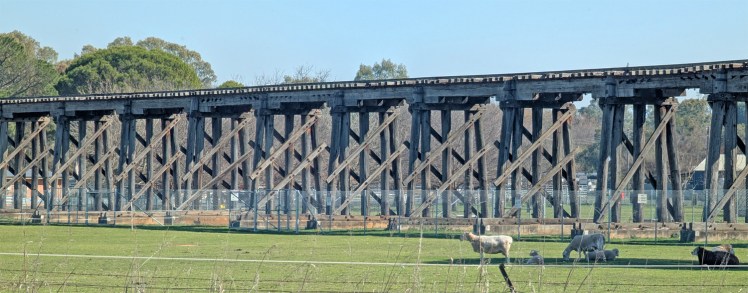
The Manilla Railway Bridge (Viaduct) built in 1908 is a historic, 500-metre-long landmark. It is the only curved timber railway viaduct in the Southern Hemisphere.
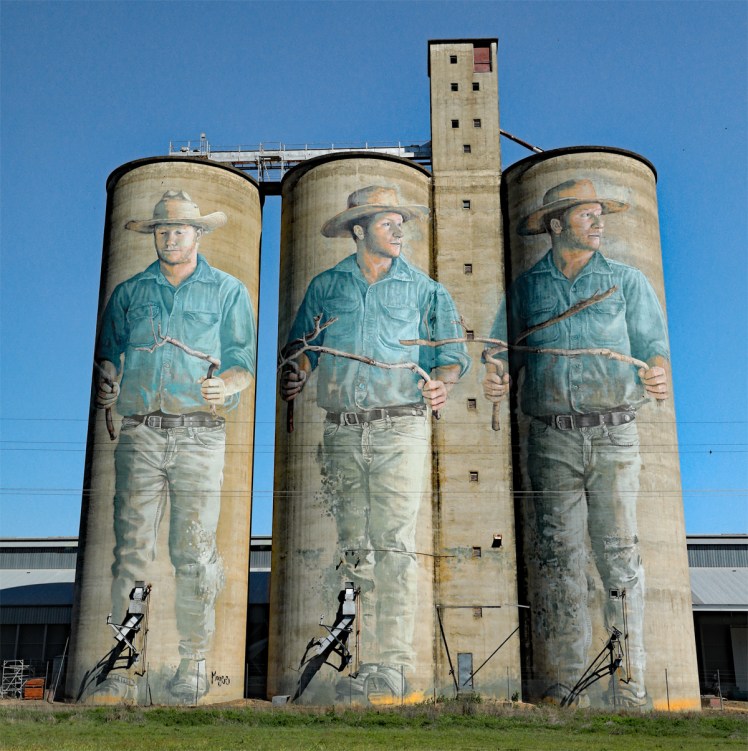
Barraba Silo Art. In 2019, NSW continued to be in the grip of one of the worst droughts Australia had ever faced, with over 90% of the state in drought. Large areas of NSW were facing severe water shortages, with supply being limited to critical water needs only. This mural depicts a local water diviner searching for groundwater.
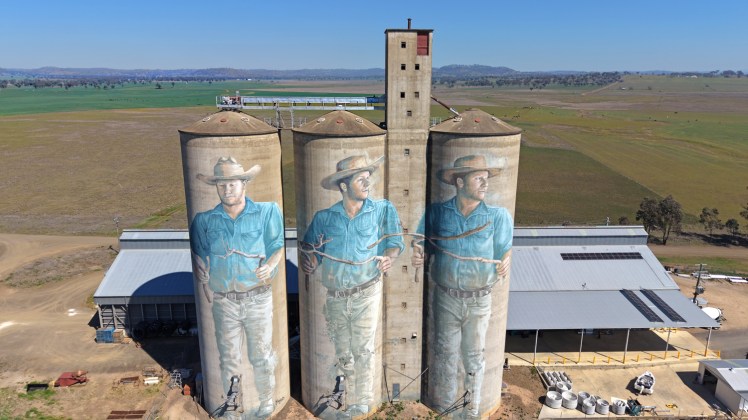
The silos are 40 metres high.
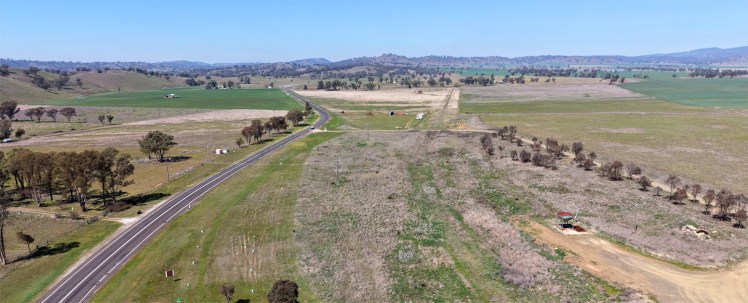
Fossickers Way looking south.
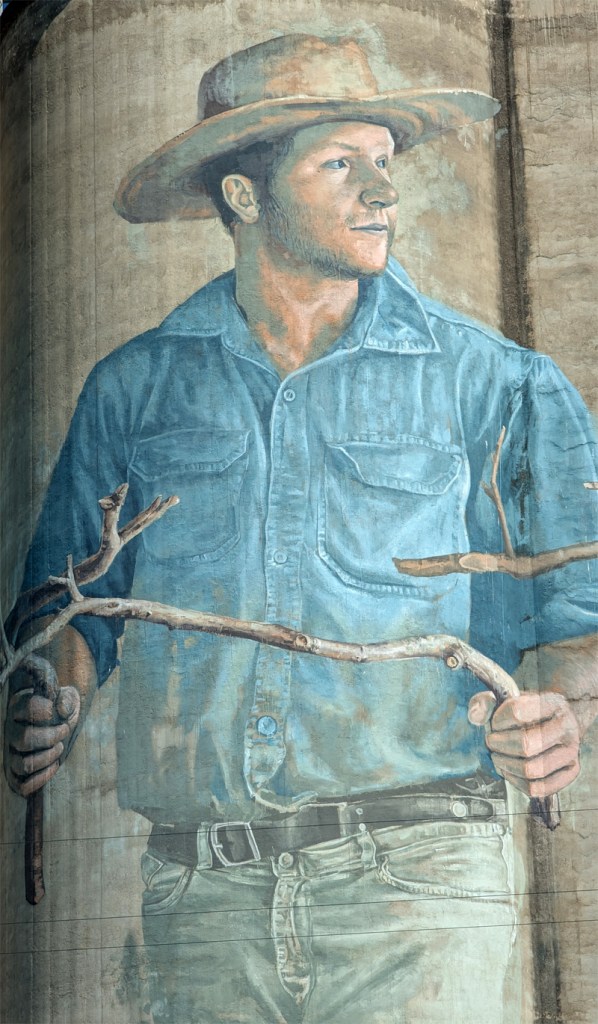
The amazing detail in the silo art painted by Fintan Magee.
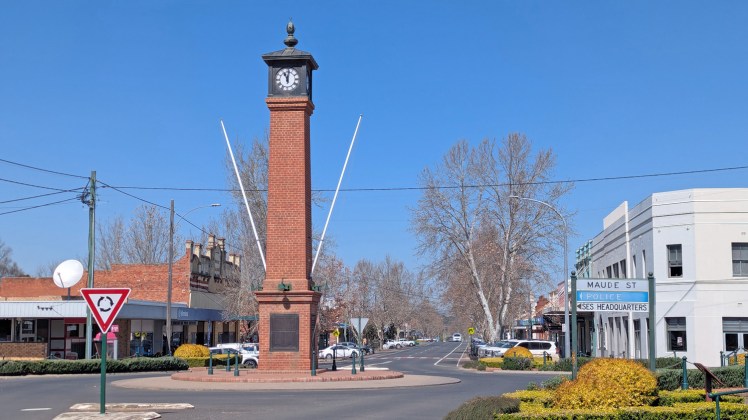
Main street in Barraba
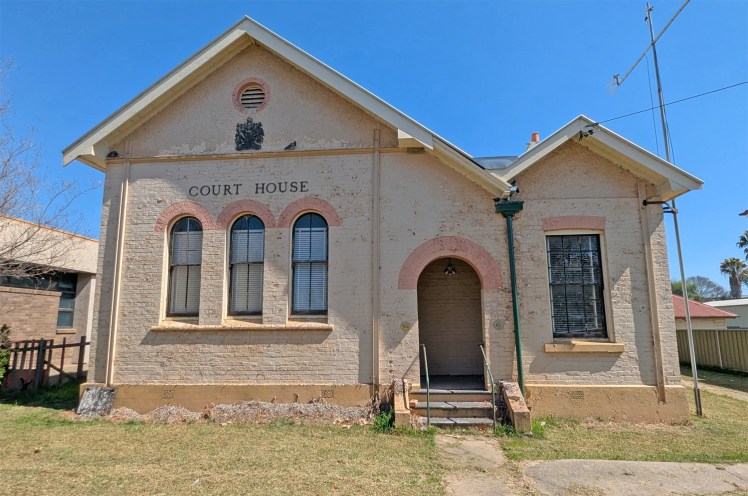
Bult in 1881, the old Courthouse is one of the oldest surviving buildings in Barraba, dating back to the region’s gold rush era.
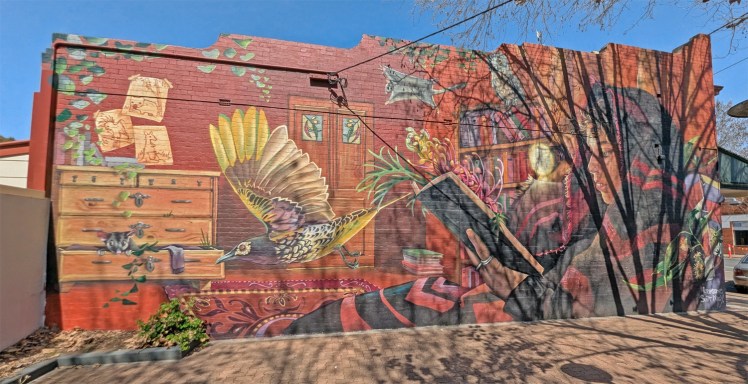
Mural in Barraba with Regent honeyeater. The Bundarra-Barraba Important Bird Area is important for the conservation of this endangered bird.
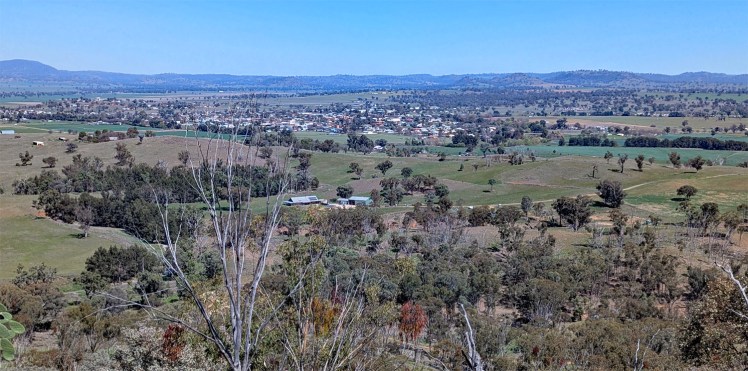
Adams Lookout overlooking Barraba
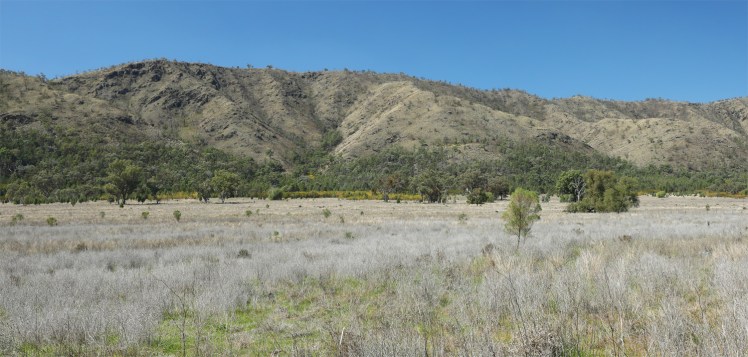
Serpentine Ridge National Park features unique serpentinite rock formations linked to local fault lines. A major geomorphological feature of the Nandewar Bioregion is the Peel Fault, which extends from Warialda to Nundle. Several areas of serpentinite geology are associated with this fault line including Serpentine Ridge after which the park is named. Serpentinite bedrock is a rare geological type in New South Wales.
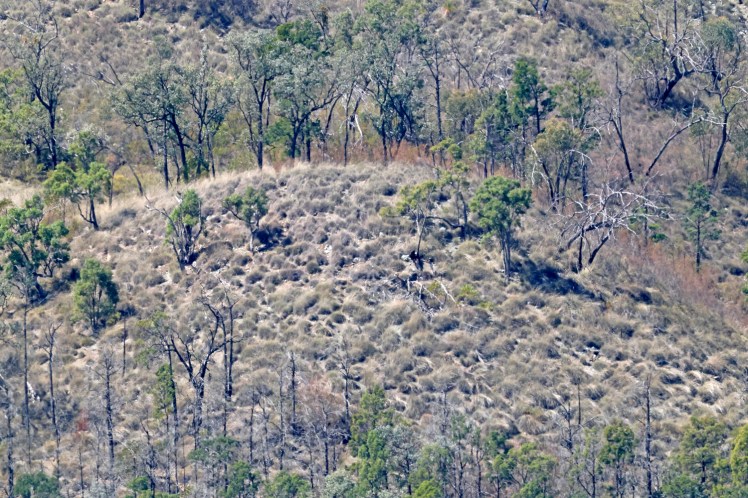
This northern section of Serpentine Ridge National Park supports a significant and regionally uncommon spinifex woodland
dominated by porcupine grass (Triodia scariosa ssp. scariosa).
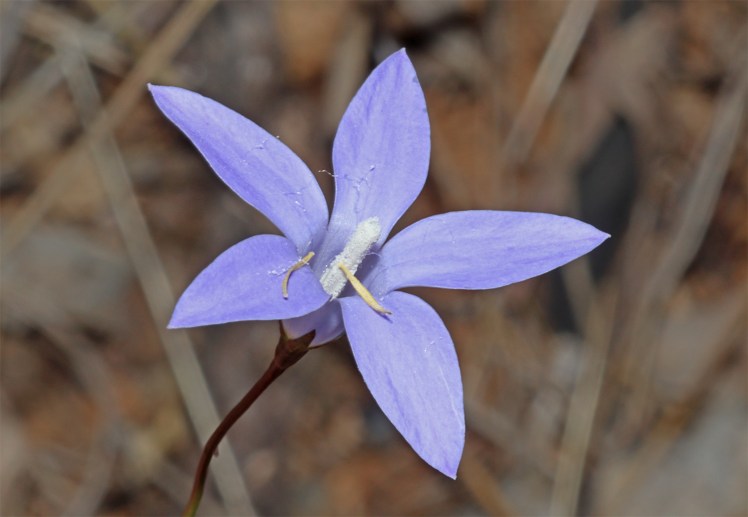
Bluebell south of Bingara
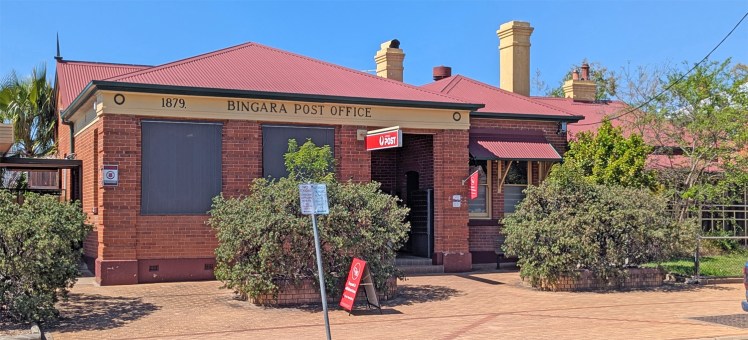
Bingara was once Australia’s biggest diamond producing area.
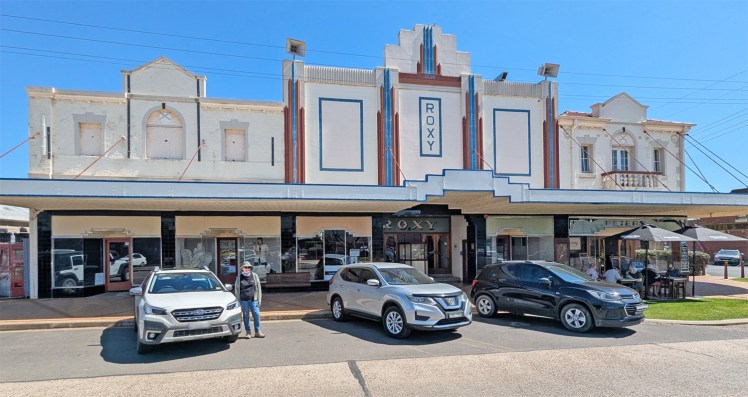
Roxy Theatre (1936) at Bingara
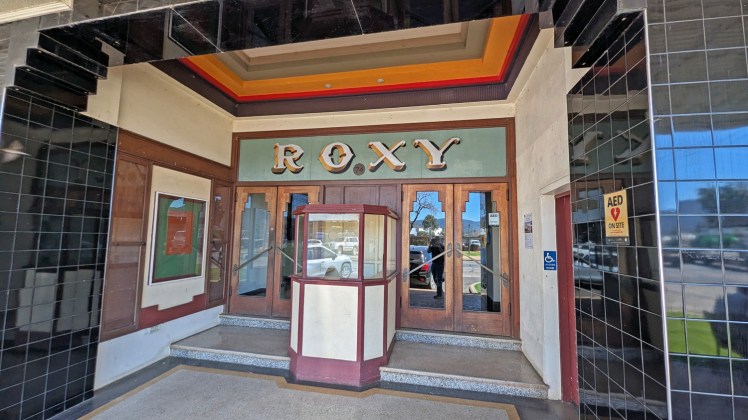
The Roxy ticket booth
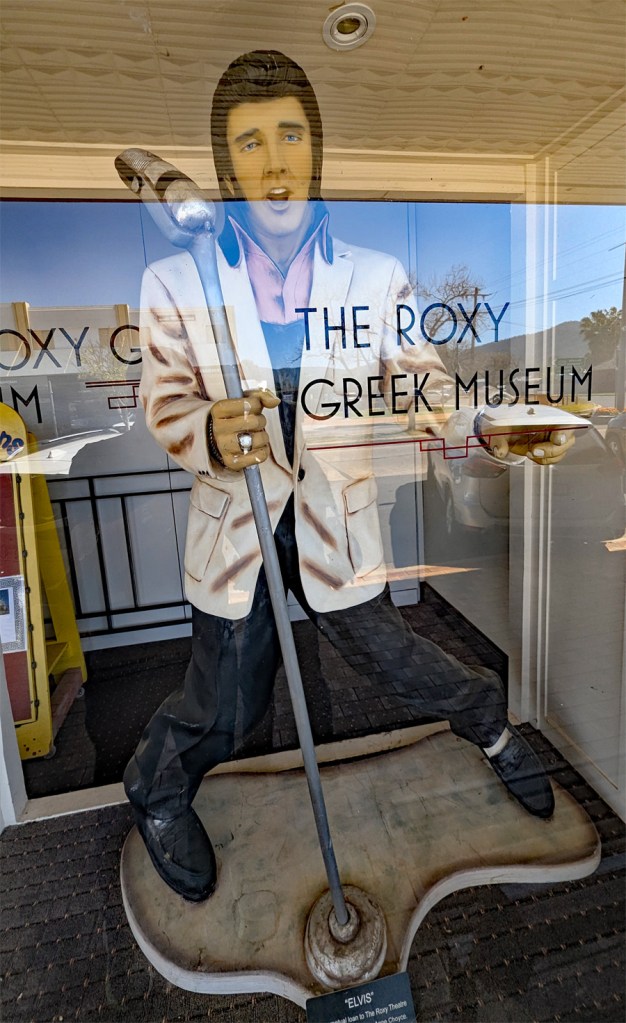
Elvis Presley at the Roxy. Some wisdom from Elvis: “When things go wrong, don’t go with them.”
The Myall Creek massacre was the premeditated mass murder of at least 28 unarmed Wirrayaraay (Gamilaraay nation) people, mostly women, children, and older men, by a gang of armed colonists and convicts on 10 June 1838 at the Myall Creek Station near Bingara. The attack occurred amid violent conflicts over pastoral land, water, and cattle during a period of severe drought. Station overseer William Hobbs reported the crime to the colonial government. There was an investigation and arrests were made. Ringleader John Henry Fleming evaded capture at the time returning to society after a few years without penalty. An initial Supreme Court trial in 1838 resulted in an all-not-guilty verdict amid intense public pressure and anti-Indigenous sentiment. The men were immediately retried on new charges. Seven of the men were convicted of murder and publicly hanged at Sydney Gaol.
The memorial site was established here in 2000, and the location was added to the National Heritage List in 2008 as a place of reconciliation and remembrance. It stands as a rare and historic instance in Australian colonial history where British subjects were successfully prosecuted, convicted, and executed for the mass murder of First Nations people. Following the trials, subsequent frontier violence by settlers against Indigenous populations was often more carefully hidden.
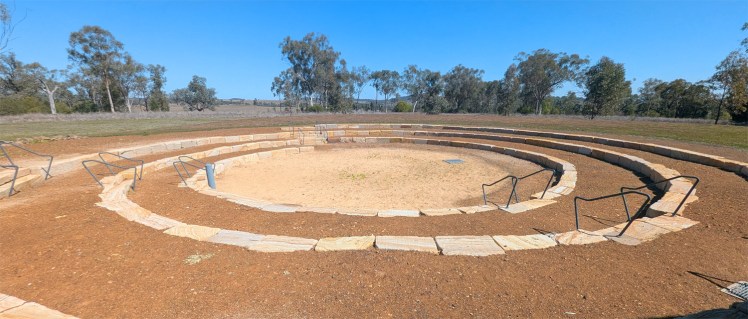
Myall Creek Memorial Site yarning circle.
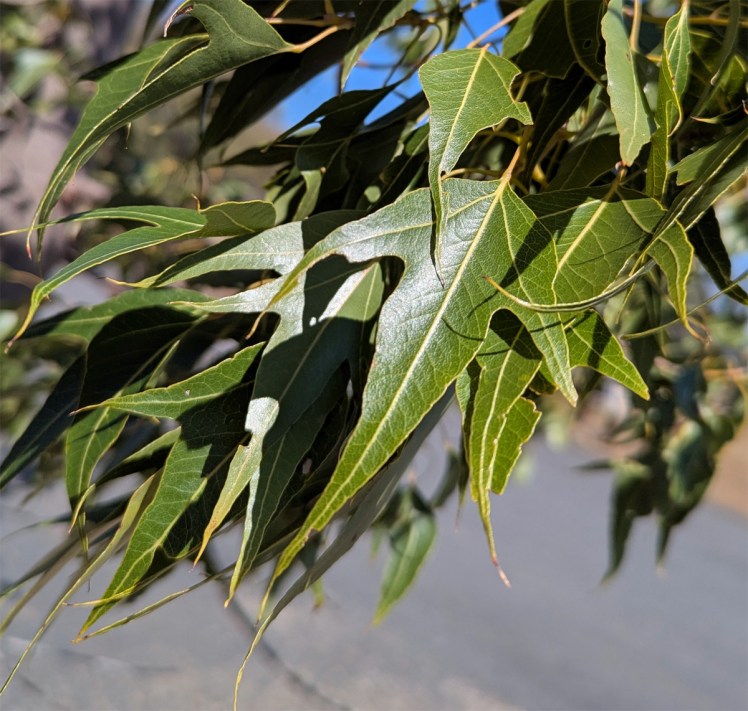
Kurrajong – variety trilobus.
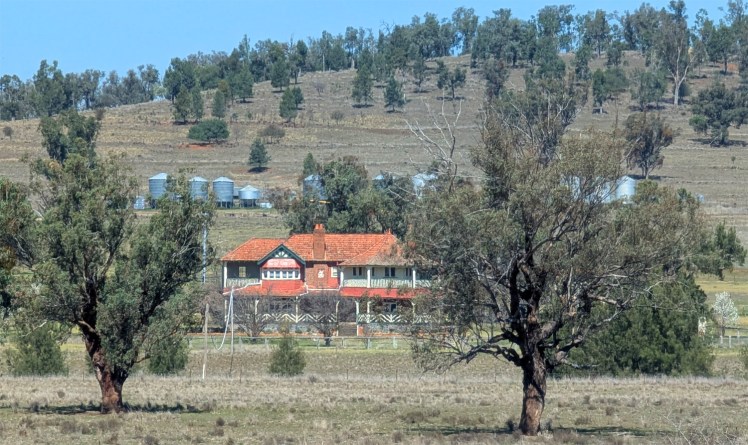
The Myall Creek homestead
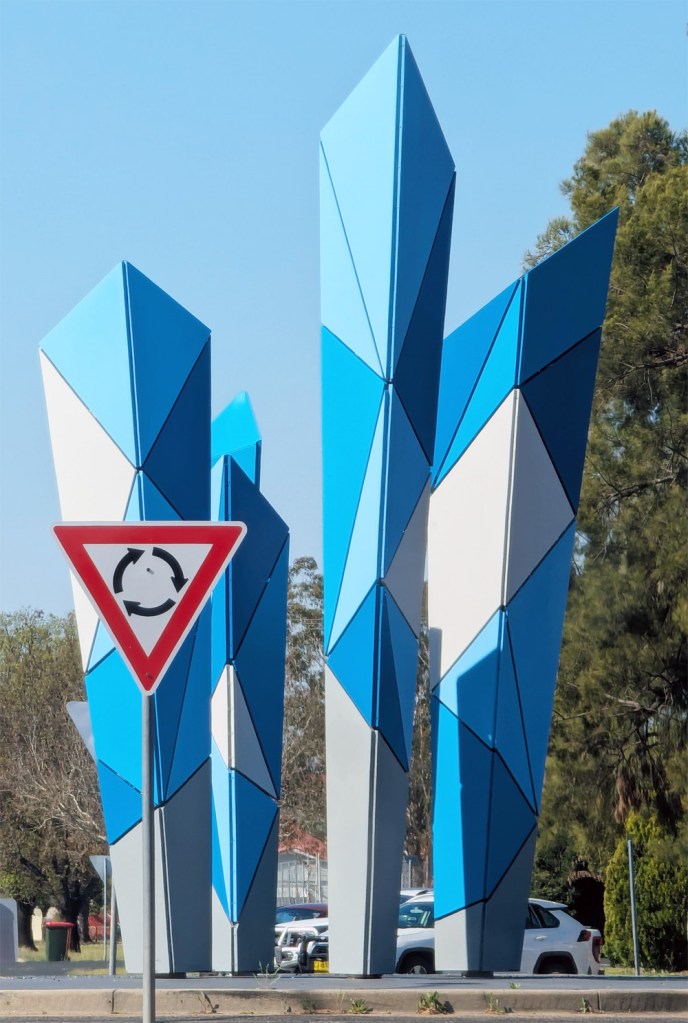
Inverell is the centre of the Sapphire industry so these stylised crystals in sapphire blue colour welcomes us to town.
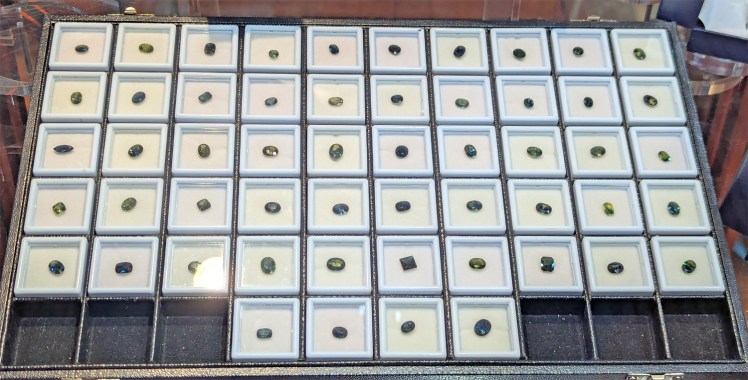
We check out some local sapphires.
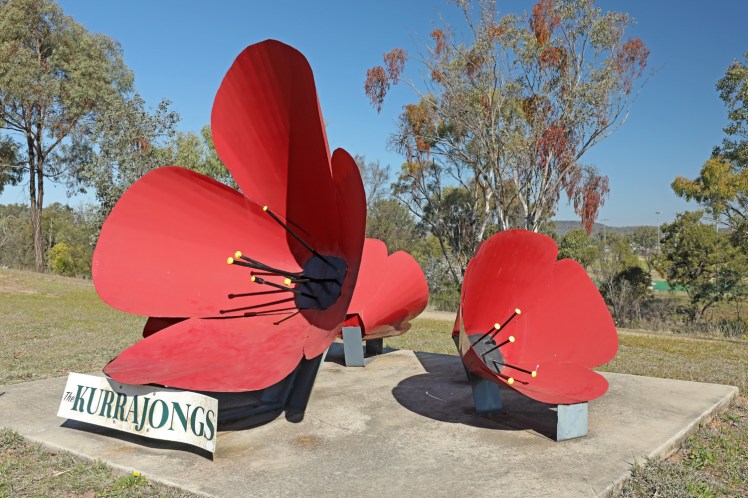
Giant Poppies installed by the Inverell RSL in 2015 for the ANZAC Centenary. The kurrajong trees in the park were planted in 1919 to honour the 114 volunteers known as the Kurrajongs who marched from Inverell in 1916. Only one in five local men returned from the war.
We’re happy little Vegemites
As bright as bright can be
We all enjoy our Vegemite
For breakfast, lunch, and tea…..
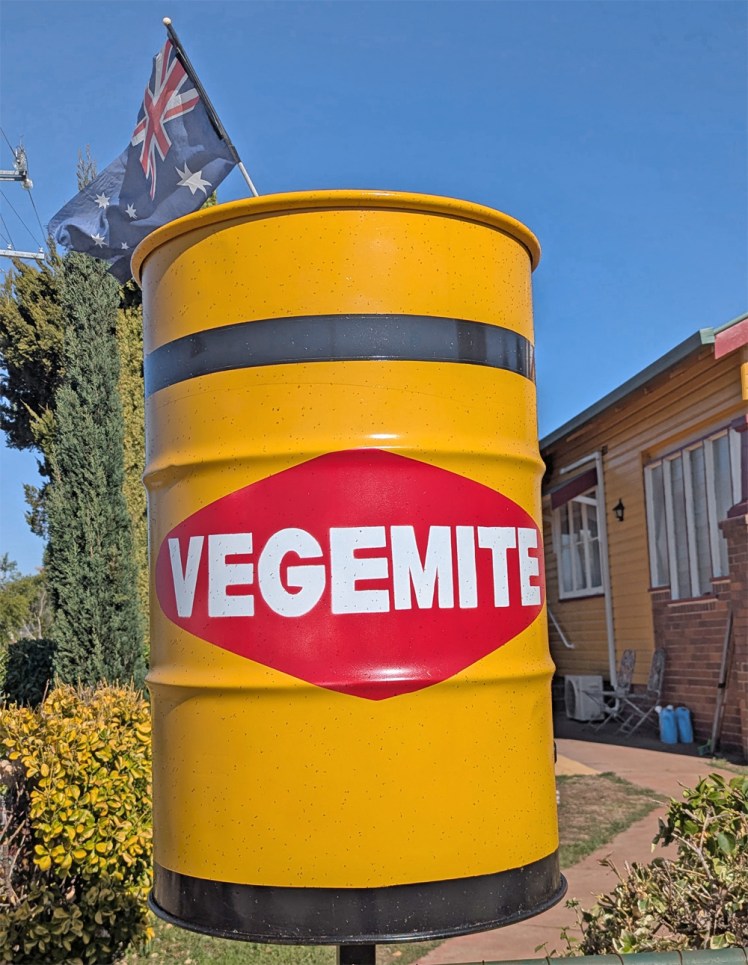
An enterprising householder has this in his front yard in Inverell. The house is also painted in vegemite colours. I suppose with a 44 gallon drum of vegemite, they won’t have a dropbear problem.
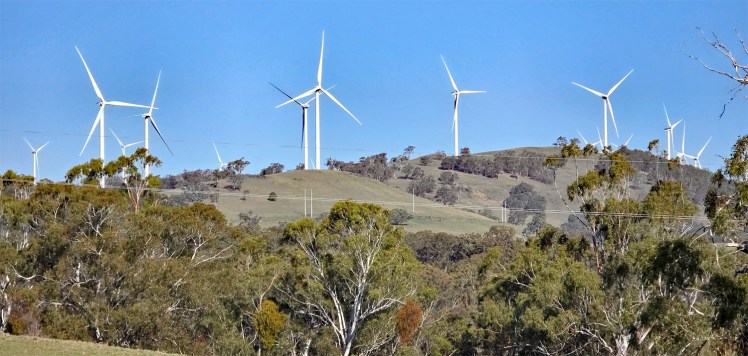
Wind farm near the Gwydir Highway
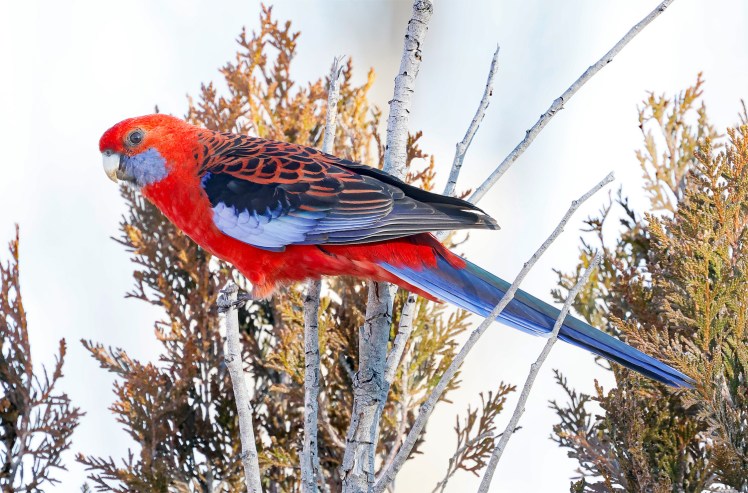
Back in the ranges, we are in Crimson rosella territory again.
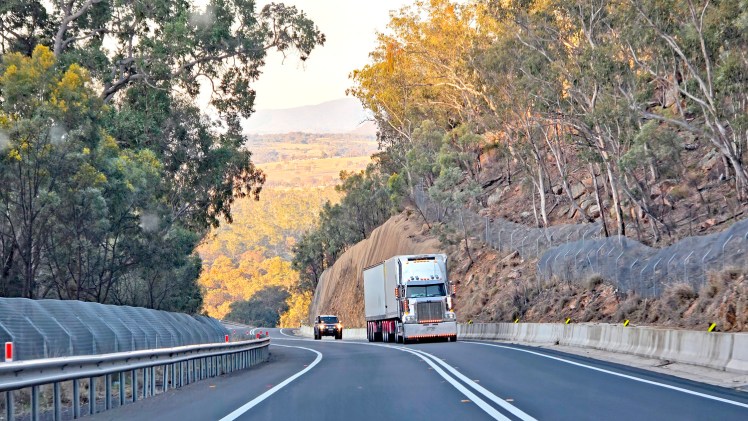
Bolivia Hill on the New England Highway
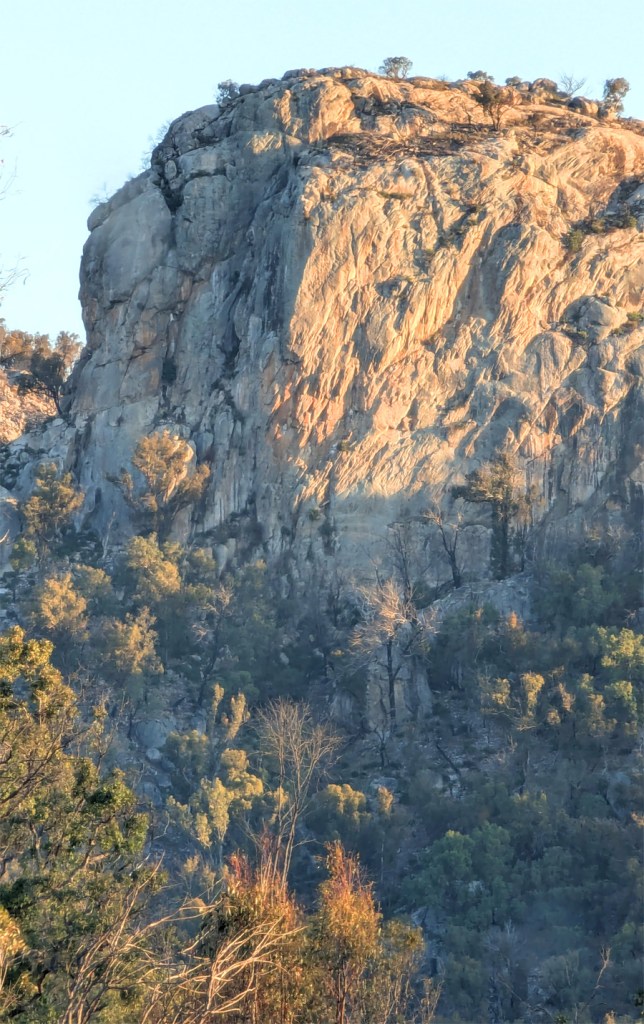
The Bluff – a prominent landform on the New England Highway.
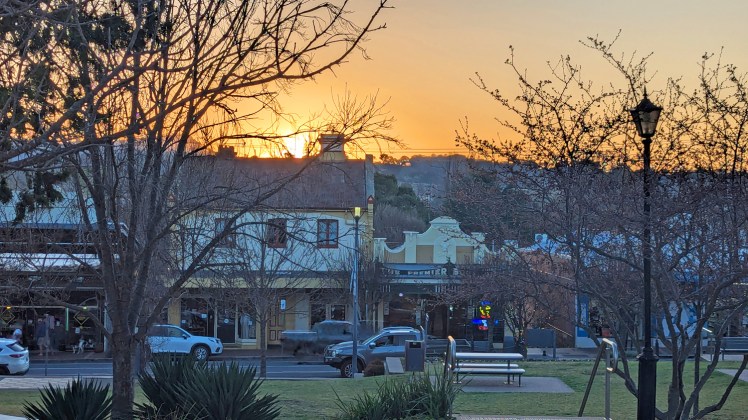
Tenterfield
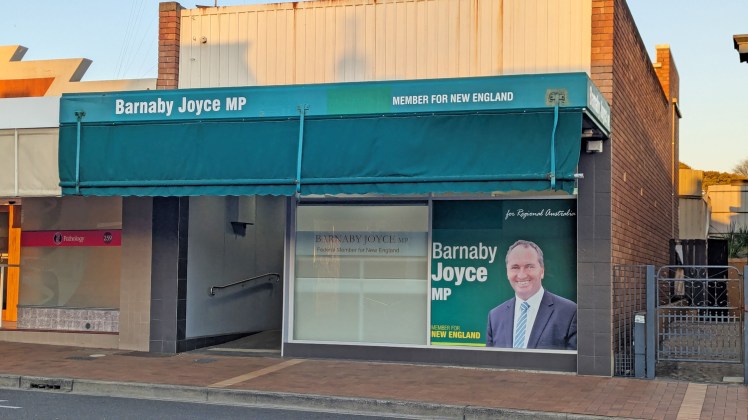
I was surprised to see Barnaby Joyce’s electoral office in Tenterfield still painted in The Nationals political party colours instead of orange, his new favourite colour. You can always tell a person by the company they keep. The State We’re In!
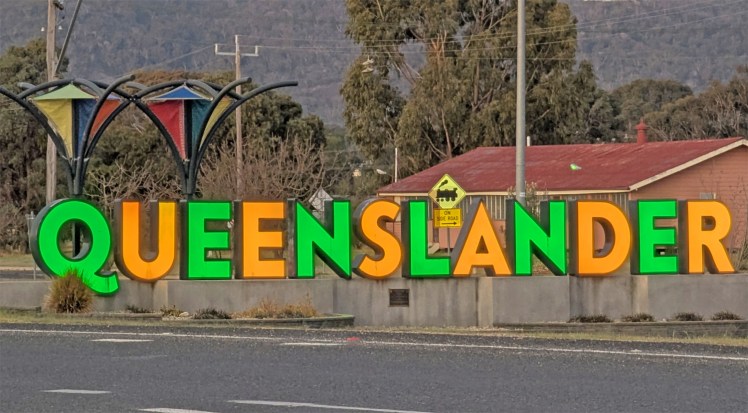
And the State We’re In now is Queensland! The illuminated sign at Wallangarra.
Overnighting in Stanthorpe.

