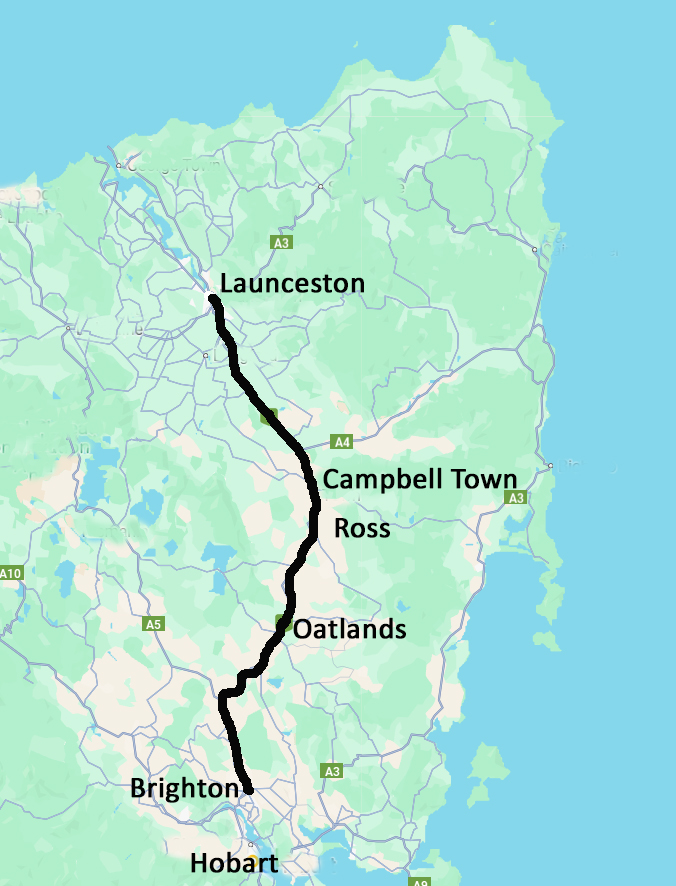
A drive through the Midlands.
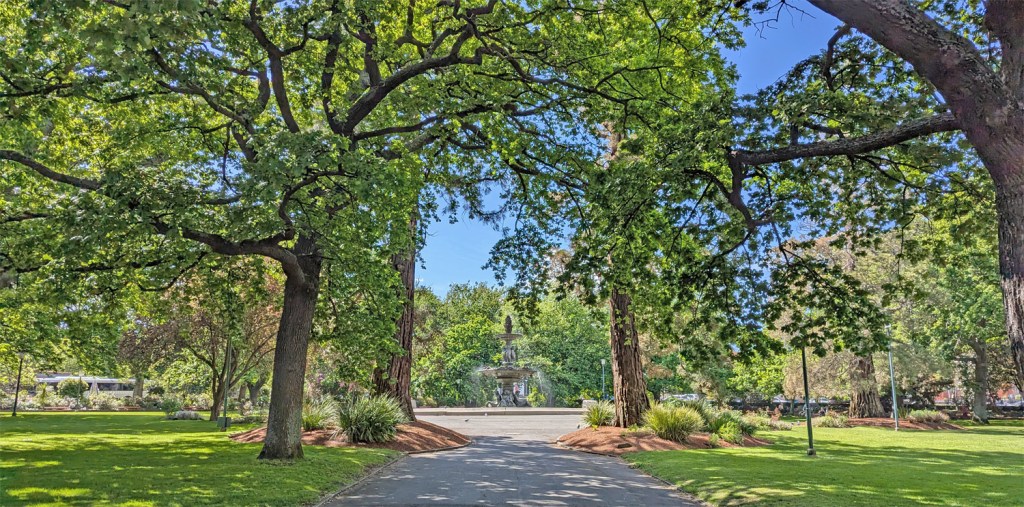
We start the day in the gardens at Launceston.

Japanese maple
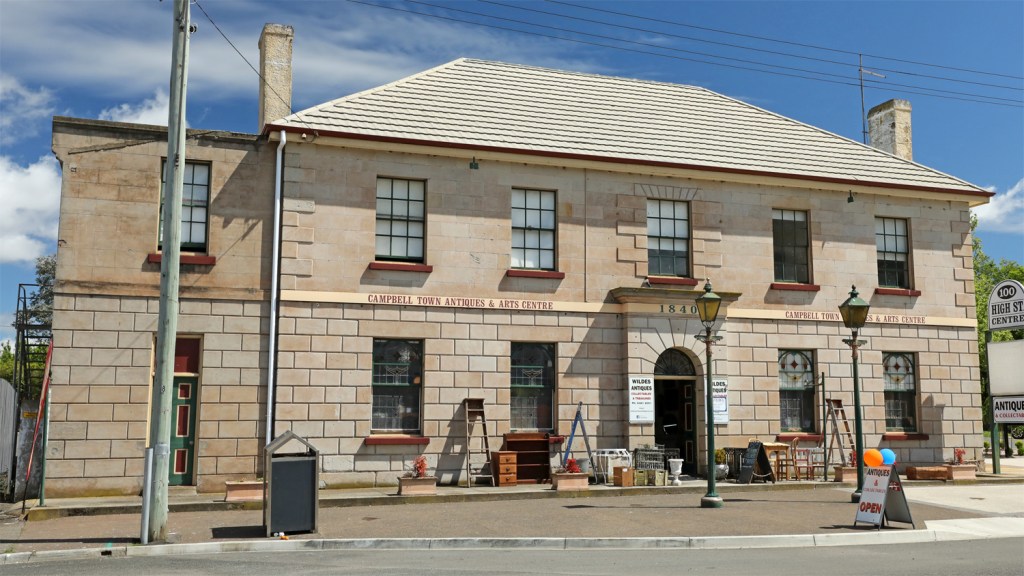
Campbell Town Inn which was built in 1840. Campbell Town was established in 1826 as a garrison town with soldiers to maintain the displacement of the Tyerrernotepanner people who were formidable opponents of settler colonisation and aggression during the Black War. The last members of the Tyerrernotepanner were, under orders from Governor Arthur, exiled from their country to die along with hundreds of other Tasmanian Aboriginals in the squalor of Wybalenna on Flinders Island in Bass Strait. They were promised a return to their traditional country which never happened. Wybalenna was established as the so-called “Aboriginal Settlement” in 1834 for the purpose of being “civilised and Christianised”.
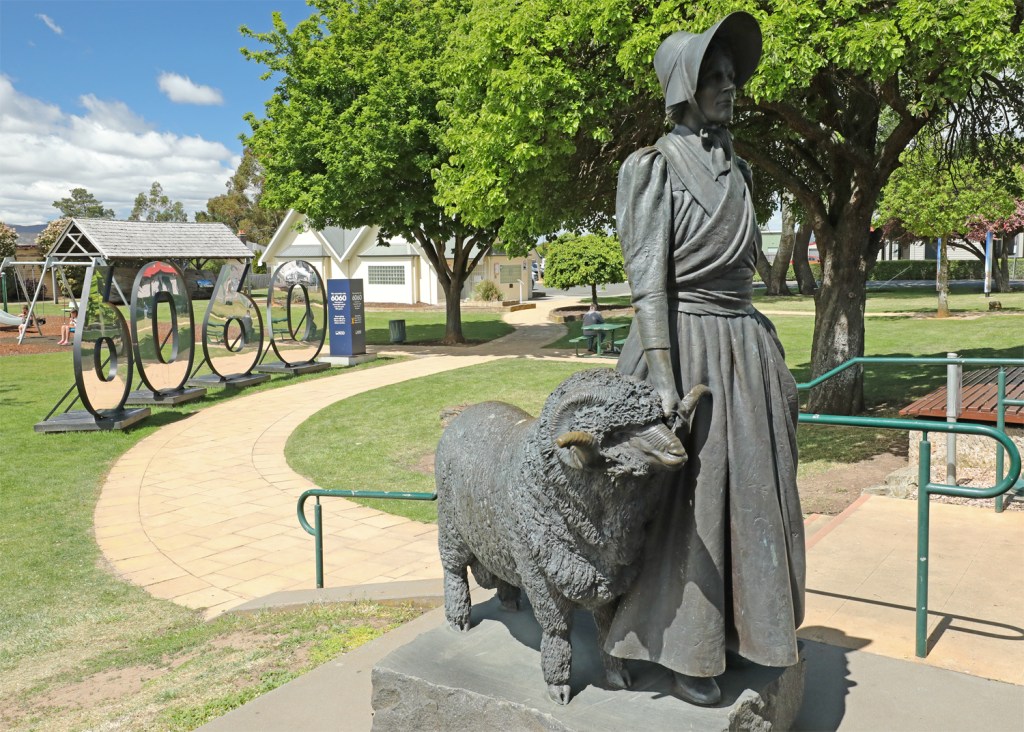
A ramdom act by one of the early wool farmers in the district.
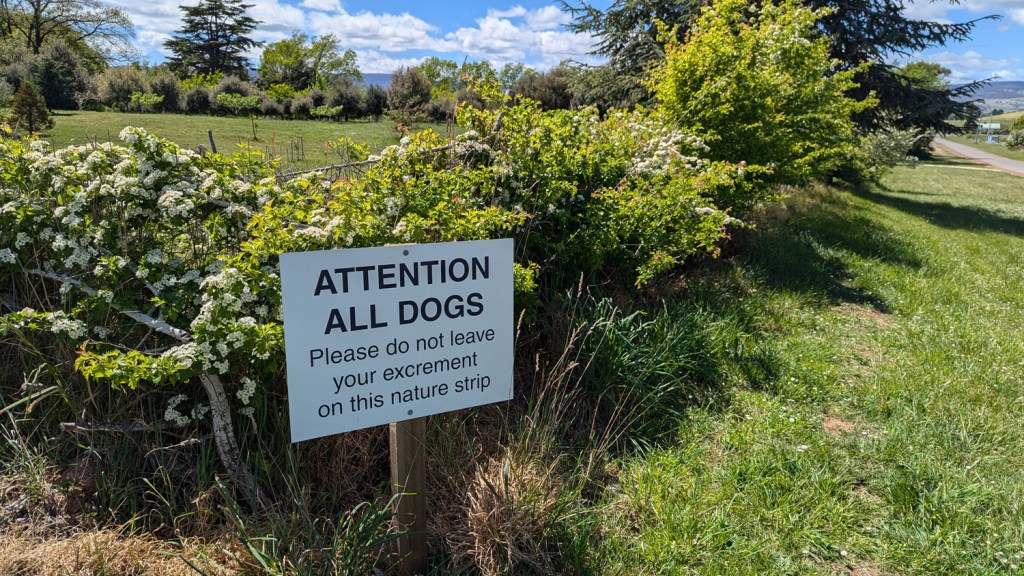
Campbell Town has some of the most literate dogs in Australia.
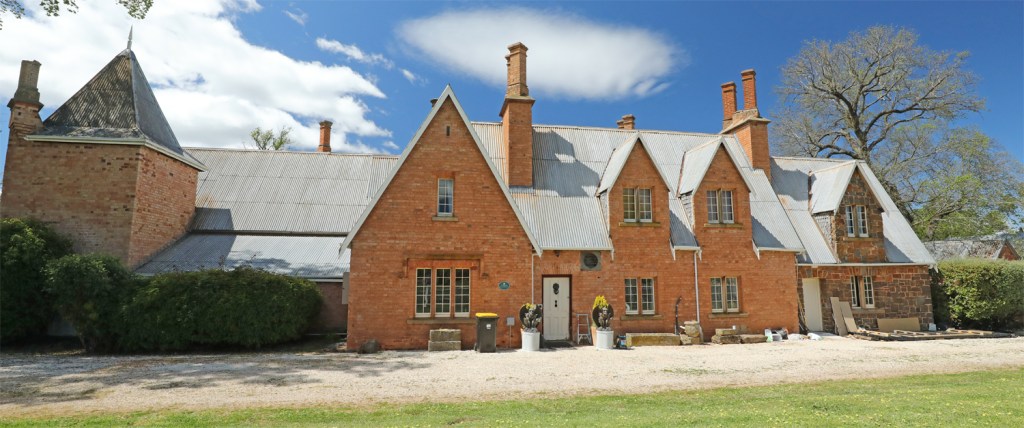
The Grange was built in 1847 in the style of an English manor house as a residence for the local doctor.
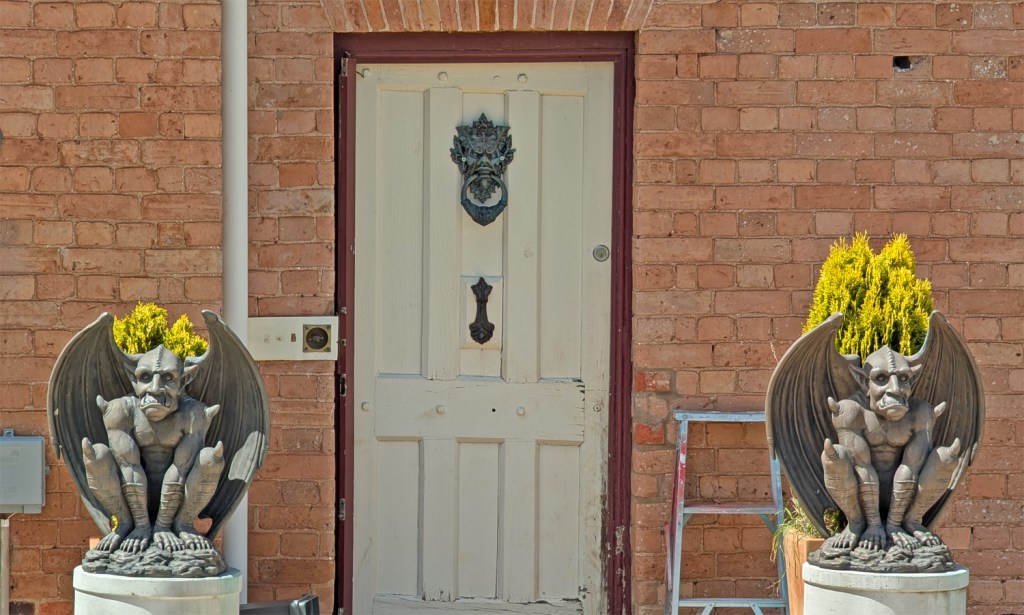
Devillish welcome to The Grange.
Did you hear about the dyslexic devil worshipper? He sold his soul to Santa.
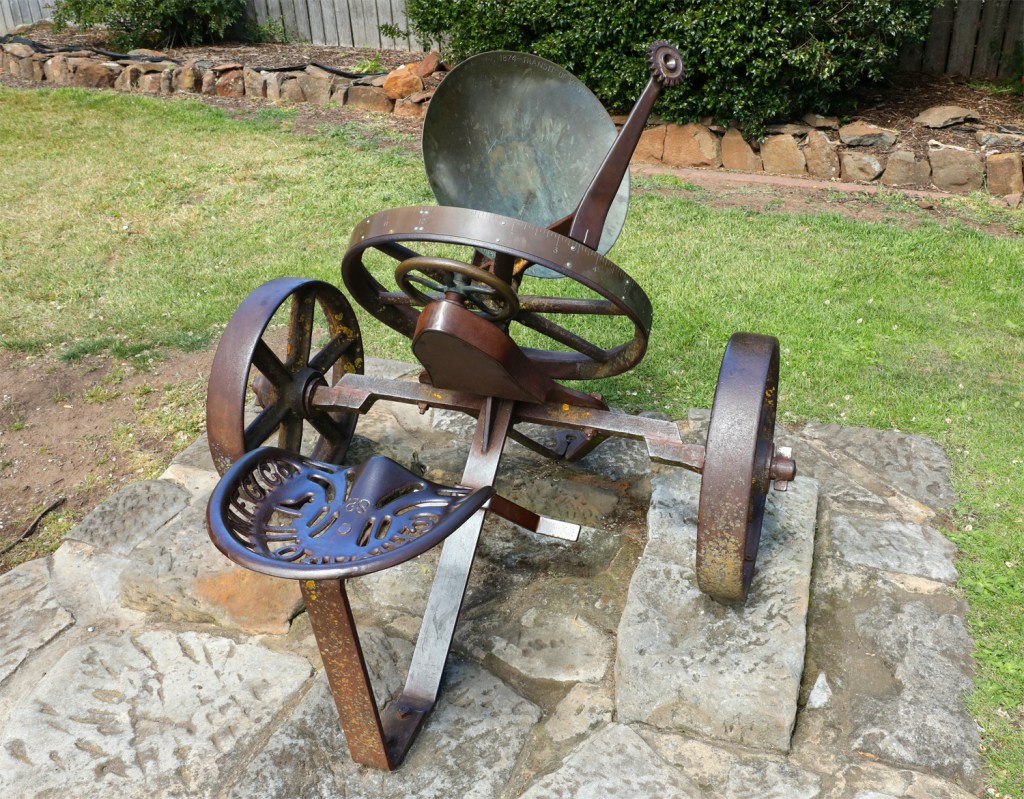
Stylised sculpture of a sundial made with agricultural parts to mark the observation of the Transit of Venus here in 1874.
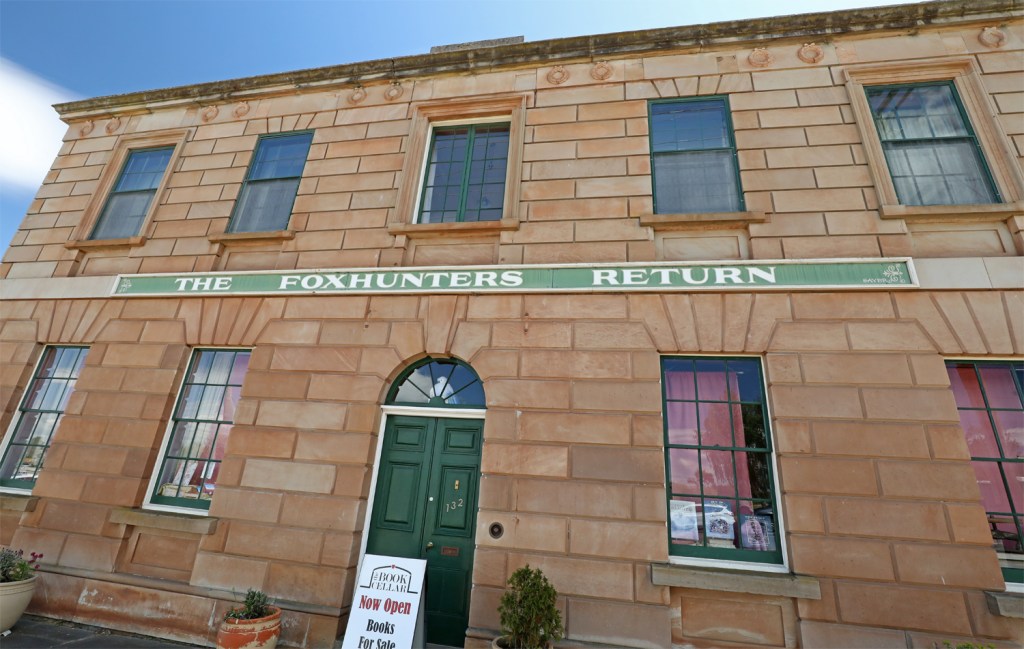
The Foxhunters Return (bad news for the foxes) – an old coach inn from 1833.
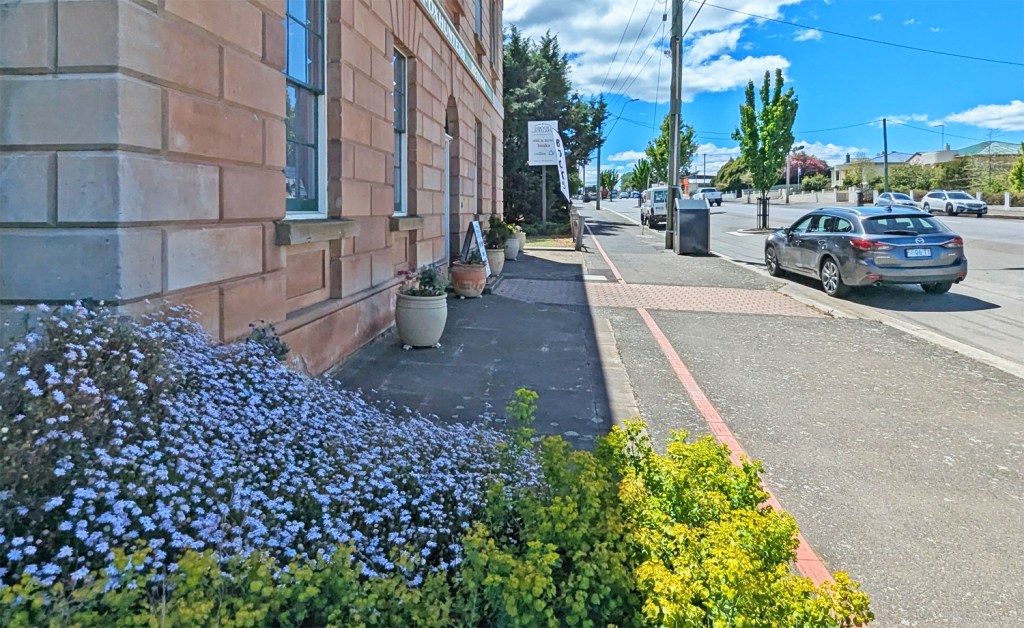
The Convict Brick Trail – a long, single line of bricks extending along the footpath for a number of blocks. Each of the hundreds of bricks records the life of a convict including the ship and year they arrived in the colony.
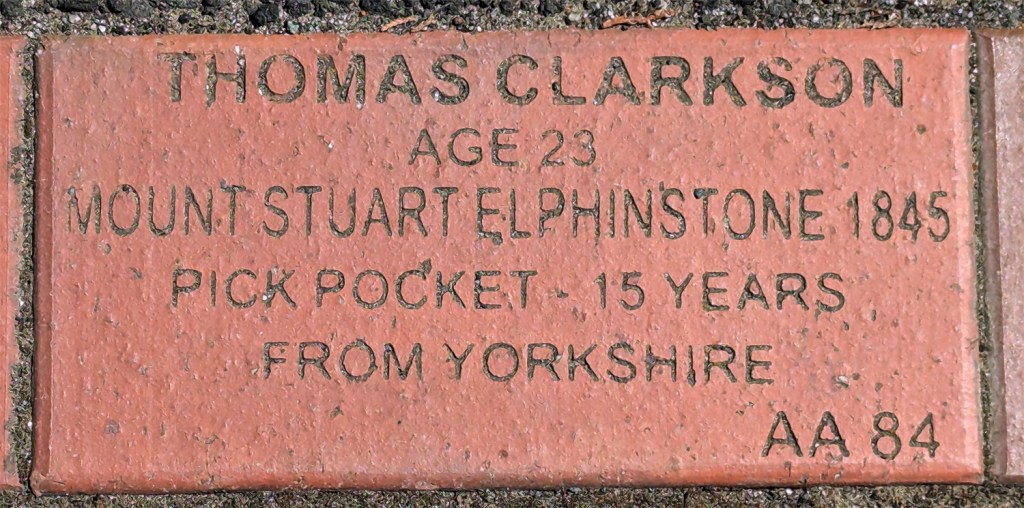
Maybe a distant relative of mine?
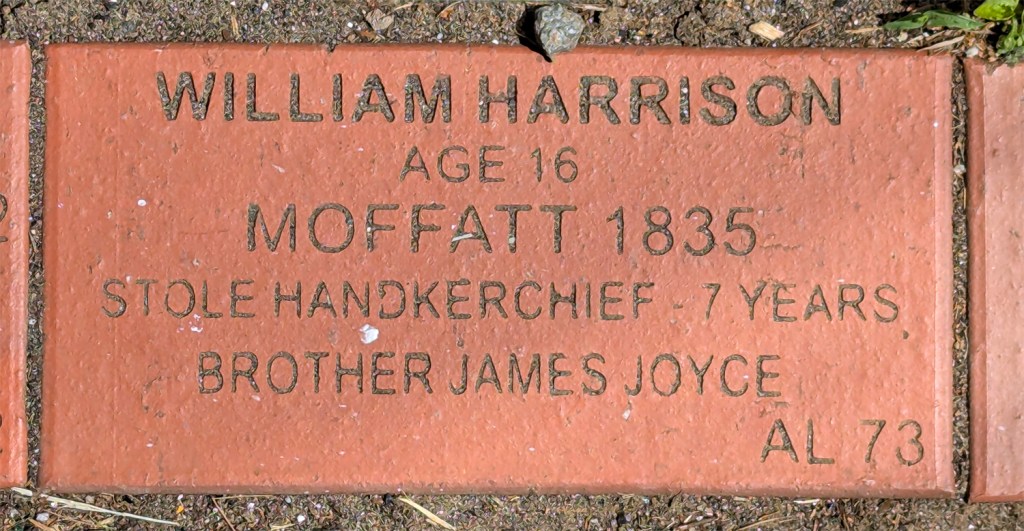
Several bricks tell of convicts who were transported to Australia for stealing handkerchiefs. I am wondering if they were picking them up from the ground when ladies were dropping them near possible suitors as was the custom in Victorian England. Or it is possible that “Stole Handkerchief” is a euphemism for “Hanky-panky” where fathers has unsuitable suitors for their daughters dispatched to the colonies.
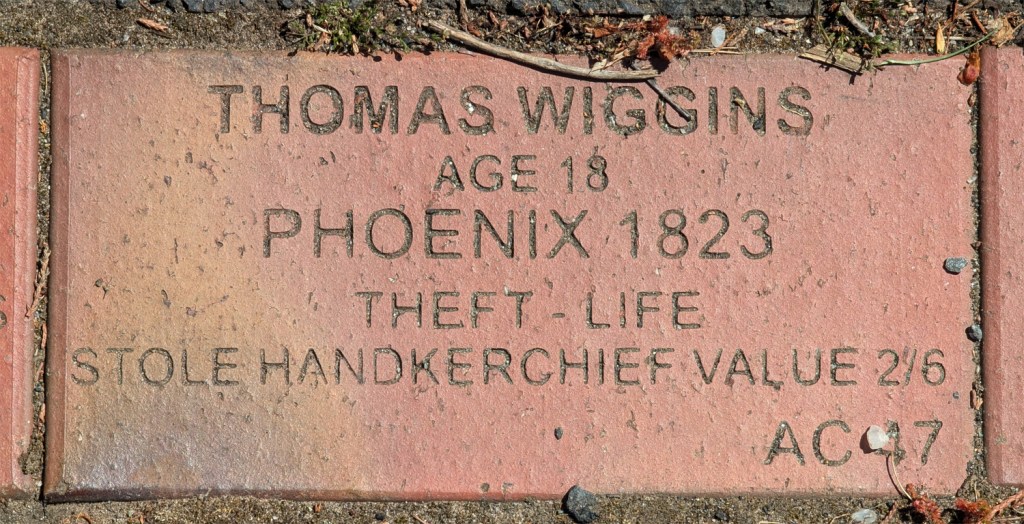
British justice – some received 7 years for handkerchief heists, whereas others received life sentences. I suppose it depended on whose handkerchief it was. It’s just snot fair!
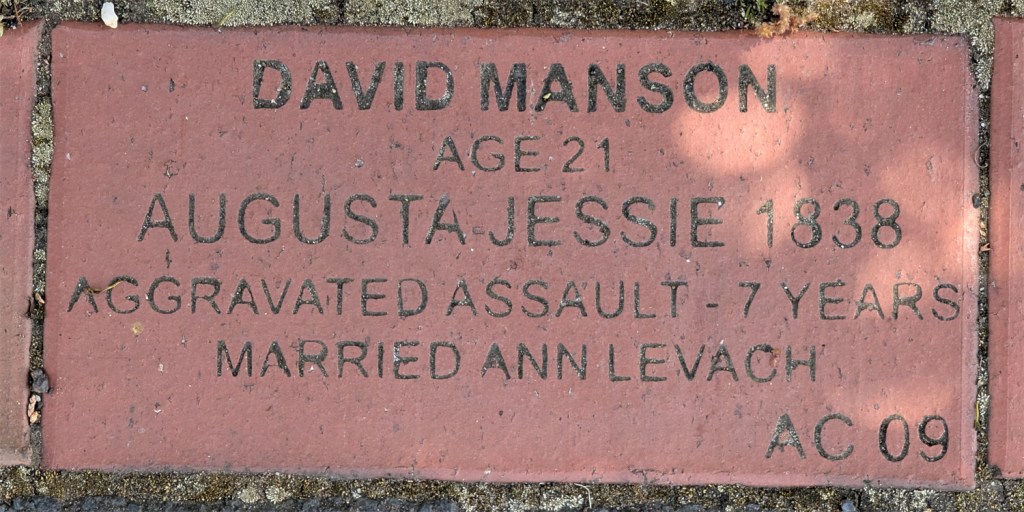
Handkerchief heists were sometimes more serious than aggravated assault in Victorian England.
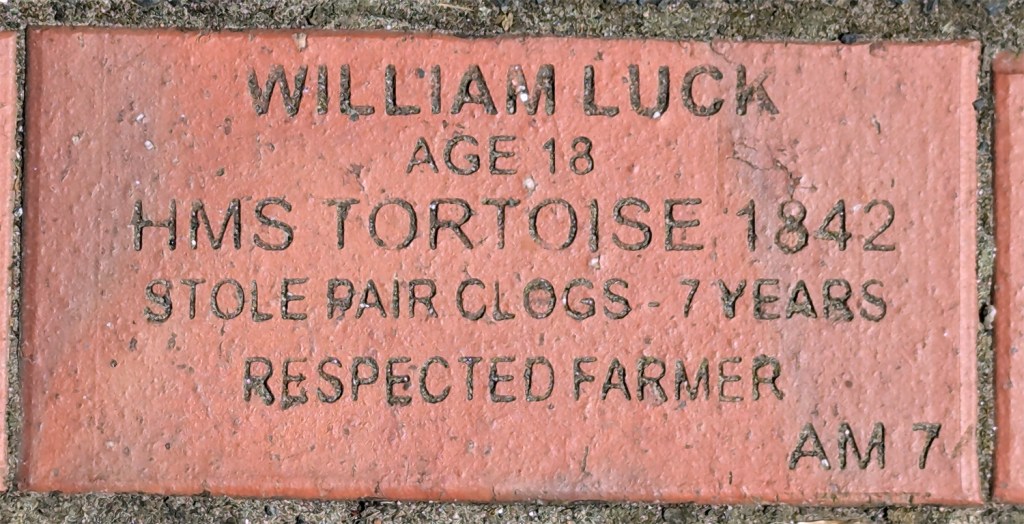
William ran out of luck when easily chased down by the police while trying to run away in his new footwear.
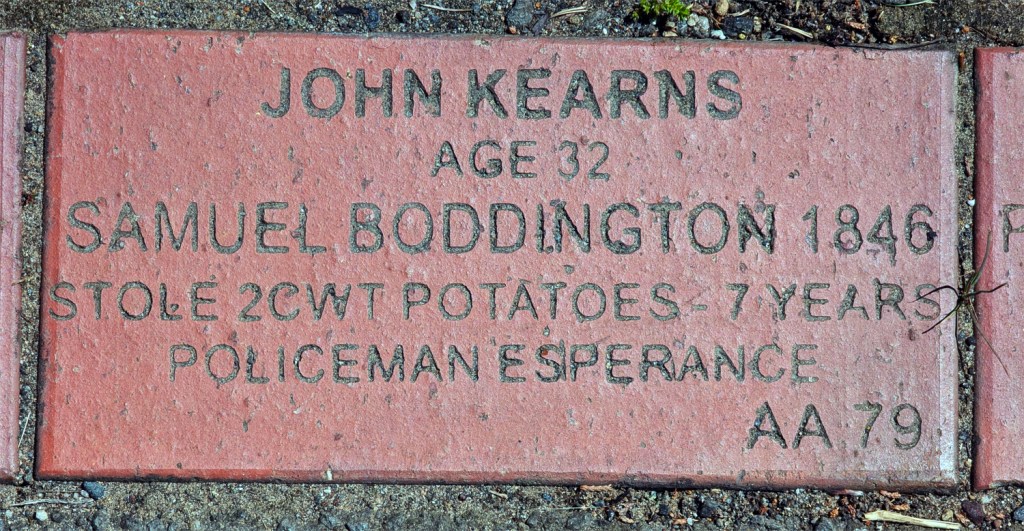
John really…really…loved his taties. At least he ended up on the right side of the law.
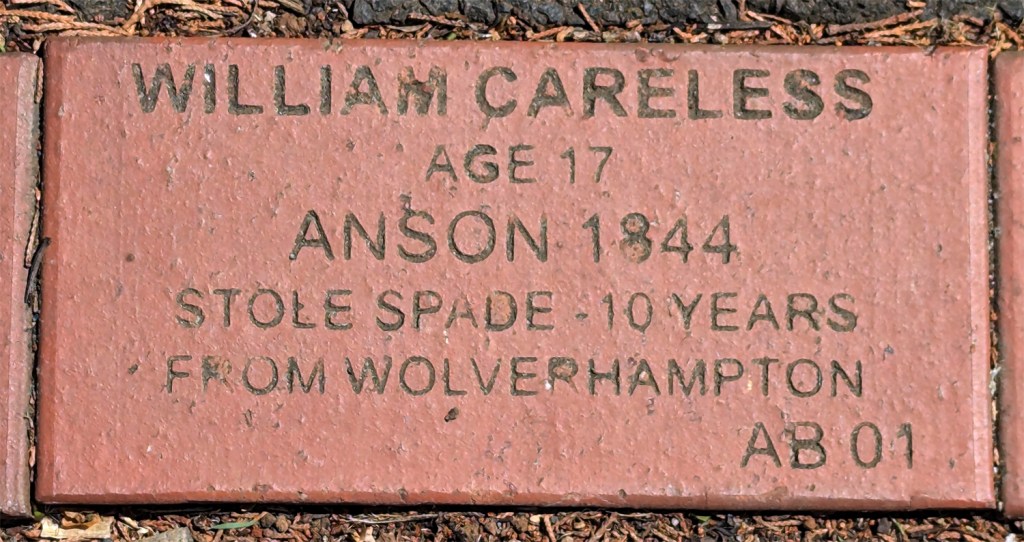
The judge deemed William careless for his actions and he became one of the first Wolverhampton Wanderers.
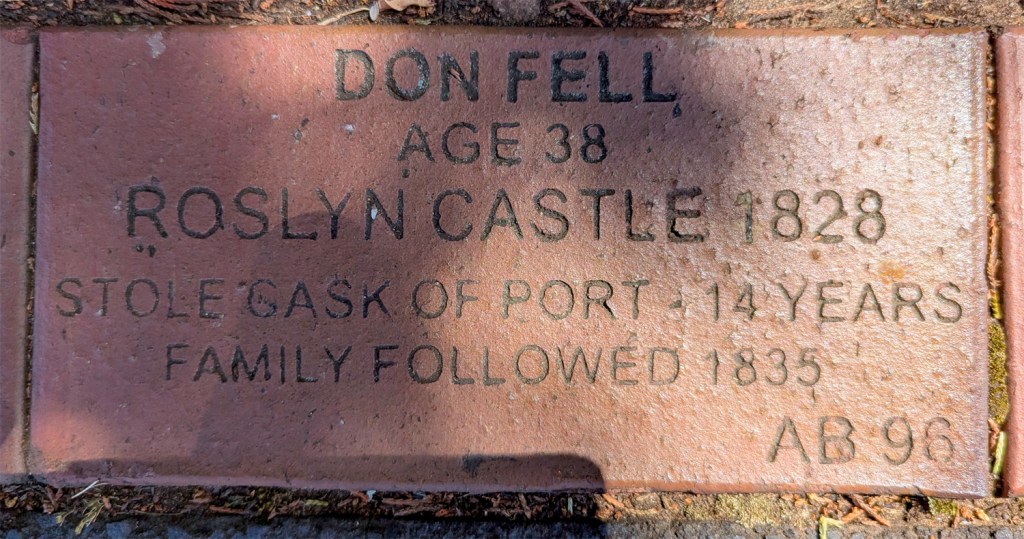
Don fell foul of the law and was an easy arrest….
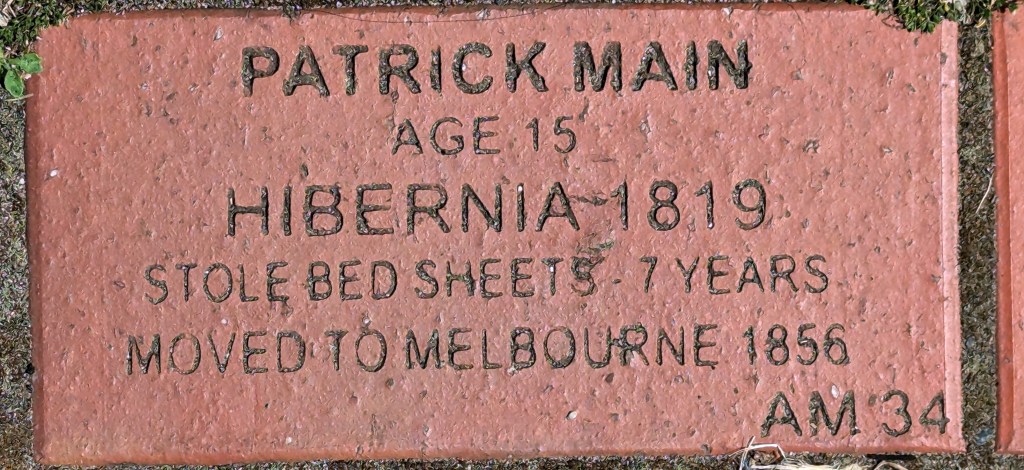
…and the sentencing really gave Patrick the sheets.
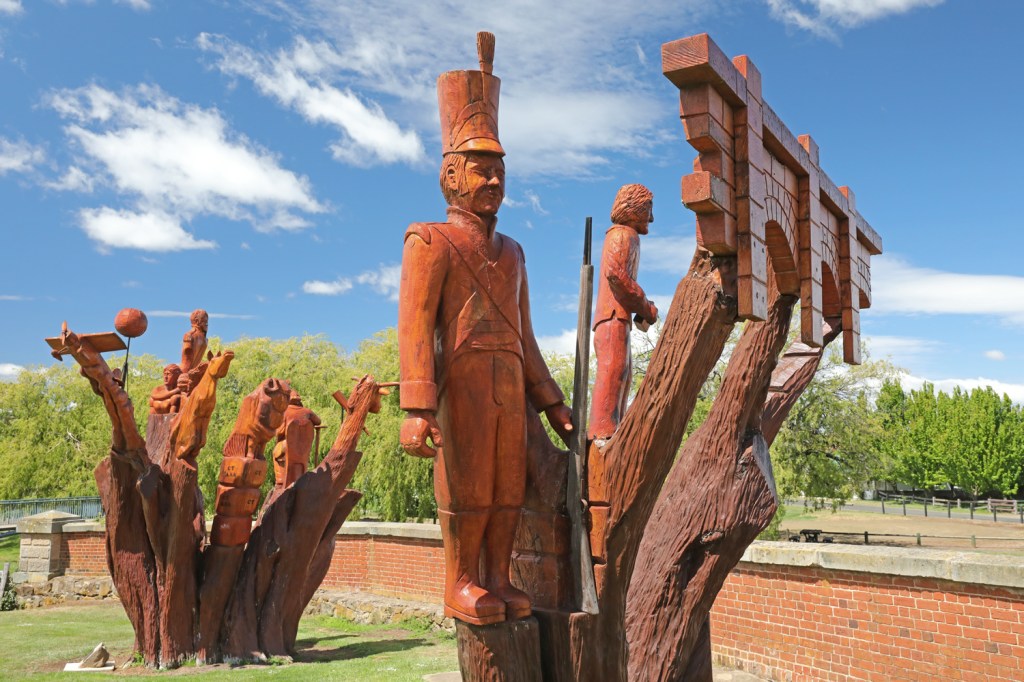
Historical carvings telling the colonial history at Campbell Town. What’s the best way to carve wood? Whittle by whittle.
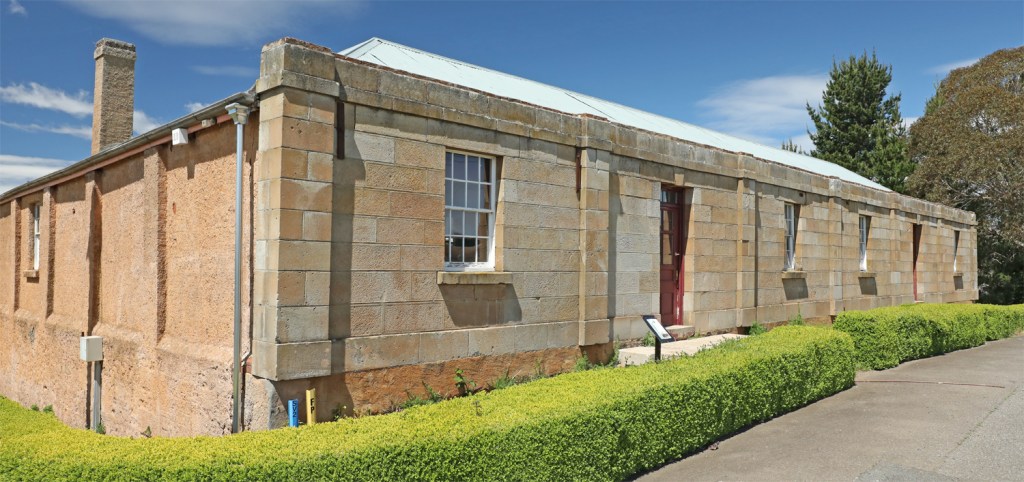
Keans Brewery 1840
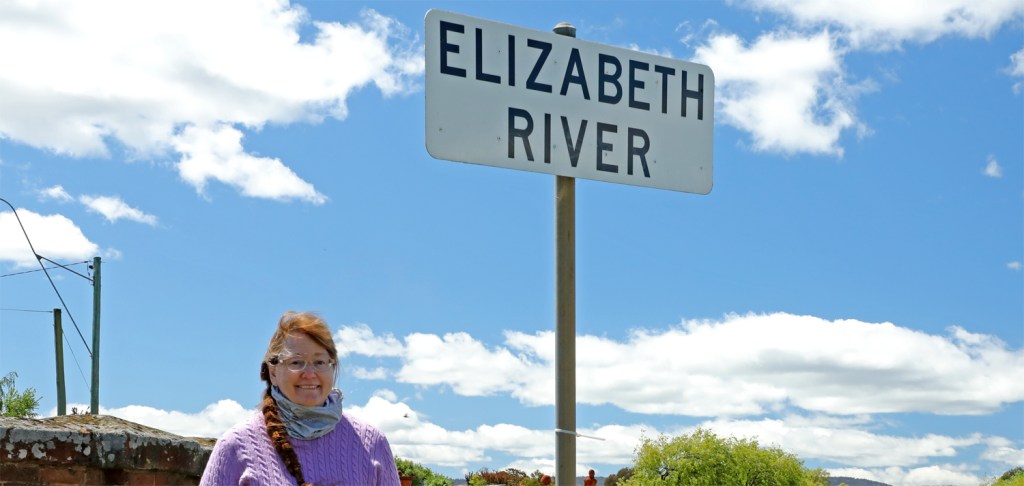
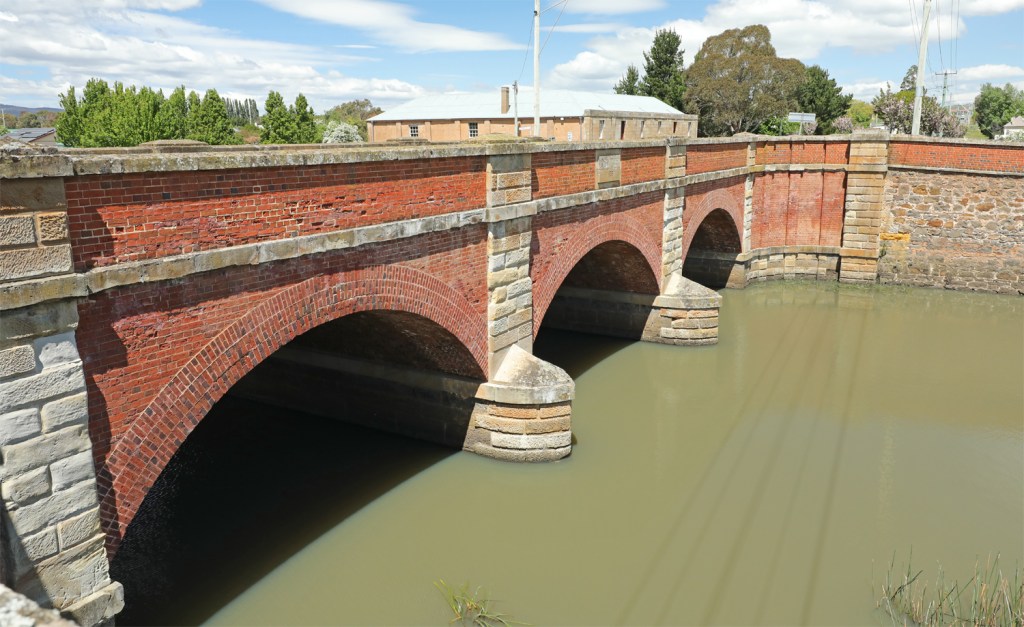
The Red Bridge over Elizabeth River was built in 1836 using convict labour. It is the oldest surviving brick arch bridge in Australia and the oldest bridge anywhere on the National Highway.
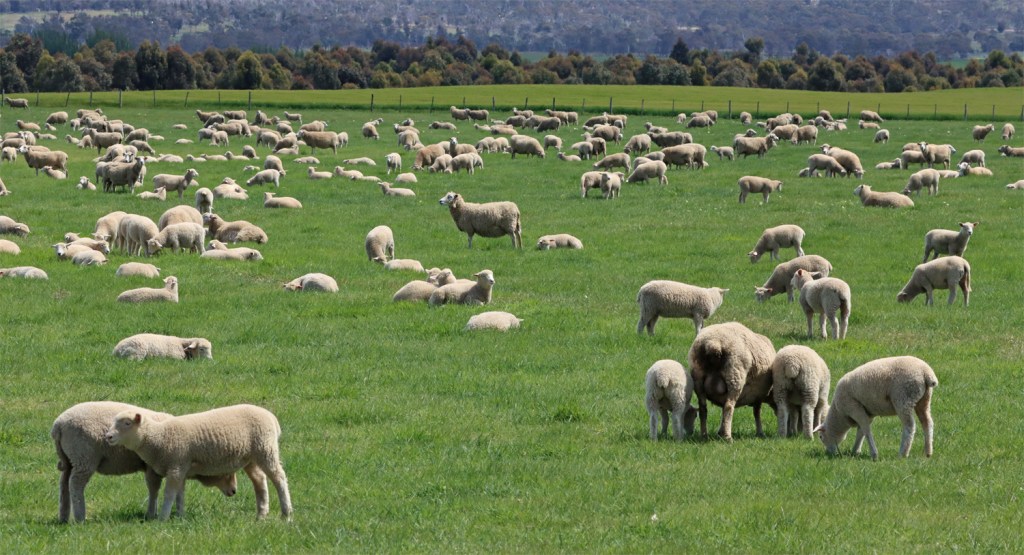
Some of the finest wool in the world is from this district.
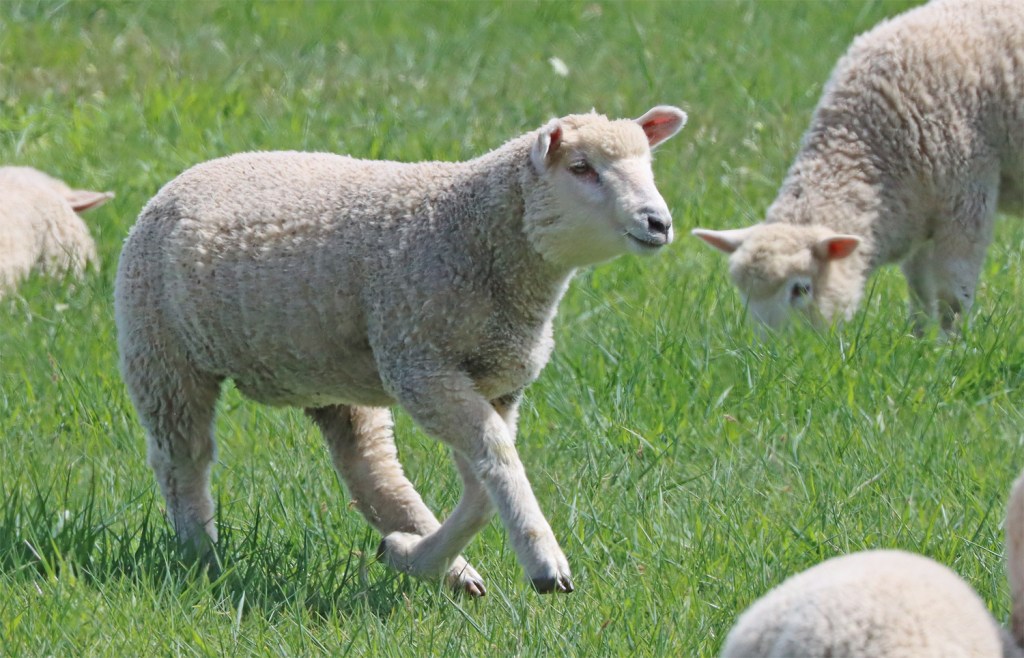
Jacqui the Lamb-ie doing some networking.
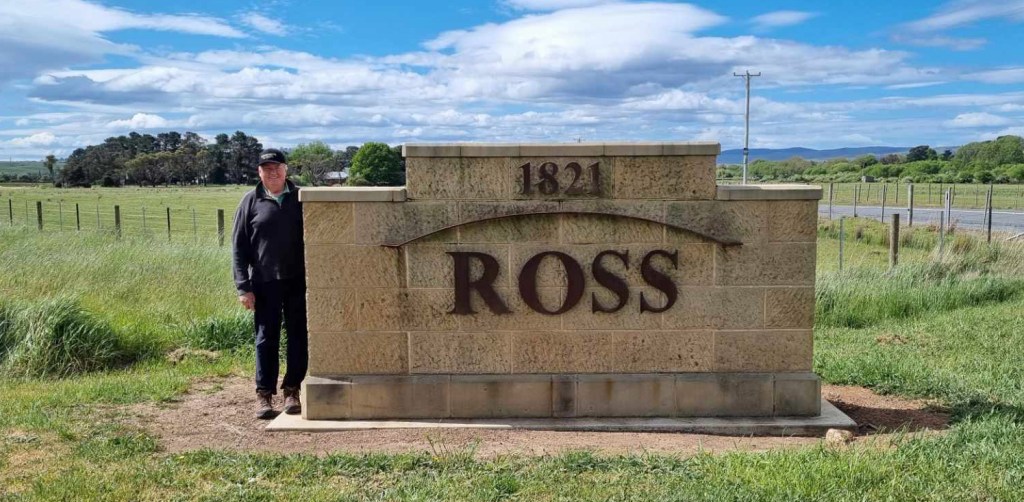
Welcome to Ross, one of the finest small towns in Australia. Ross was first colonised around 1812 but was renamed Ross by Governor Lachlan Macquarie in 1821.
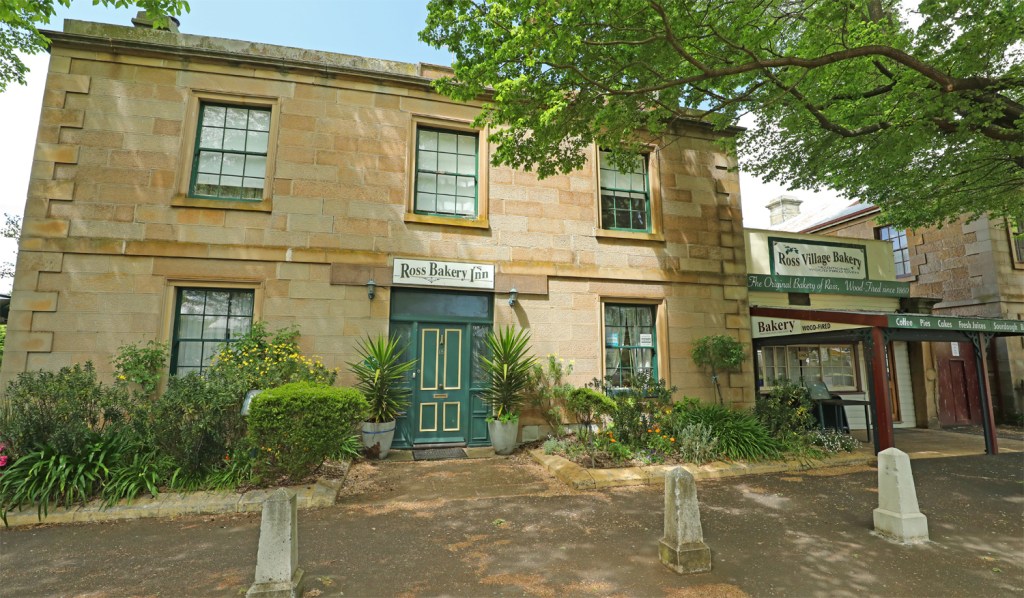
The Ross Village Bakery was built in 1860 and has the original wood-fired oven. Sadly closed today!
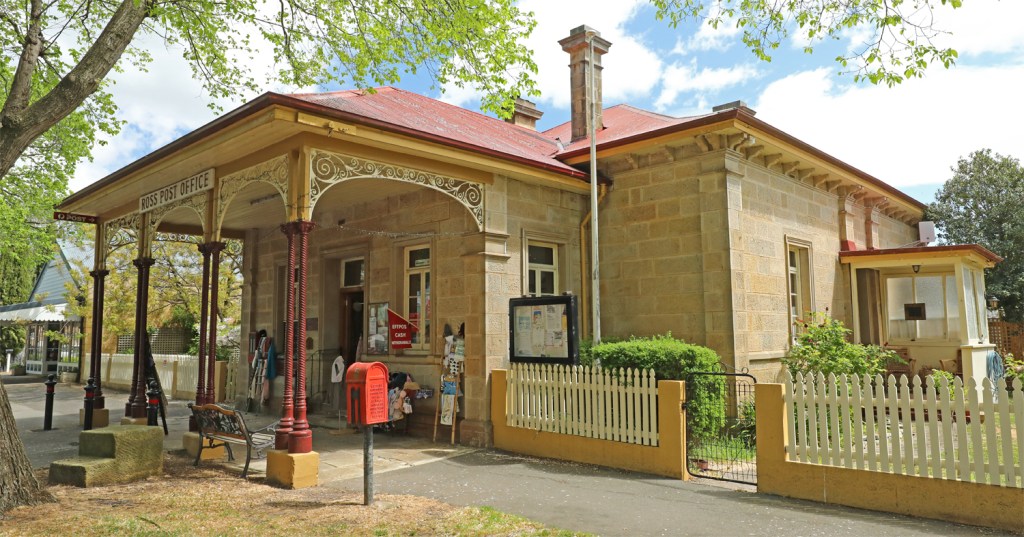
Ross Post Office
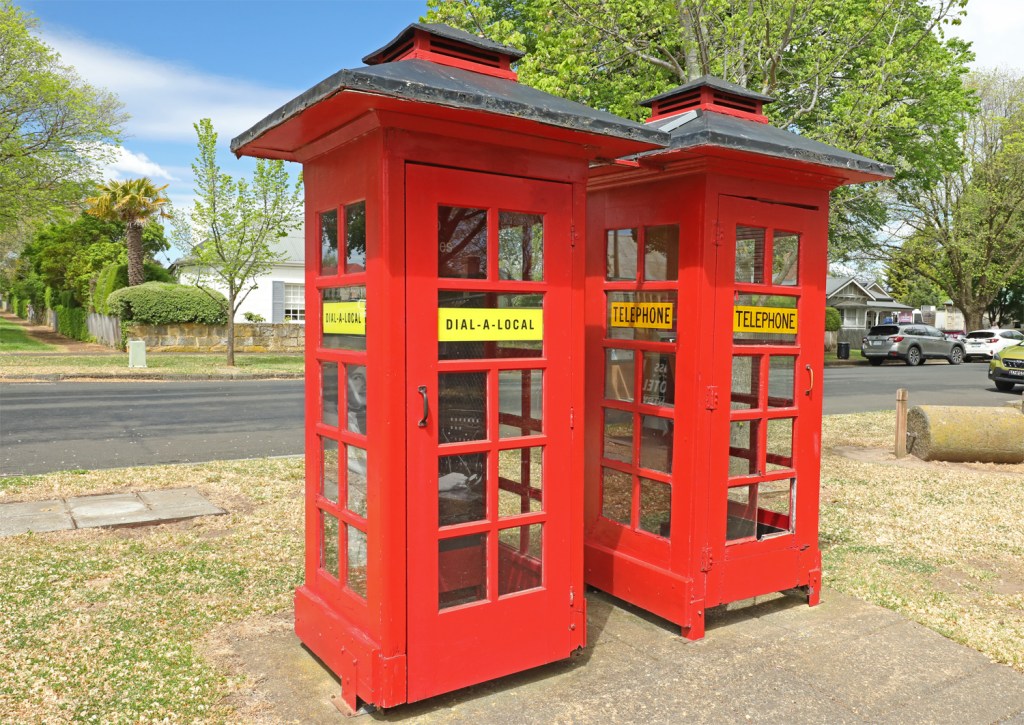
Modern telecommunications has arrived in Ross.
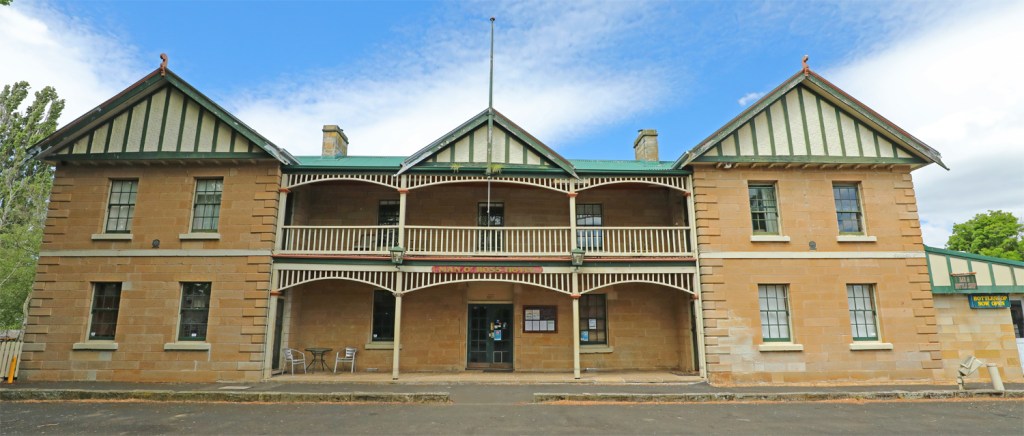
Man O’ Ross Hotel was built in 1831.
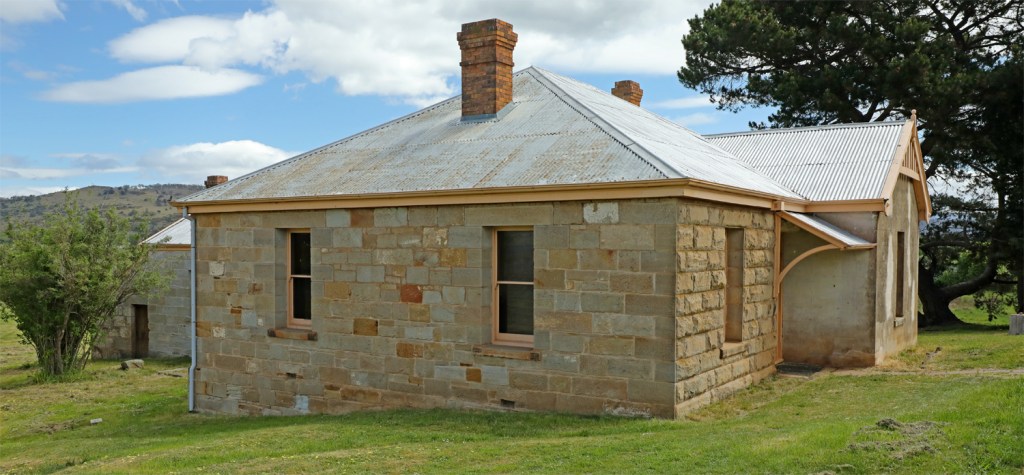
Female Convict Factory ruins – between 1848 and 1854 approximately 12,000 female convicts passed through the Female Factory. The site served as a factory as well as a hiring depot for female convicts working in farms and settlements. Life for female convicts was much harder than for men.
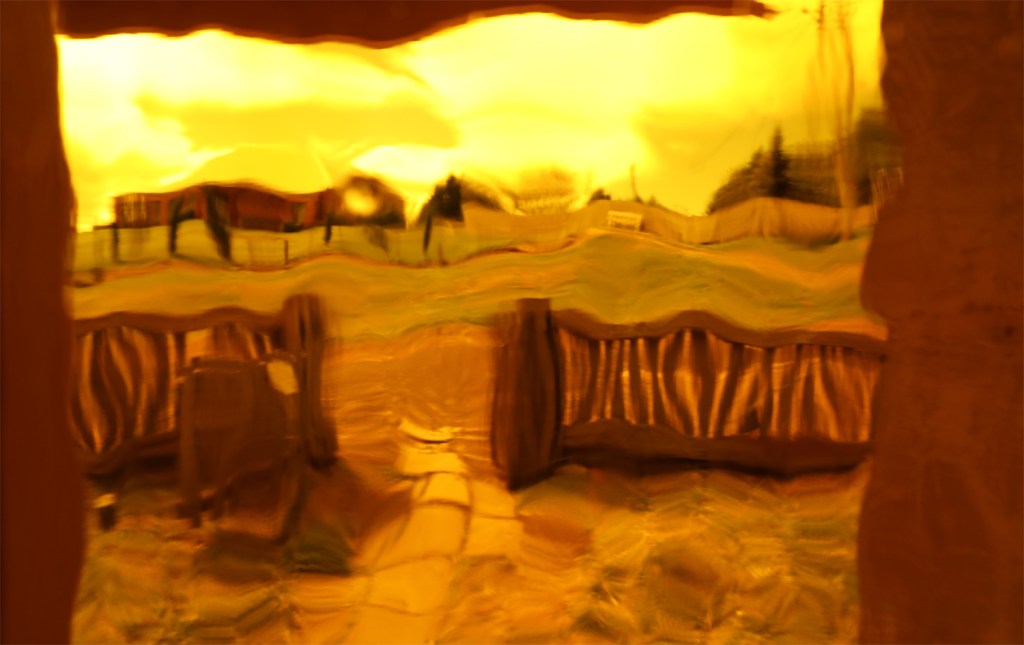
View through the old stained glass of the front door.
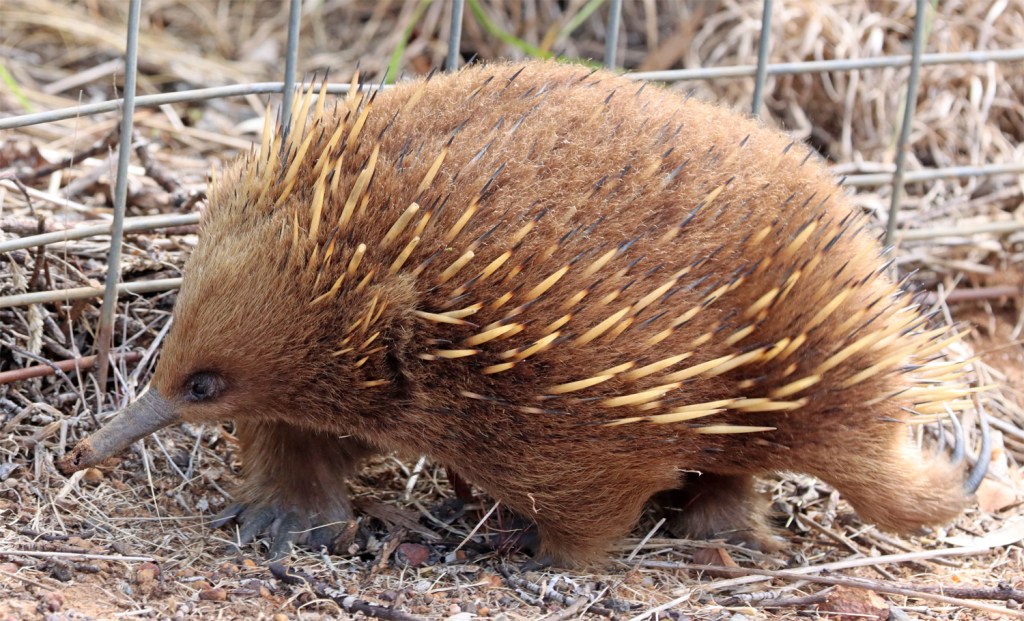
An echidna walking along a street in Ross. Echidnas in Tasmania are a subspecies of the mainland echidna with much longer fur. The scientific name is Tachyglossus which means fast tongue as they flick their tongue up to 100 times a minute when eating ants. Their body temperature is between 30 – 32 degrees C making then the second lowest body temperature of any mammal.
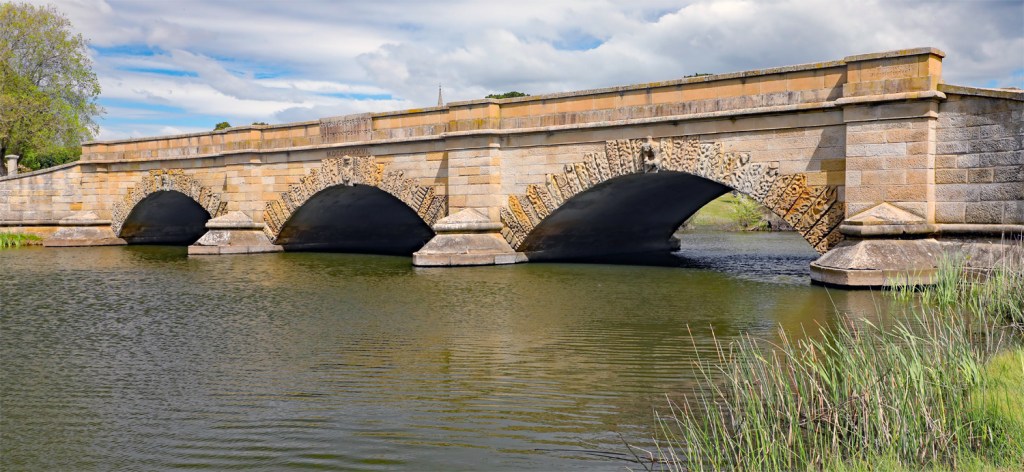
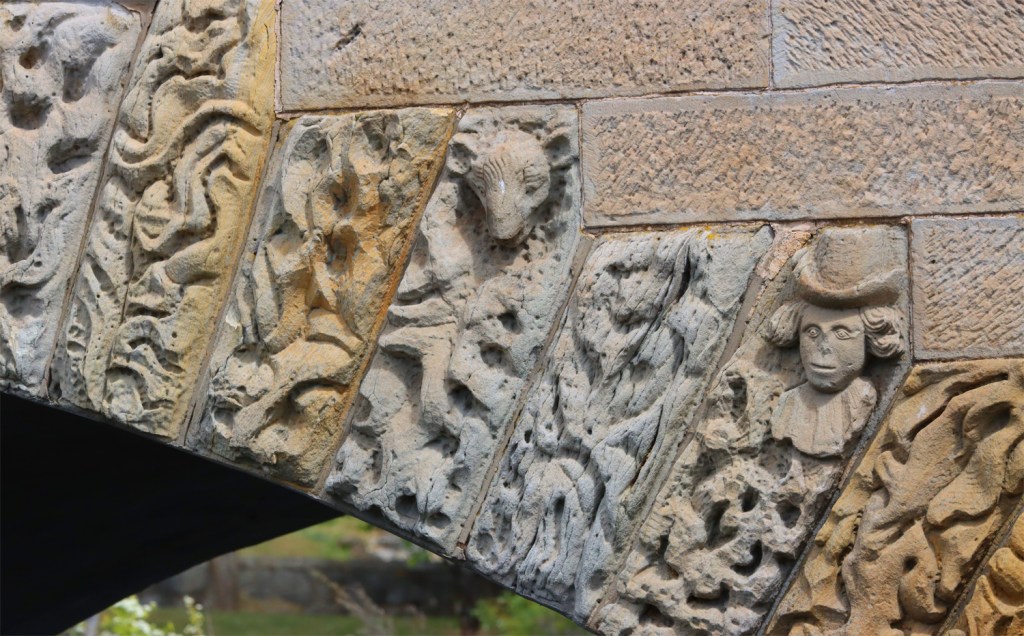
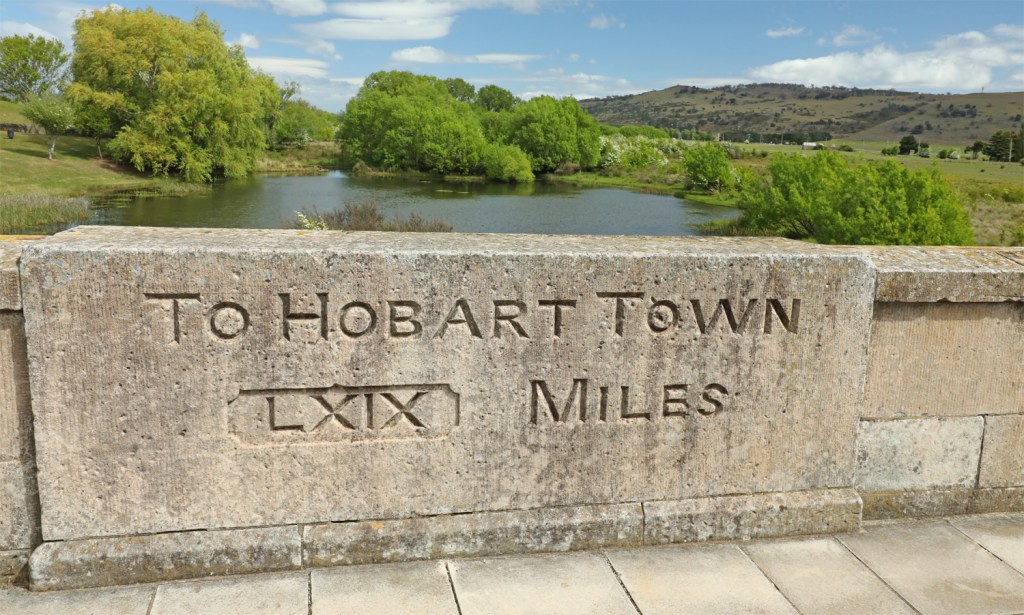
Ross Bridge was built by convicts and completed in 1836. It replaced the original timber bridge built in 1821. The ornate carvings are by Daniel Herbert who was convicted of highway robbery in England and sentenced to transportation. He died here a free man as he was recognised for his work on Ross Bridge that gained him a pardon and his release from a chain gang.
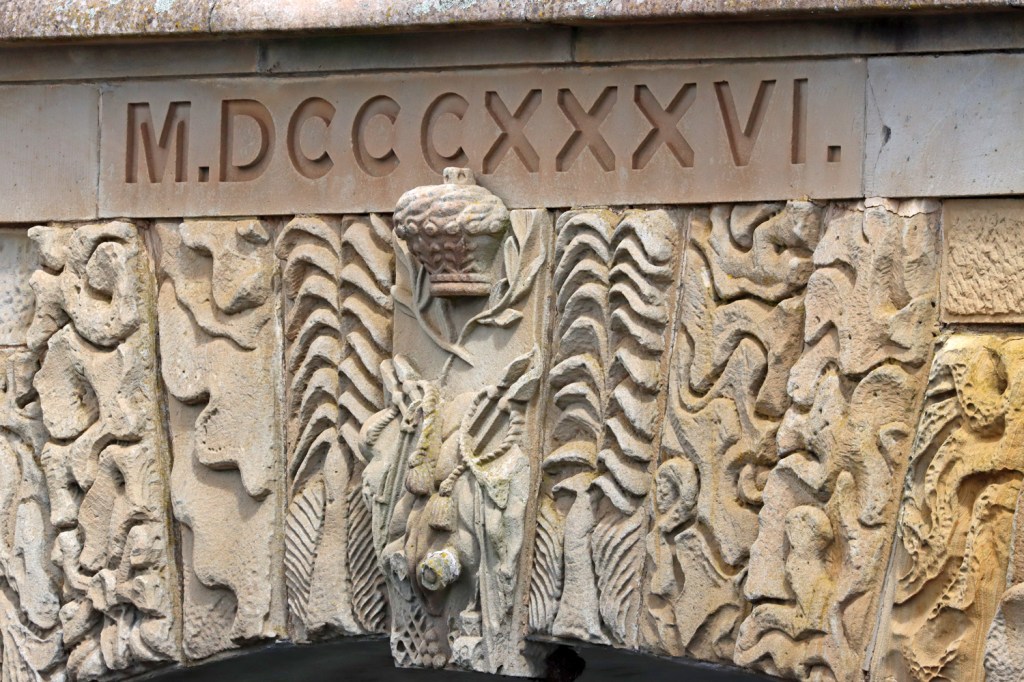
Lesson in Roman Numerals (1836)

Historic stables at Ross at the site of the Barracks.
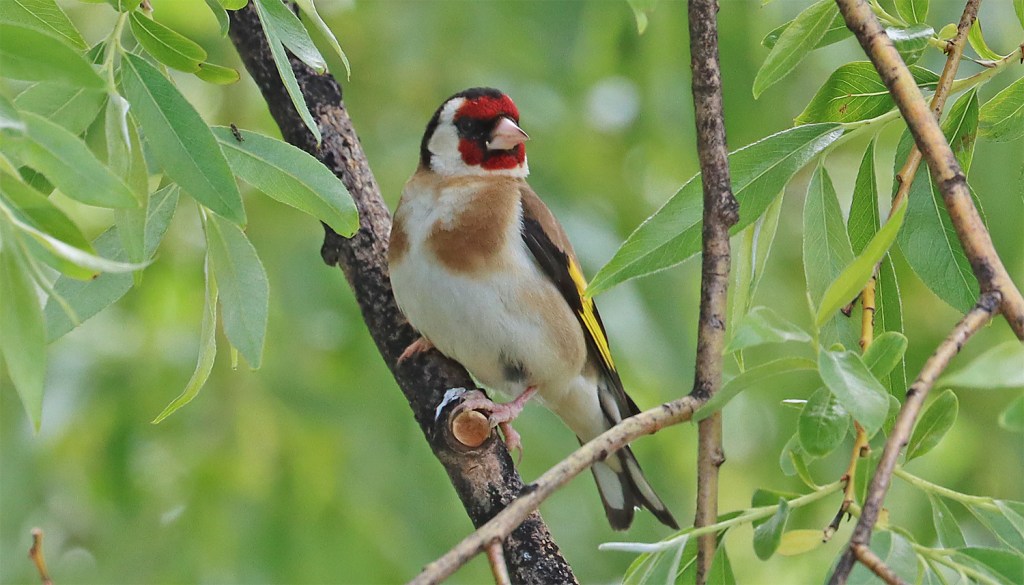
European goldfinch – an introduced feral.
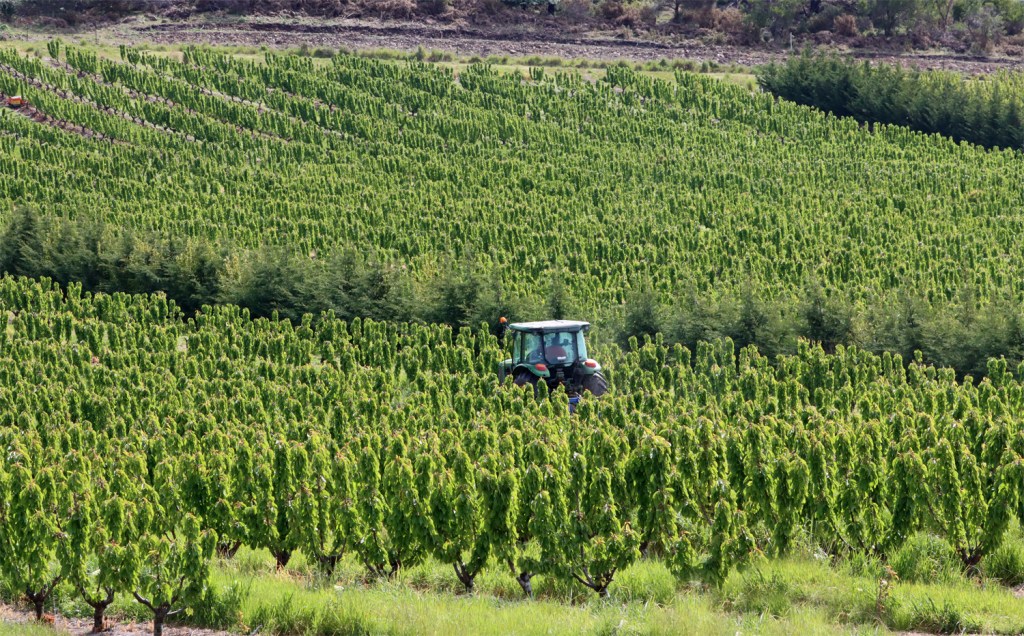
Somercotes has huge cherry orchards just south of Ross.
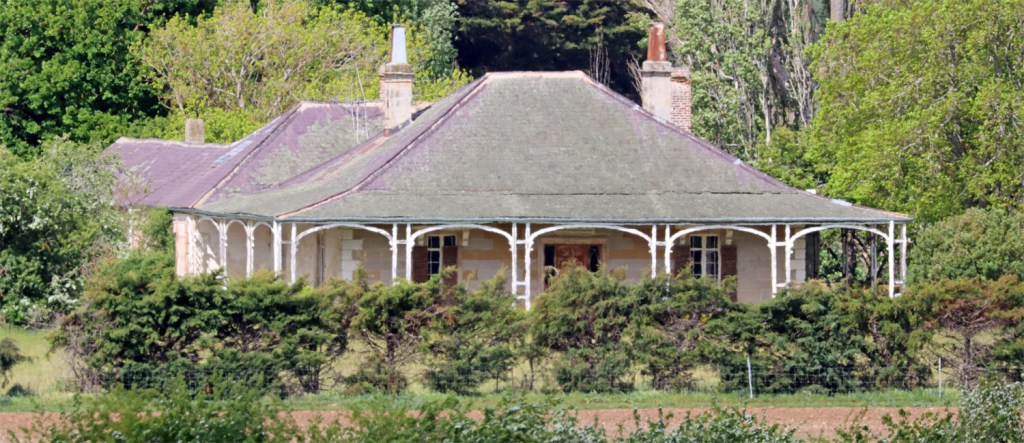
Somercotes was settled in 1823 by Captain Samuel Horton and is one of a select number of Australian properties that have remained in continual family ownership.
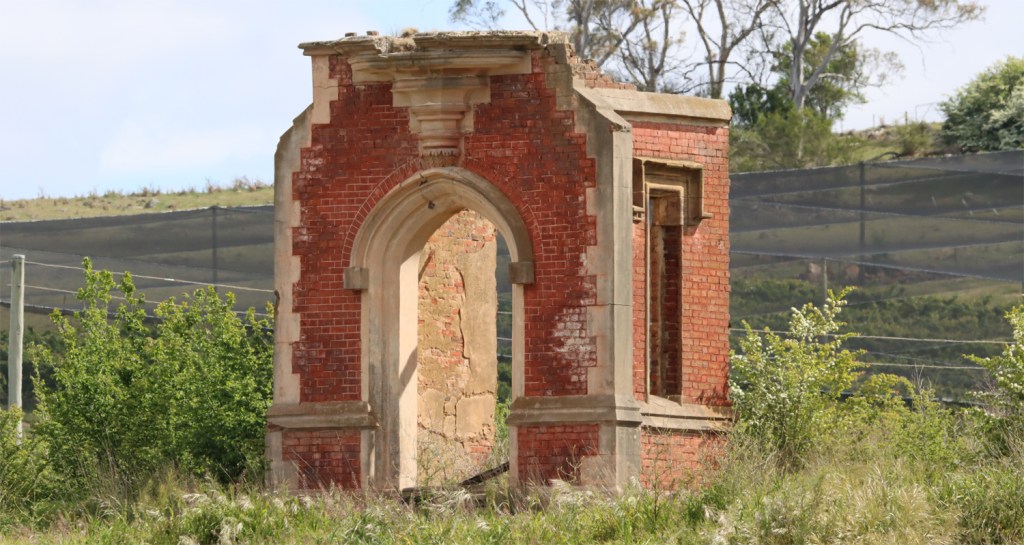
The portico to the old Horton Agicultural College near Somercotes.
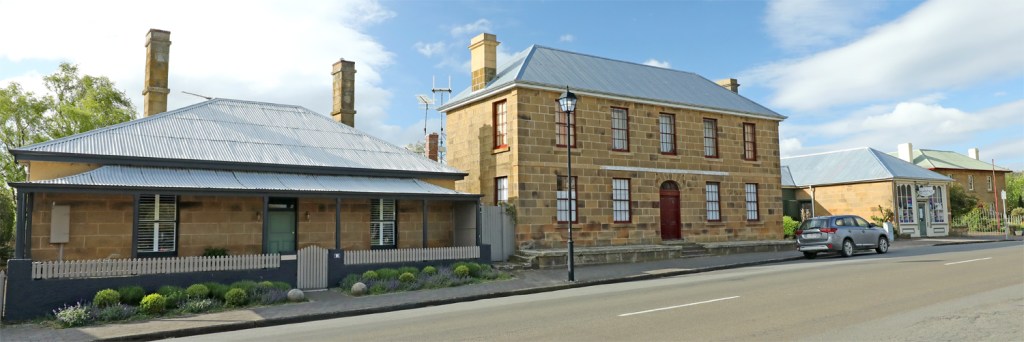
Oatlands is one of Tasmania’s oldest settlements (1821) and is considered to have the largest number of colonial sandstone buildings of any town in Australia; many of them were built by convict labour. There is a collection of 138 sandstone buildings within Oatlands, of which 87 are situated on The Main Street. It was developed as a military base for the control and management of convicts because of its central location between Hobart and Launceston. Convicts were assigned to nearby farms and properties, and also worked on public buildings, roads and bridges.
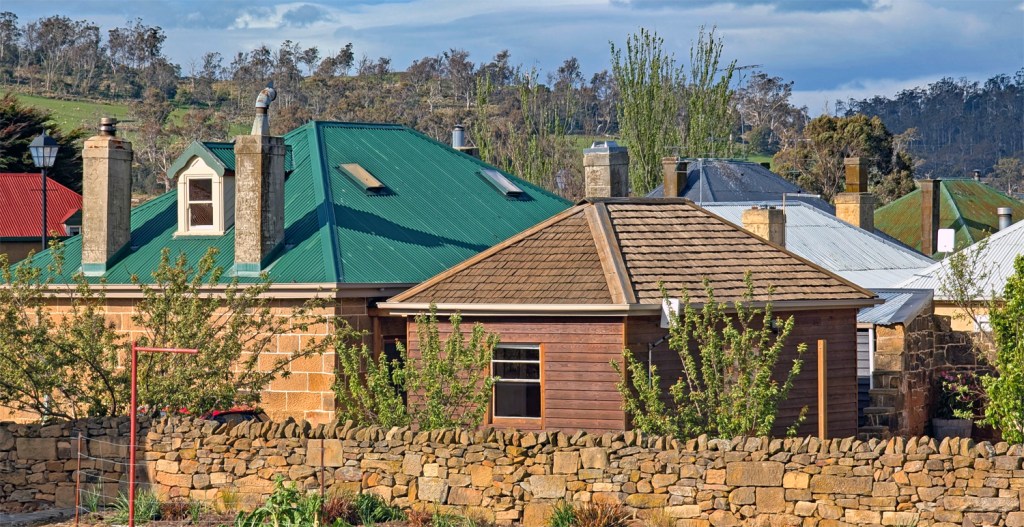
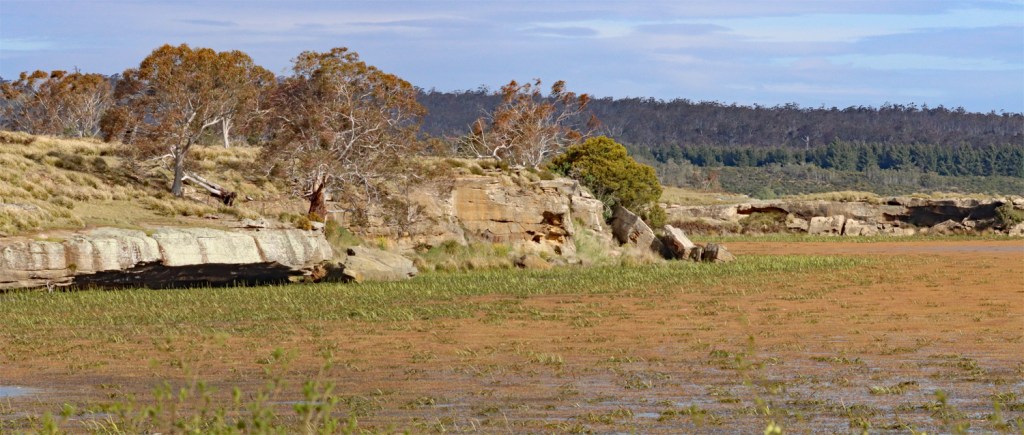
Lake Dulverton – source of the sandstone used throughout town.
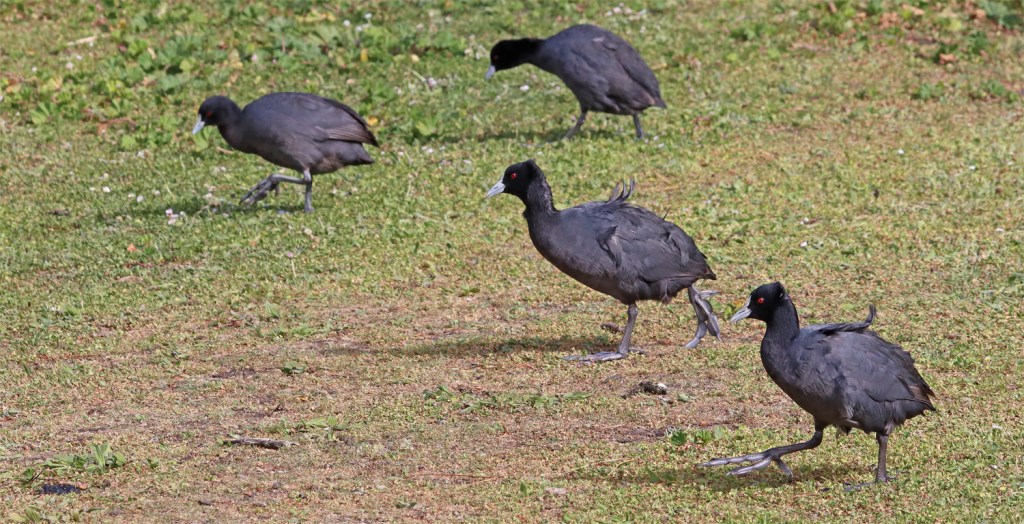
The local coot convention – there were huge amounts here.
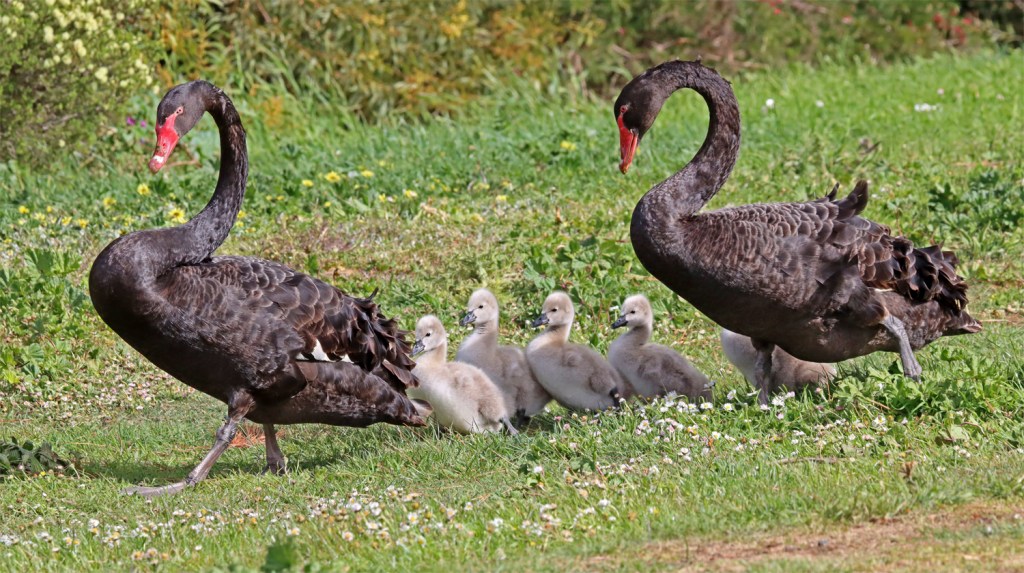
Black swans
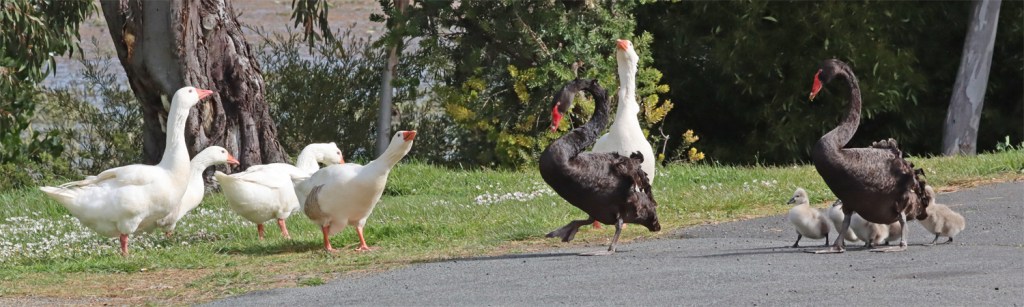
The geese made their objections known but didn’t take on the swans.
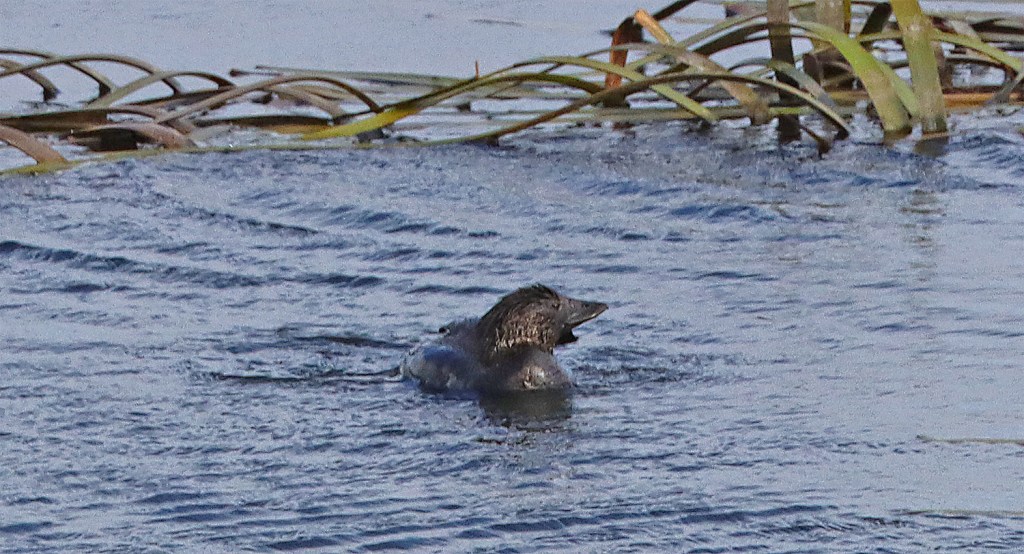
Musk duck
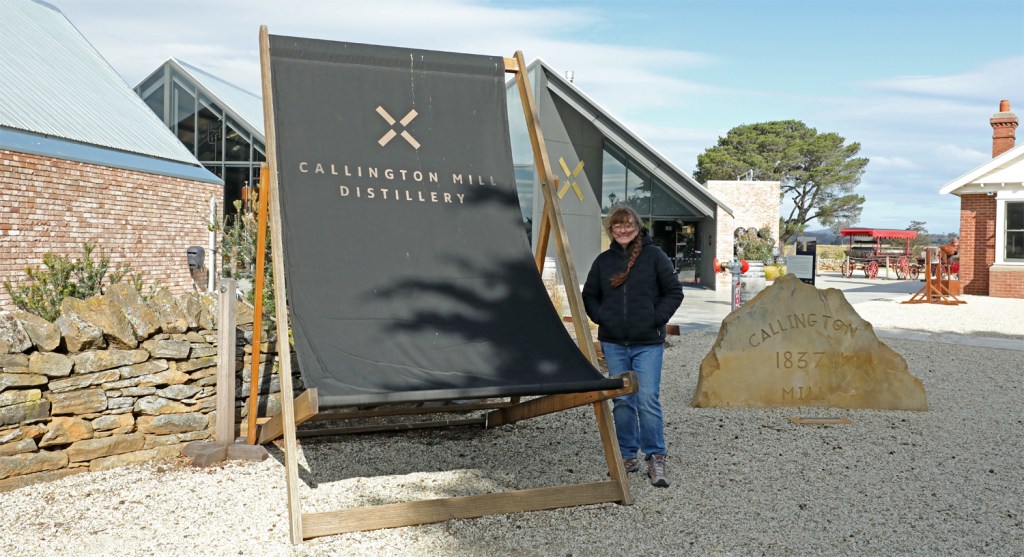
Callington Mill Distillery now takes over from Winton as the home of the Big Deck Chair.
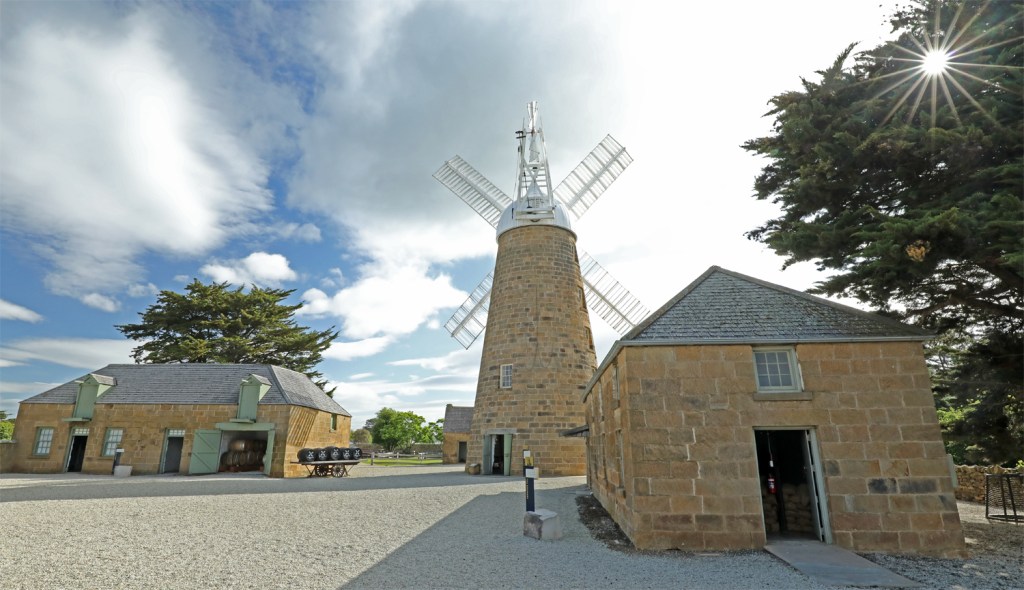
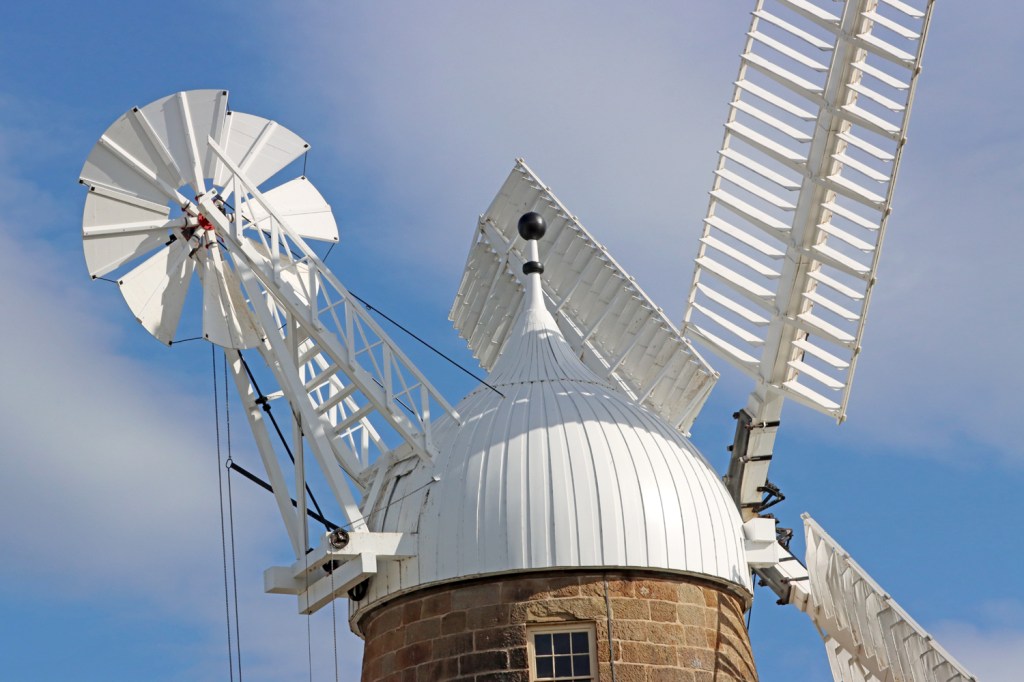
Old Mill at Oatlands (1837) – now the home of Callington Whiskey.
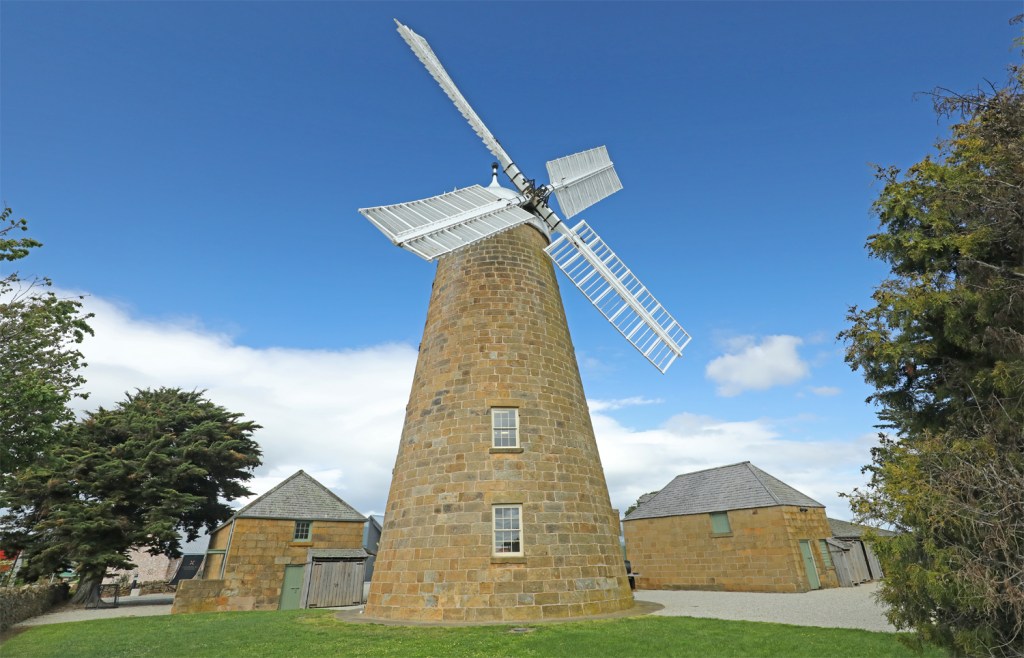
Once a few guys were arguing how to get out of a grain silo. One tried for calm saying, “We’re all in the same oat.”
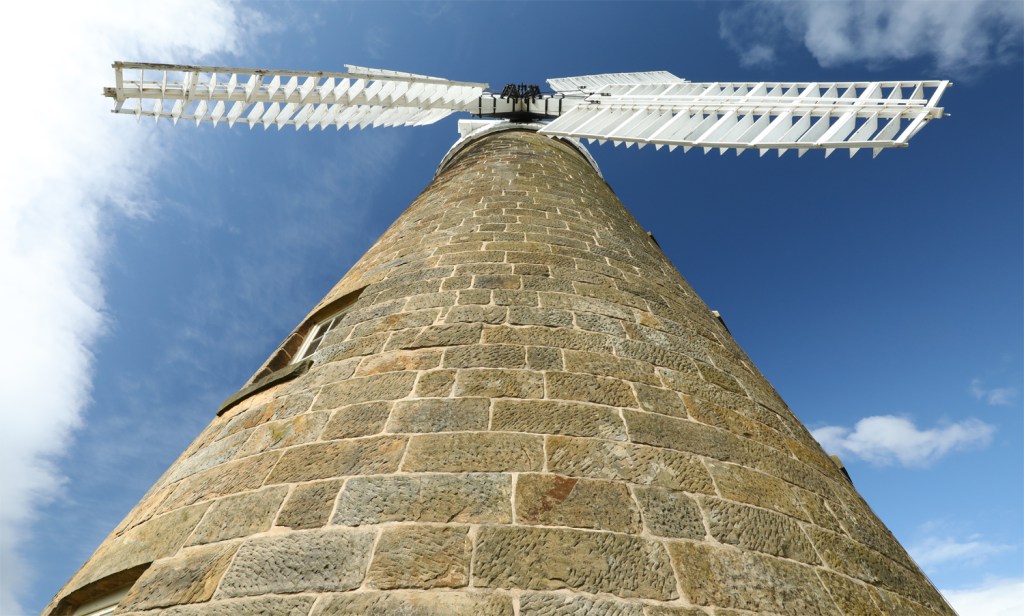
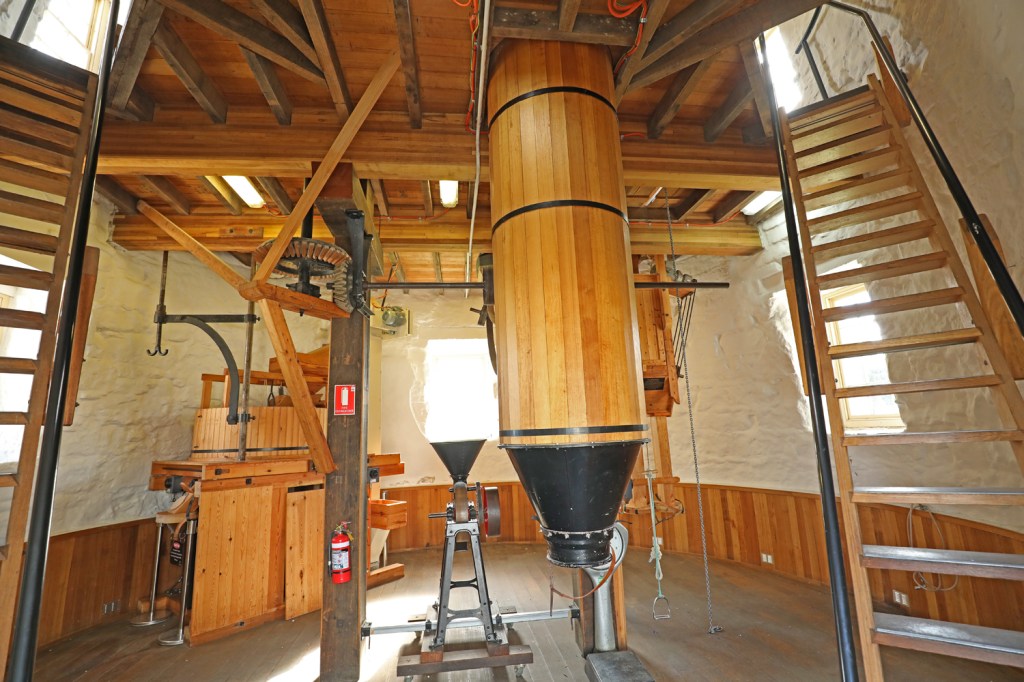
The Callington Mill is the only working example of a Lincolnshire windmill in Australia.
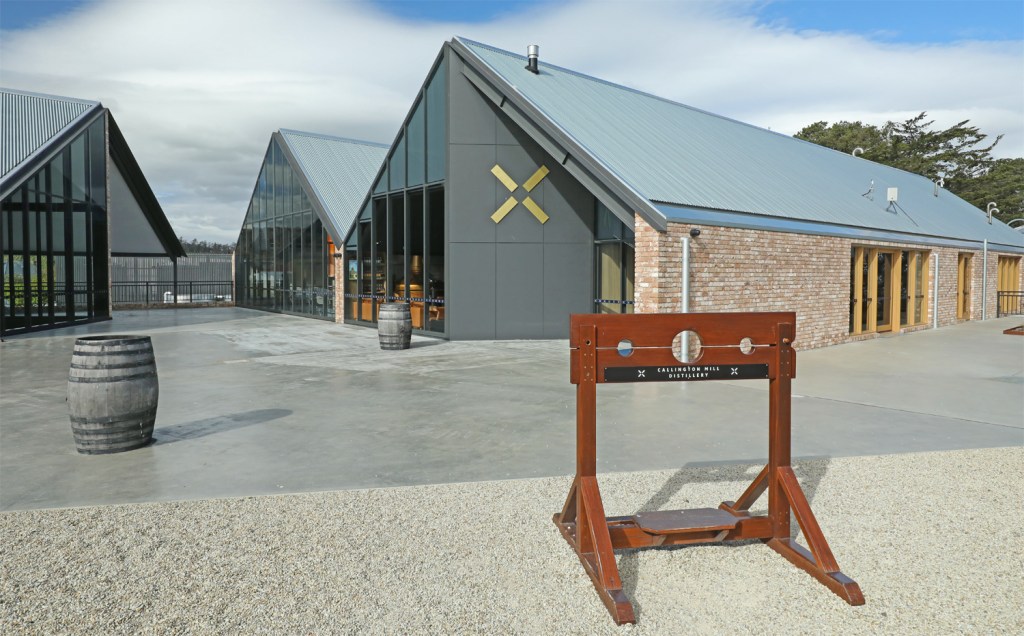
It is best to settle your bill promptly here.
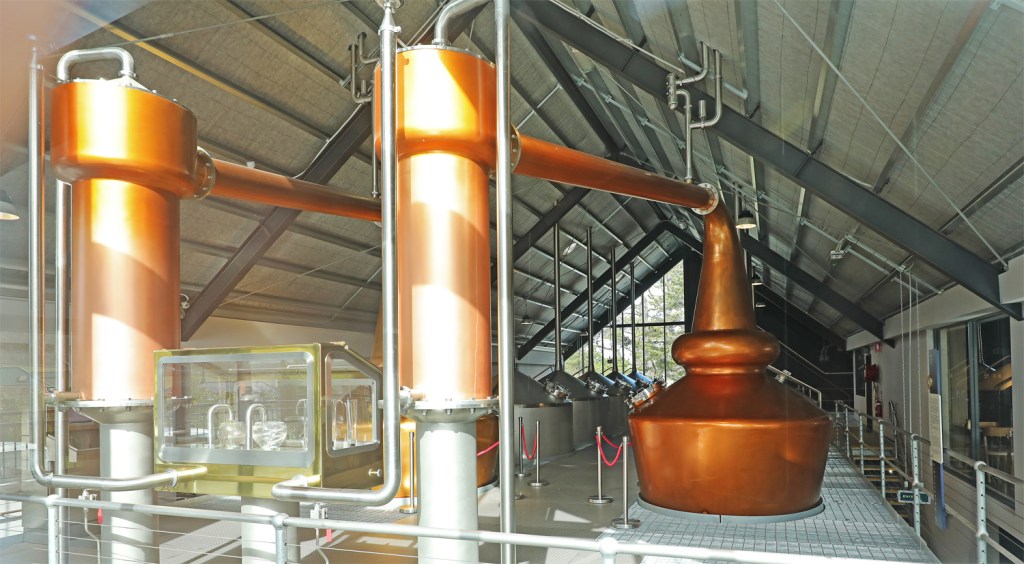
The stills at Callington Mill. A man’s wife once decided to become a whiskey-maker. He loved her still.
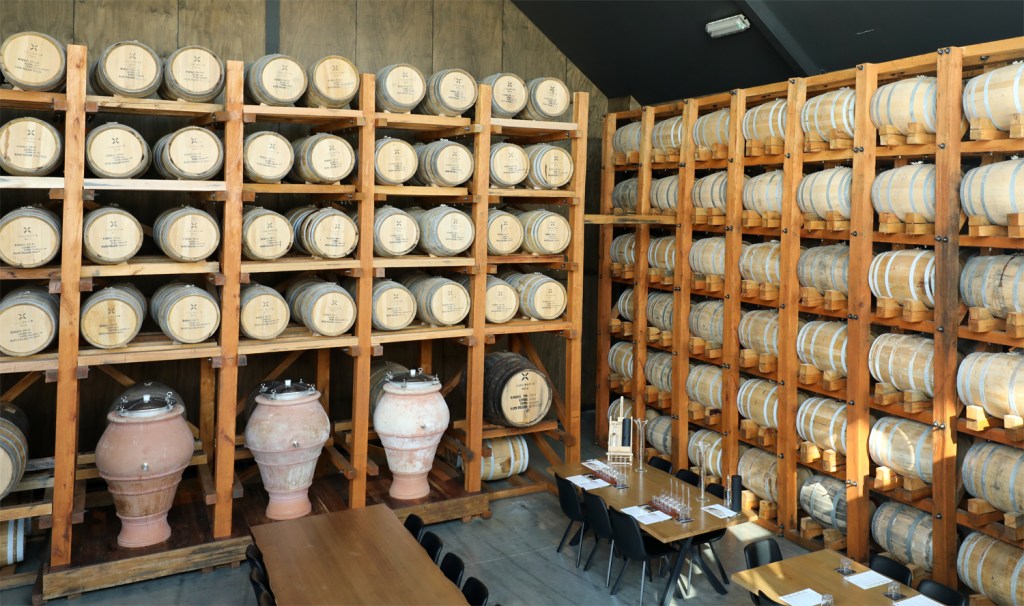
A few barrels
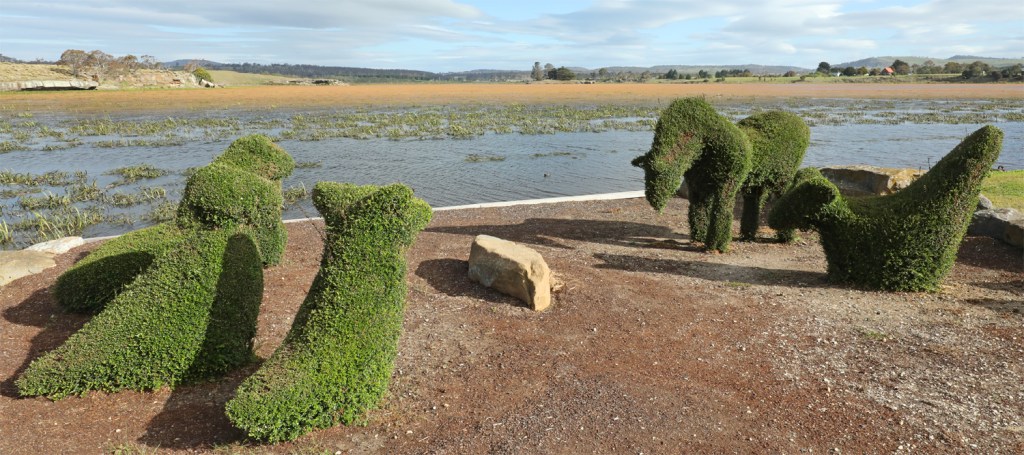
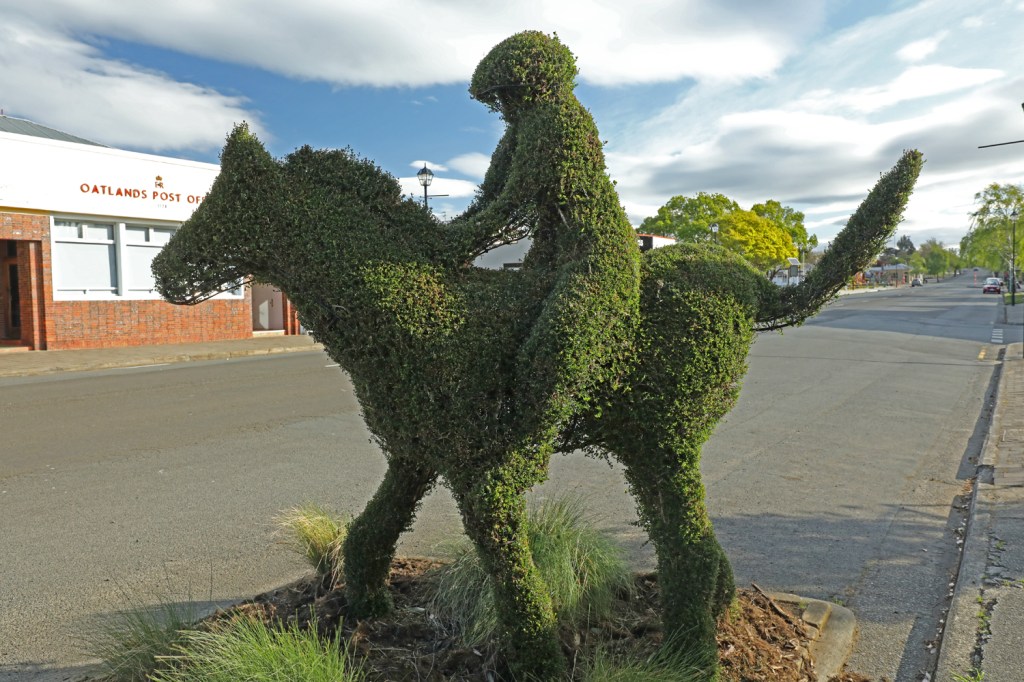
And in the Tasmanian Top Topiary Town Trim-off, Oatlands put a lot of pressure on Railton.
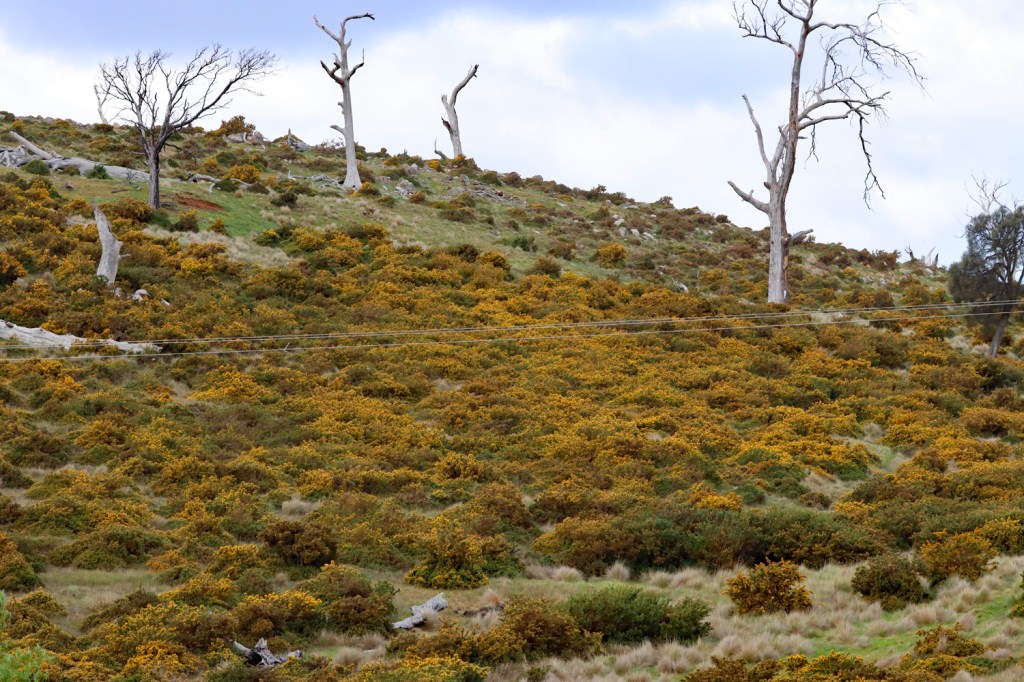
Countryside south of Oatlands – I think this is gorse, an introduced feral weed.

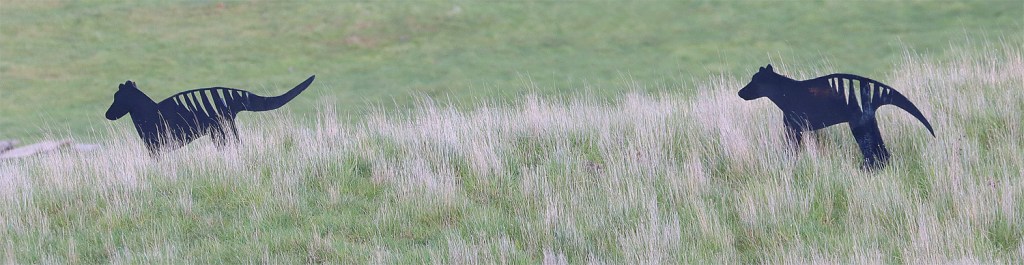
If only…….
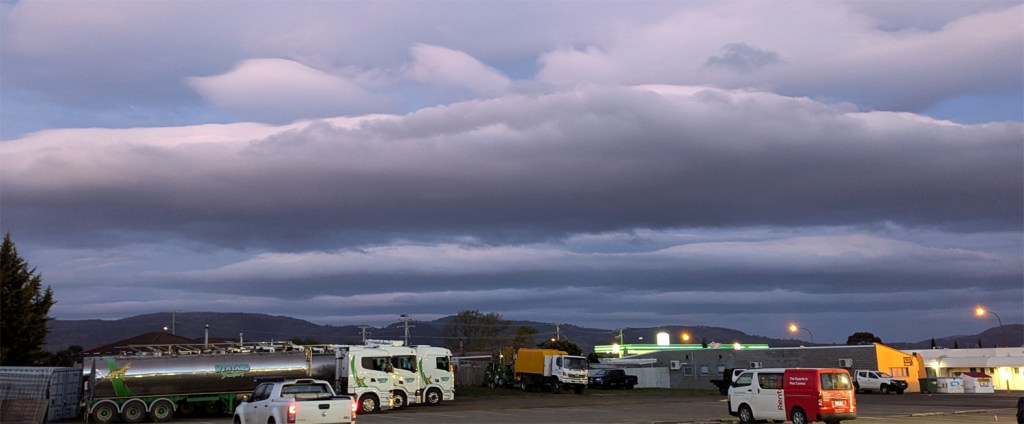
Change in the weather at our accommodation at Brighton, 30km from Hobart.
 imagenau.com