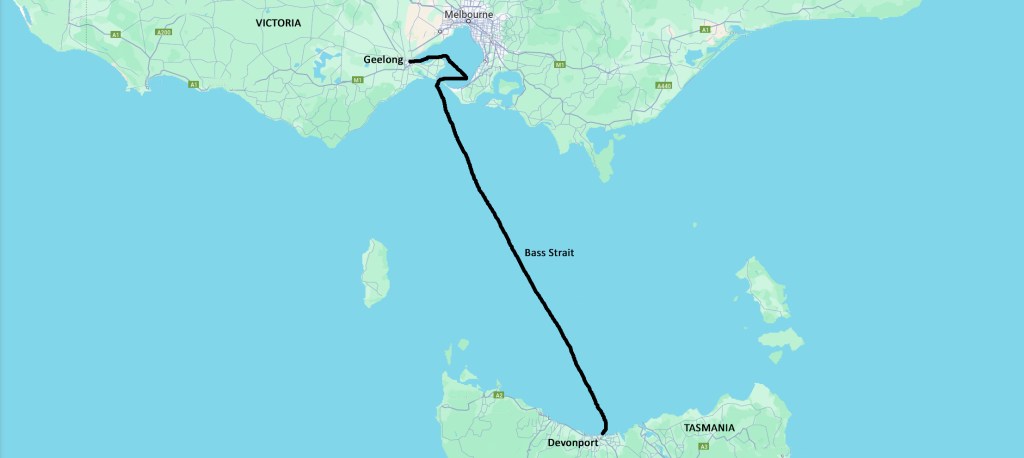
The excitement builds – today is the day we cross Bass Strait. We are caught up in Tas-mania! The 26th largest island in the world was colonised as a penal settlement in 1803 to dissuade the French from settling there during the Napoleanic Wars. Environmentally, the Thylacine (Tasmanian Tiger) is presumed extinct from hunting and habitat loss but features on the coat of arms and official government logo. Making amends, about 42% of its land area, including national parks and World Heritage Sites, is now protected in some form of reserve. The first environmental political party in the world was founded in Tasmania. Eco-tourism is one of the main industries so we will add to the local economy for our time there.
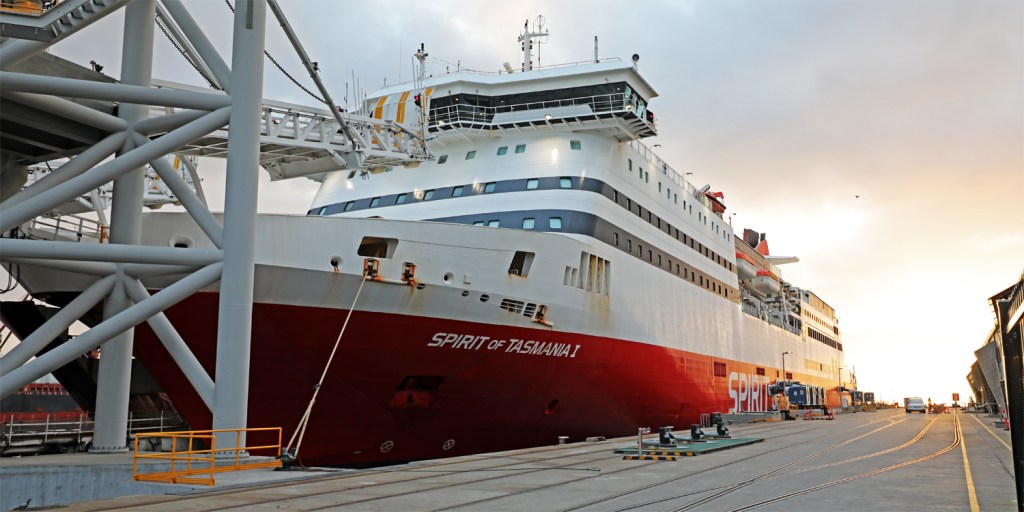
Up at 5am (4am Qld time) to join the huge queue to load onto the Spirit of Tasmania – I was hoping to come up with a one liner.
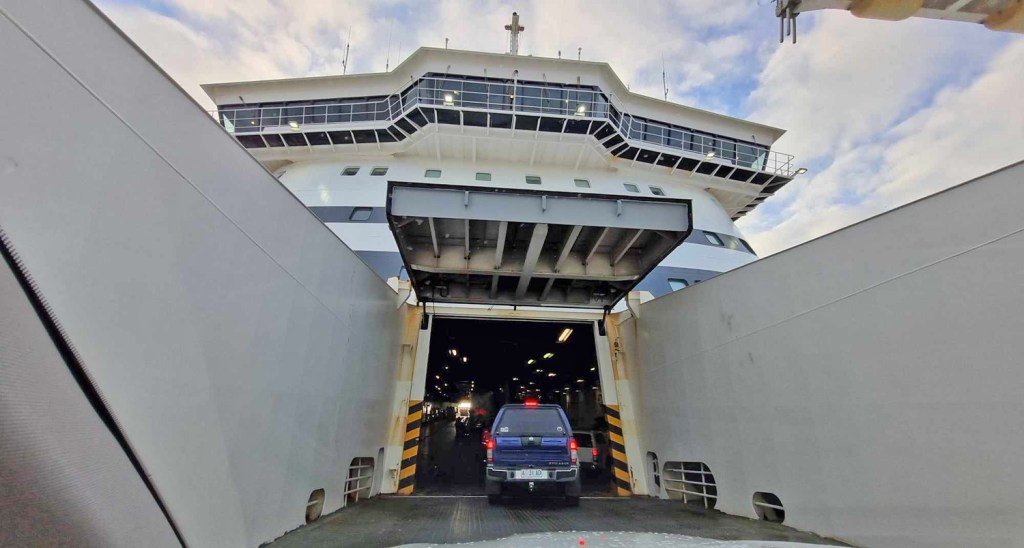
And driving straight up onto the bow – vehicles were loaded onto 4 decks. There is capacity for 500 vehicles.
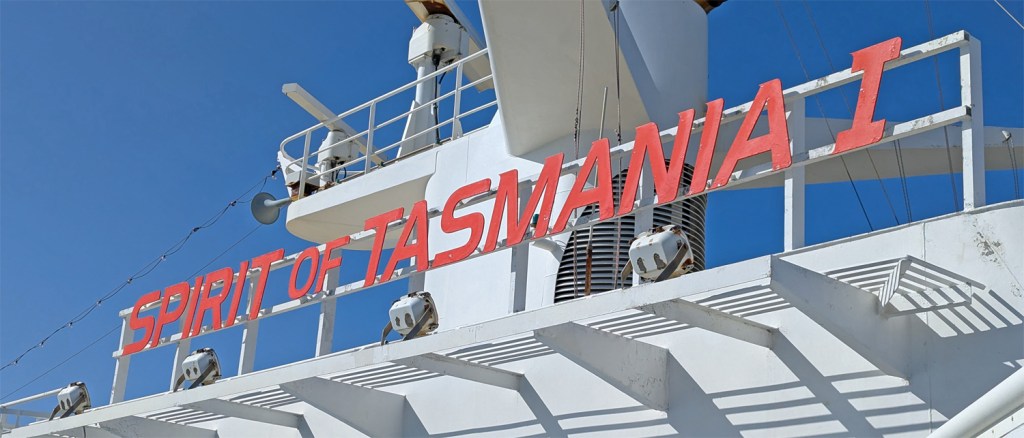
“The little wascal has spiwit….bwavado…a touch of dewwing-do.”
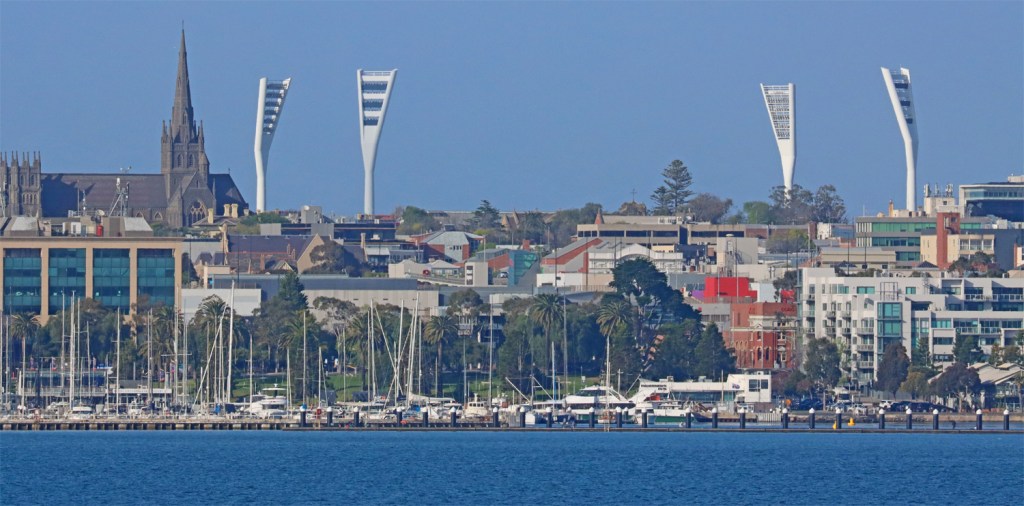
We farewell Geelong with the lights of Kardinia Park prominent. This is the home of the Geelong Cats AFL team. Then straight across Bass Strait! Well mostly… it takes a few turns to get out of Port Phillip Bay.
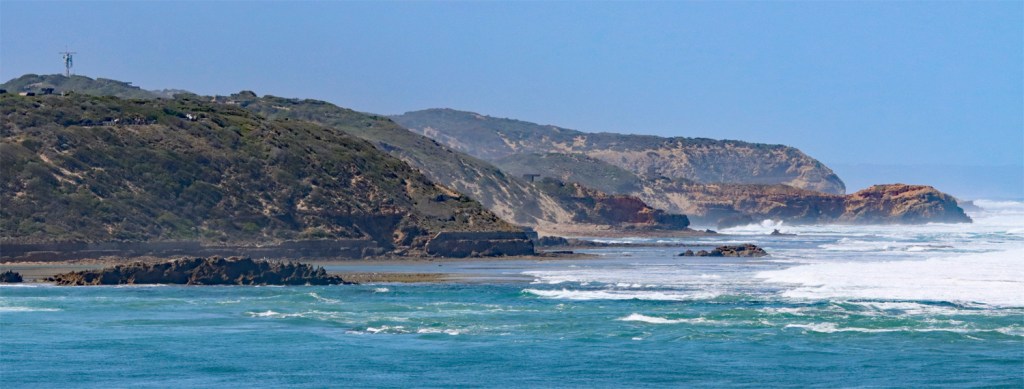
The narrow entrance to the vast Port Phillip Bay with the Portsea coast on the east….
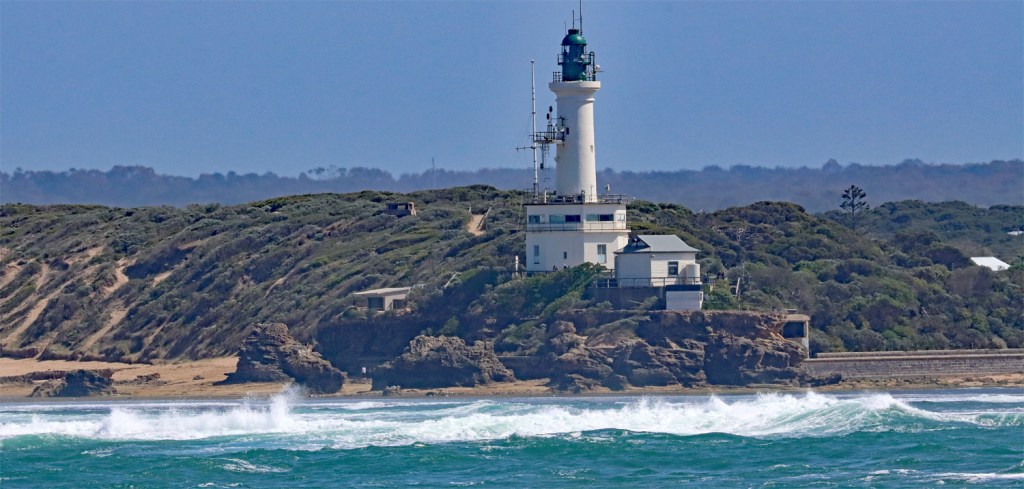
…. and Queenscliff lighthouse on the western side.
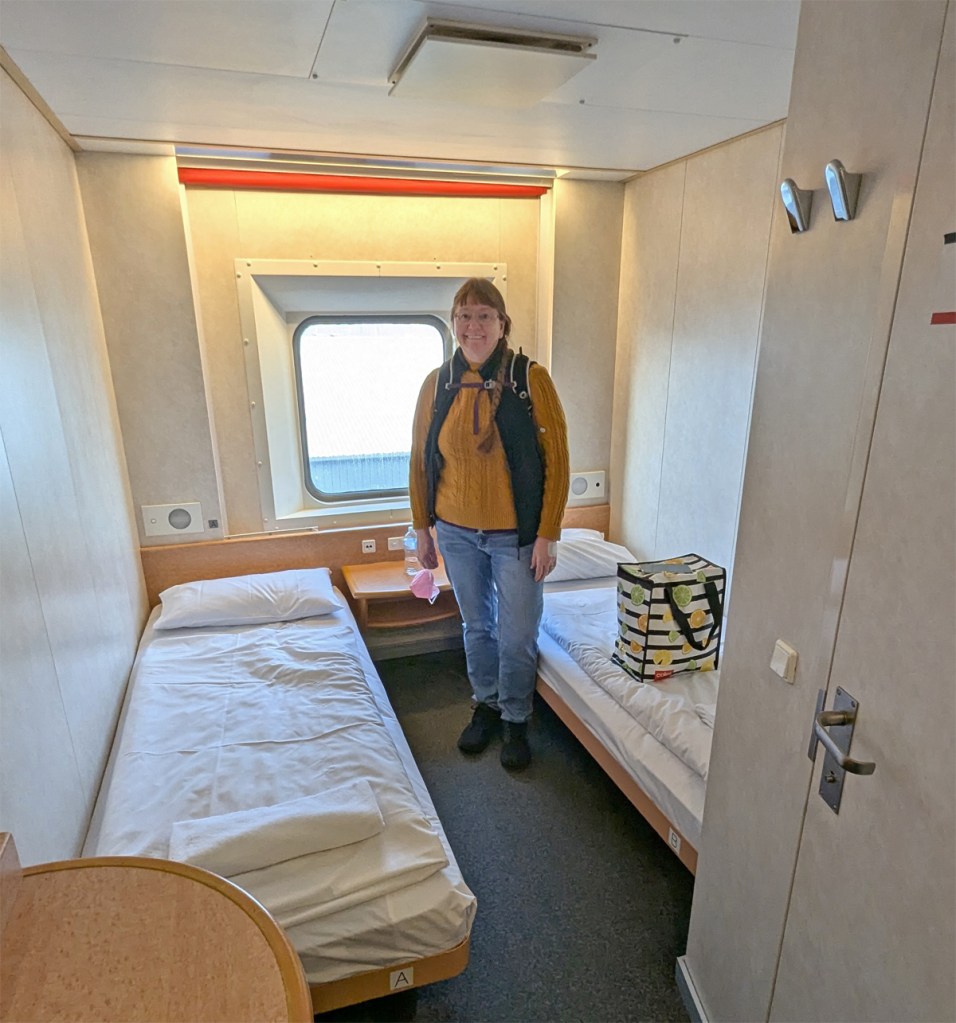
We found our cabin and then explored the ship and its multiple dining areas and lounges.
Ok, so a few nautical terms for landlubbers. The word landlubber is a derogatory nautical term from the word lubber that evolved from meaning “clumsy oaf” to “inexperienced seaman.” Back in the 15th century, the meaning of lubber was to “sail badly.” Landlubbers put daft into aft (that’s stern captain!).
The front of a ship is called the bow because of the process of bending (or bowing) of ship planks in Medieval shipbuilding. Shipbuilders would shape the planks in a curve to enable the vessels to slice efficiently through the water.
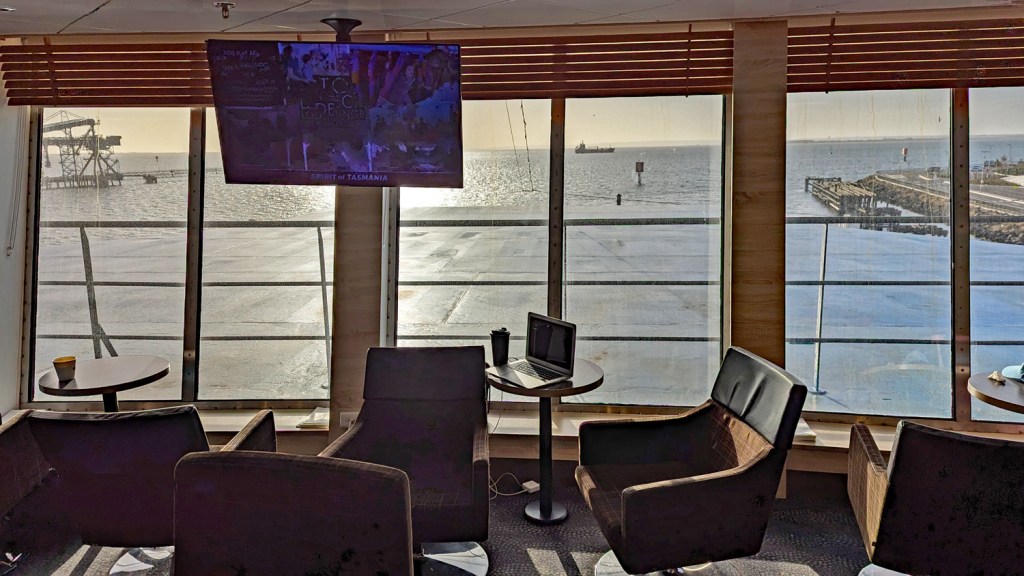
Lounge at the stern of the ship. The term stern originated from the Old Norse word ‘styra’, (to steer) with steering apparatus at the back end of the boat or ship.
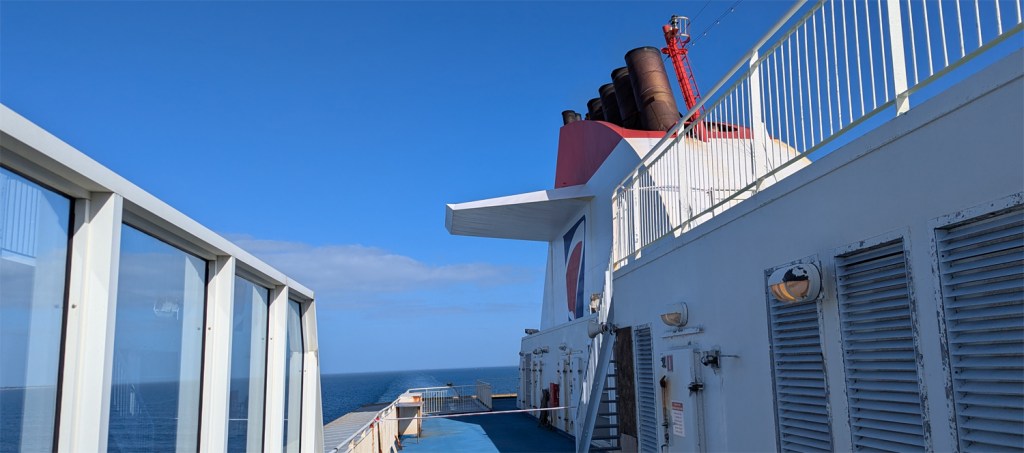
The upper deck (10)
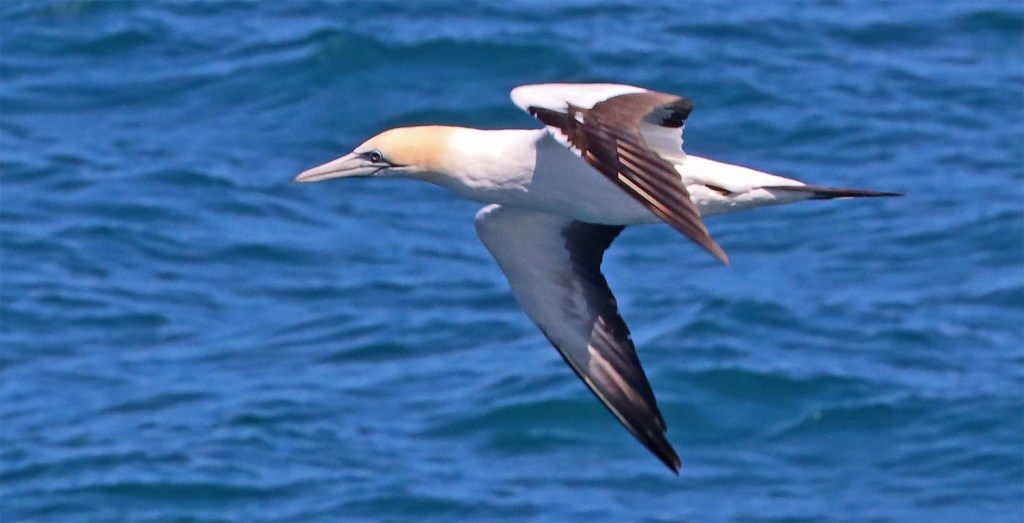
We spent a good chunk of the day on the outside decks and were rewarded with some Bass Strait wildlife including numerous gannetts…
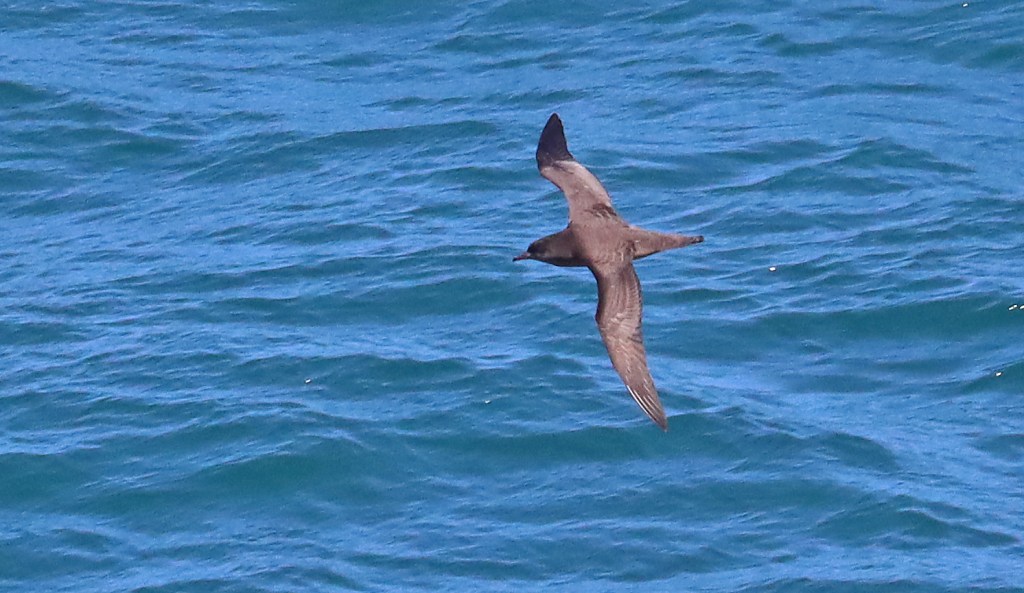
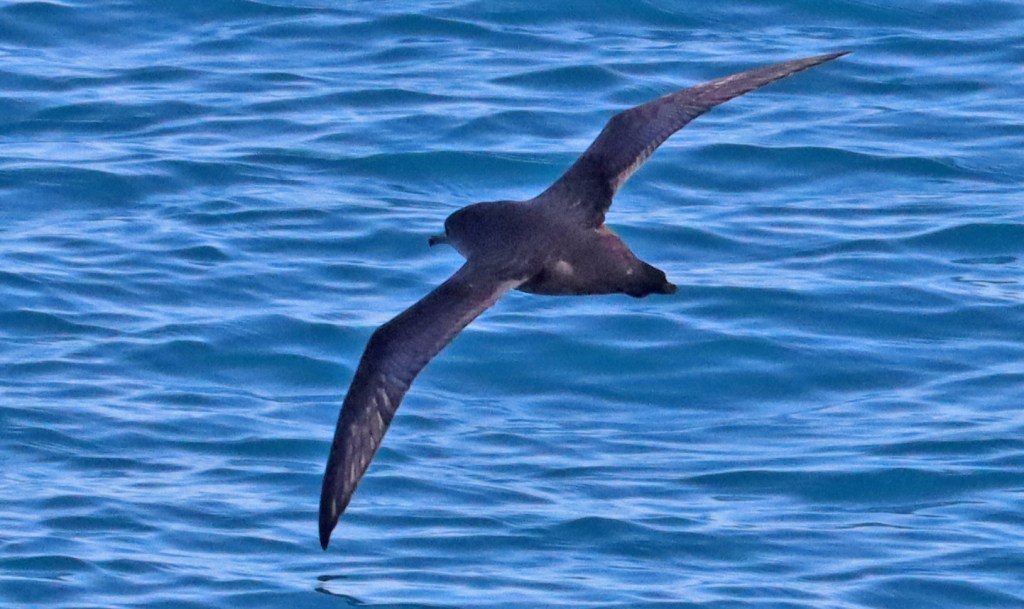
…many Shearwaters….
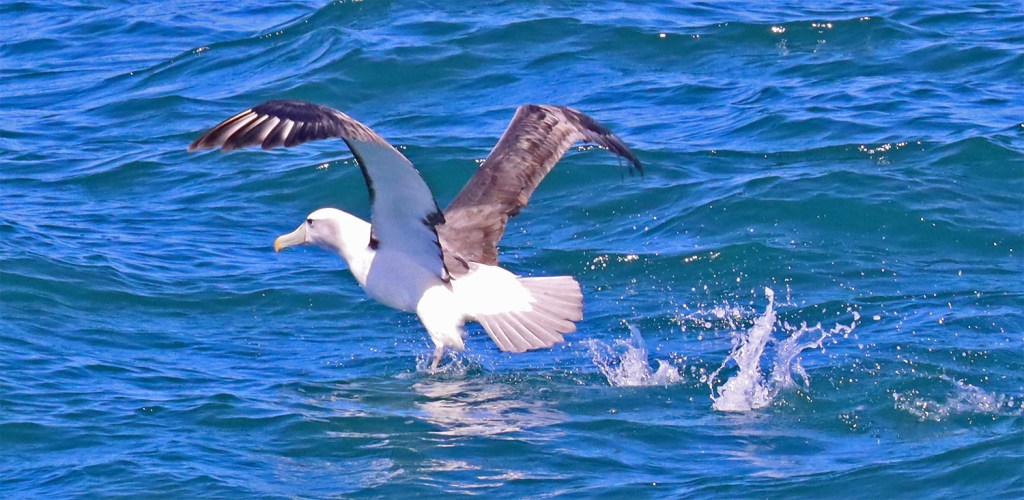
…an albatross….
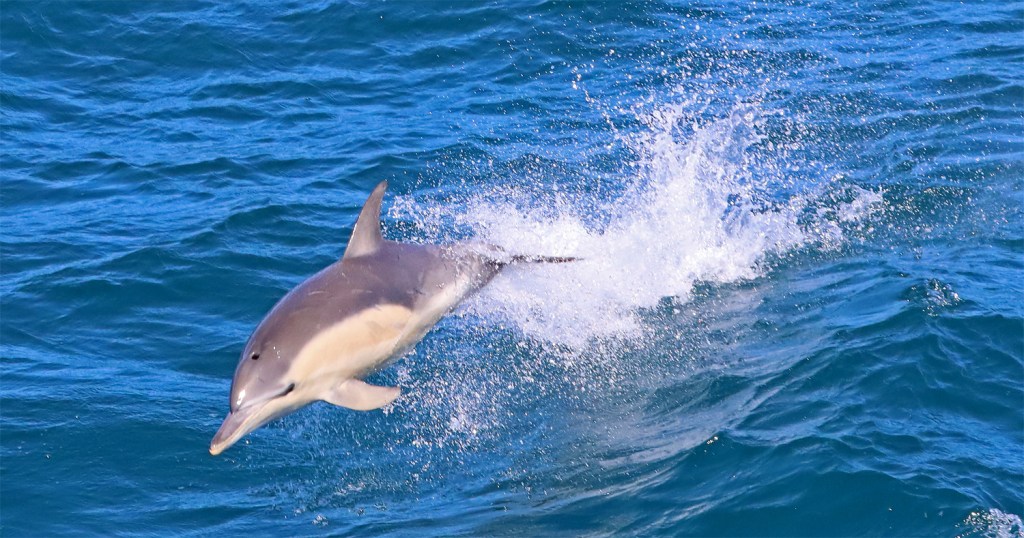
…. and Short-beaked common dolphins. We saw over 40 speeding beside the ship.
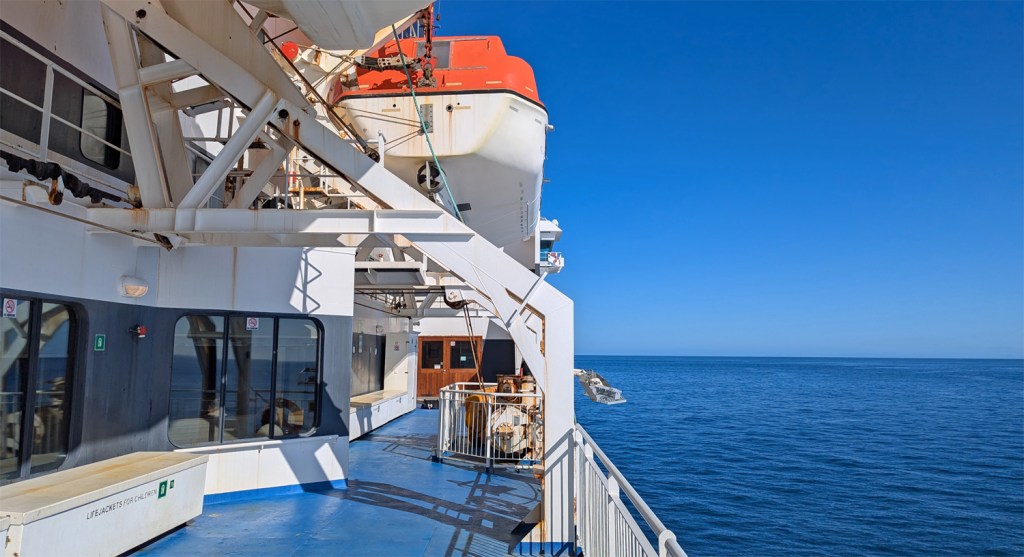
Port or Starboard? -The term starboard derives from the Old English steorbord, meaning the side on which the ship is steered. Before ships had rudders on their centrelines, they were steered with a steering oar at the stern of the ship on the right hand side of the ship, because more people are right-handed. Since the steering oar was on the right side of the boat, it would tie up at the wharf on the other side. Hence the left side was called port. (source – Wikipedia) If in doubt, think – “If you drink port, there is none left“.
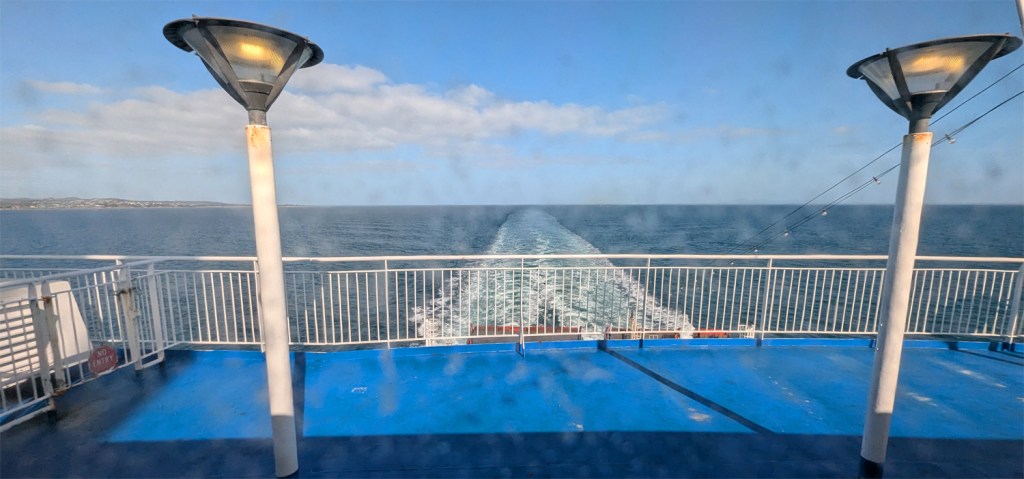
In search of the rest rooms, I discovered that there were no toilets on the poop deck (deck over a cabin at the stern).
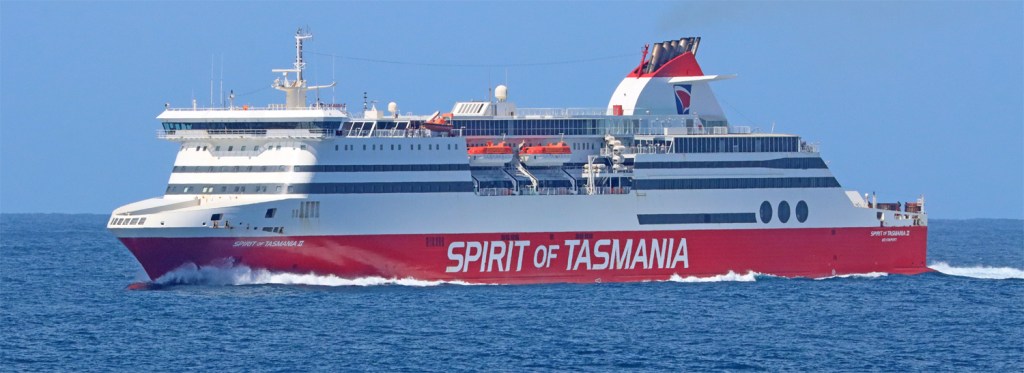
Passing the sister ship. There are two ships that provide the crossing to and from Tasmania. Spirit of Tasmania I and II were constructed in Finland in 1998 and operated for four years between Greece and Italy. They replaced the original MV Spirit of Tasmania, making their dual maiden voyages across Bass Strait in 2002. The ships weigh 28,000 tonnes with a length of 194.3 metres. They were refurbished in 2015 but are due for replacement at the end of this year with new ships built in Finland.
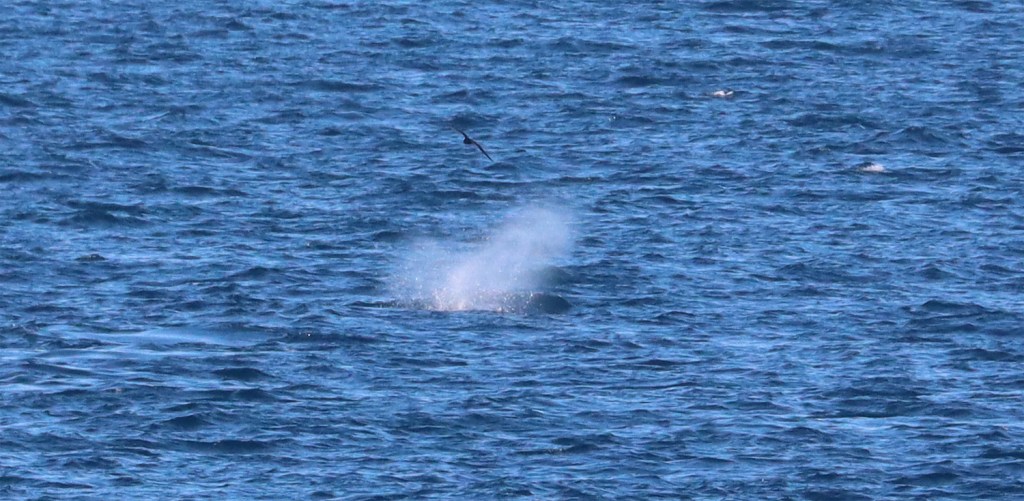
We passed a small pod of whales.
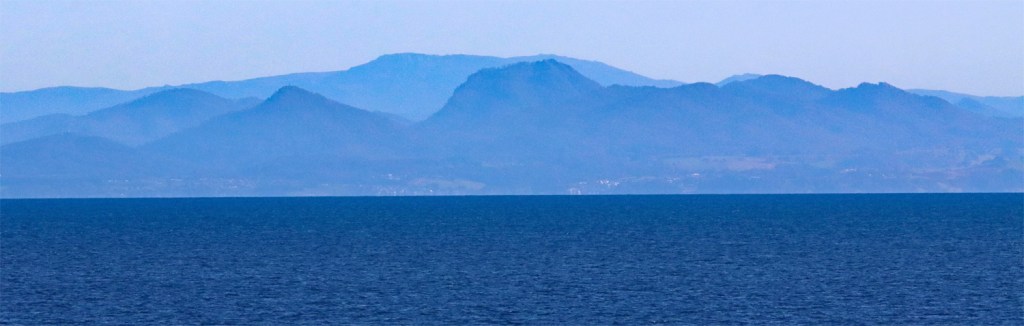
Land ho!
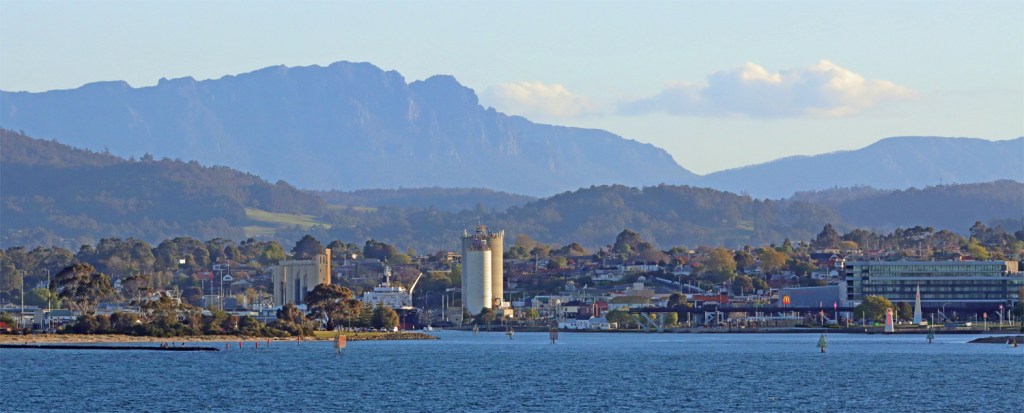
Devonport
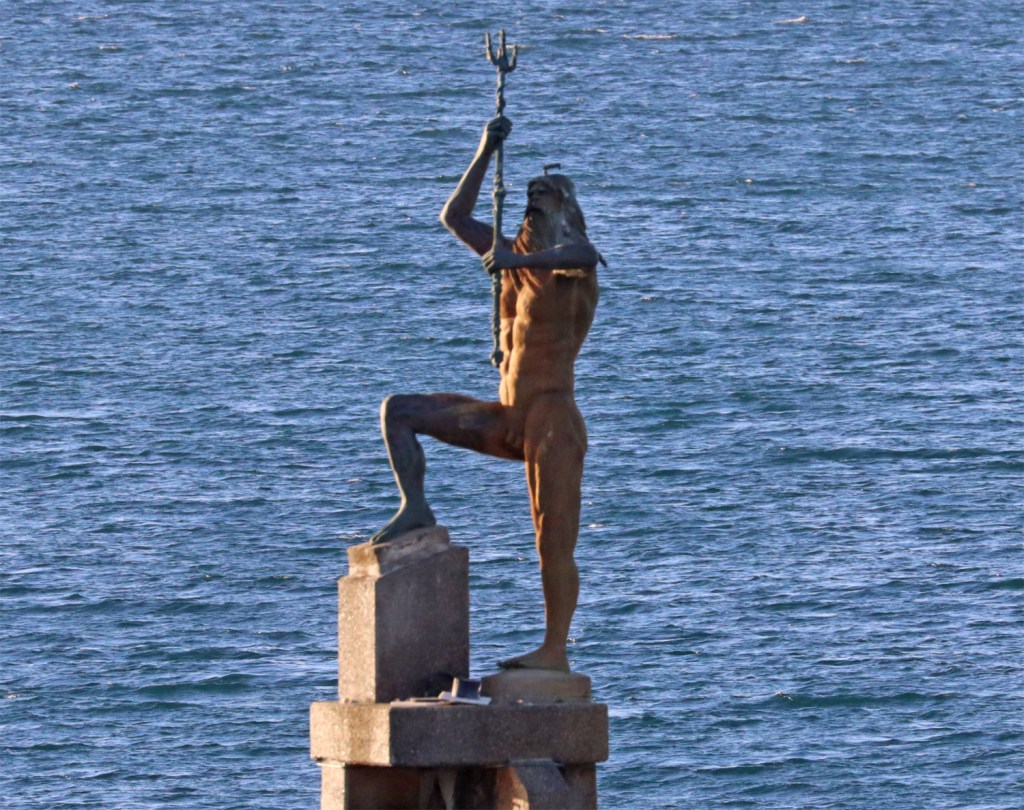
The Spirit of the Sea statue welcomes and farewells ships into port….
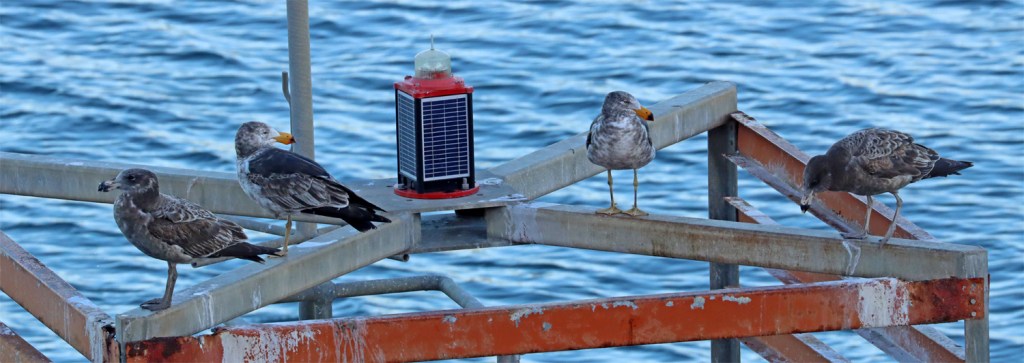
…as do the Pacific gulls.
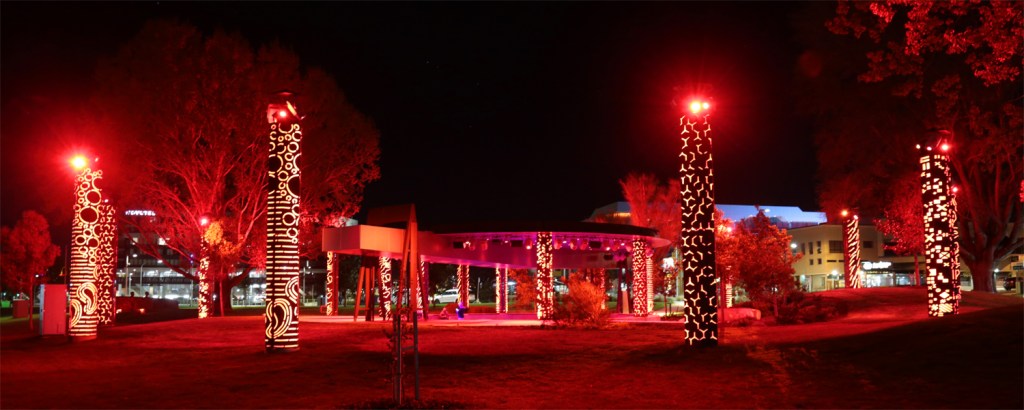
We ventured out at Devonport at night. From the Sky to Sea is a 20 minute Palawa light and sound spectacular in a local park.
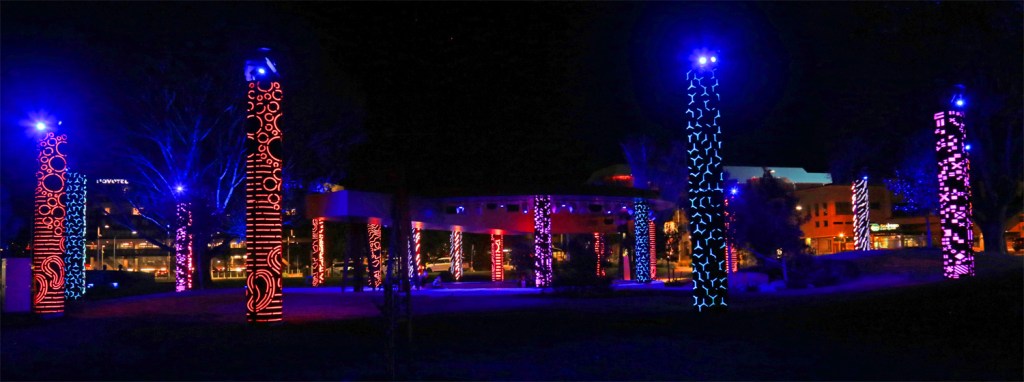
I would highly recommend it. The still images don’t do it justice.
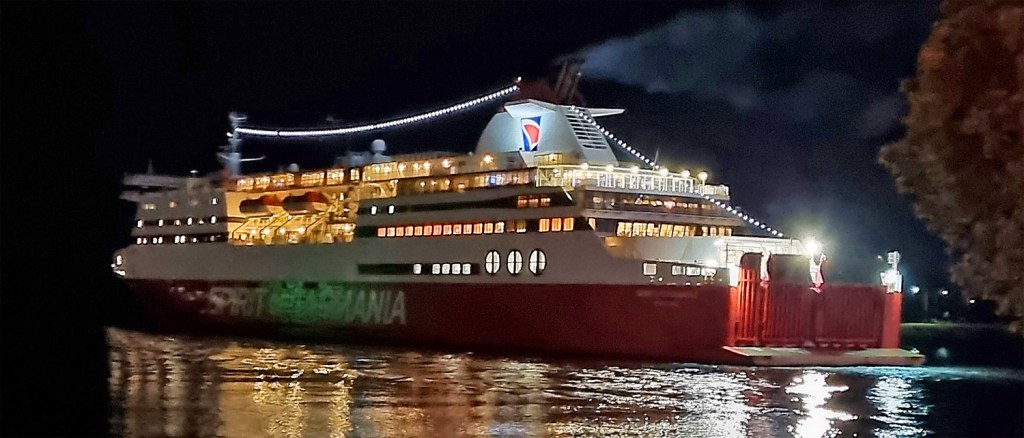
We watch the Spirit of Tasmania 1 leave Devonport for another Bass Strait crossing.
 imagenau.com