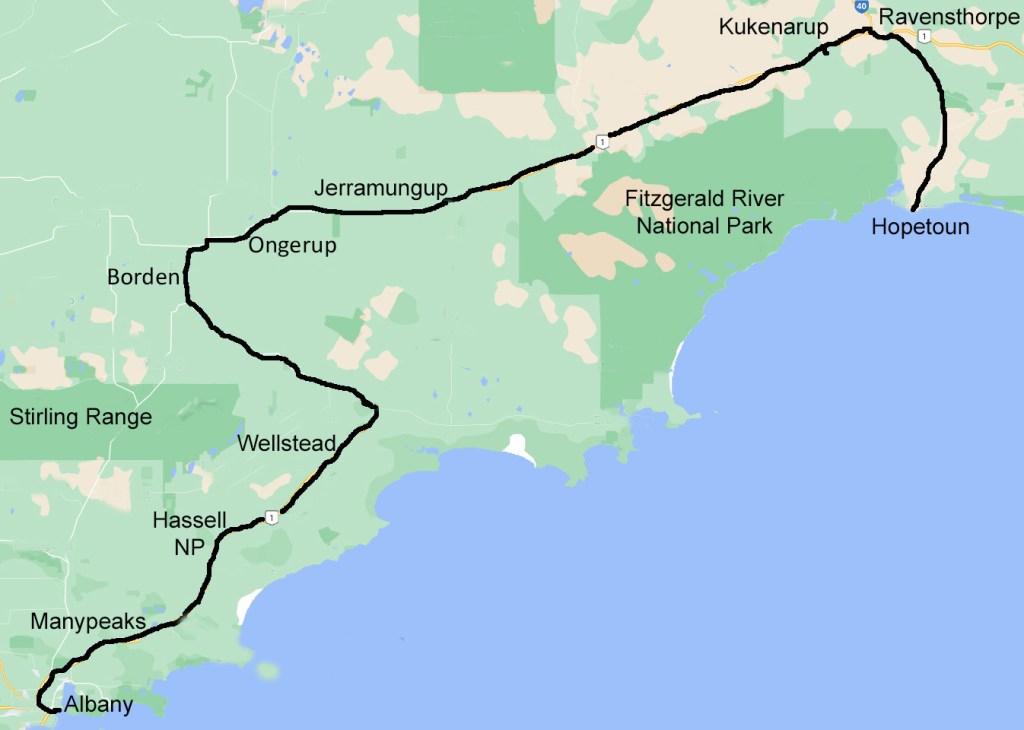
We leave Albany and head east today for approximately 400km.
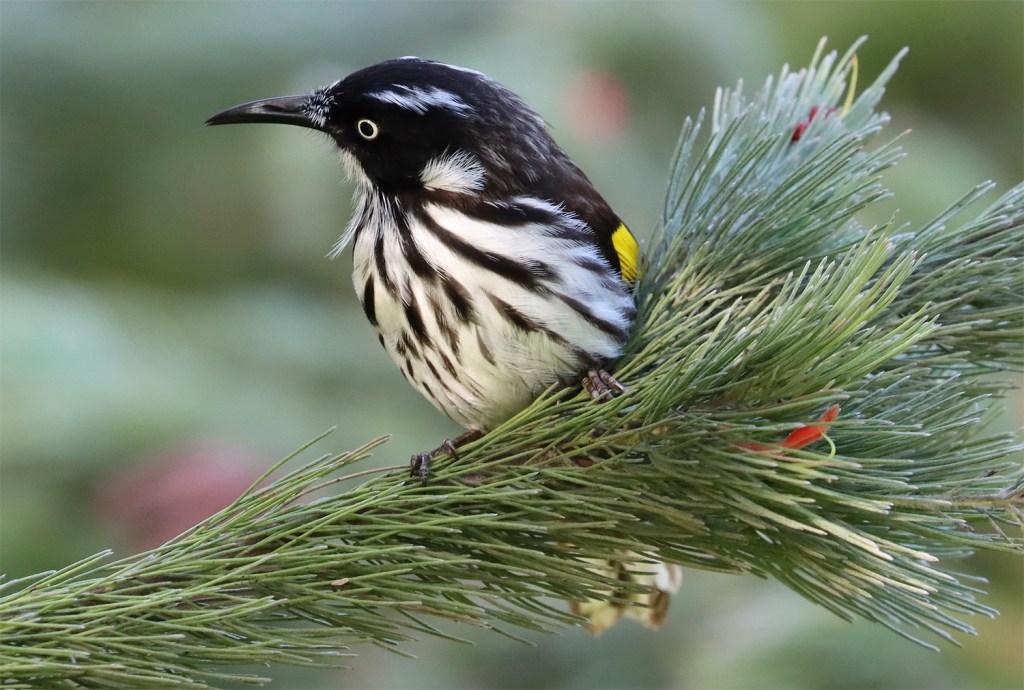
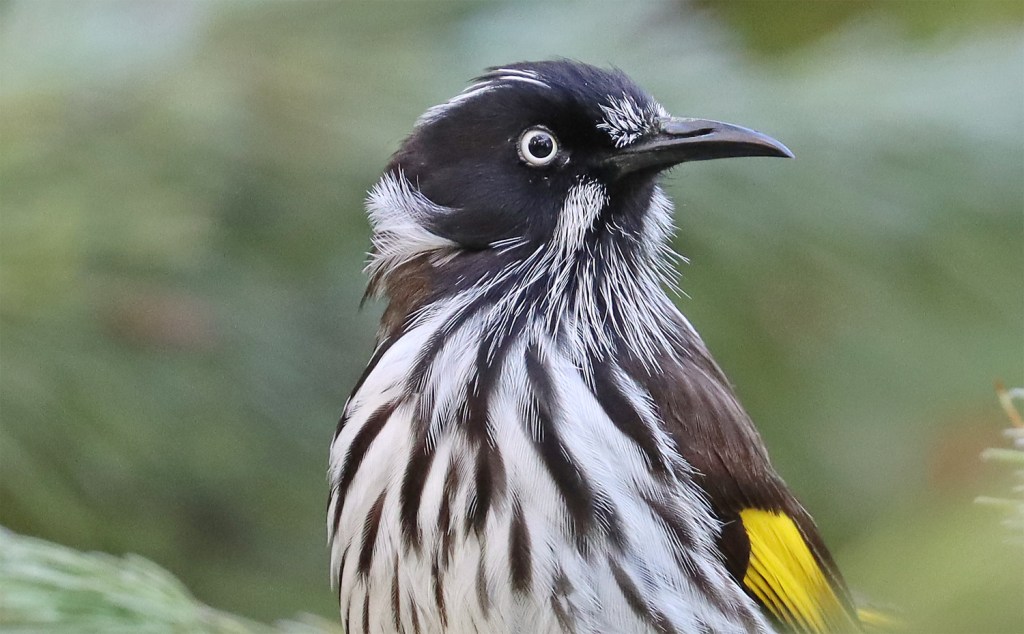
But one last check on the birds at Emu Point at Albany. New Holland honeyeaters are plentiful but very photogenic.

Golden whistler
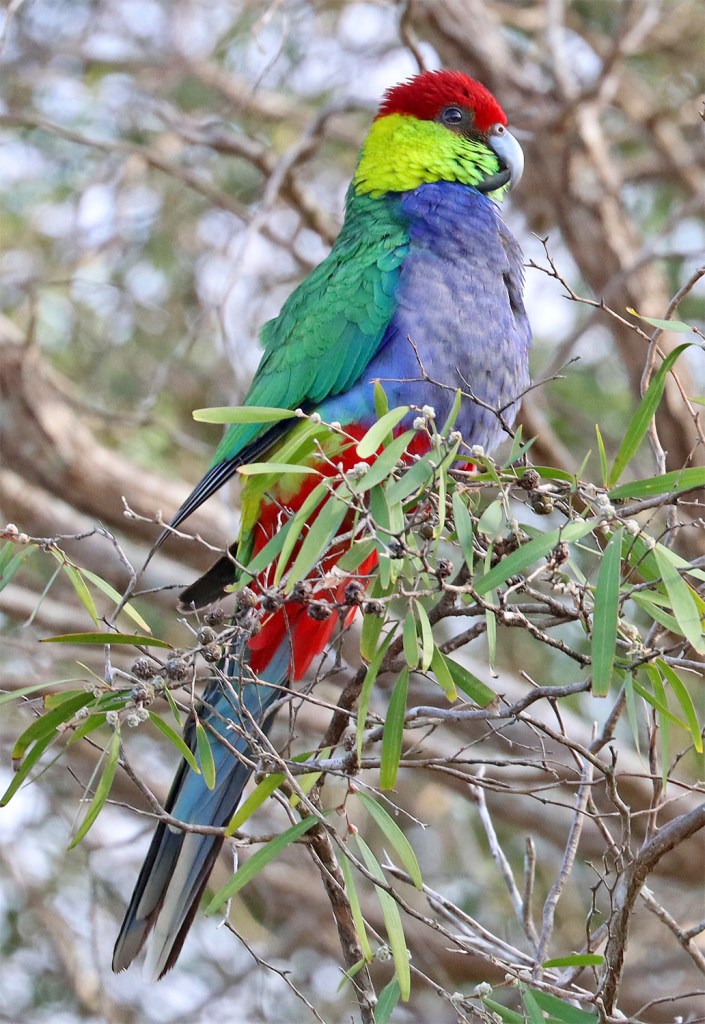
Red-capped parrot
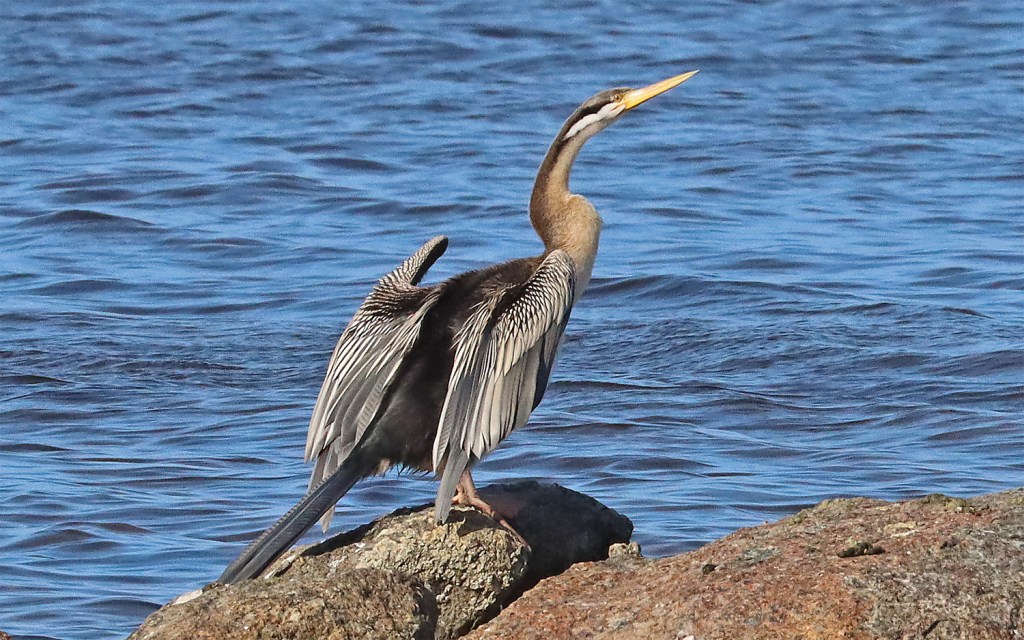
Darter at Lower King north of Albany
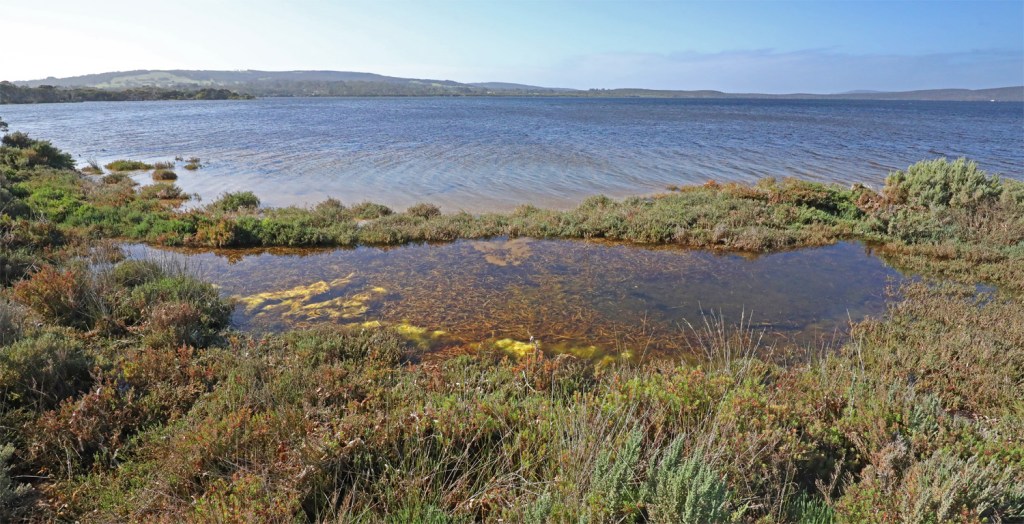
The Fish traps at Kaatboornup (Oyster Point) were used for thousands of years.
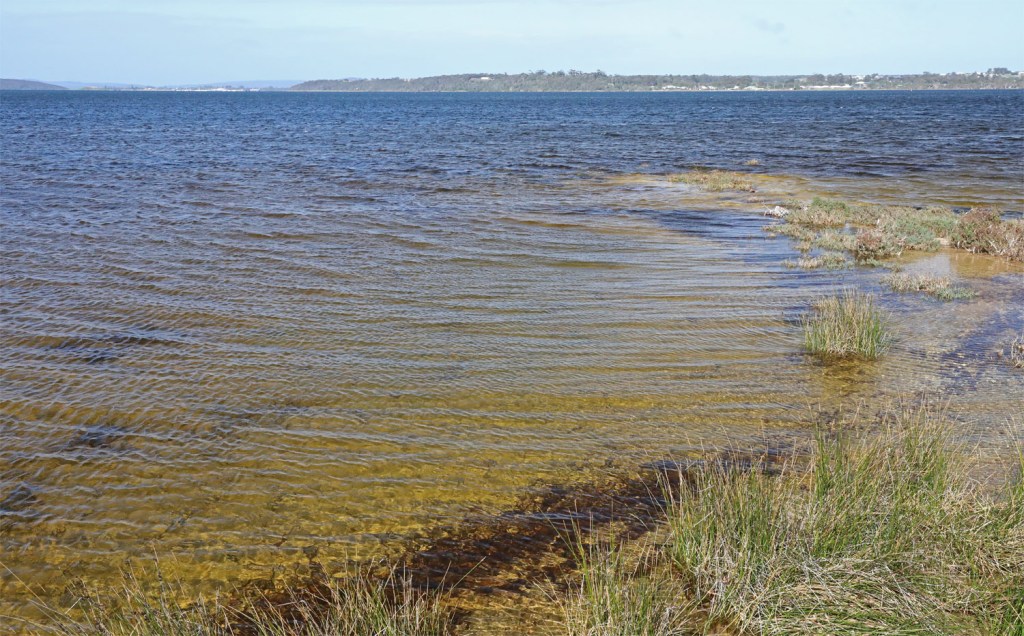
Unfortunately, it was high tide so the rocks were under water.
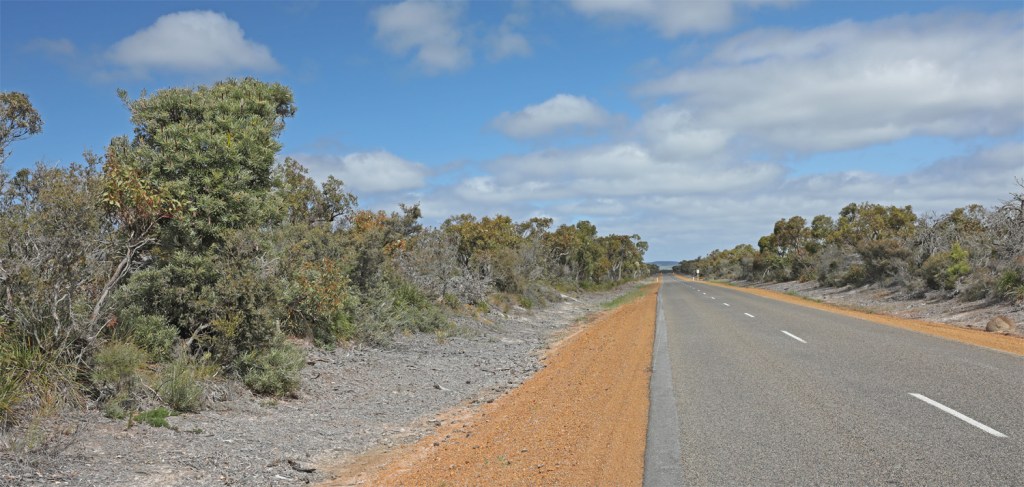
Hassell National Park is an important ecological area of intact vegetation and wildlife corridor.
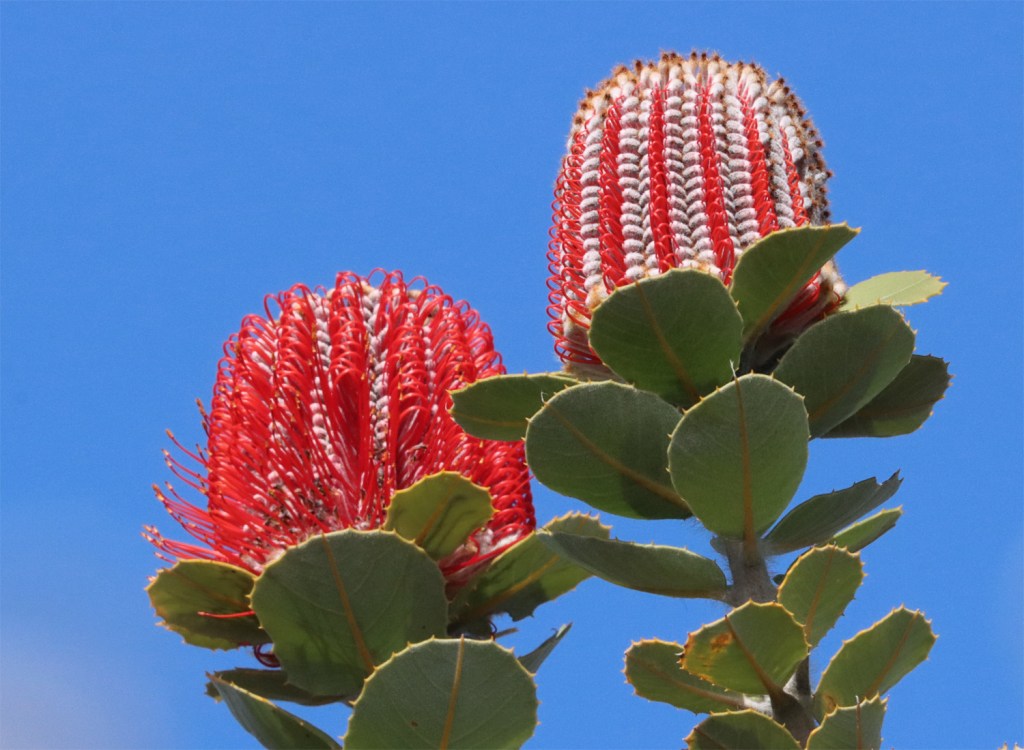
Scarlet Banksia (Banksia coccinea)
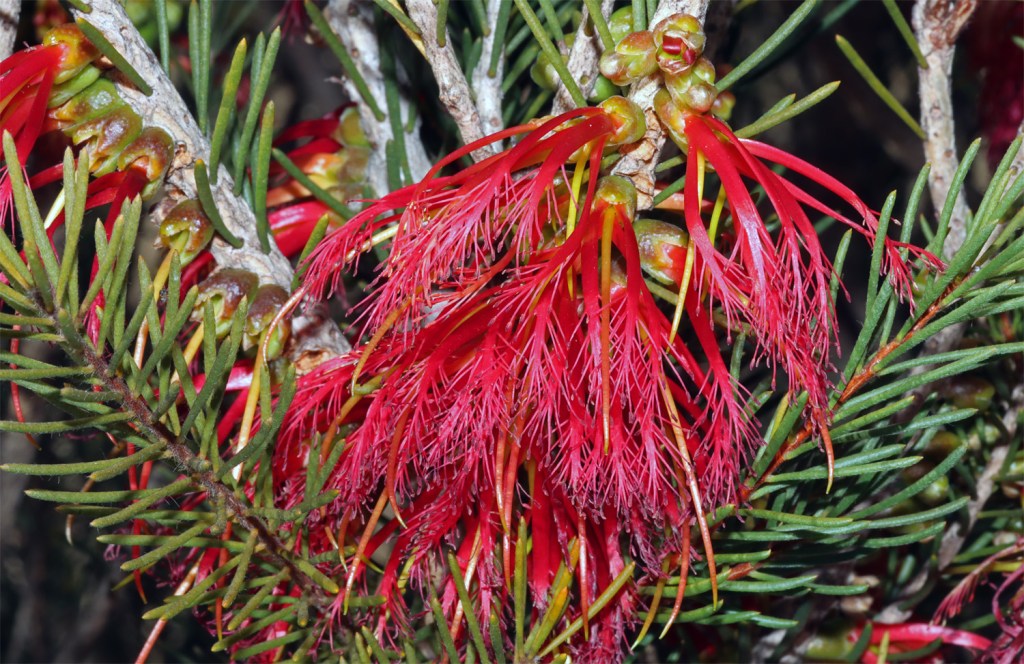
Clawflower (Calothalmus sp.)
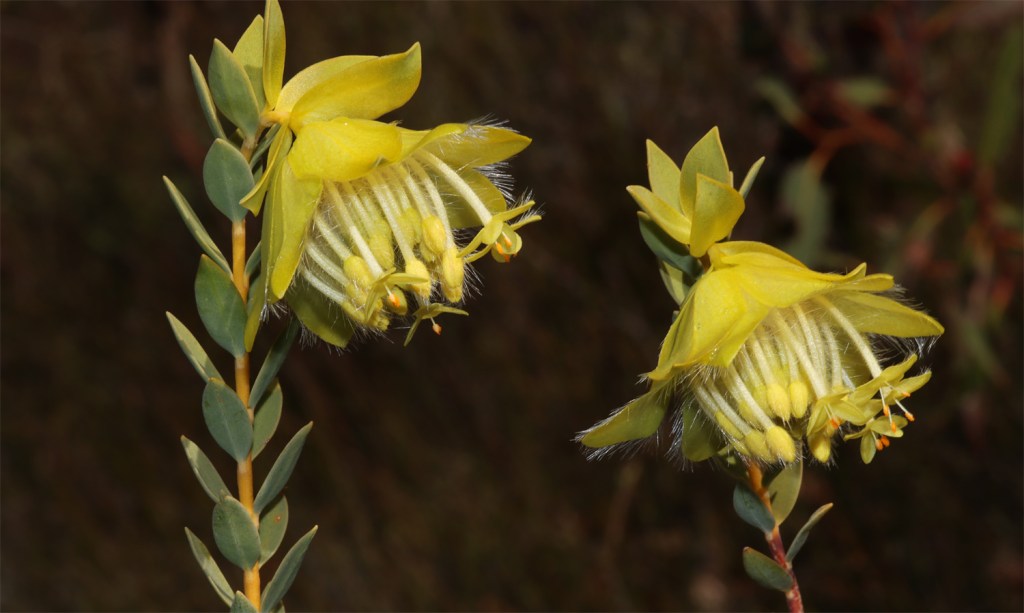
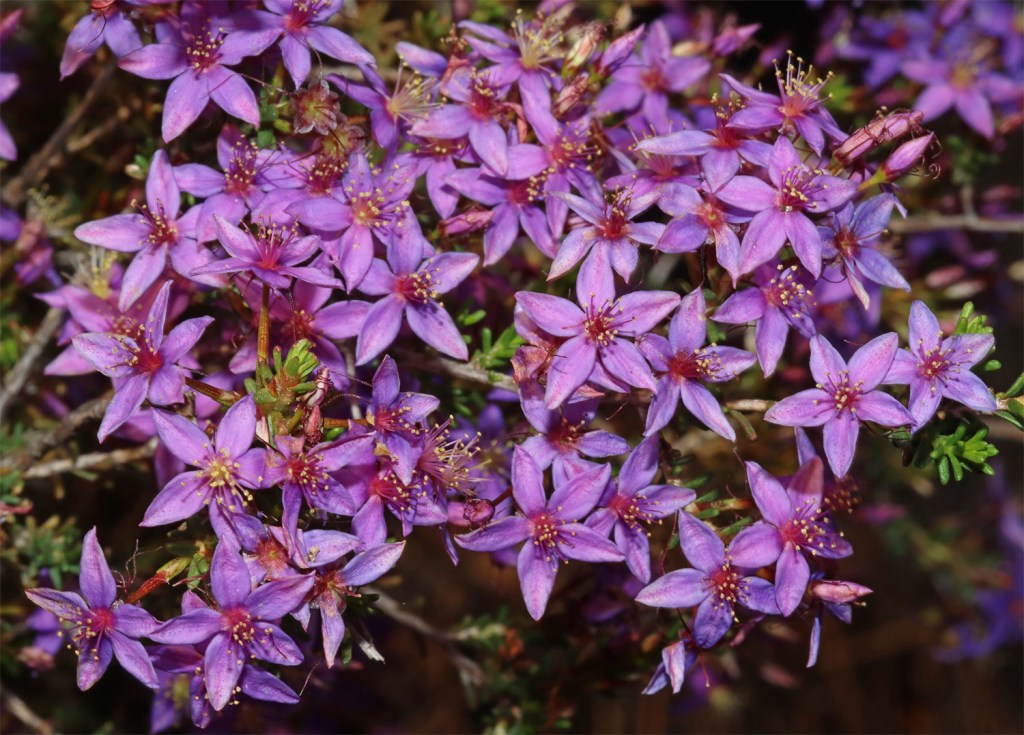
Pimelea species
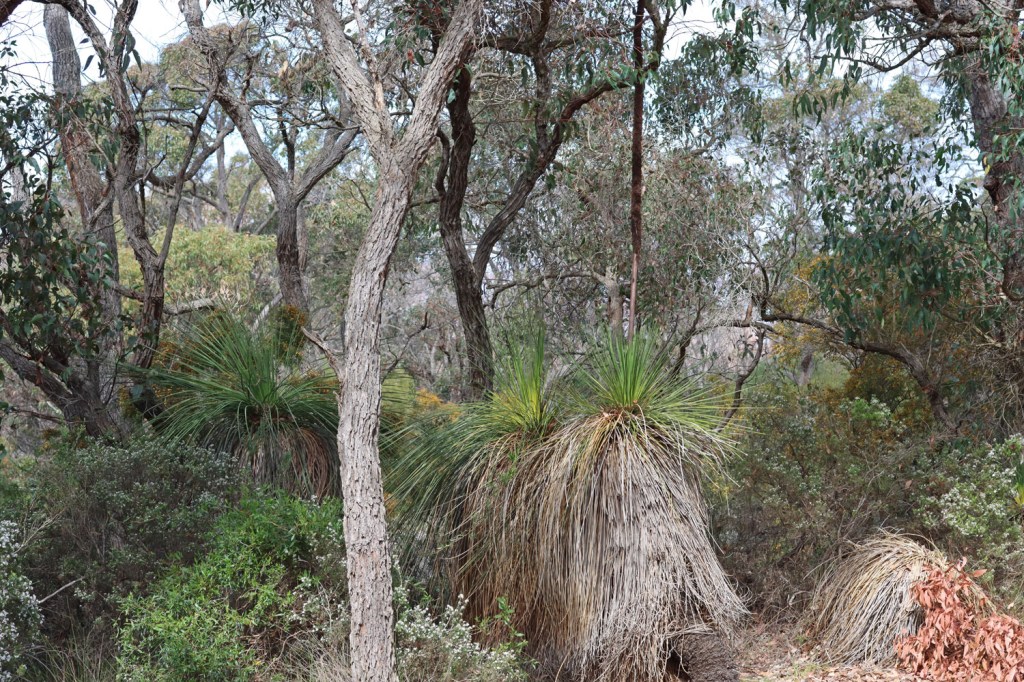
Much of Hassell NP is heath but there are some patches of woodland.
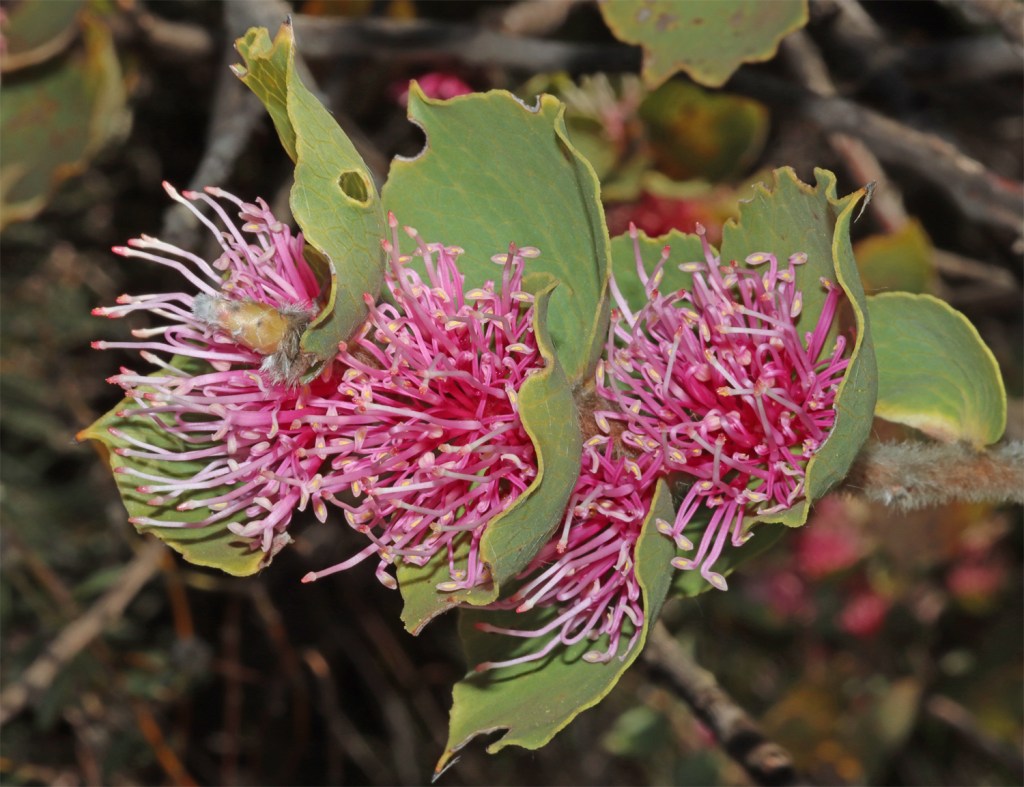
Hakea species
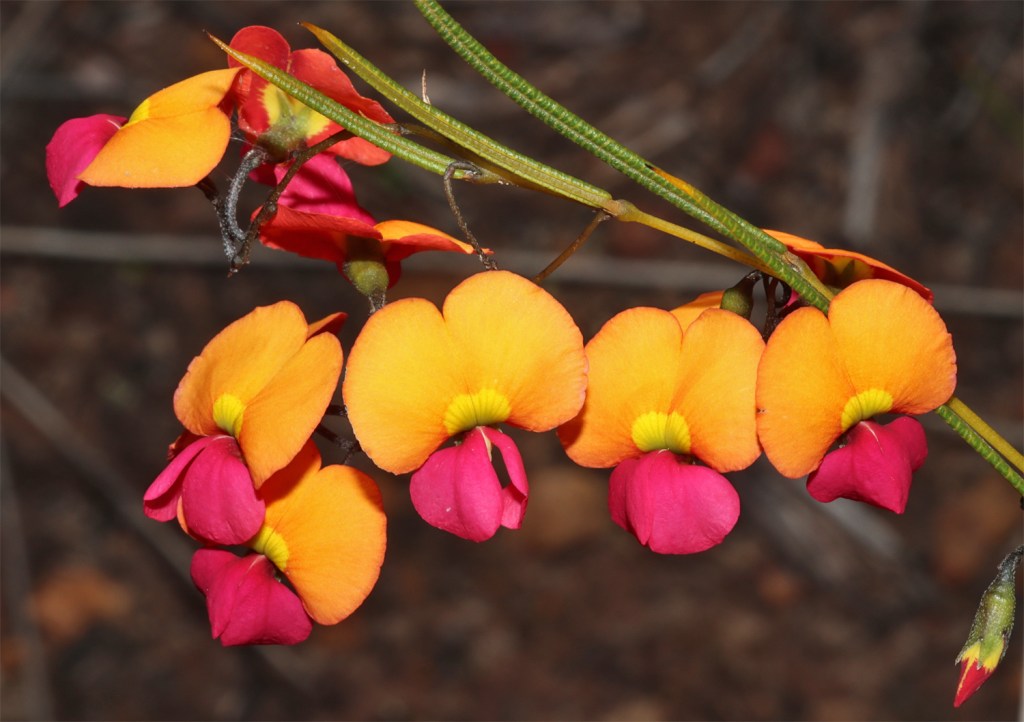
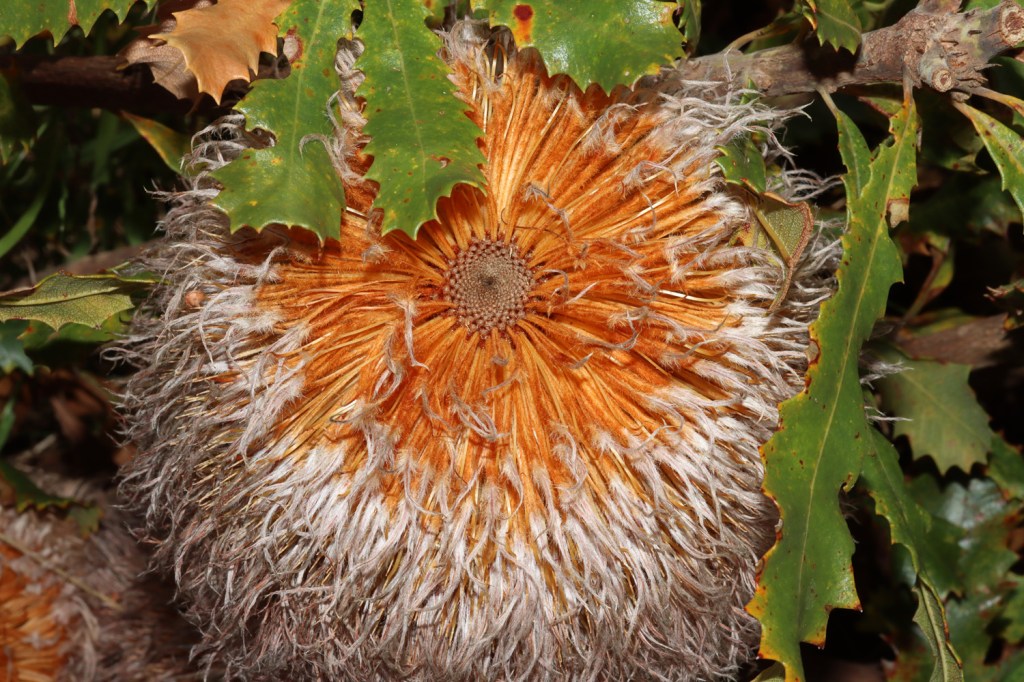
Woolly banksia (Banksia baueri) has a limited range along the coast.
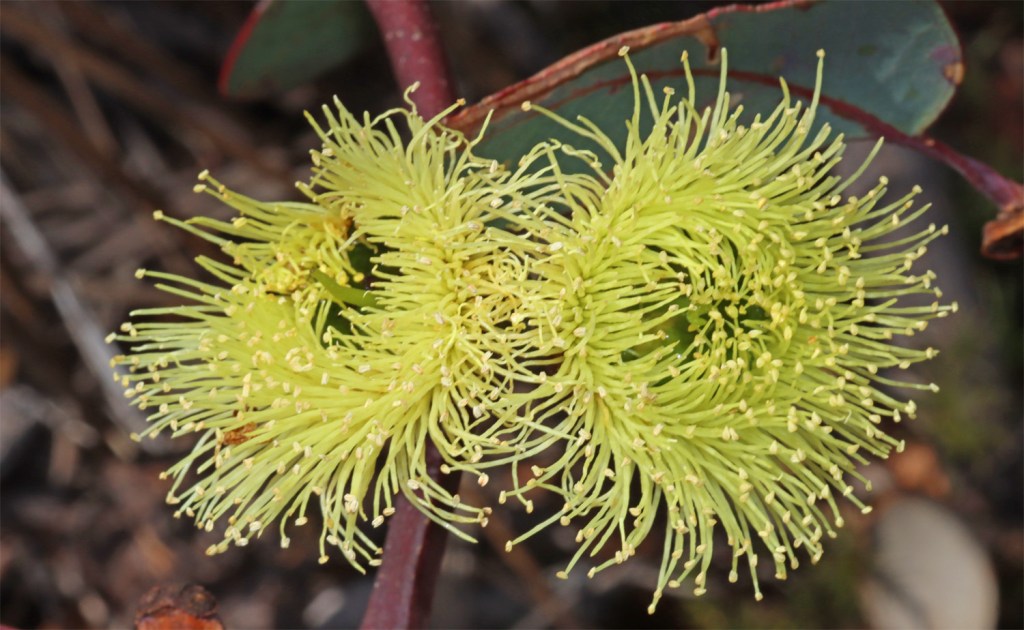
Bell-fruited mallee (Eucalyptus preissiana)
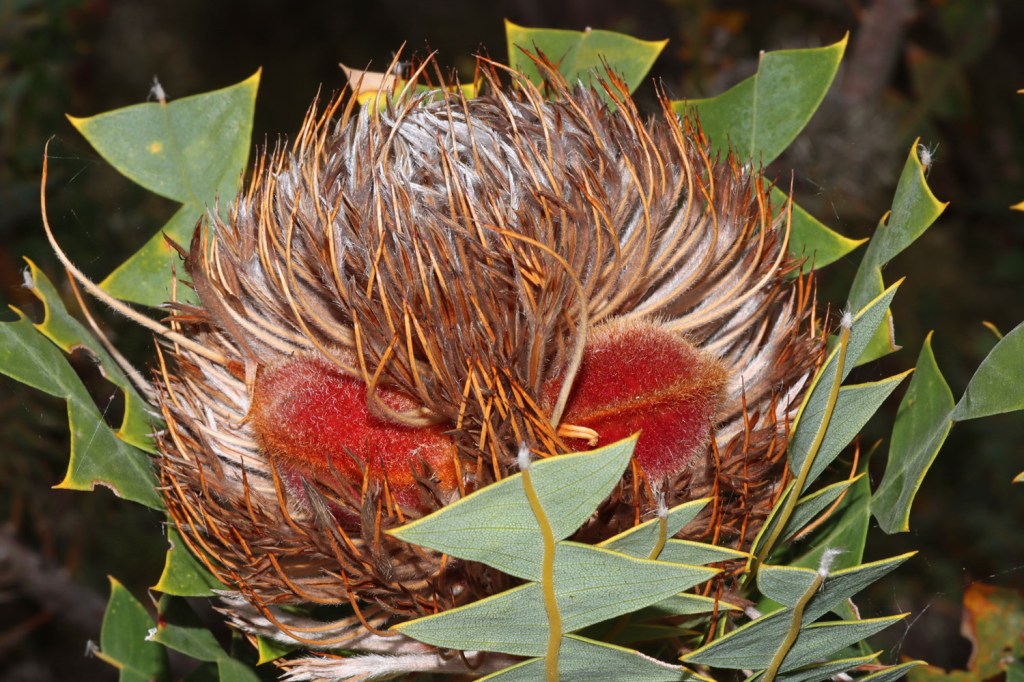
Big Bad Banksia baxteri man
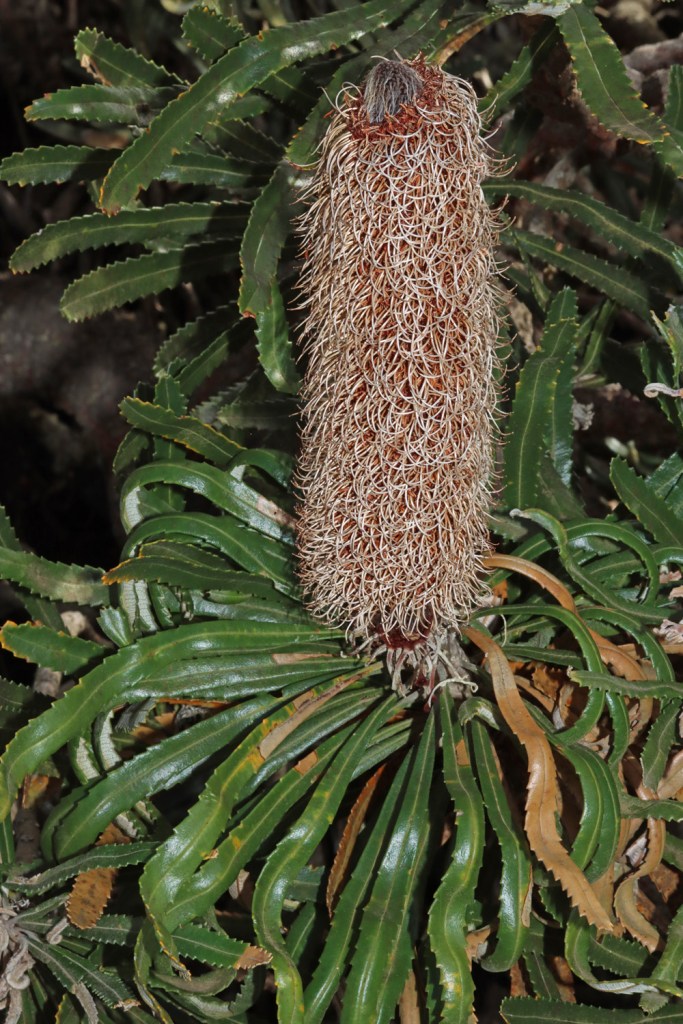
Banksia quercifolia
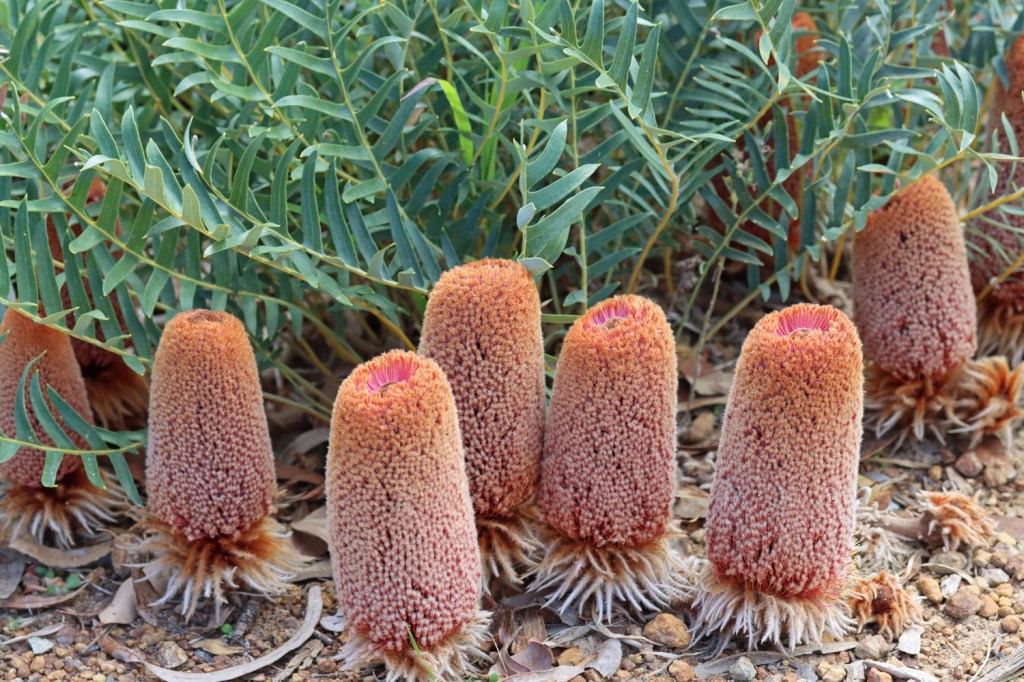
Banksia blechnifolia
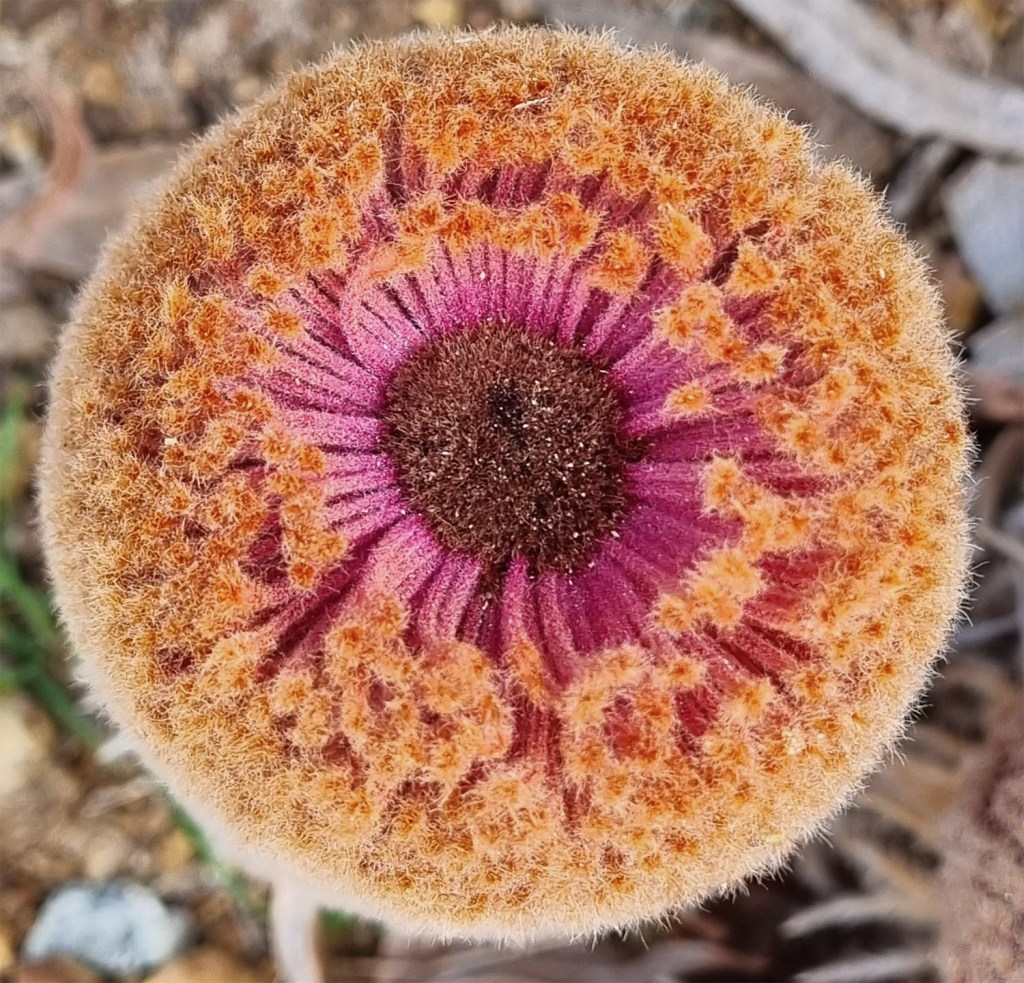
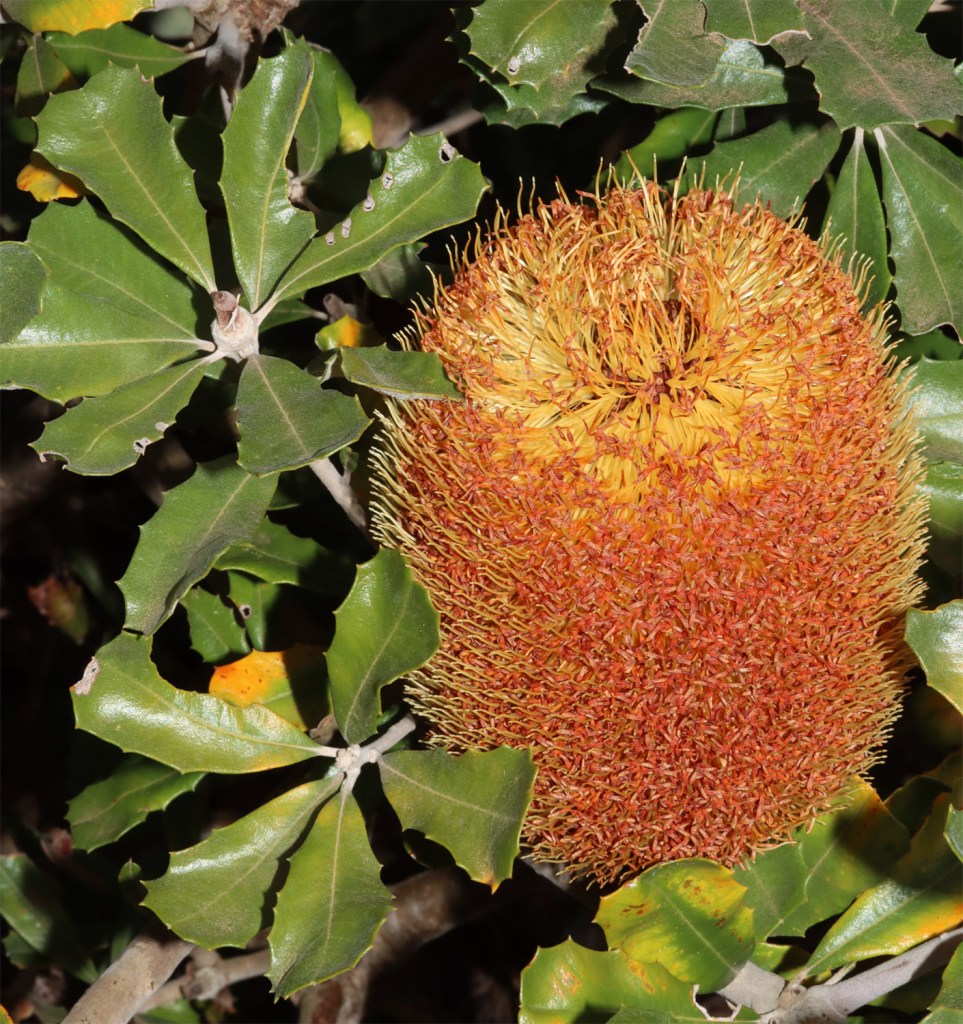
Banksia sp.
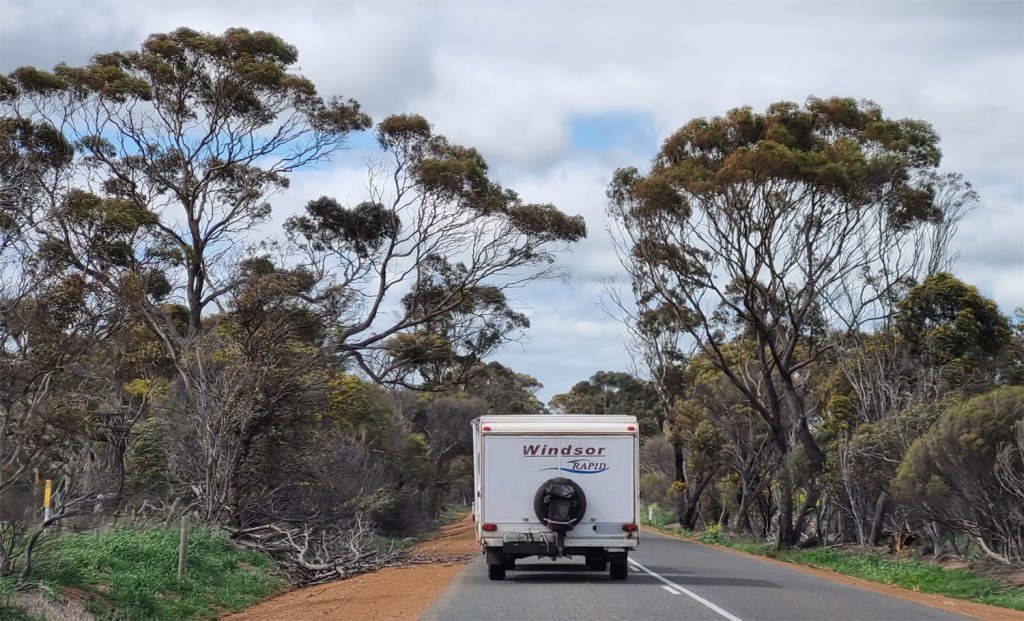
Not so much today.
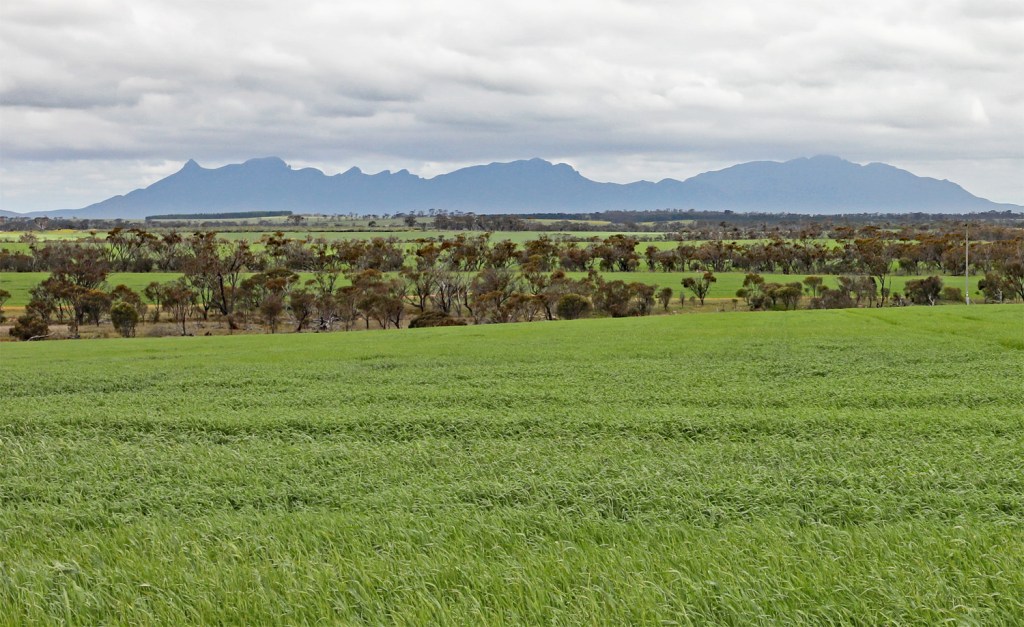
Views to Stirling Ranges from near Wellstead
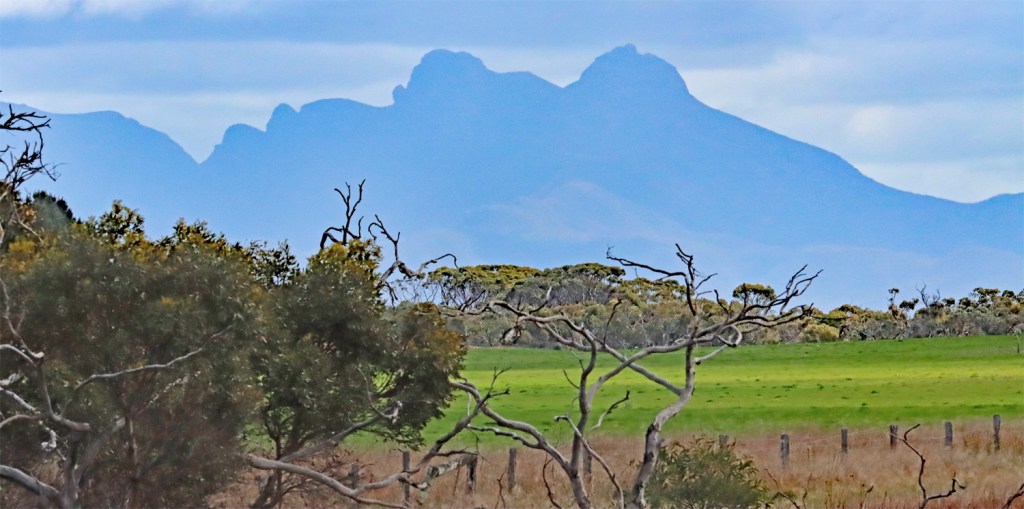
We get closer to the Stirling Ranges on the Bremer Bay-Borden Road
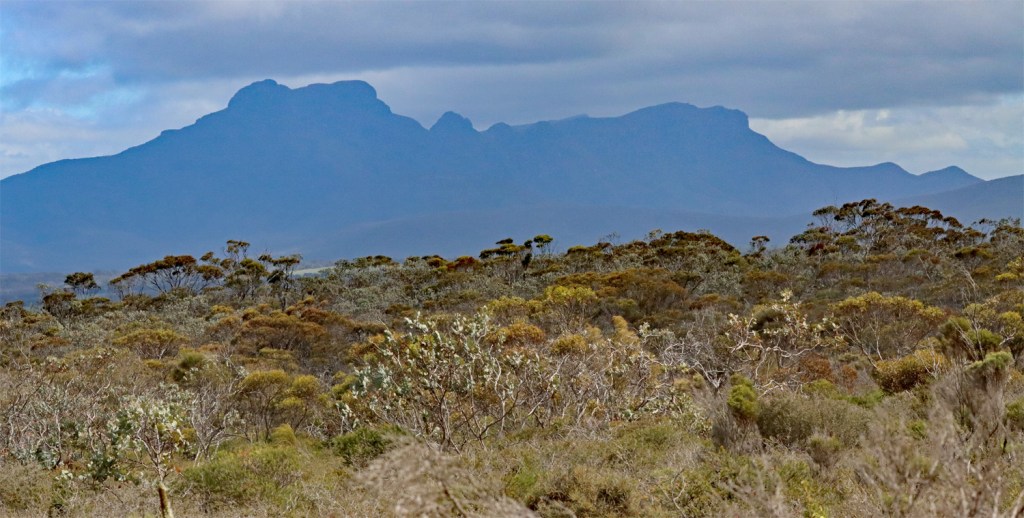
Greaves Road Nature Reserve with views to Bluff Knoll
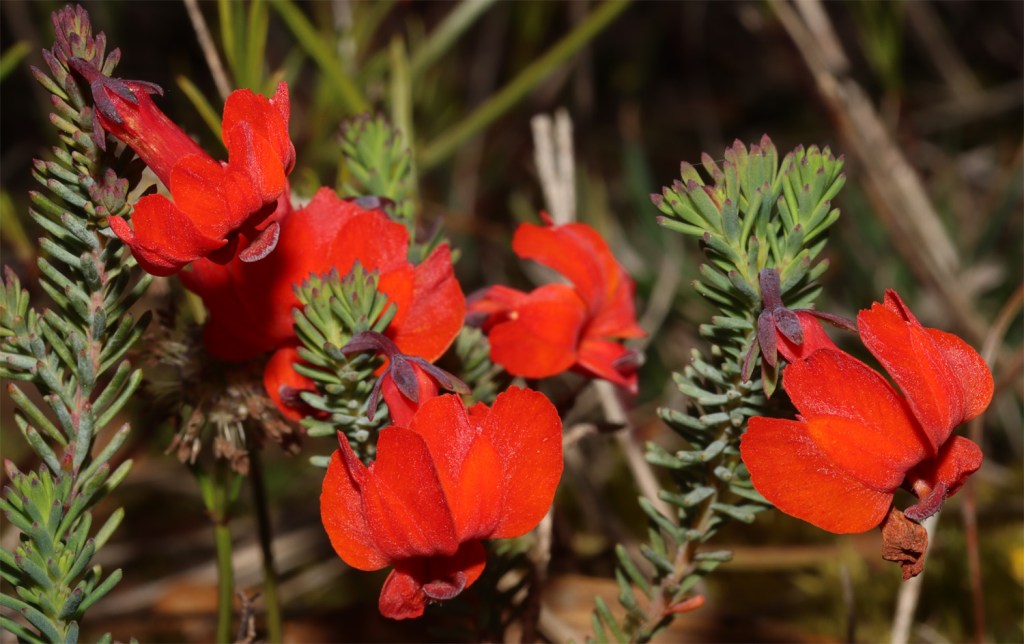
Red leschenaultia
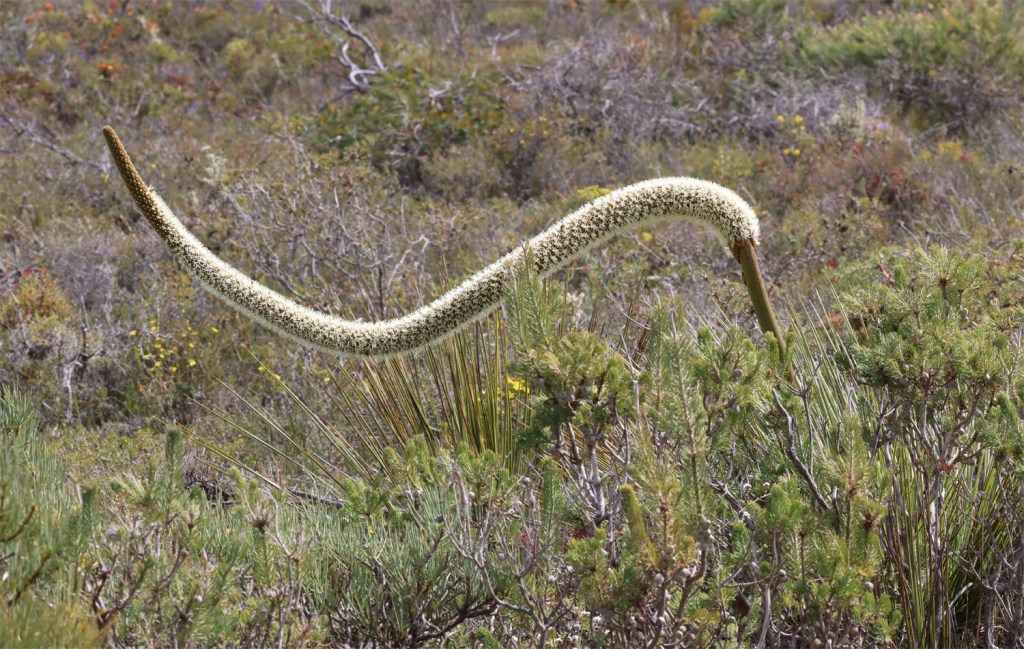
Grasstree (Xanthorrhea) flower spike
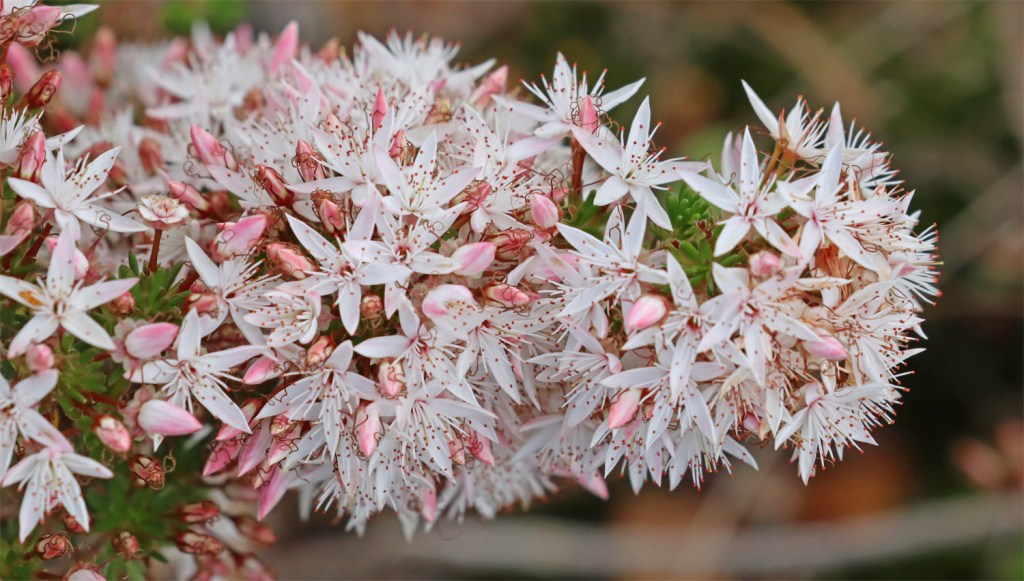
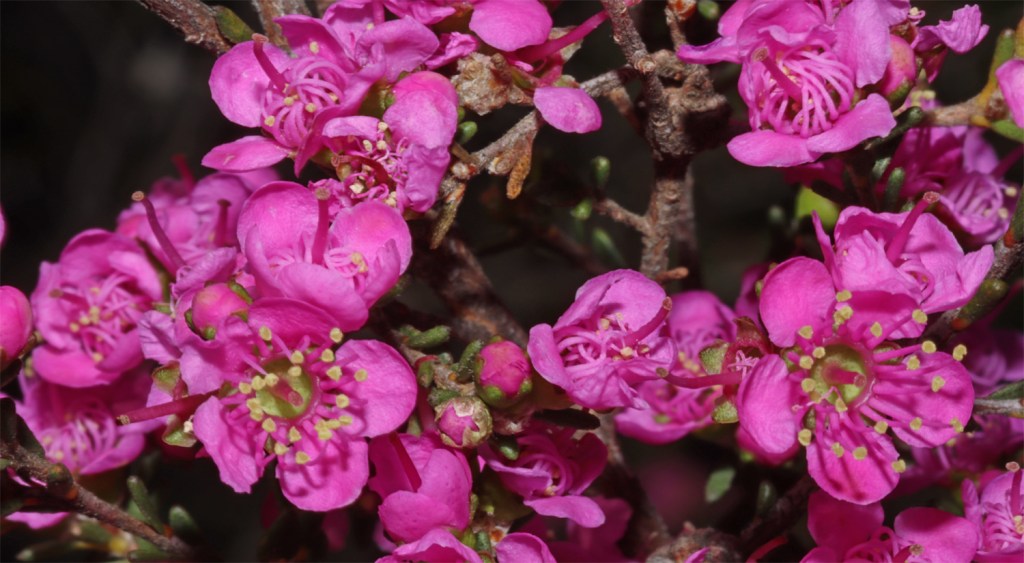
Calytrix
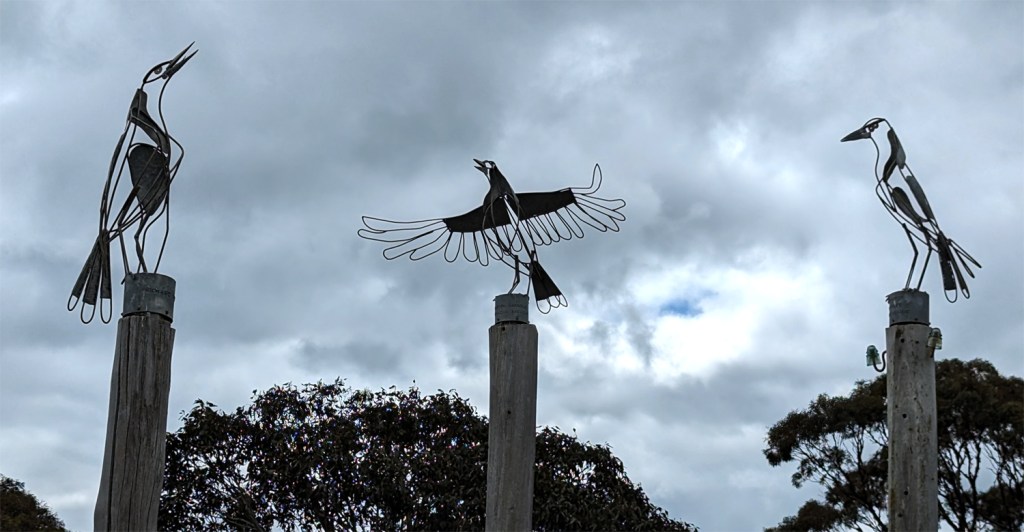
Borden has welcoming sculptures called The Magpie Flight Path.
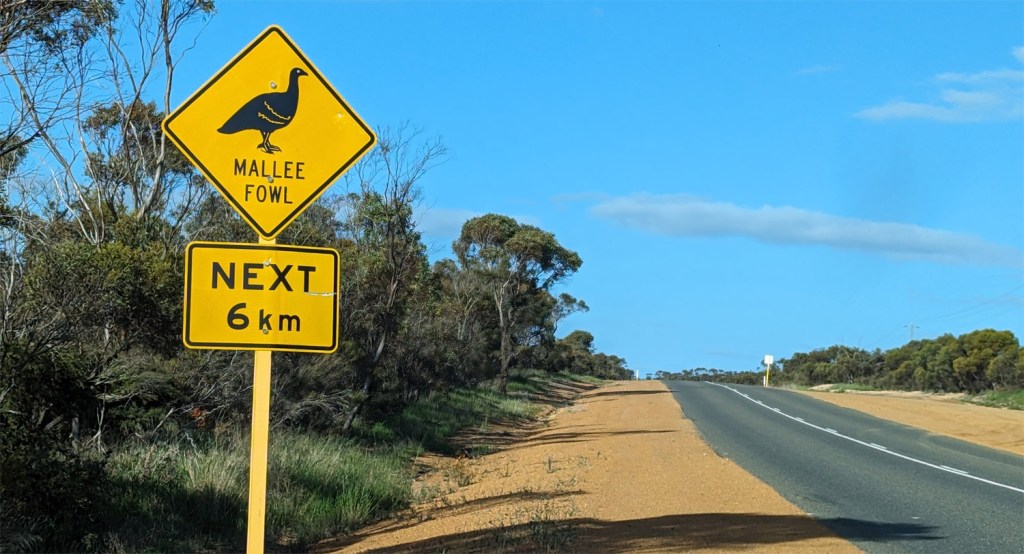
We must be close.
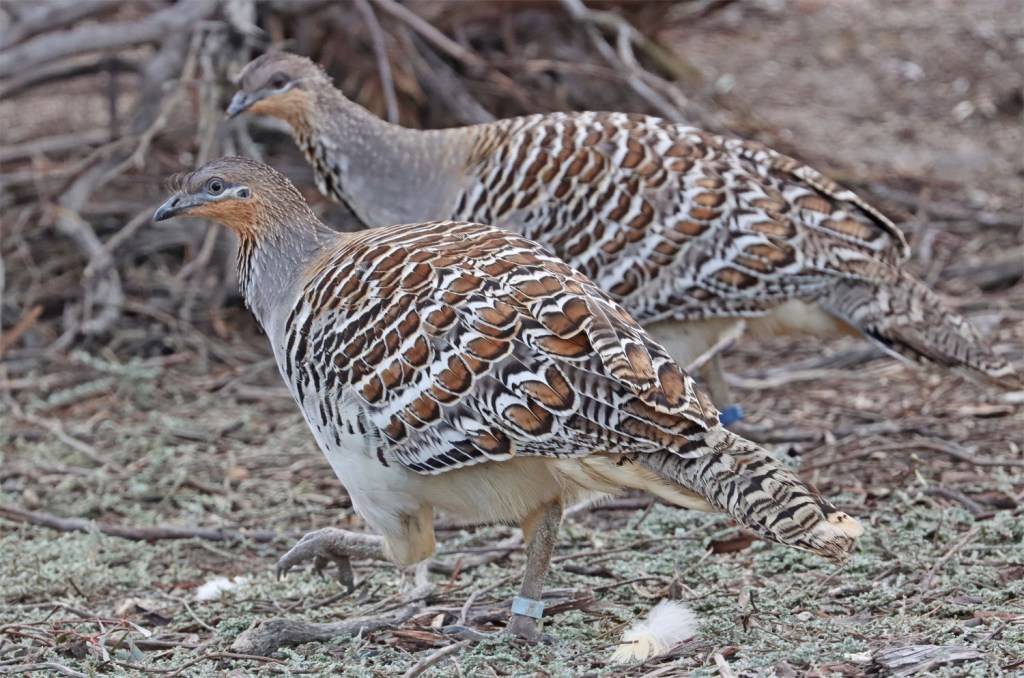
Fowl things afoot at the Youngergnow Mallee Fowl Centre at Ongerup. After eluding us in the bush over a number of years, we visited the Centre to see these fowl creatures. It is a community owned and operated centre for environmental awareness and education, with special focus on conservation of the mallee bush and the endangered Malleefowl.
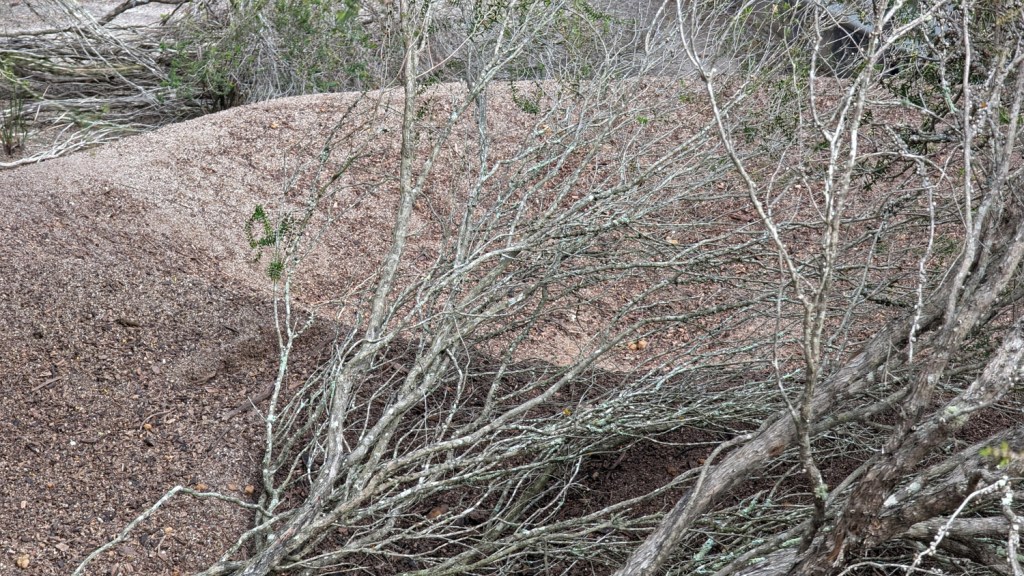
They managed to fowl one’s nest.
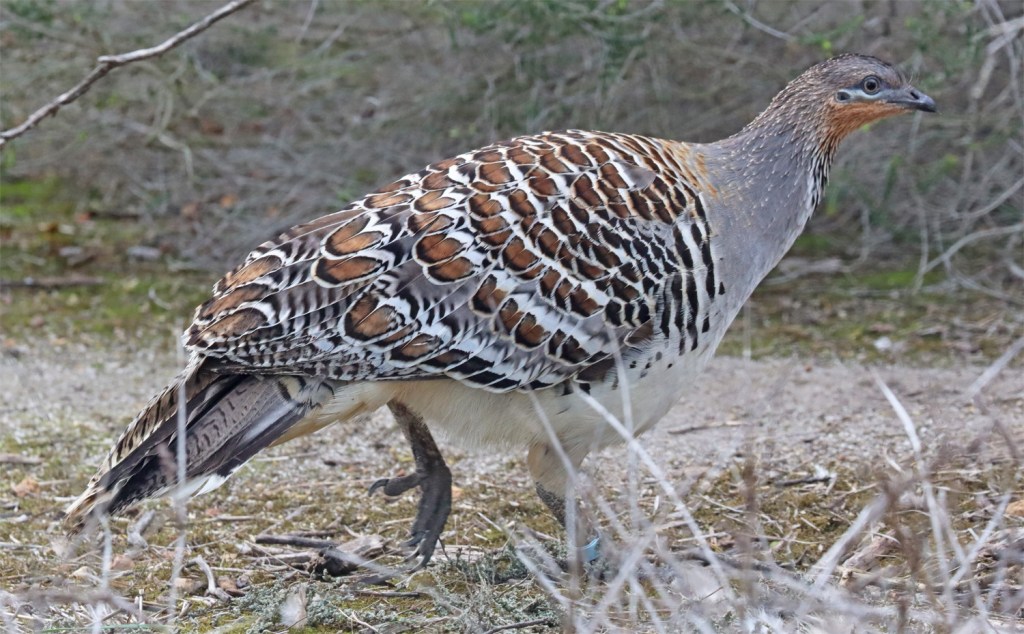
The malleefowl are in large aviaries in a natural mallee bushland setting.
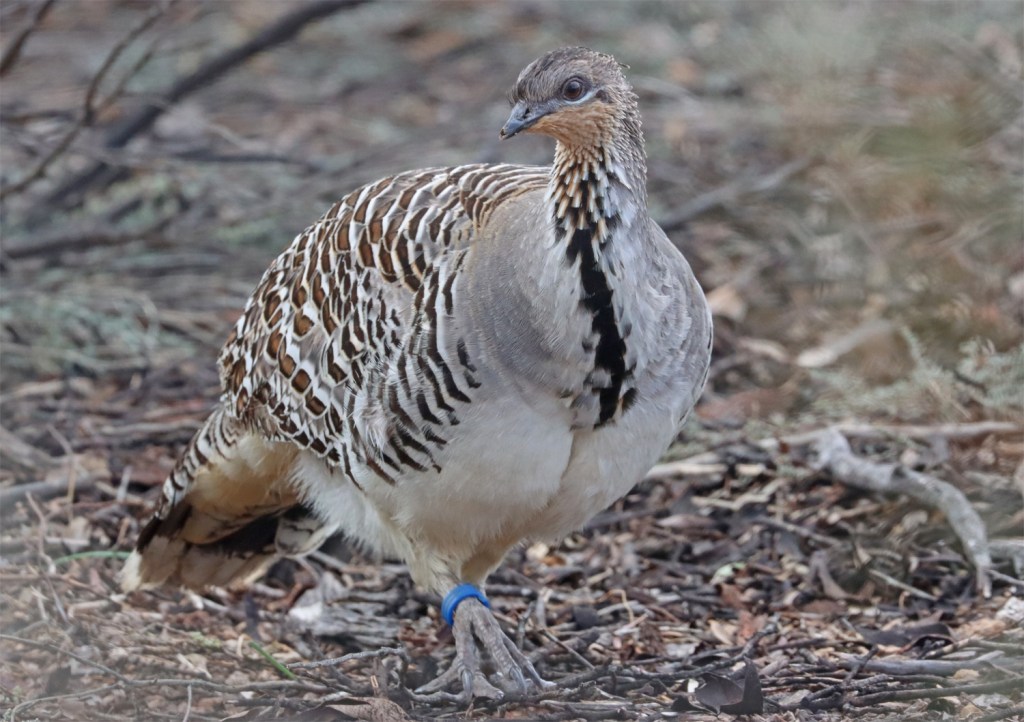
Fowl play
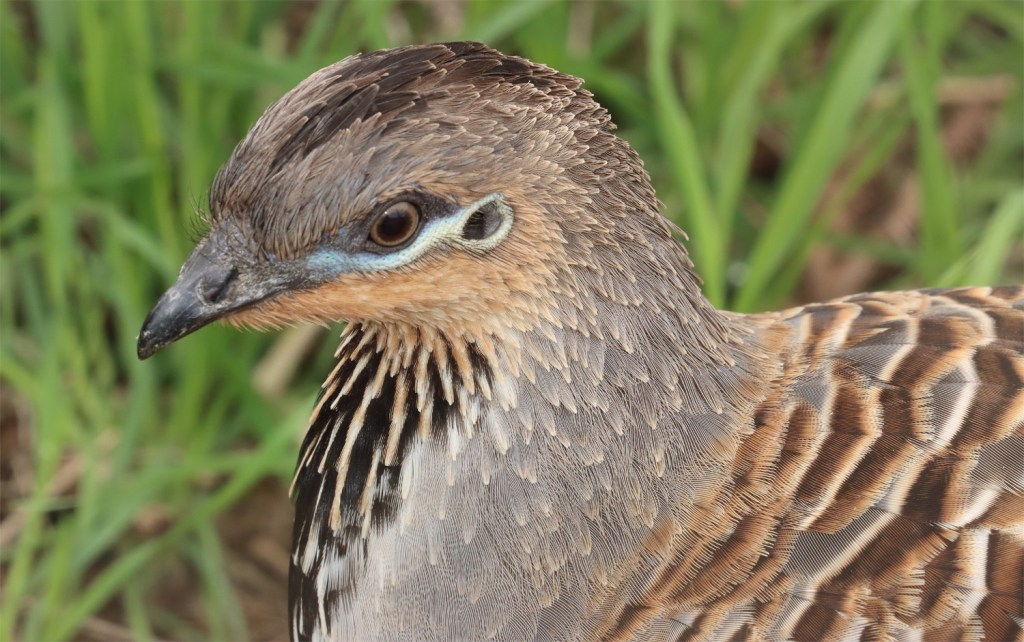
” Fair is fowl and fowl is fair” (variation of Shakespeare from Macbeth)
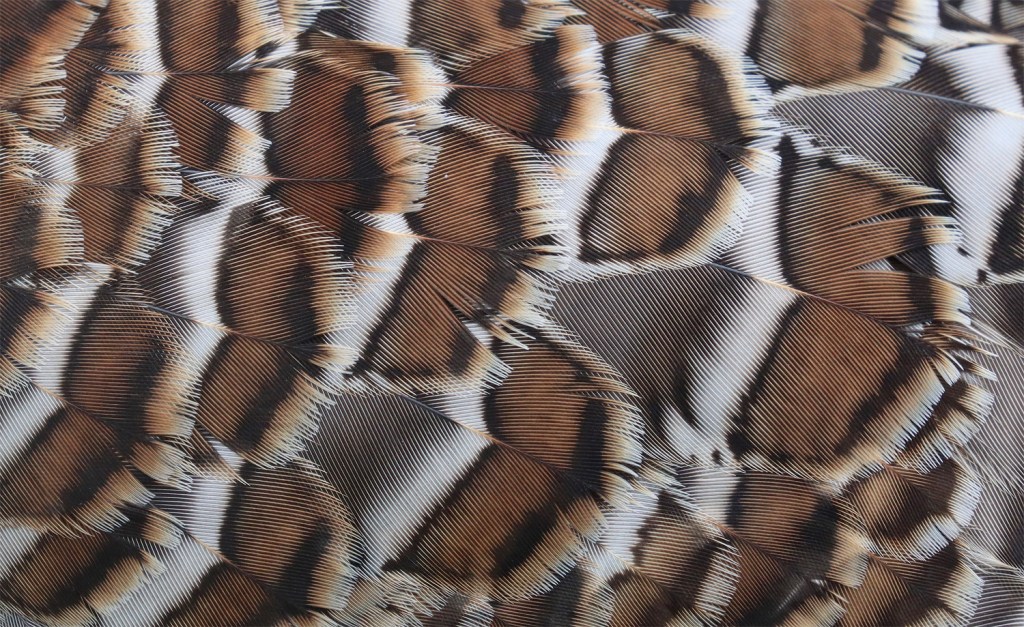
Beautiful malleefowl feathers
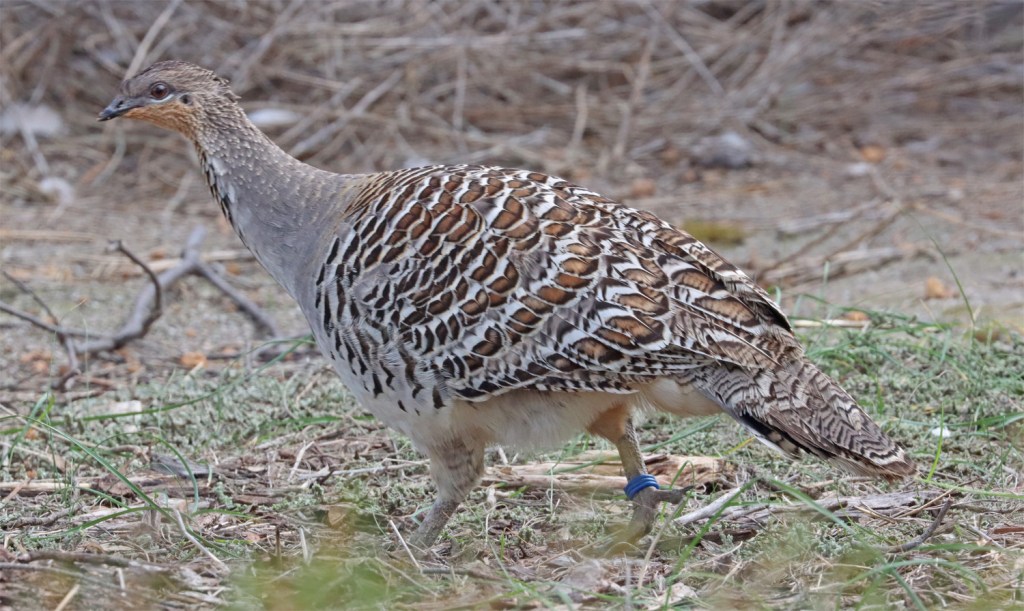
It was great to finally see our fowl friends.
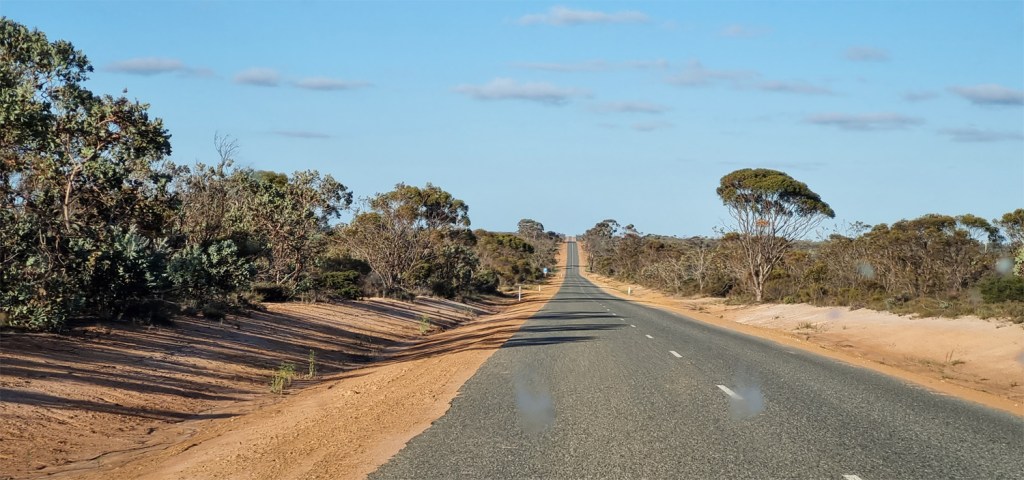
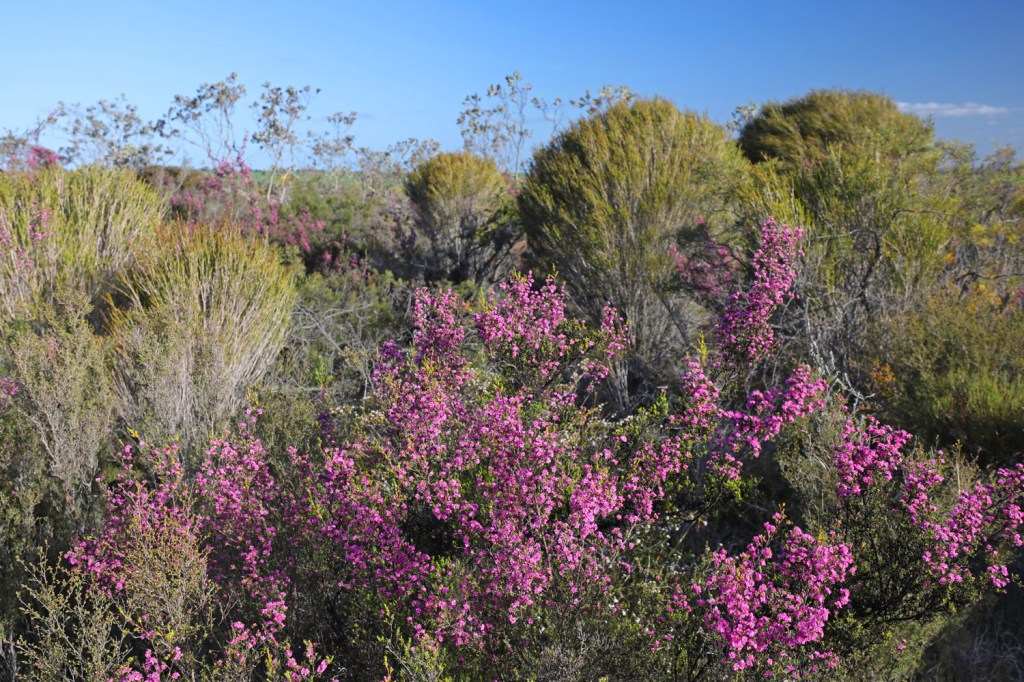
Malleefowl habitat as we head for Ravensthorpe.
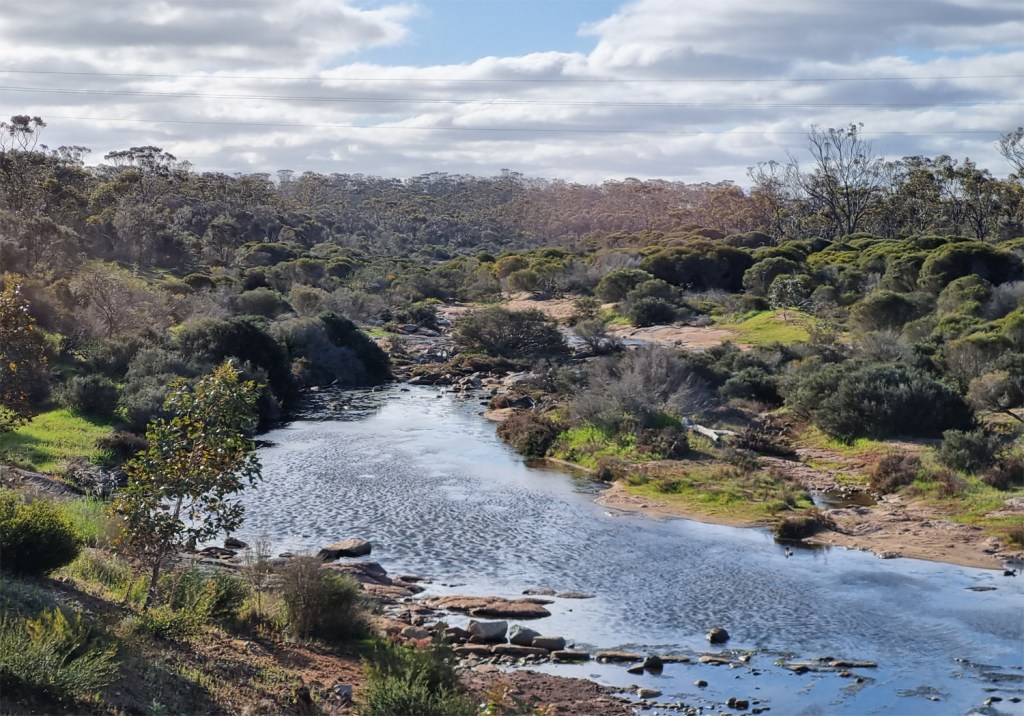
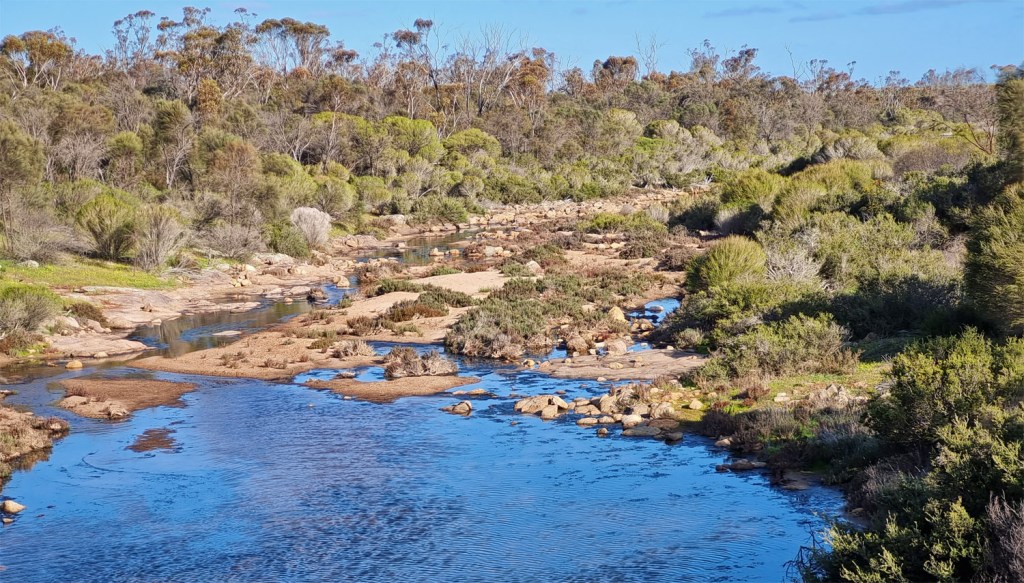
We cross the Fitzgerald River
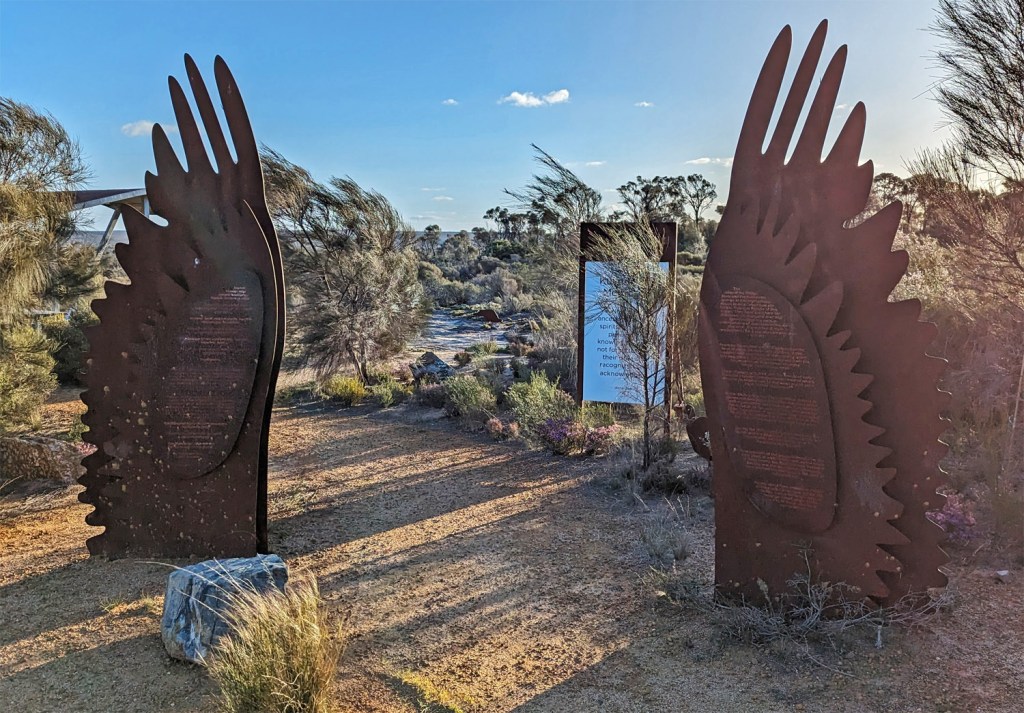
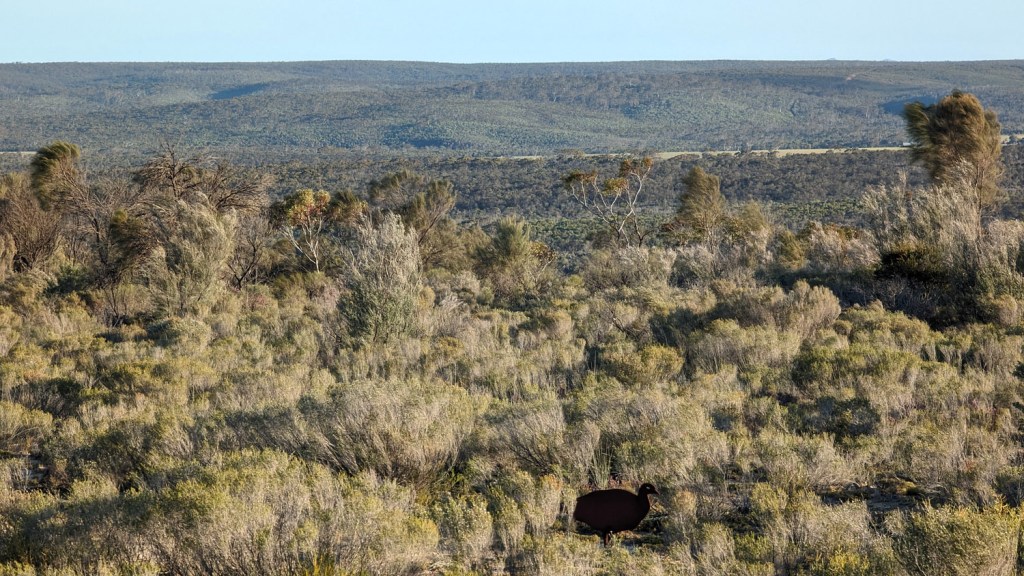
Kukenarup – a memorial to a massacre nearby was created in 2015 to those killed in the early years of white settlement near Ravensthorpe (see below). A pair of eagle wings sculptures represent one of the Noongar totem animals. Cutouts of the other one – the malleefowl – are scattered around. Words from the local Aboriginal people invite visitors to pause and reflect.
This is the wording on the memorial:
“Kukenarup Massacre
The Wudjari People were living near the gnamma (water hole) now called “Coconarup Springs” in the valley to the south. The Dunn family were the first European settlers to farm this area. During 1880, relations between the Dunn family and the Wudjari reached breaking point after the Dunn brothers’ legacy of abusing Noongar women became intolerable. John Dunn was caught by Noongar men abusing one of their women, and by way of tribal law was fatally speared. One Aboriginal man was arrested, charged and imprisoned on Rottnest island but the case against him was eventually dismissed due to lack of evidence. The Dunn family, along with other farmers began killing Noongars in retaliation. A government sanctioned punitive expedition led by police from Albany also travelled to the area and participated. A massacre of approximately 40 Noongar men, women and children was carried out in that one concentrated effort, but the killings continued here in this valley below, and eastwards for at least another five years. The Wudjari people of this area were decimated. No one among the settler community was ever charged.”
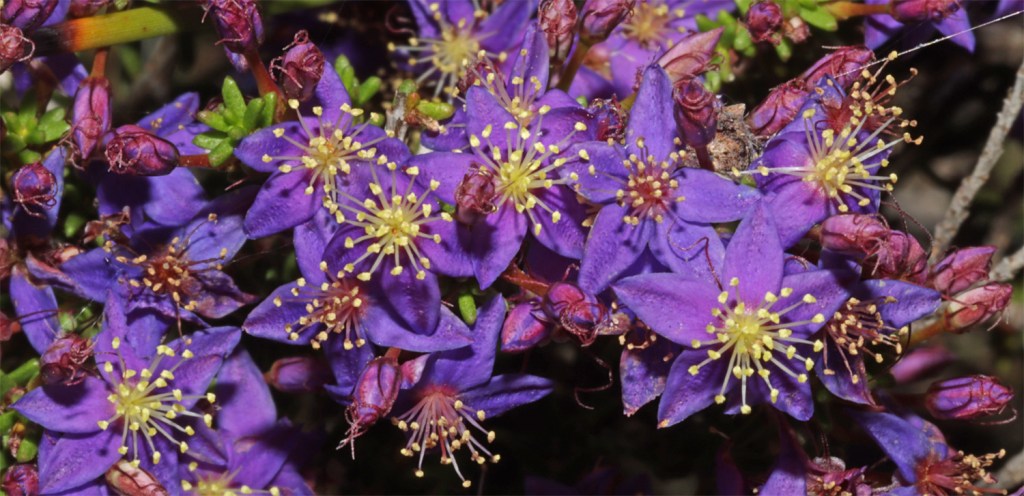
Wildflowers at Kukenarup – Calytrix
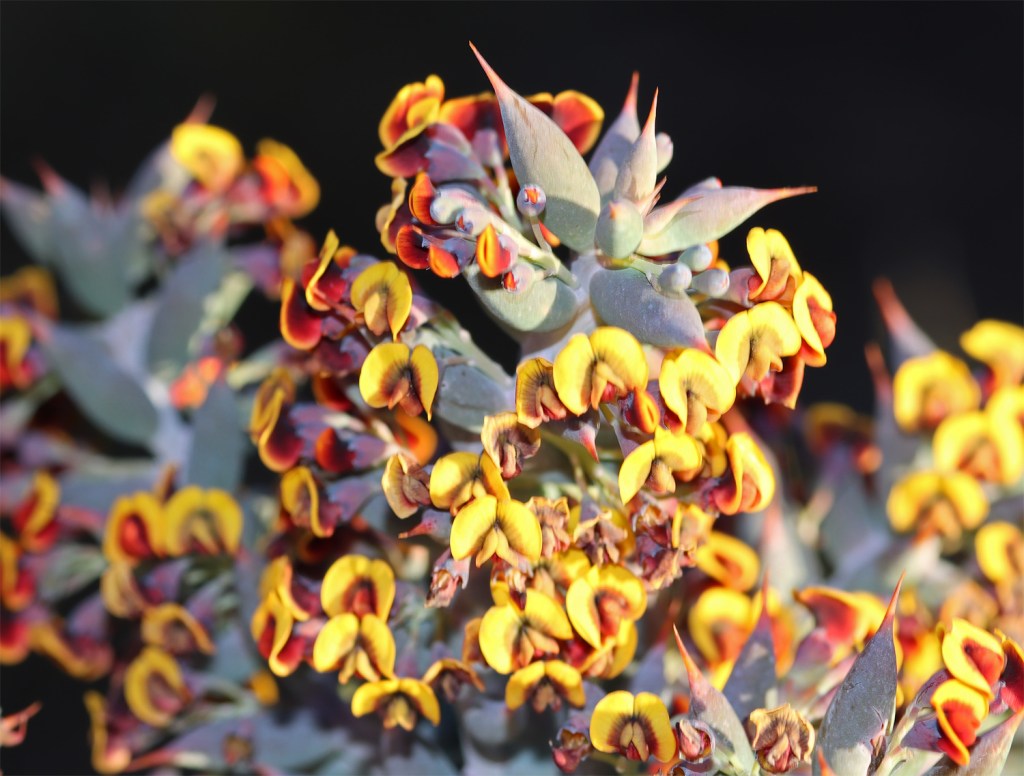
Daviesia
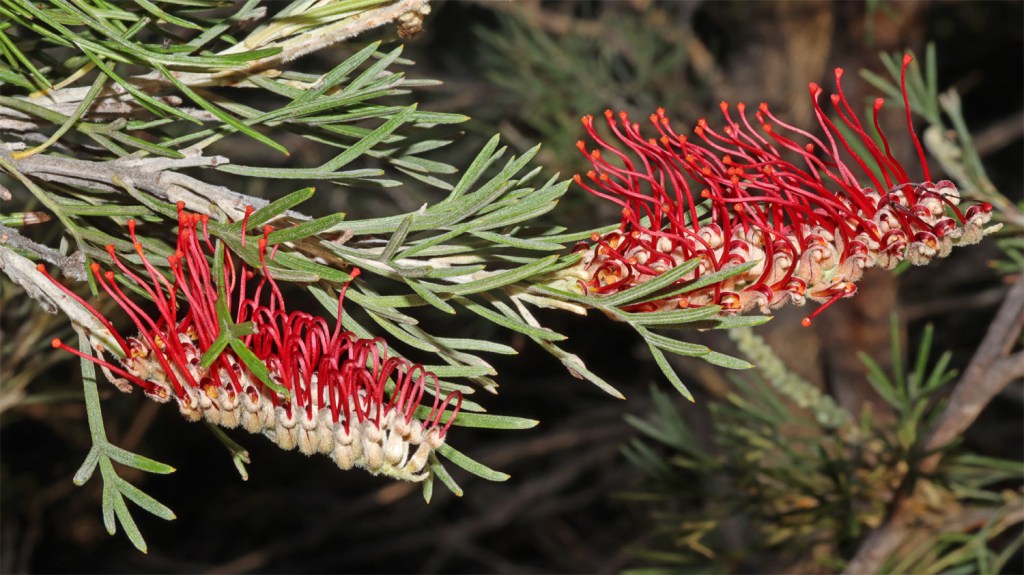
Grevillea
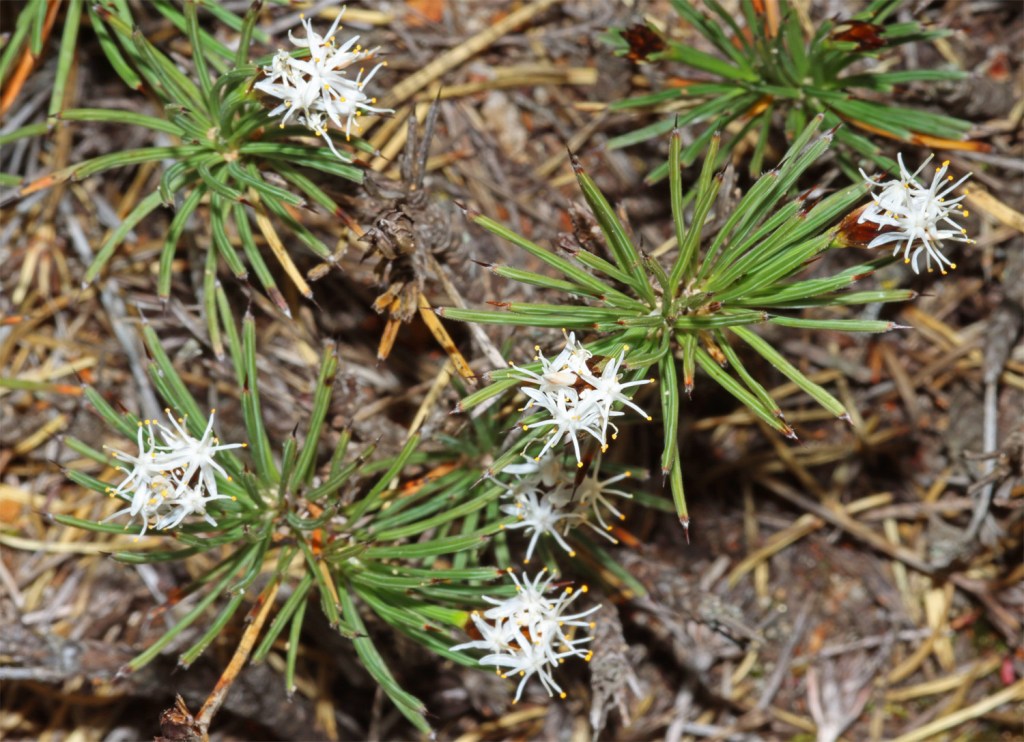
Borya
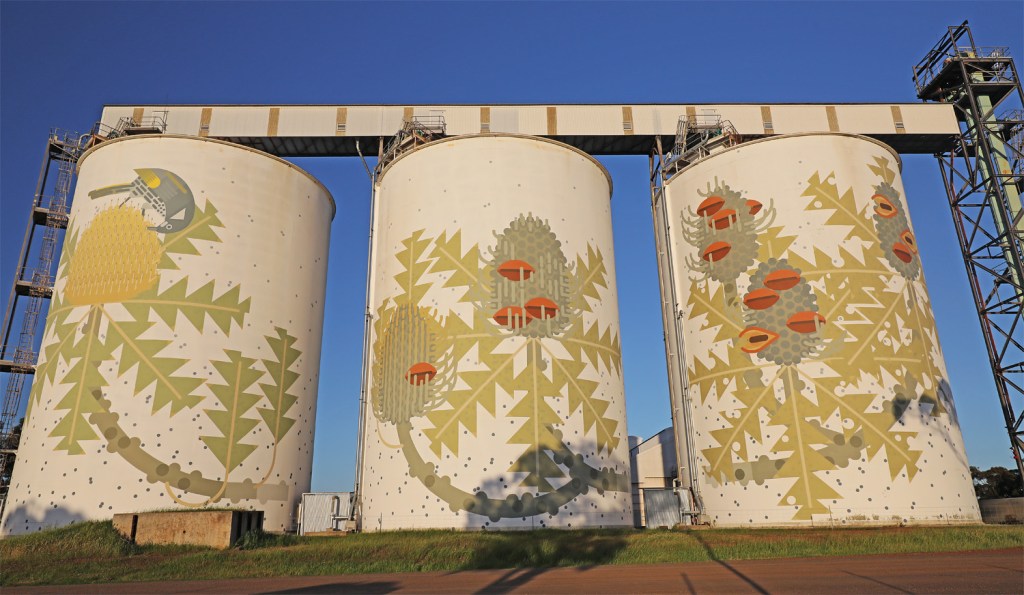
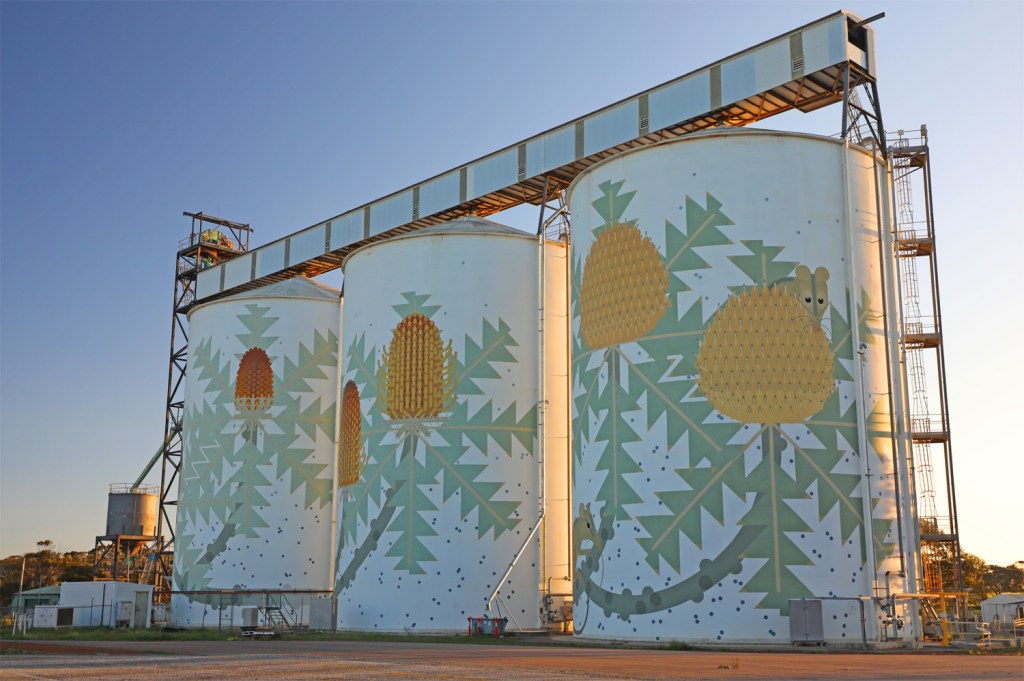
We arrive at Ravensthorpe – Ravy to the locals. The Ravensthorpe Silos display Six Stages of Banksia baxteri across the three silos. Artist Amok Island focused on local flora and fauna. “Each silo side shows a different stage of the flowering cycle of this species of Banksia: from flower buds, to full bloom, to seedpods developing, drying out and opening”. Banksia baxteri is only found between Esperance and Albany. The Honey possum and New Holland honeyeater are this species’ main pollinators.
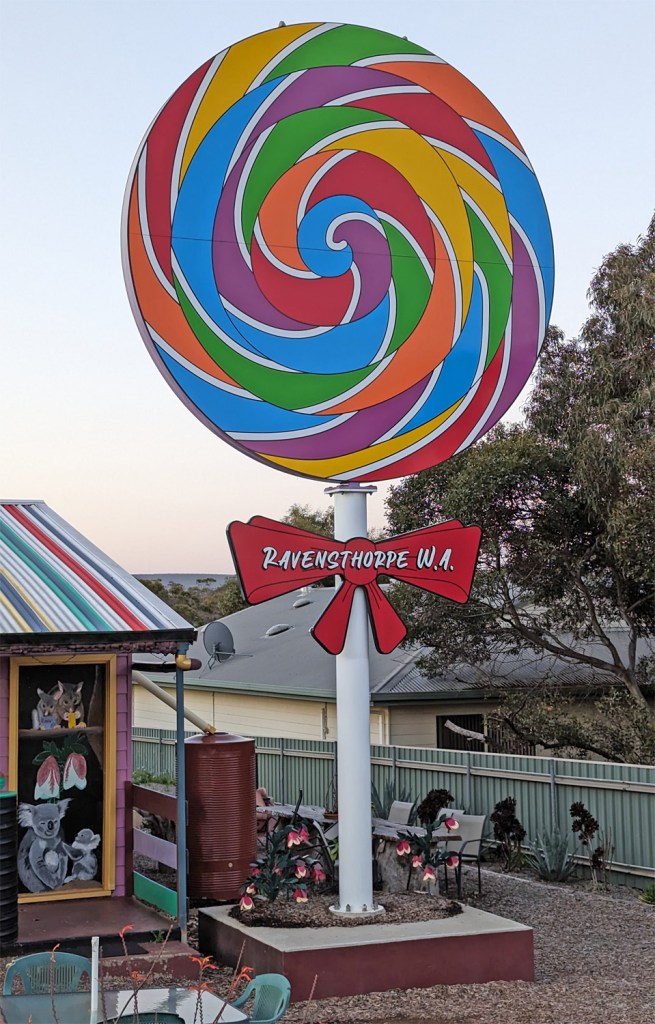
Now you know I’m a sucker for Big Things. This was a double bonus – at a lolly shop in Ravensthorpe, you don’t only get to see The Big Lollypop…
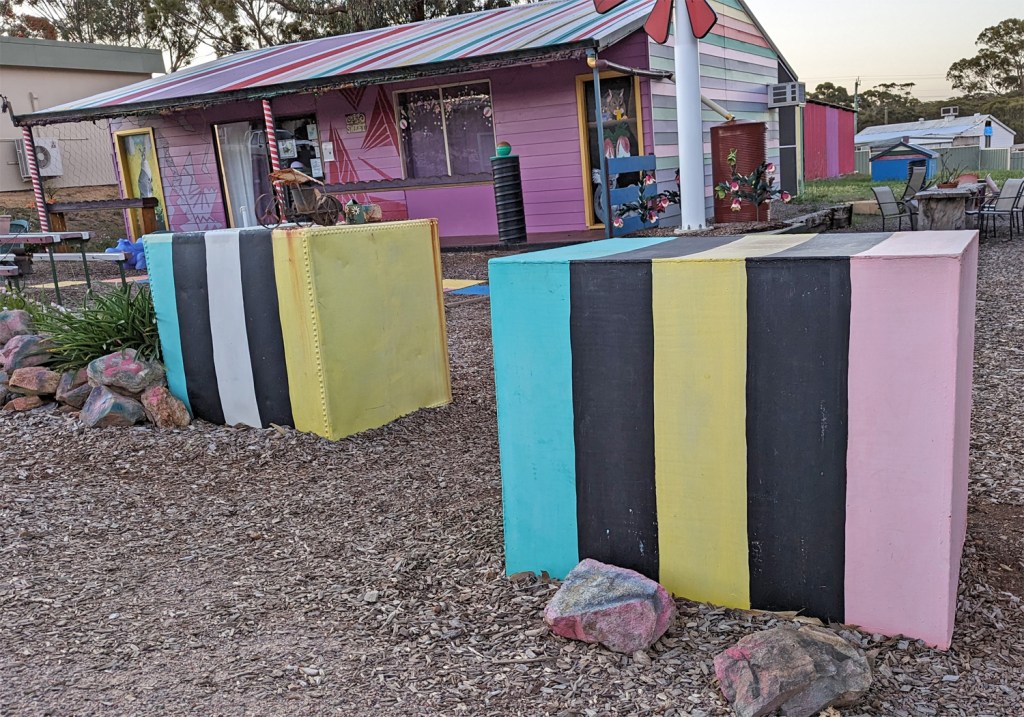
…but also the Big Licorice Allsorts. Sweet!
We continued to Hopetoun – we are staying for 3 nights to explore the highly rated Fitzgerald River National Park.
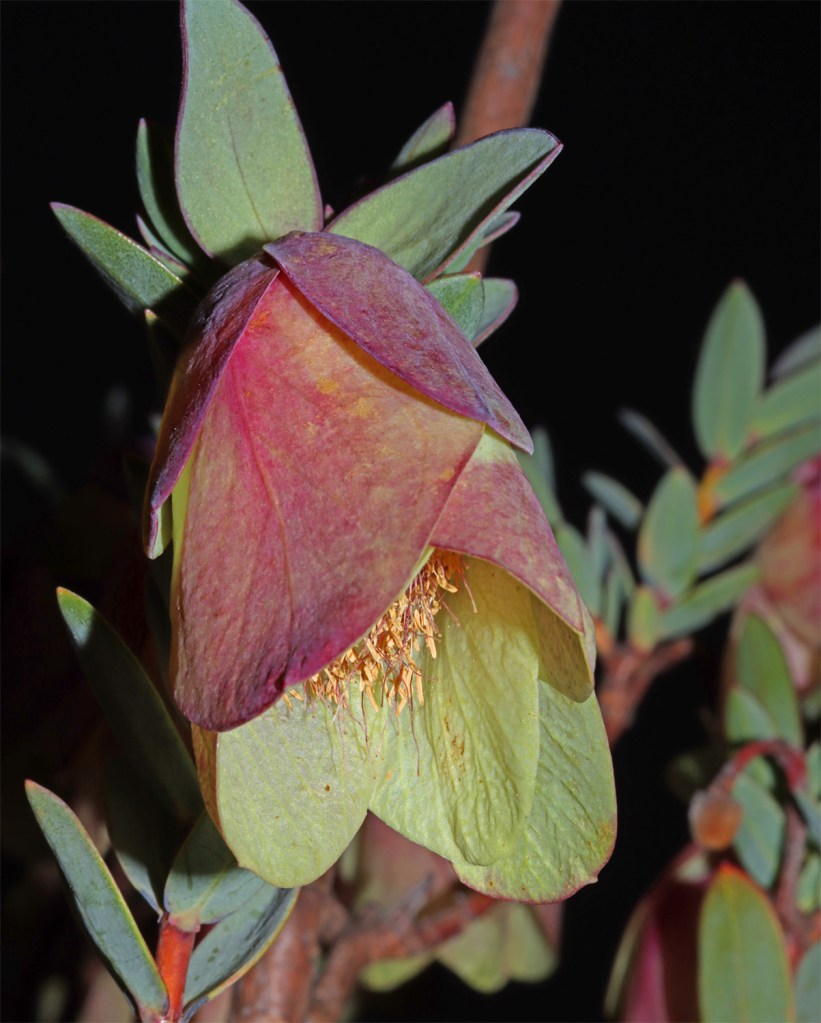
Qualup bell at Ravensthorpe
 imagenau.com