

We awoke to a fine Esperance morning and visited the Whale Tail on the harbour. An old man and a whale once entered a bar at the same time. ‘Who’s your whale pal?’ the bartender asked. The Old man seemed annoyed and replied, “I don’t know. Maybe Dick”.

The Esperance Stonehenge is the only full size replica of the original in the UK.

It appears as the original would have looked around 1950BC.

It has 137 stones of Esperance Pink Granite that were quarried locally.

External stones line up the solstice with the alter inside the circle.


Altar stone


The larger standing stones are 5 metres high.

“Clonehenge”. It was good to be in the inner circle.
When I was at school long ago, I didn’t mind my geometry teacher asking me to draw a circle. But to then ask me to turn that circle into two equal parts? That’s where I draw the line.

What a great idea – a trailer toilet! Instead of having to use public toilets of varying quality, why not take your own. It puts a song in your heart, “Portaloo, couldn’t escape if I wanted to; Portaloo, knowing my fate is to be with you; Loo-Loo-Loo-Loo-Portaloo, finally facing my Portaloo.”

Cape Le Grand National Park has spectacular coastal scenery with massive granite peaks rising from the coastal plain and ocean.

Expansive heathlands are a home to a diversity of plants.


Western Australian Christmas Trees have brilliant yellow-orange flowers in December and January. Biologically, this species is the largest parasitic plant in the world as it attaches itself to the roots of other plants and sucks their sap. The species is related to mistletoe and is more accurately known as a hemi-parasite because, though they do feed off their hosts, they can also sustain themselves through photosynthesis.

Away from the coastline, Frenchmans Peak dominates the landscape. It was named in 1870 as its shape was thought to resemble the hats worn by French troops in the 1800s.

There is a large cave near the summit. The Aboriginal name for the peak is Mandooboornup and it is an important place in local Aboriginal culture.
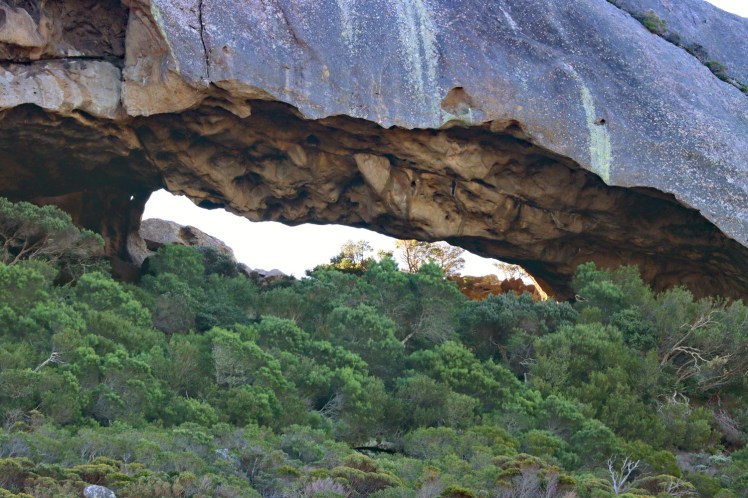

View to Rossiter Bay in the eastern part of the park.

Lucky Bay is considered one of the best beaches in the world.


The locals seem to agree.

Lucky Bay is famous for seeing kangaroos lazing on the beach but the obligatory shift had just finished and this guy made its way back through the carpark to the dunes.

Mississippi Hill on the eastern end of Lucky Bay

Coastline and island at Lucky Bay. While exploring the south coast of Australia in 1802, Matthew Flinders sailed a dangerous route through the Recherche Archipelago. He usually anchored out to sea at night but wild weather forced him to look for a sheltered anchorage closer to shore. He named it Lucky Bay when his vessel HMS Investigator took shelter here.

Robert Brown, botanist on the Investigator came ashore here and named several new species.


Banksia

Boronia

Joey at Lucky Bay

For all those entomologists out there asking for an ant photo, here it is!

Granite rocks to the water.

Whistling Rock

Lichen at Whistling Rock


Thistle Cove – but no thistles. Matthew Flinders named Thistle Cove in 1802 after the ship’s master John Thistle. Flinders was pleased when Thistle discovered a source of freshwater here. Thistle do the trick.

Frenchmans Peak

Roadside kangaroo on the drive out of the park.
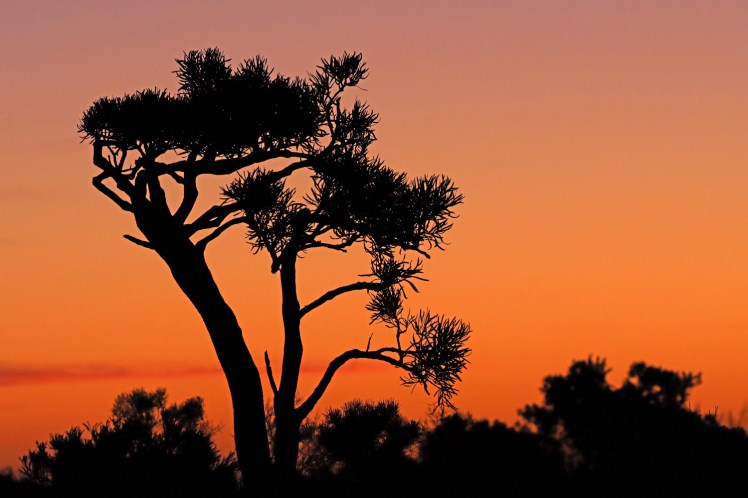
WA Christmas Tree

Islands of the Recherche Archipelago at the entrance to Esperance Bay.
 imagenau.com