Today the SW corner of WA had a Severe Weather Warning with the forecast of very destructive winds and lines of storms as strong northerly winds were met with a vigorous cold front from the west. The warning said it could be one of the two worst weather days of the year. We had 400km to travel so decided to stay in Albany and drive in better forecast conditions tomorrow. Albany was spared the worst of it with winds only reaching 70km/hr. East and west of us the winds gusted into the 90s. The strongest wind gust in the state (128km/hr) was at Rottnest Island.
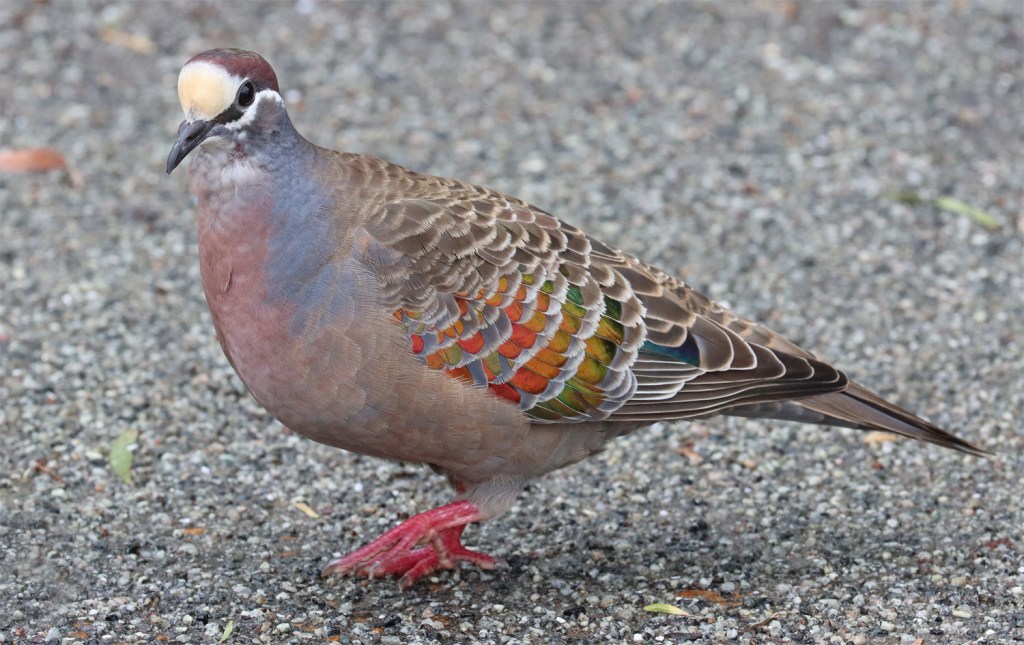
The morning started OK with birds such as this Common bronzewing patrolling the carpark at our accom. This beautiful native pigeon only feeds on the ground. Males have a bright yellow and white forehead.

Closeup of the beautiful green and bronze iridescent colouration in the wings.

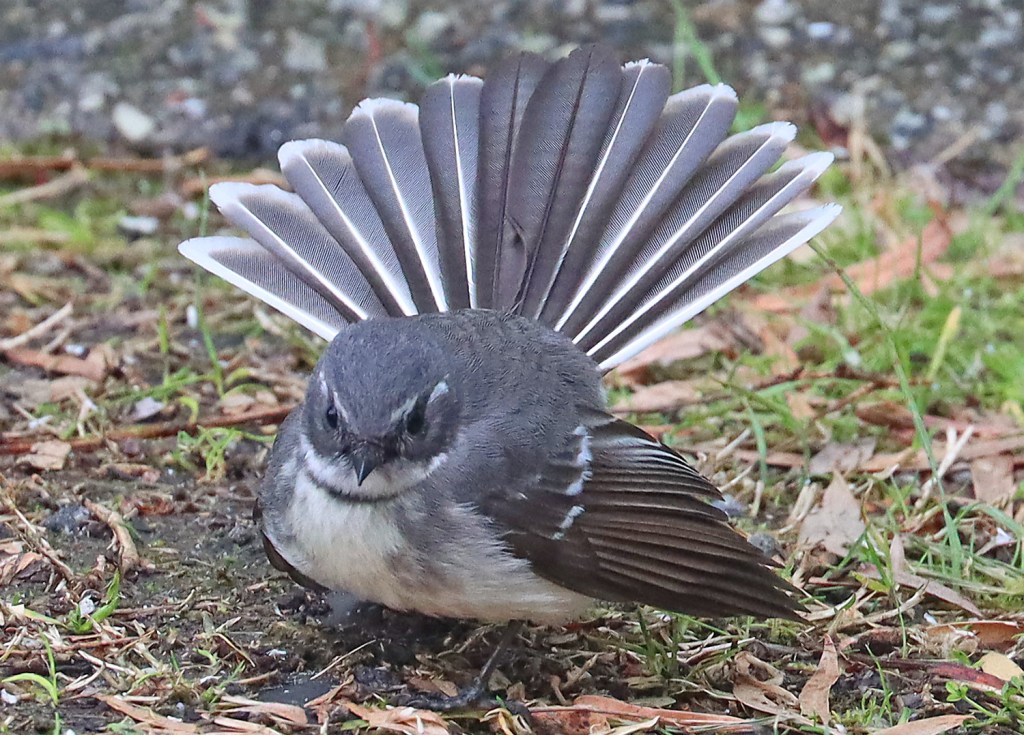
Grey fantail (Rhipidura albiscapa race preissi) found in SW WA

The trees at the back of our accommodation back onto bushland. This is the Western rosella. They are a different species to the Eastern rosella and have yellow cheeks instead of the white cheeks of Easterns.


Red-capped parrot

Red-capped parrots are endemic to SW WA mainly within 100 kms of the coast, from Perth to Esperance. This guy is happy as purple is very in fashion at present.
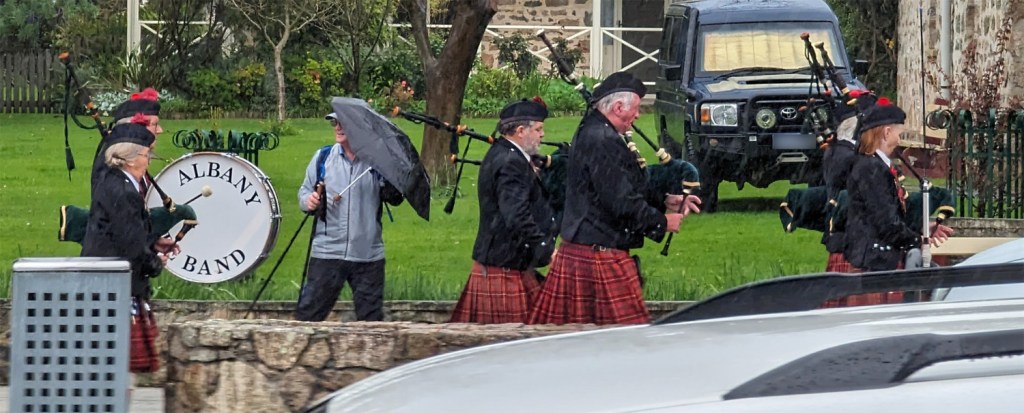
In a break in the weather we ventured into town and in the wet and windy conditions and found this band playing in the rain. These hardy folk don’t mind a wee bit of rain.

Albany’s first European colonists arrived in 1826. There is a heritage precinct close to the harbour with some fine old buildings.

Patrick Taylor Cottage built in 1832 is the oldest surviving dwelling in Western Australia.


The Museum next door has some wagons with a colourful past.

Old Albany Convict Gaol was built in 1852 and added to in 1873.


The Big Amity had a perilous 6 week journey from Sydney to King George Sound to establish the first European settlement on the west coast of Australia. On board was the ship’s crew, 23 convicts, 21 soldiers and enough domestic animals, food crops and building materials to start the small, remote outpost.

This is a replica of the original Amity. It had a long history before being run aground by gale conditions in Bass Strait in 1845.
The original Amity was built in New Brunswick, Canada in 1816 and for some years was used as a merchant vessel trading between America and Britain before being brought to Australia in 1824 by the emigrating Ralston family from Scotland. Ralston later sold the brig to the Government of New South Wales in Sydney where she was used for exploration and supply voyages. The brig carried the first European settlers to Queensland in 1824 after Redcliffe had been recommended as a suitable location for a penal colony. Amity on Stradbroke Island in Queensland was named after the brig. (source Wikipedia).

Two of the sailors had a contest to see who could make the most knots with a length of rope. In the end they tied.

I bet you did knot see that one coming.
Rope walks into the bar. Bartender says, Sorry we don’t serve ropes here. Rope walks out, messes himself up, ties himself in a knot, and walks back into the bar. Bartender asked if he’s a rope!
Rope replies, “I’m a frayed knot.”

Silos at Albany Port

Silo art painted in 2018. The art celebrates the Ruby Seadragon found in Western Australian waters. It was first described in 2015, making it only the third known species of seadragon, and the first to be discovered in 150 years.

Bulk loading facilty at the port.

Fertilizer depot at Albany Port.

Clearing weather in the west a hint at finer weather tomorrow.
 imagenau.com