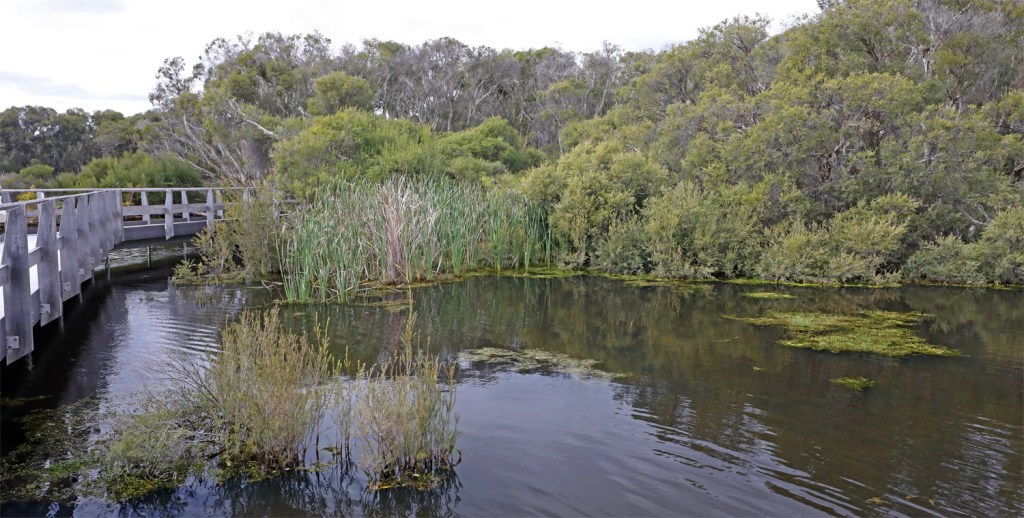
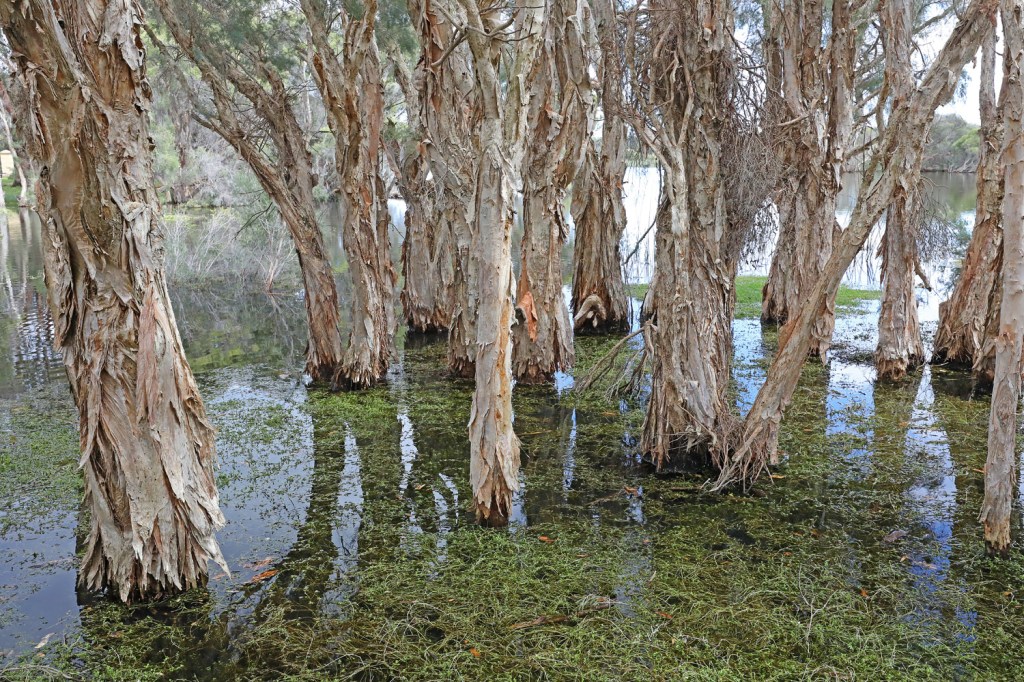
Herdsman Lake is a natural wetland that, despite human modification is a valuable urban habitat for wildlife. Tiger snakes are commonly seen in summer. Habitats include dense wetland rushes, fragments of remnant paperbark and flooded gum woodlands and well as maintained open grass parklands. Herdsman Lake contains a wetland dominated by Bulrush (Typha orientalis) and four deep permanent water bodies.
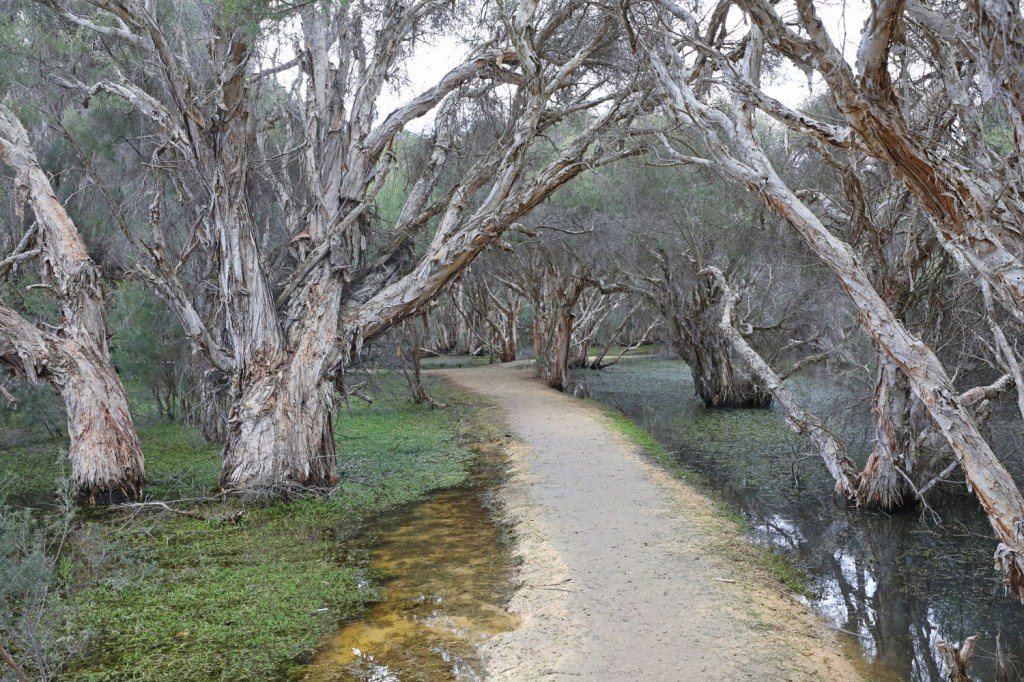
After winter rains the water is quite high. I enquired about tiger snakes and one was seen the day before. I looked around the edge of the lake but was told to look in the water as that is where they are commonly seen. They can stay underwater for 20 minutes.
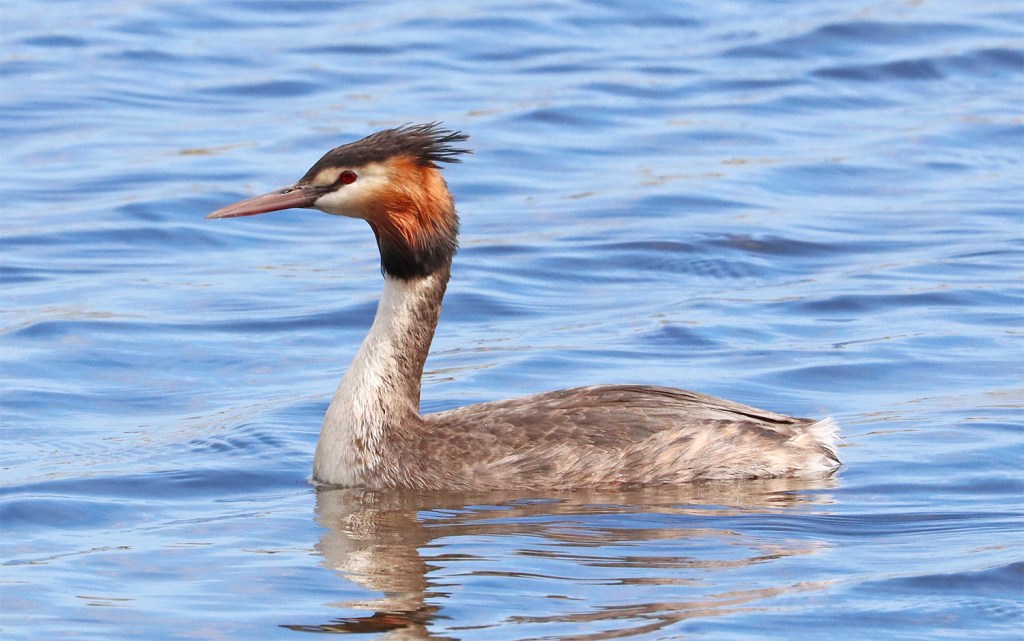
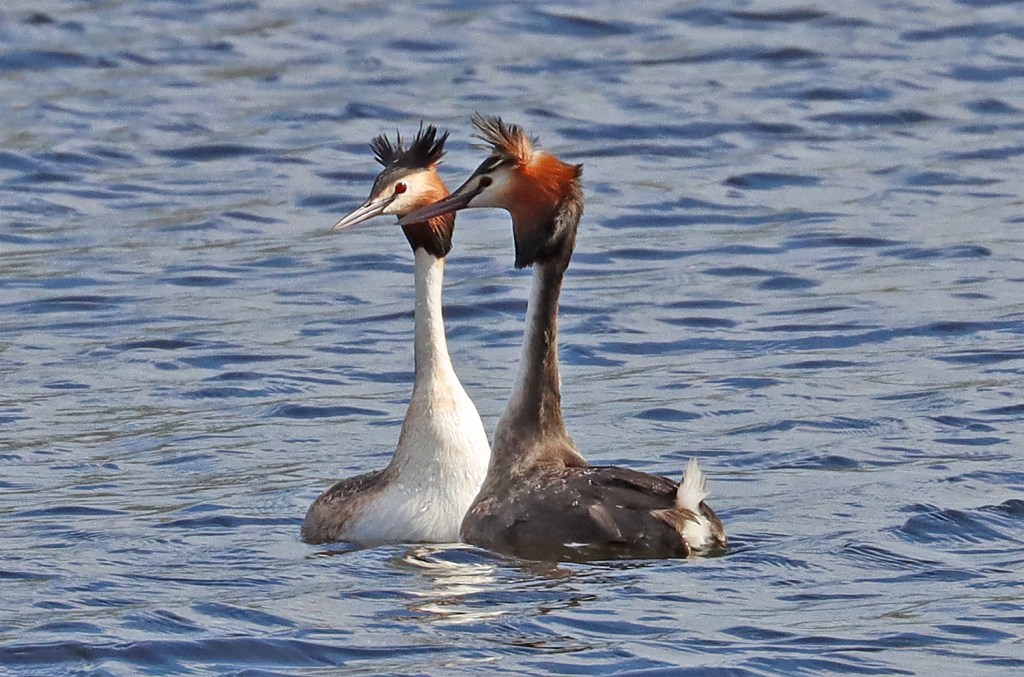
Great crested grebe
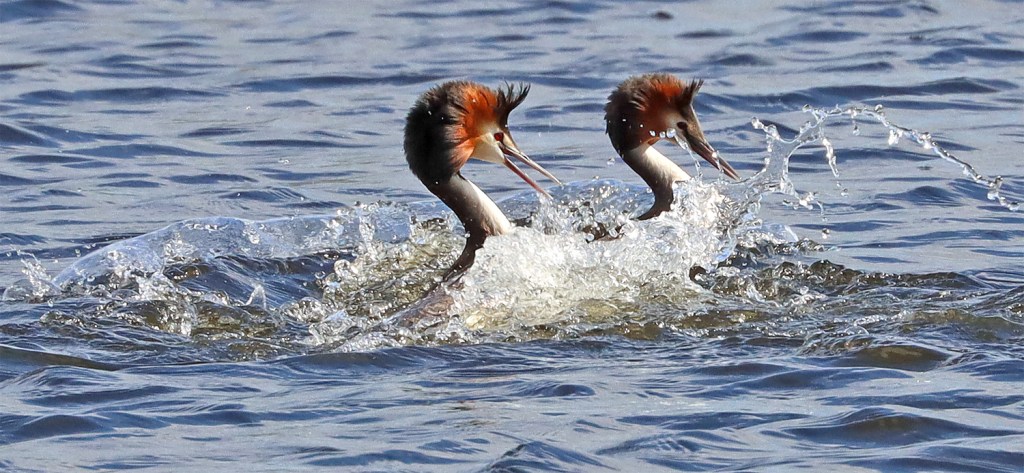
The Great crested grebes were performing mating rituals on the lake which involved splashing…

…bowing and bumping into each other…
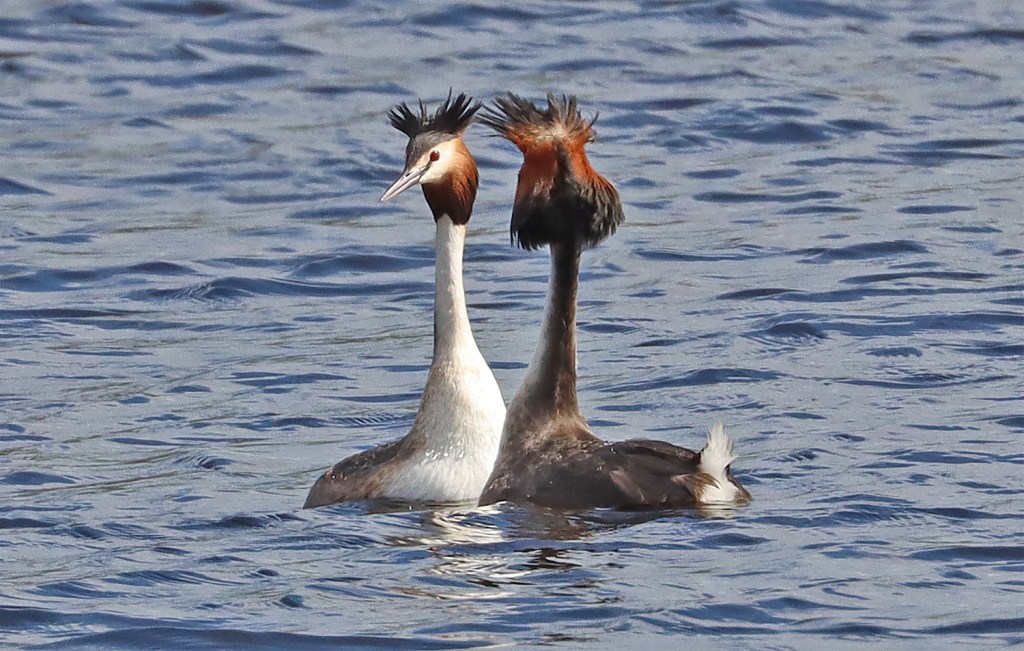
and neck turning in close proximity.
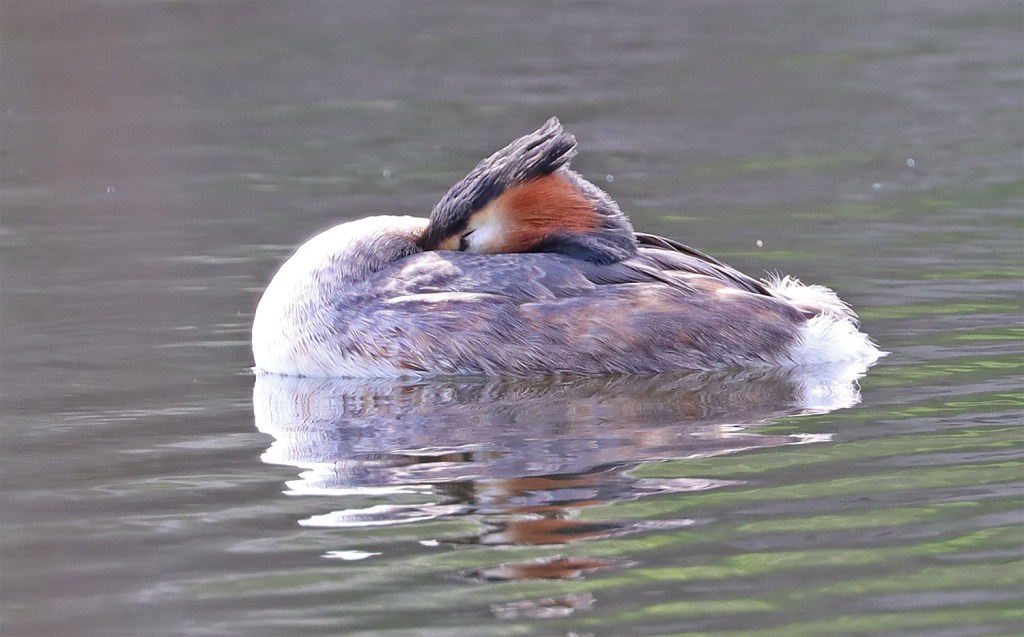
When resting, they resemble a fluffy slipper.
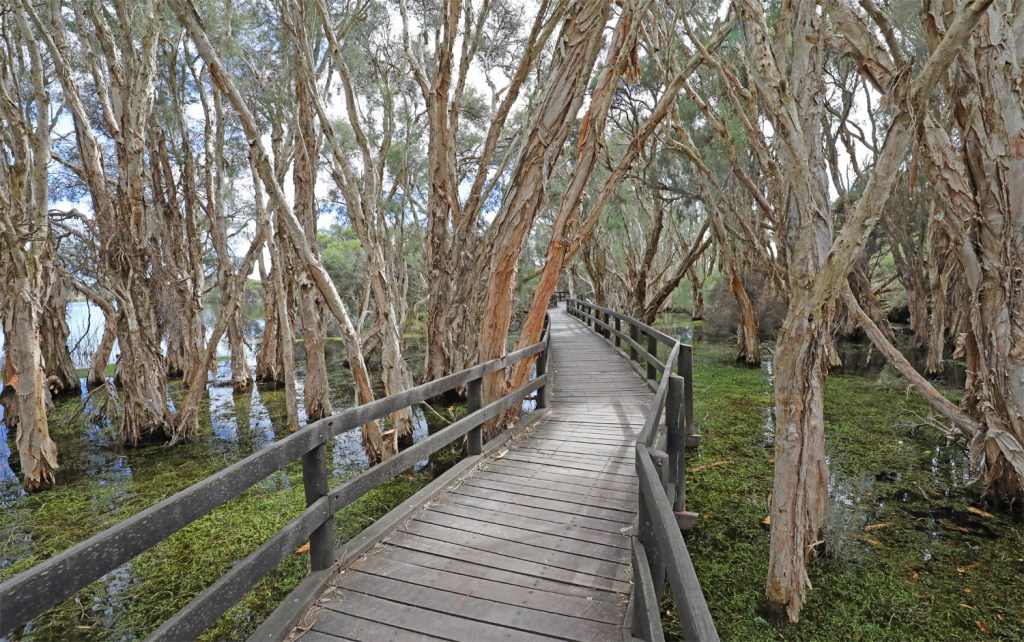
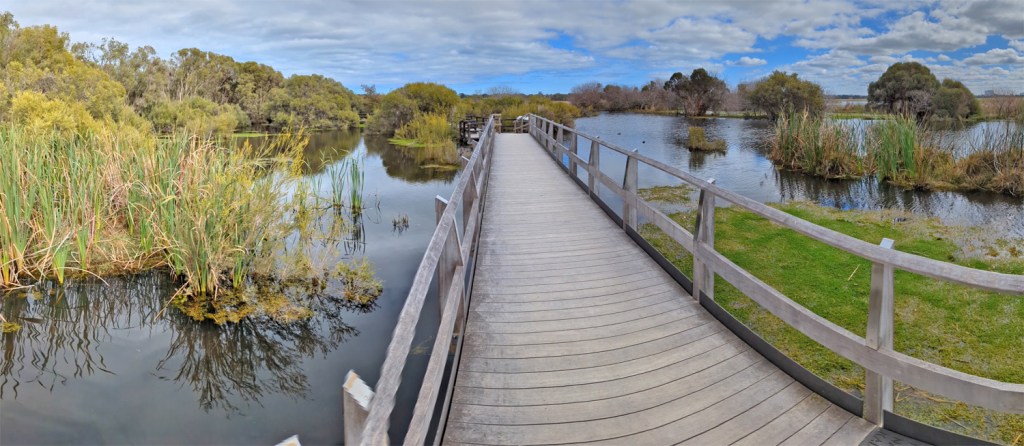
Boardwalks go around and into the lake system.
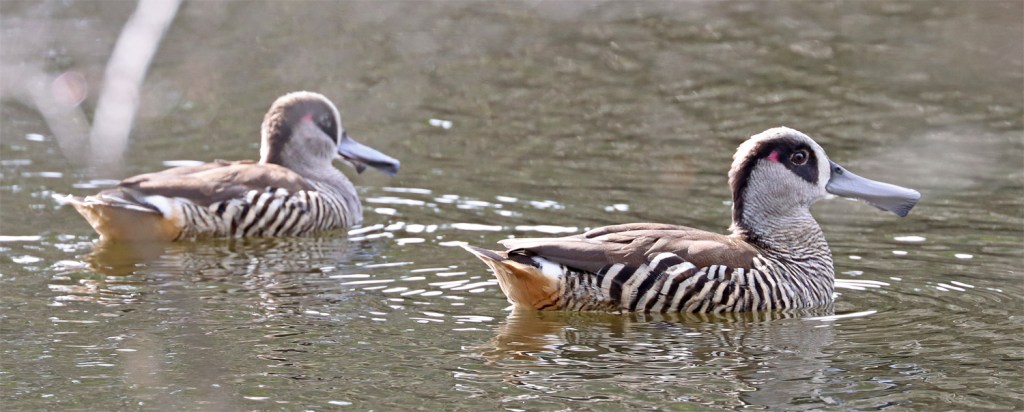
Pink-eared ducks
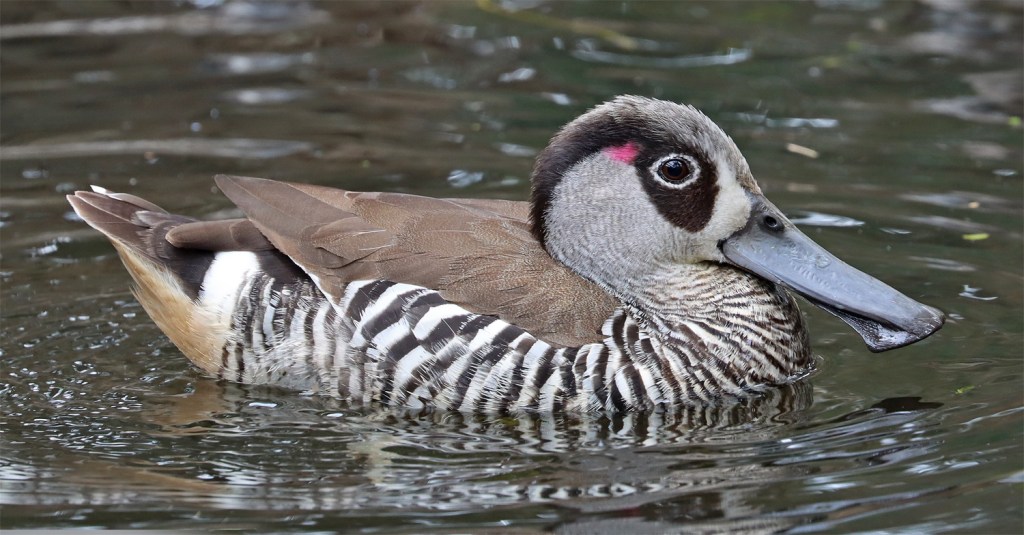
Pink-eared Ducks have odd-shaped bills, evolved to feed in a specialised manner: water is sucked through the bill-tip, then expelled through grooves along the side of the bill, filtering out tiny invertebrates in the process. (Birdlife Australia)
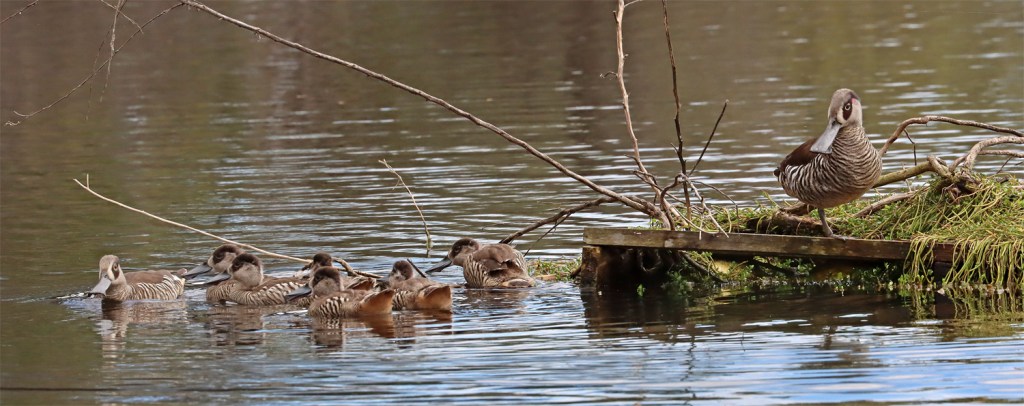
An adult pair with their ducklings.
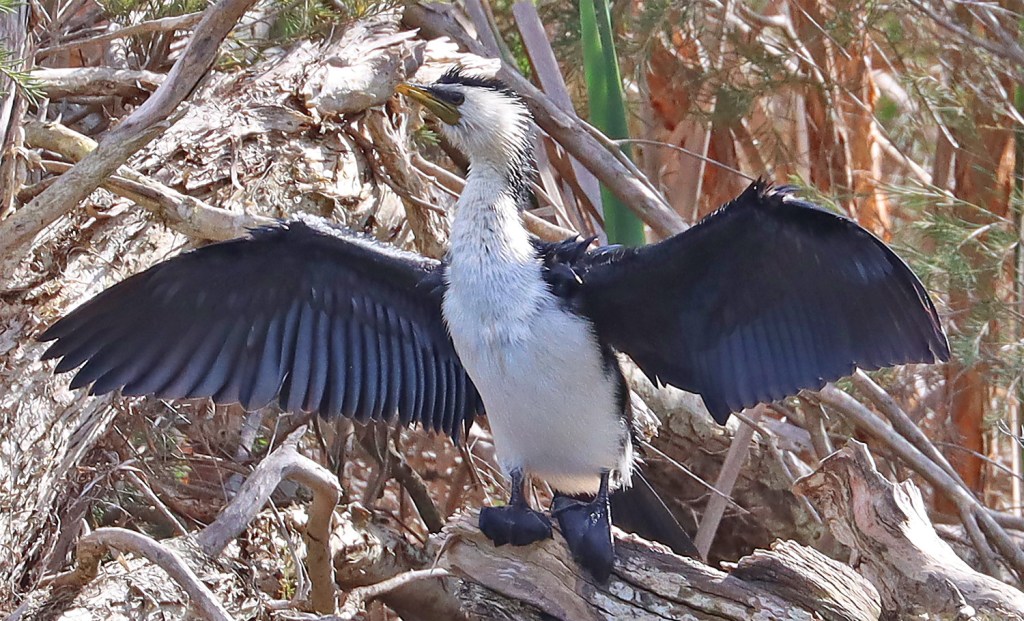
Little pied cormorant
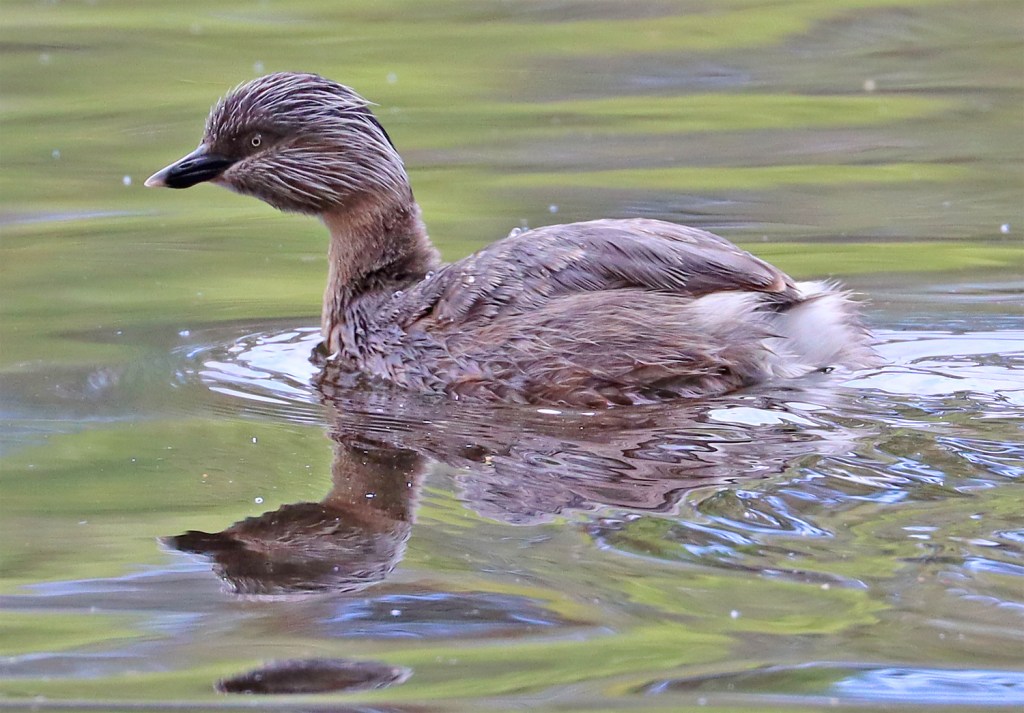
Hoary-headed grebe
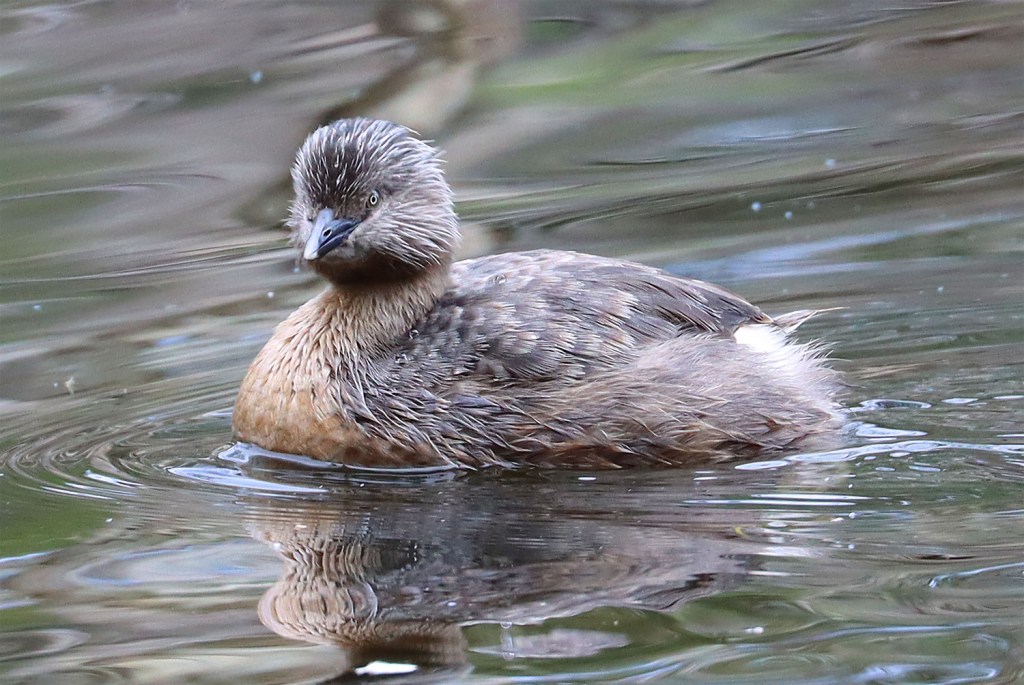
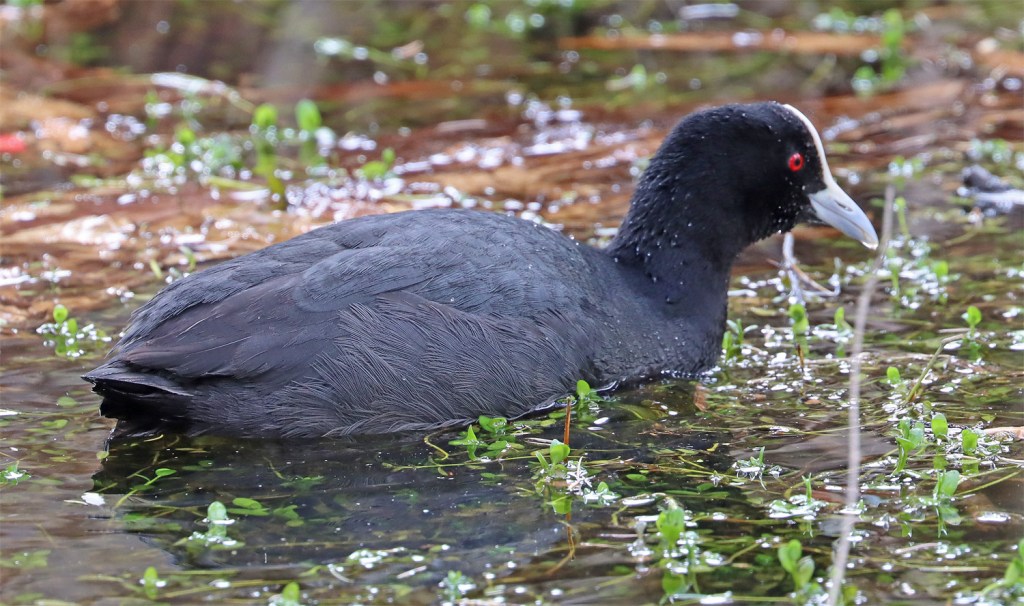
Coots were the most common bird species on the lakes.
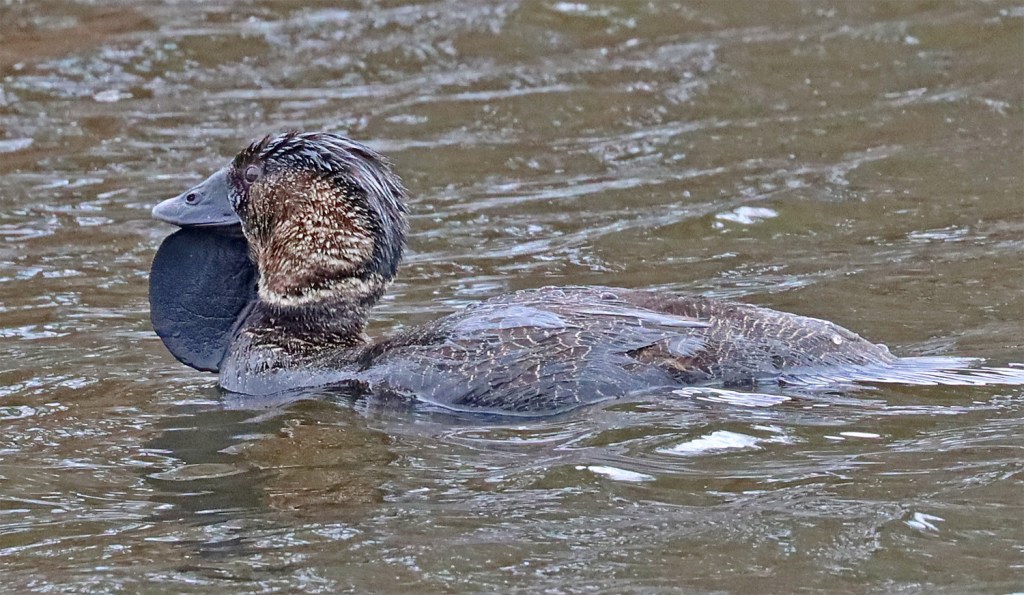
Musk ducks sit very low in the water. They exude a musk odour in breeding season. Adult males have a distinctive large, leathery lobe underneath the bill.
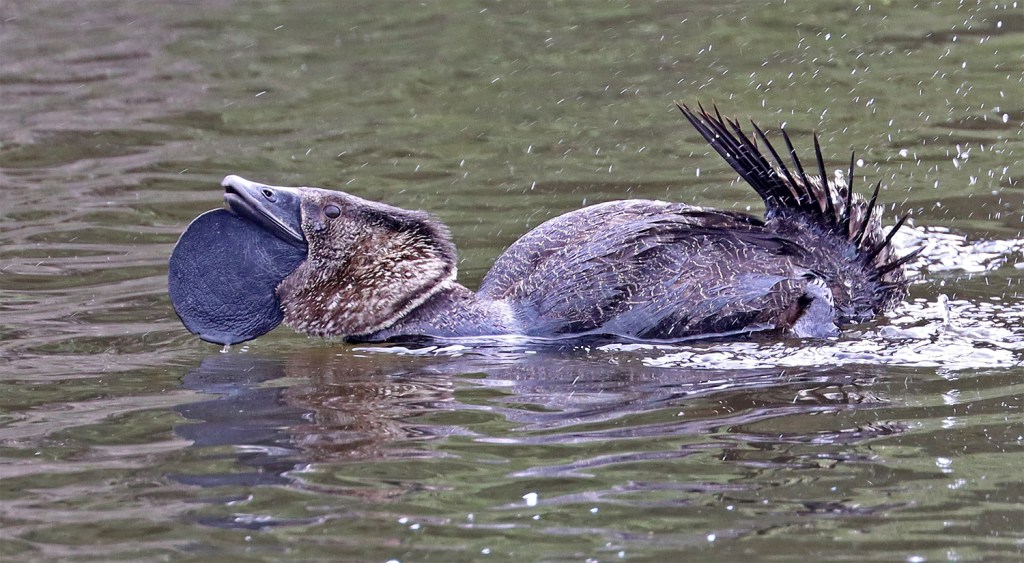
Being nearly springtime, it was time to attract a mate.
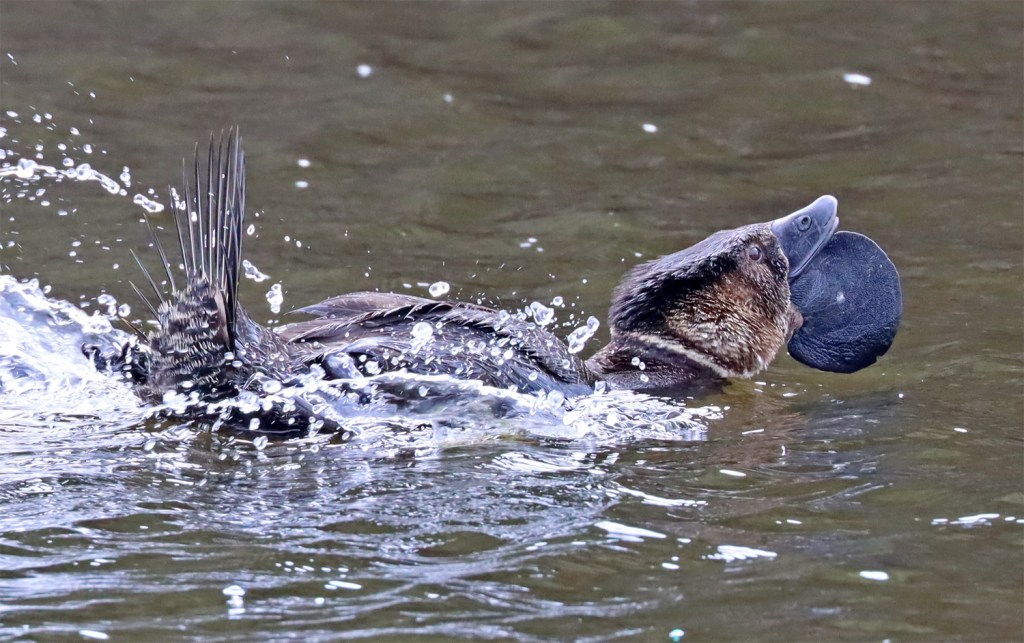
The musk duck has two races – the Eastern Musk duck and this one, the Western Musk duck (Biziura lobata lobata). It is the only species in the genus. There was another in New Zealand, but it is extinct.
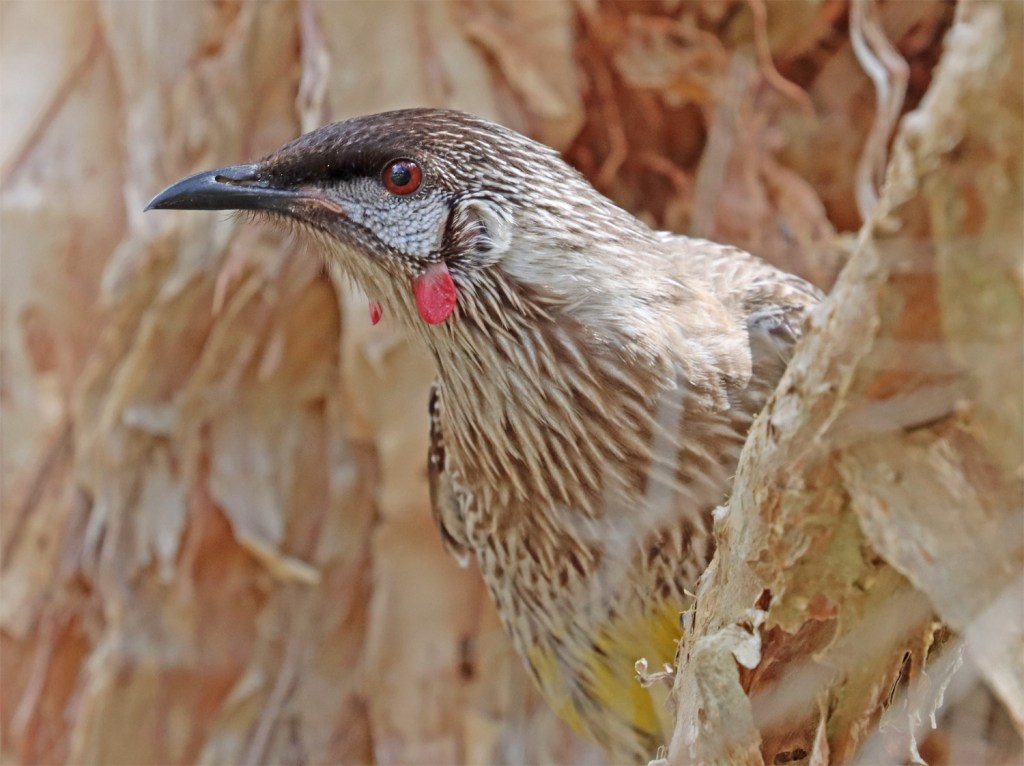
Red wattle bird on a paperbark tree.
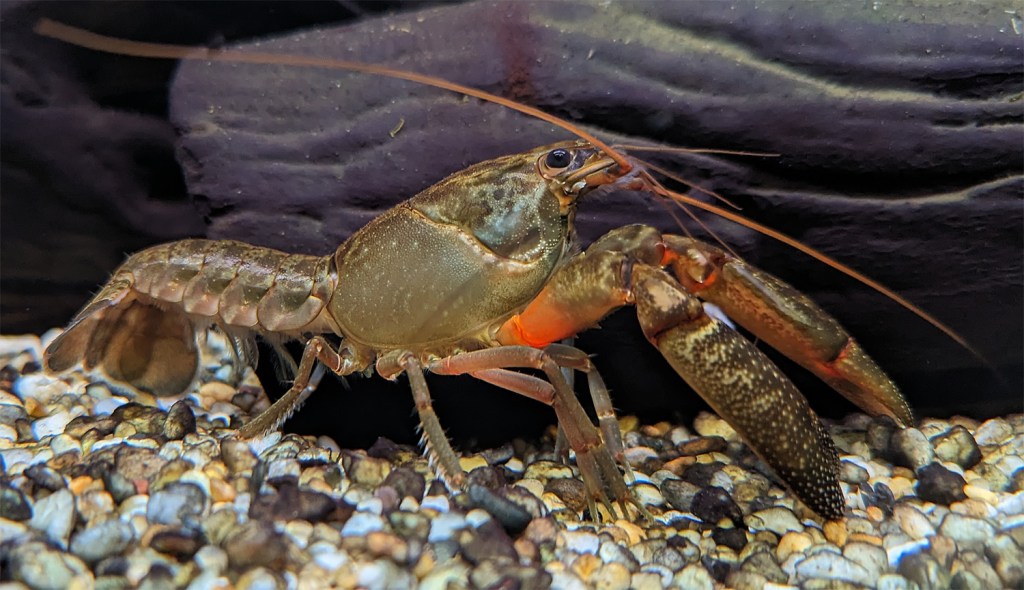
The local Common gilgie (Cherax quinquecarinatus) is a small freshwater crayfish found in two lakes in Perth – Lakes Herdsman and Monger. This was in a tank at the Visitor Centre.
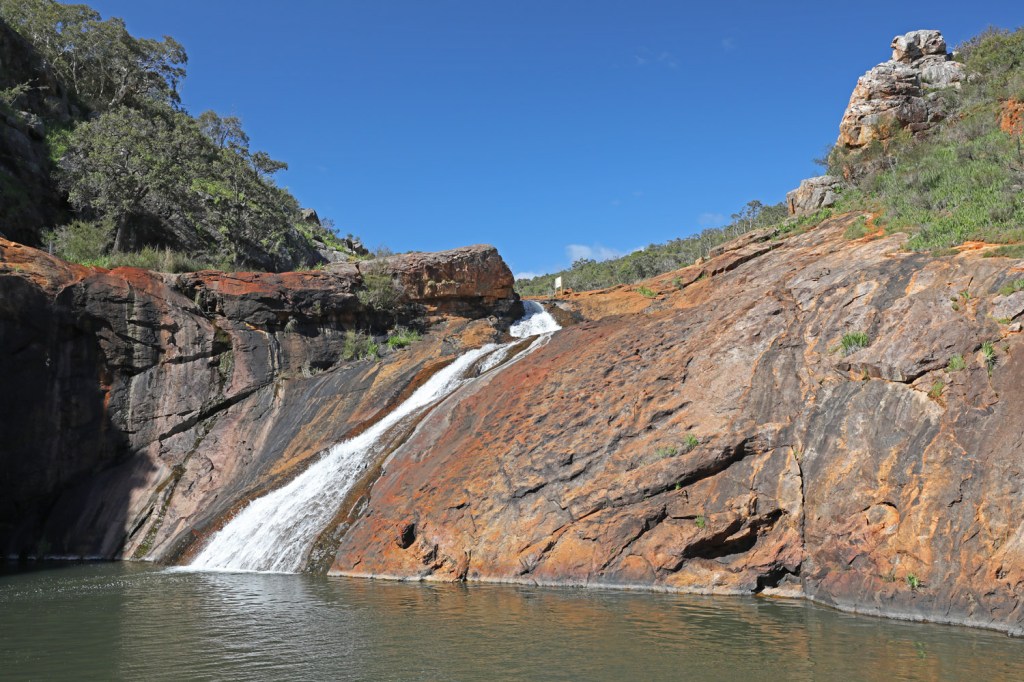
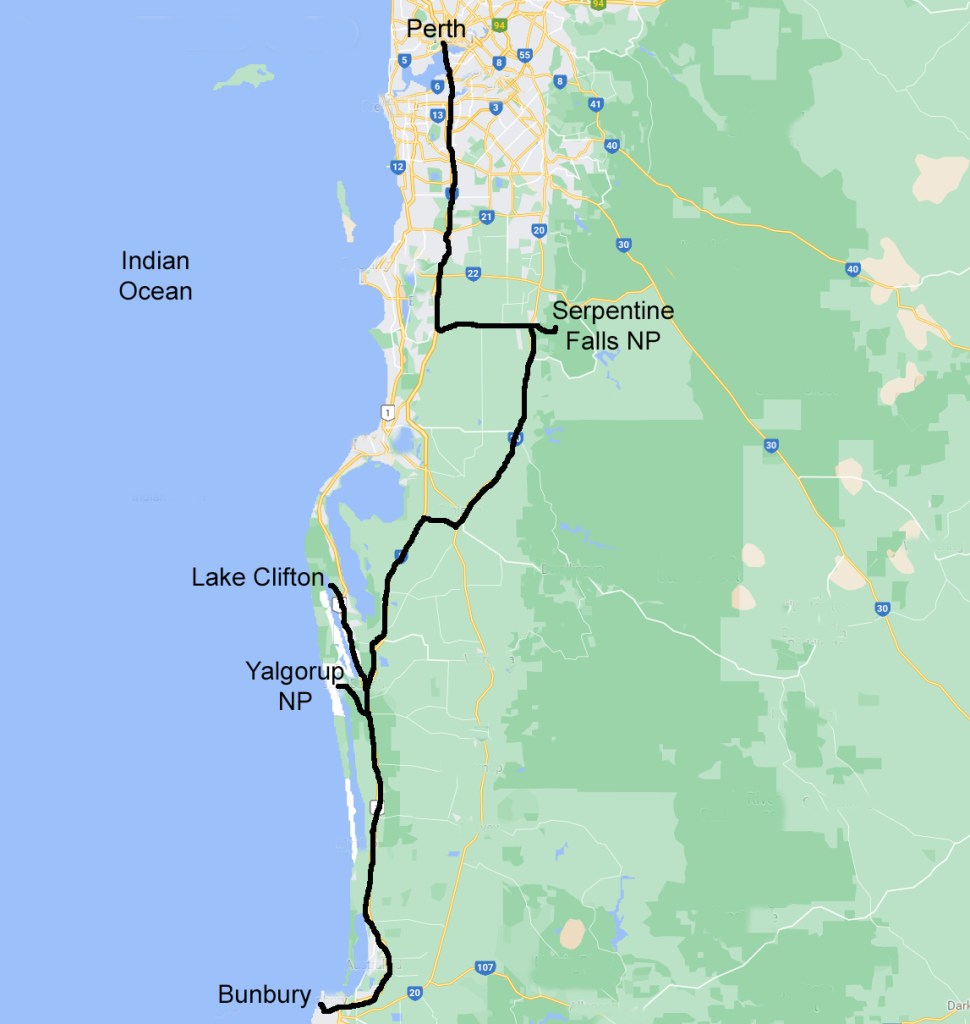
Heading south for about 200km with a detour inland to the Darling Range to see one of the biggest local waterfalls. Serpentine Falls cascading over a sheer granite rock face at the foot of the Darling scarp.
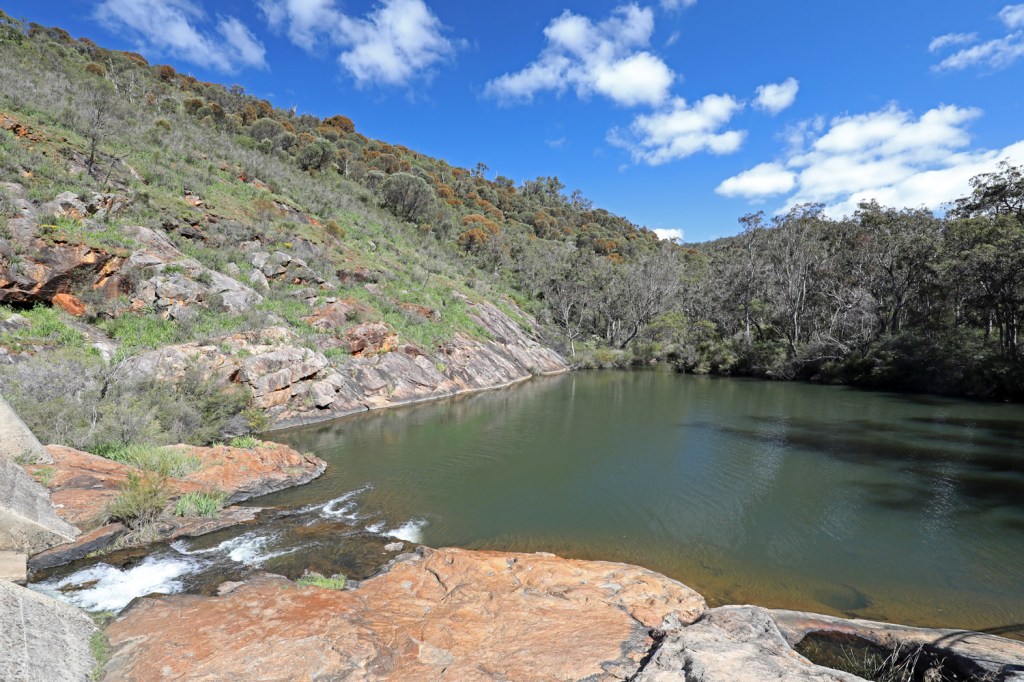
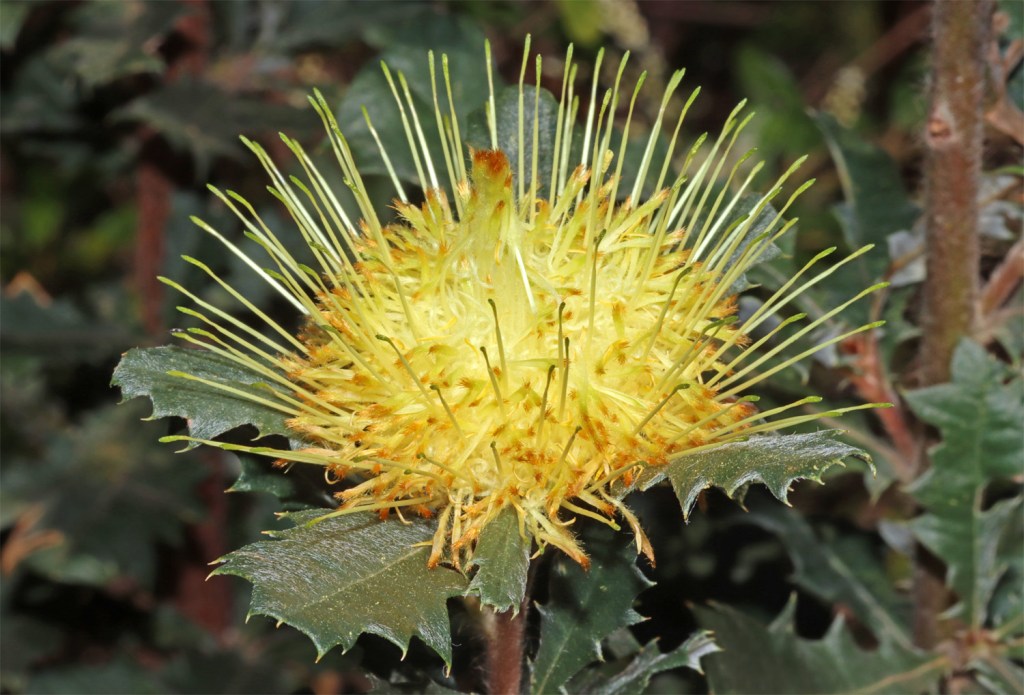
Dryandra banksia at Serpentine Falls.
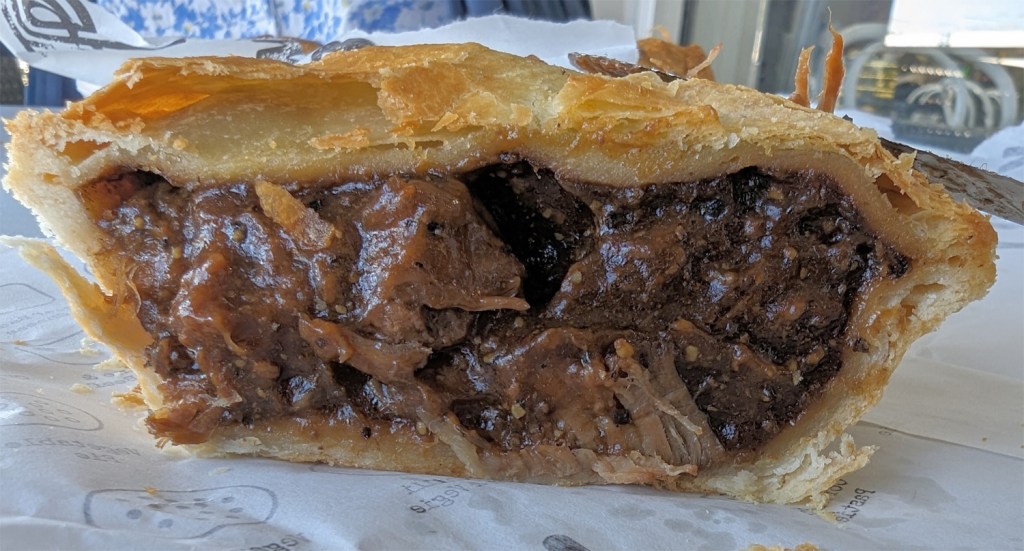
In competitions, Pinjarra Bakery has won Australia’s Best Plain Meat Pie with a chunky beef so for purely comparative purposes, we stopped to see if the hype was worth it. From our travels, we know that every bakery in Australia is an award winner of some sort but Pinjarra has won national accolades on many occasions. This one was definitely upper crust.
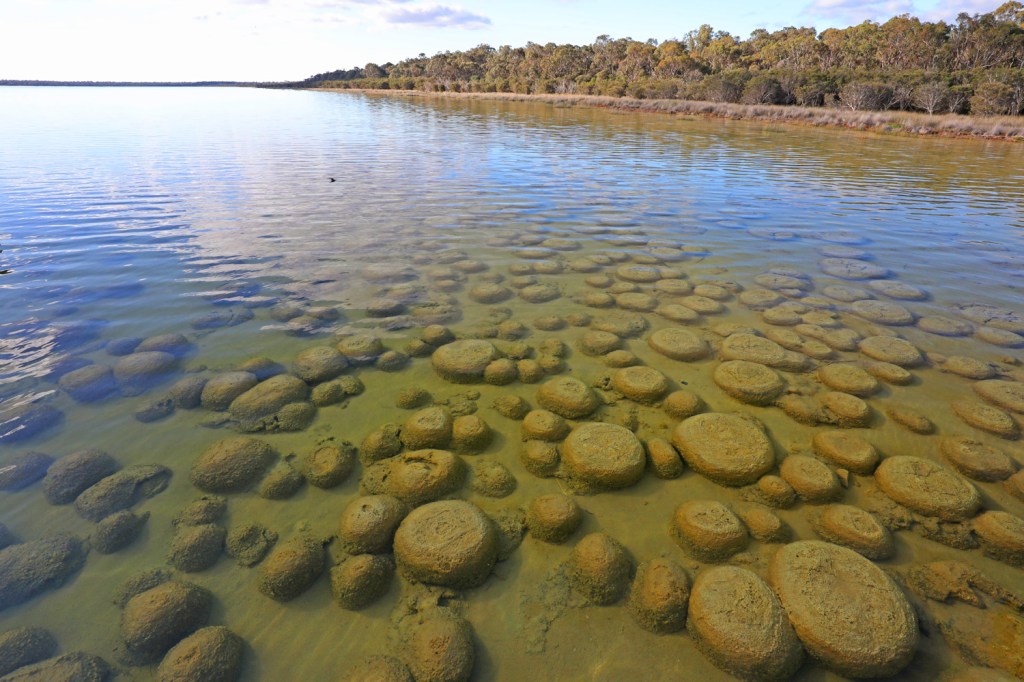
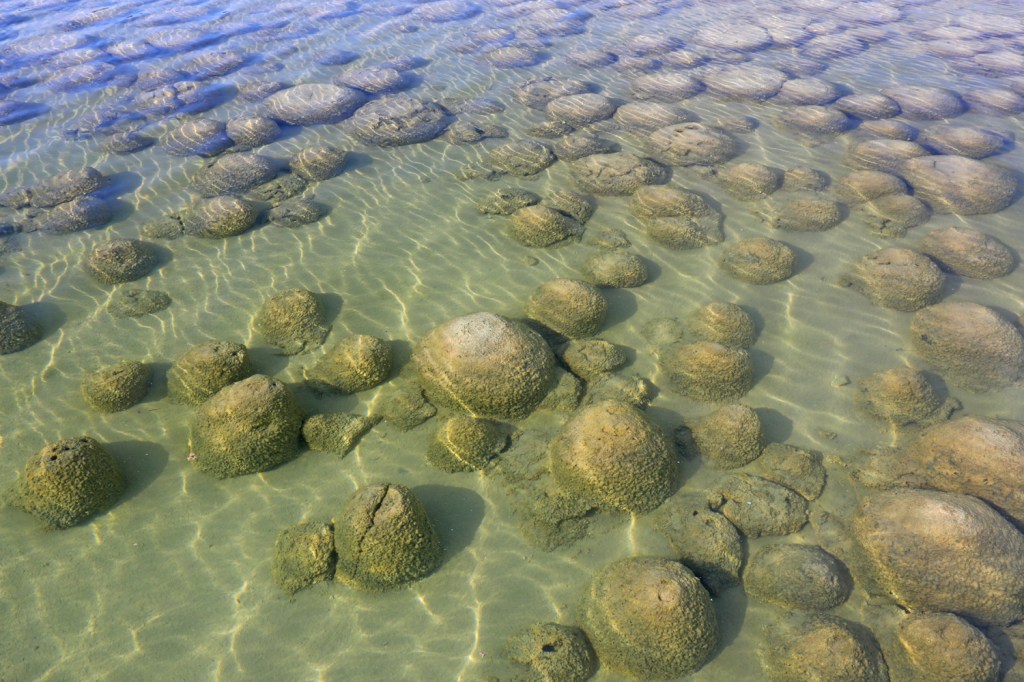
Lake Clifton thrombolites in Yalgorup National Park. For those afraid to ask, thrombolites are “clotted accretionary structures formed in shallow water by the trapping, binding, and cementation of sedimentary grains by biofilms of microorganisms, especially cyanobacteria!” They are similar to stromatolites from Shark Bay but the layers and clumps of sediment and microorganisms are much larger and visible to the naked eye. They may look inert but the stromatolites and thrombolites produced huge amounts of oxygen that supported the development of life on earth. Before cyanobacteria the air was only 1% oxygen. Then, for 2 billion years, photosynthesising Stromatolites pumped oxygen into the oceans. When the oceans’ waters were saturated, oxygen was released into the air, and with around 20% of oxygen in the air, life on land began to thrive.
At Lake Clifton I spent a while trying to photograph birds. Enjoyable but I didn’t see a thing. I have no egrets.
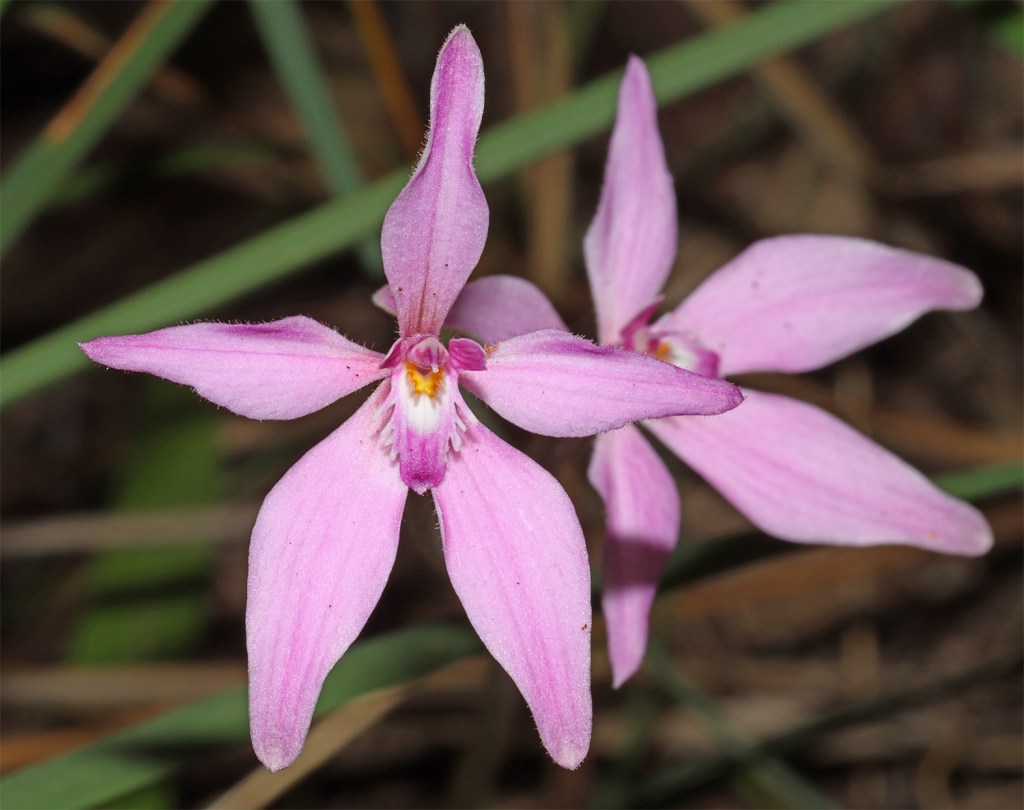
There was a lakeside walk with many Pink fairy orchids…
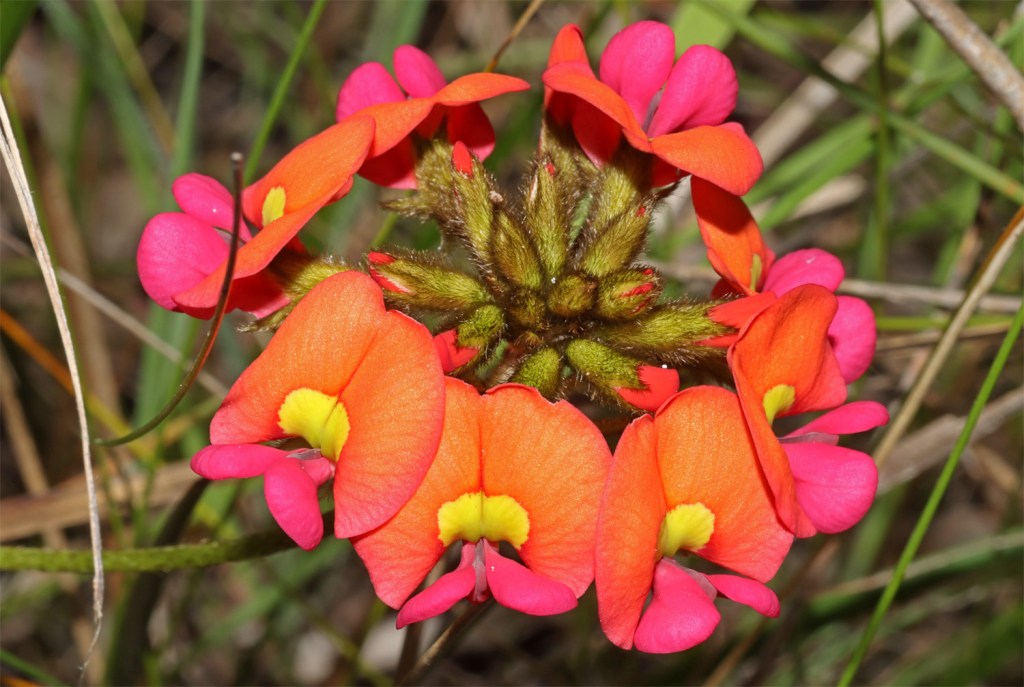
…vibrant Fabaceae vines…
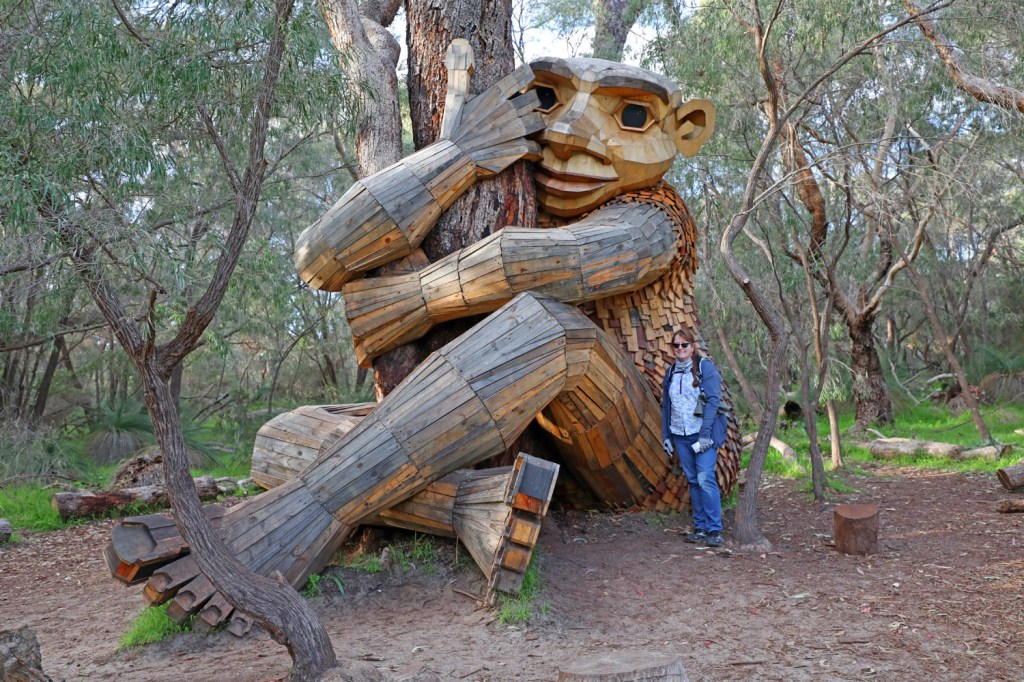
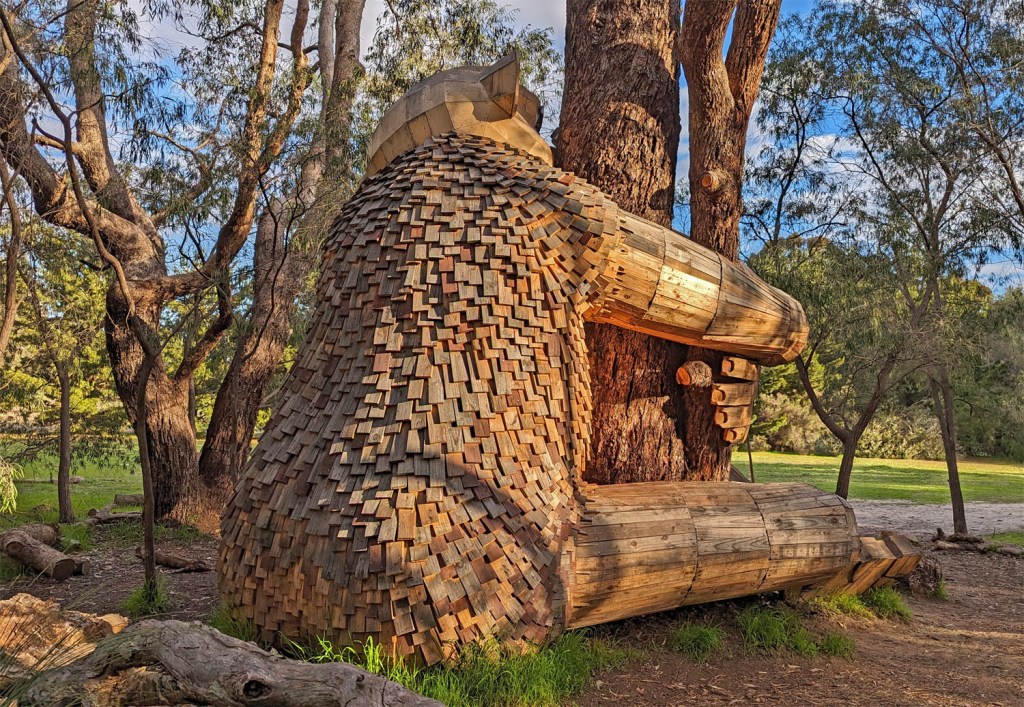
…and just outside the national park was a giant. This is Fyttes Hytte, one of the Giants of Mandurah – a series of sculptures throughout the area. This young woman wasn’t scared of the giant but some people are – they suffer from FeeFiPho-bia.
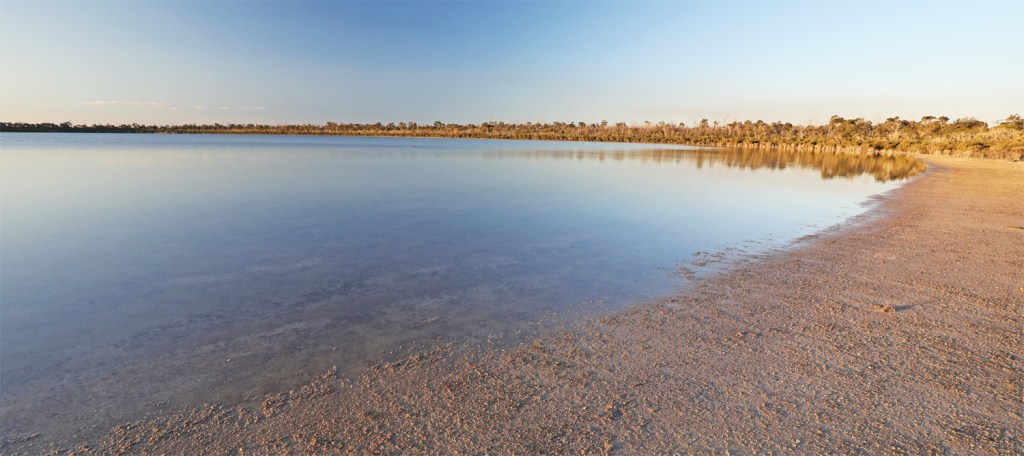
Lake Hayward in Yalgorup National Park
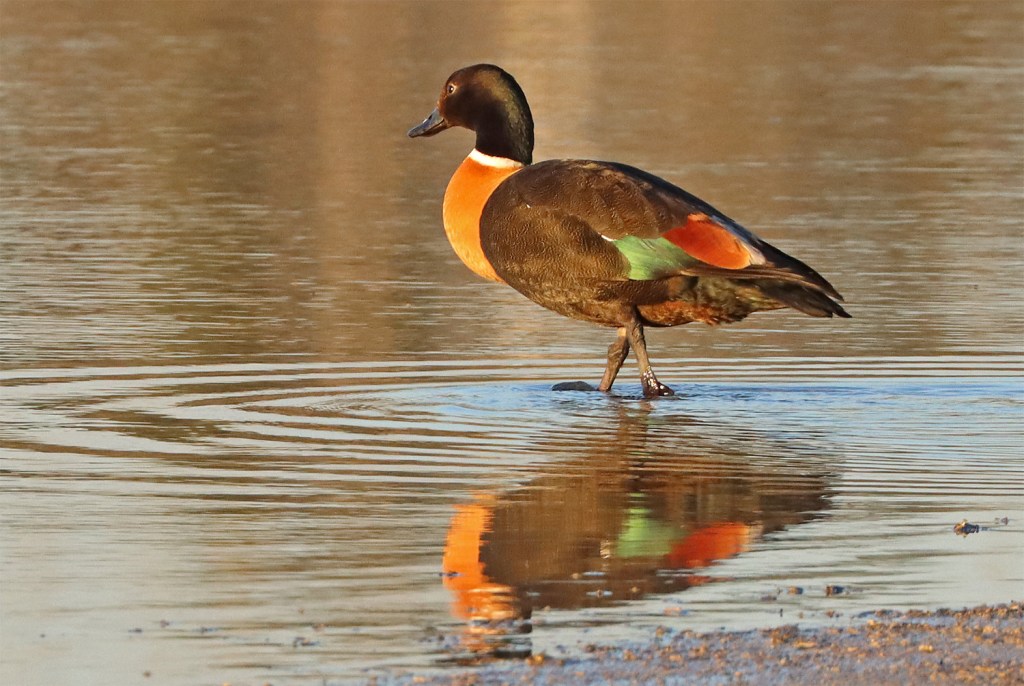
Australian shelduck on Lake Hayward
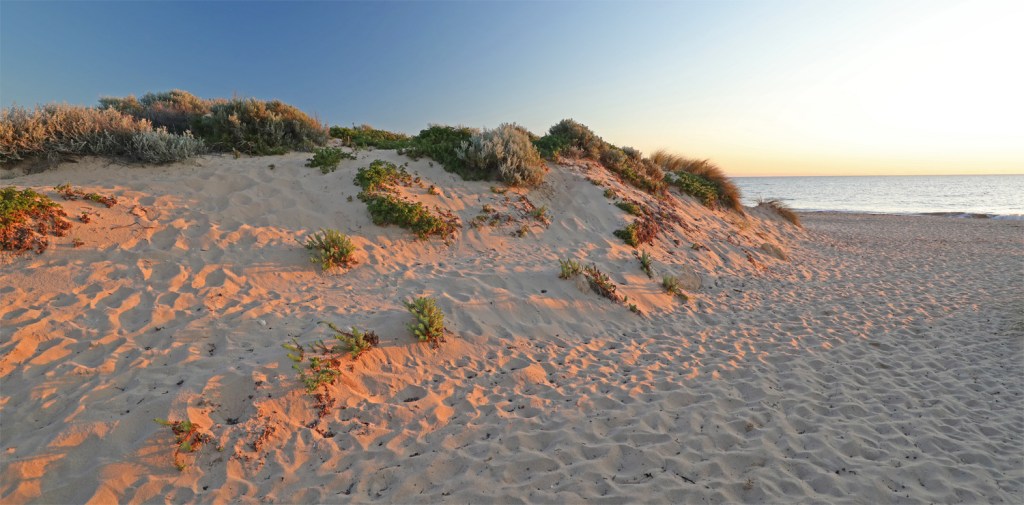
Dunes at Preston Beach
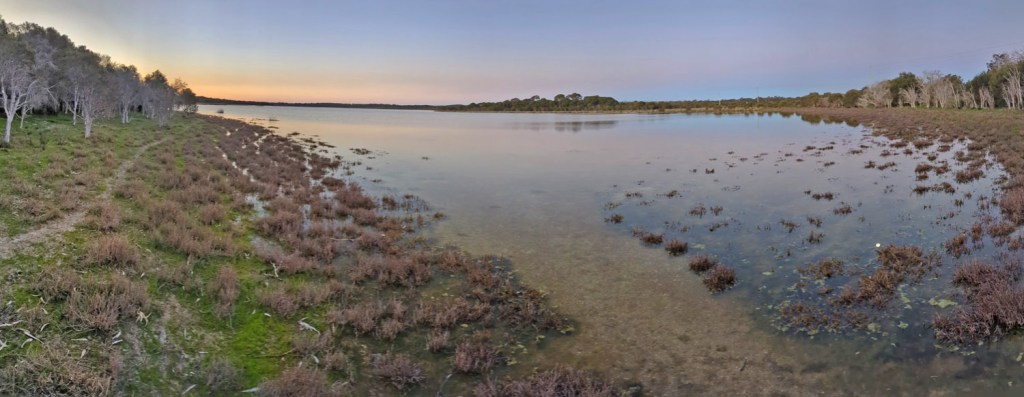
Lake in Yalgorup National Park at sunset
 imagenau.com