
After a nice break in Karratha, we continued south-west for 550km to Exmouth on North West Cape.
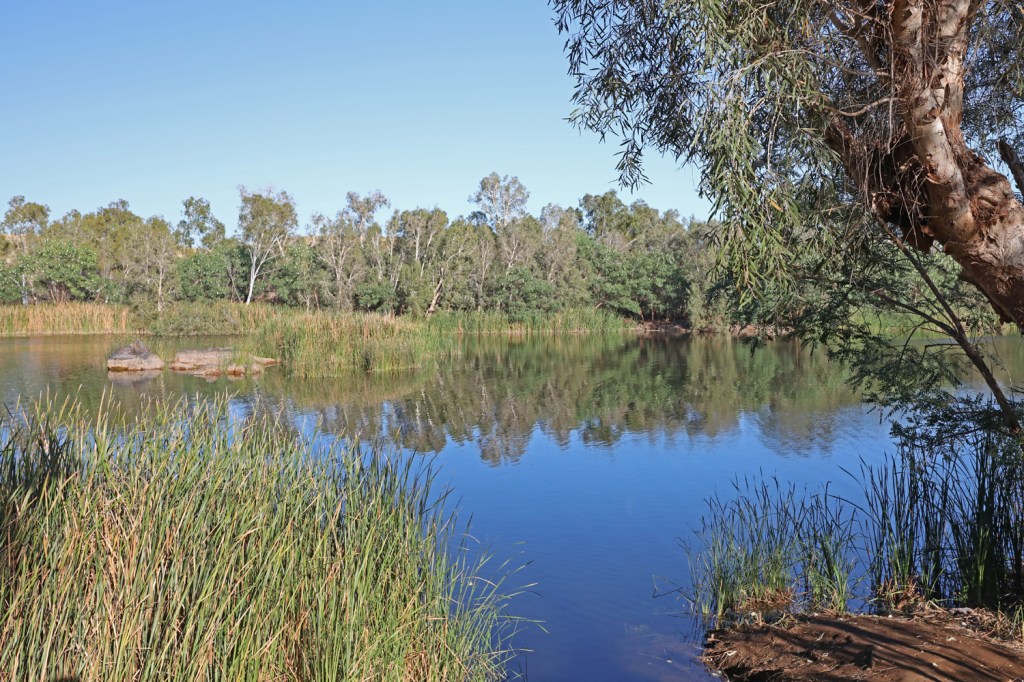
Miaree Pool on the Maitland River.
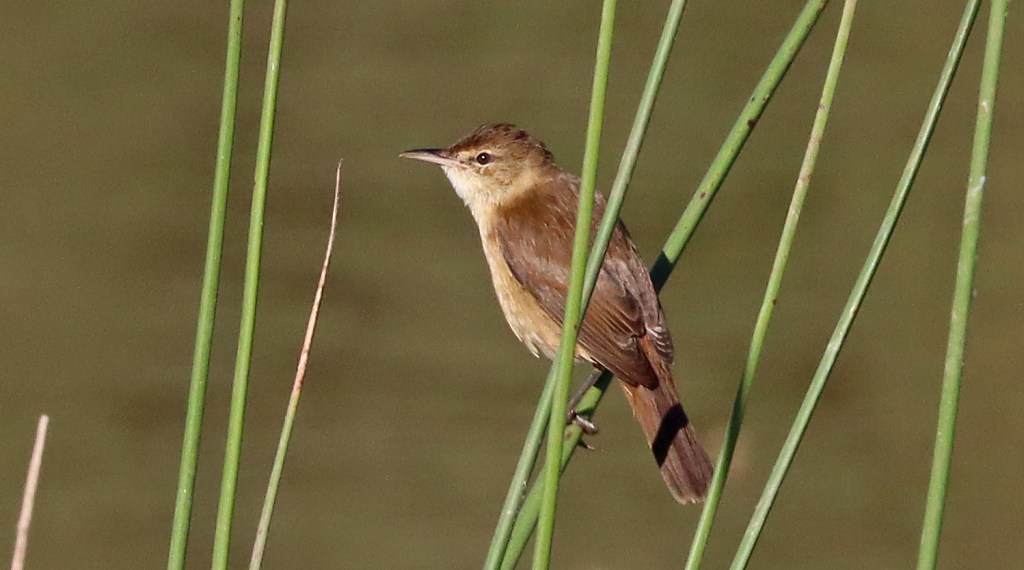
Australian reed warblers were active.
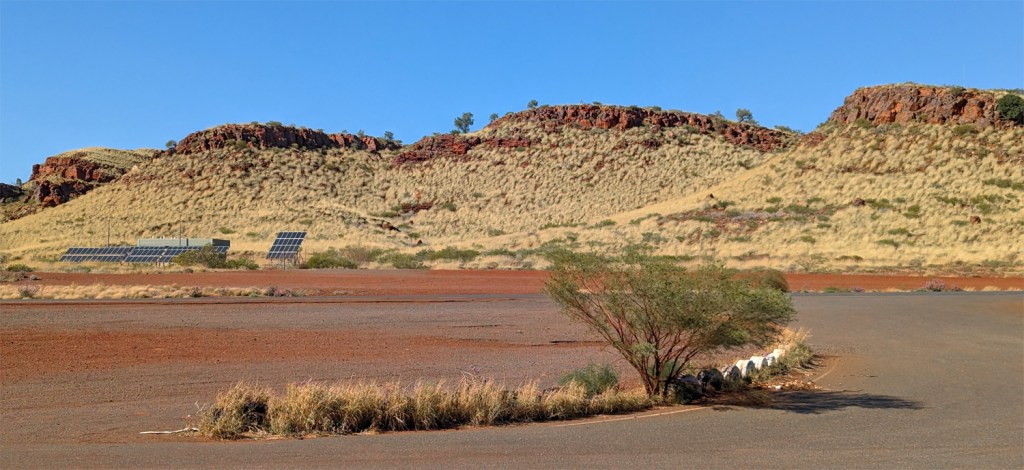
Low range at Fortescue Roadhouse
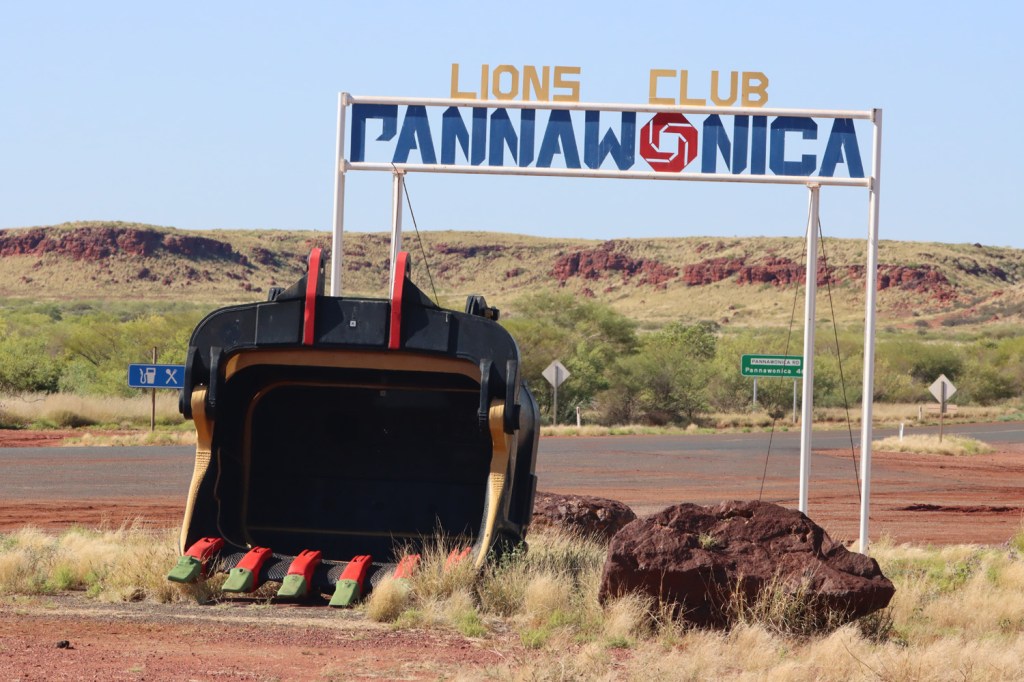
Turnoff to Pannawonica and Tom Price
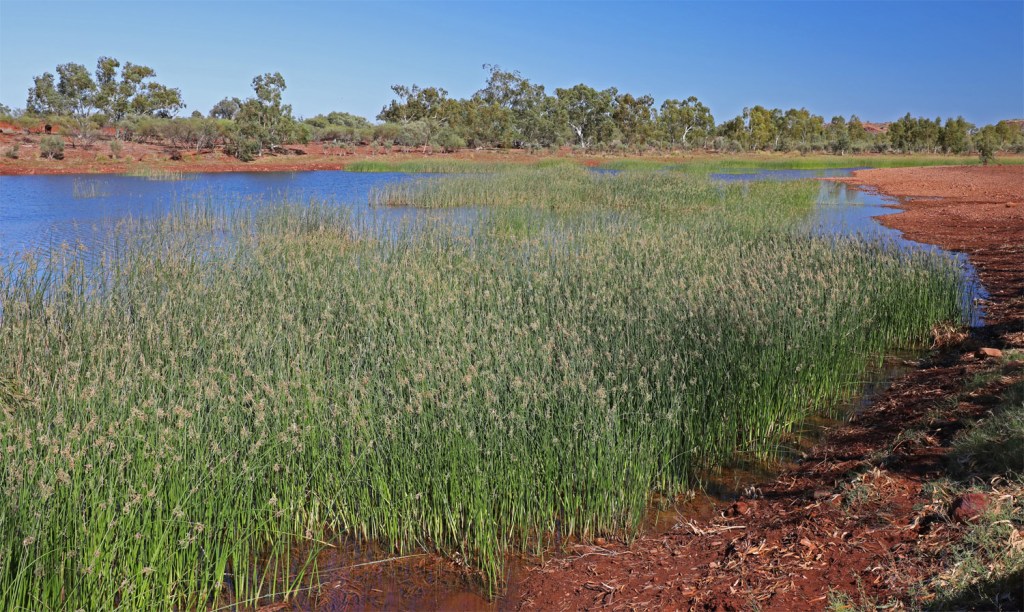
Robe River has a long and lovely stretch of water
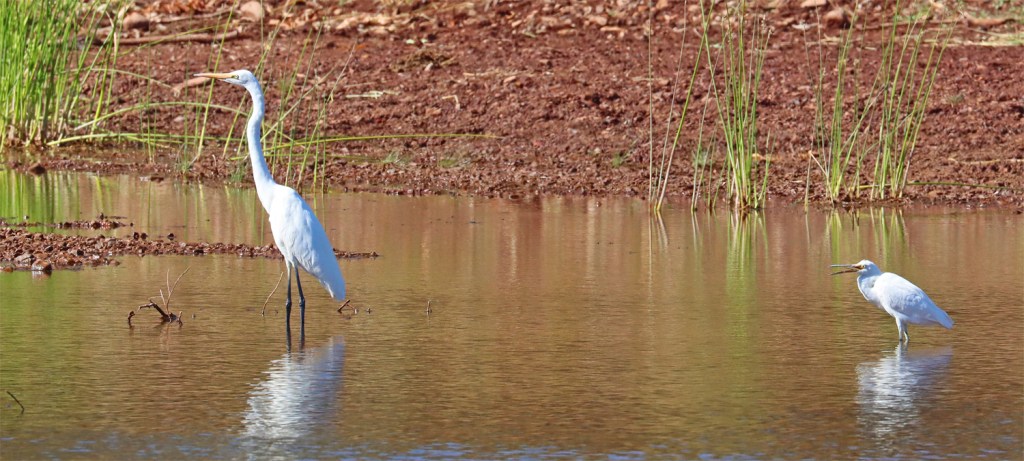
Great egret with Little egret feeling hard done by – there was no Intermediary here today.
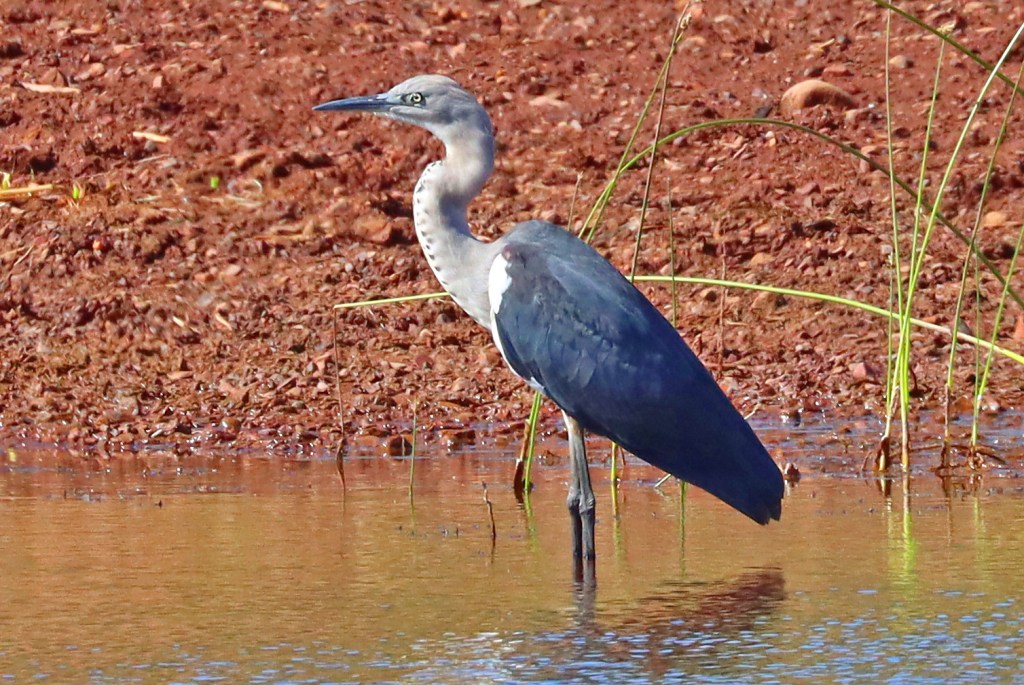
White necked heron
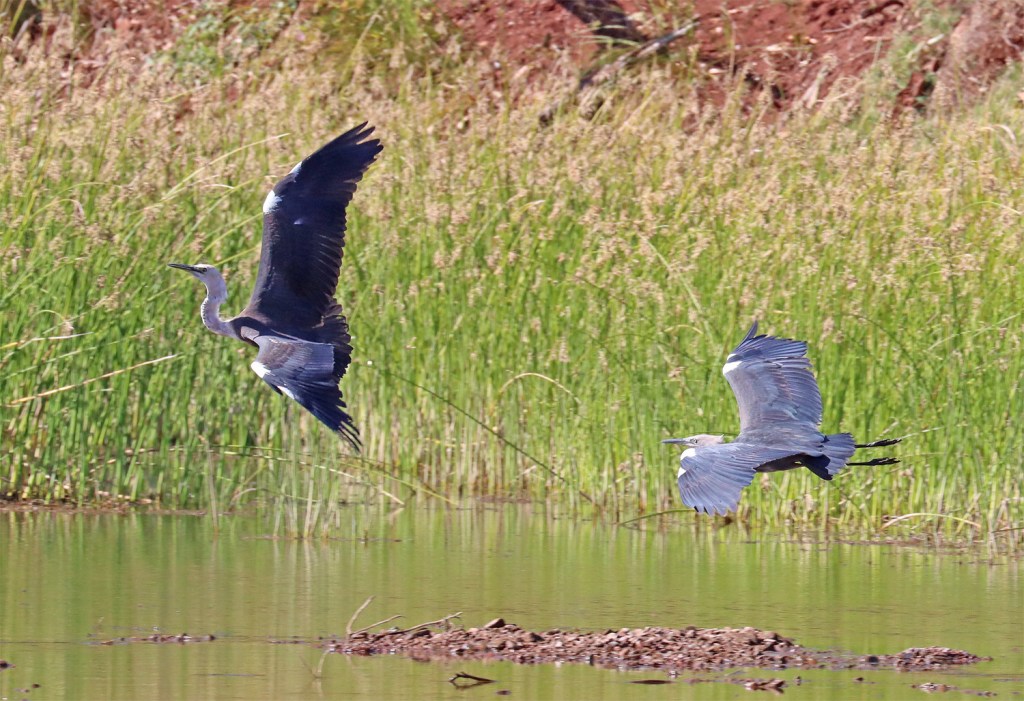
Taking flight
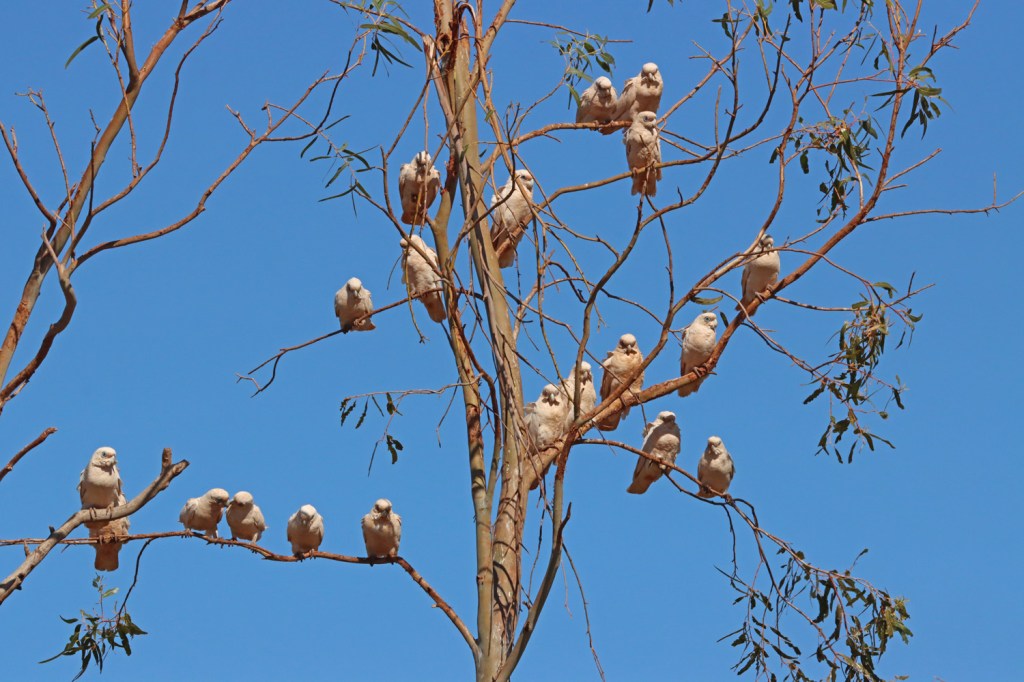
There is a nearby rest area at Robe River. As we approached the rest area, the tranquility of the river was replaced by the cacophany of hundreds of corellas … and a grey nomad’s older generator penetrating the auditory senses. Which noise won the battle of the sounds? Both failed to drown the other out so it was a tie!
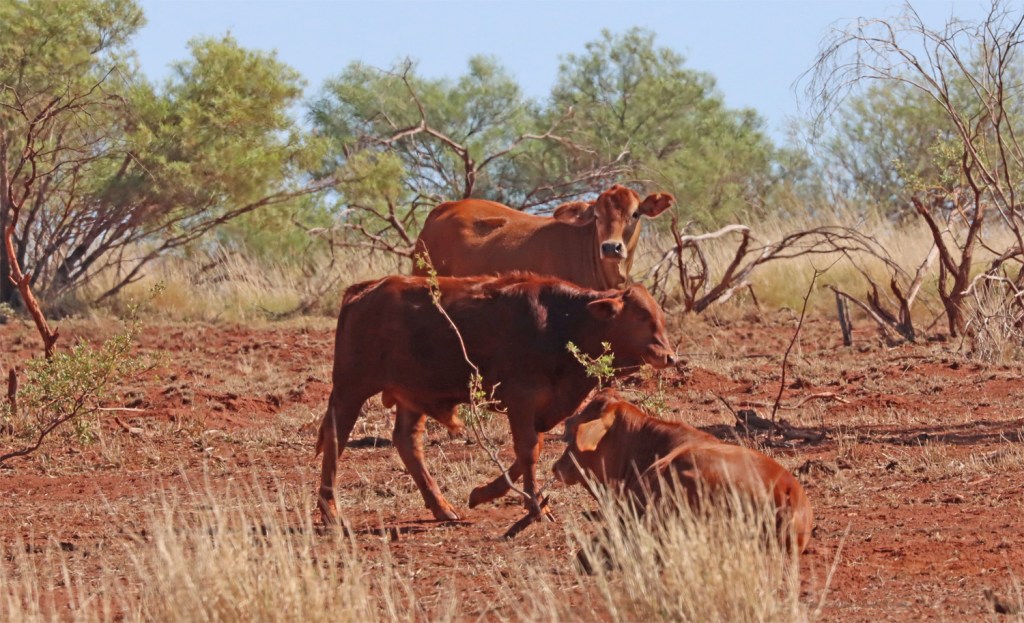
The combined cacophany of the corellas and generator made the cattle less than impressed putting them in a bad mooood….
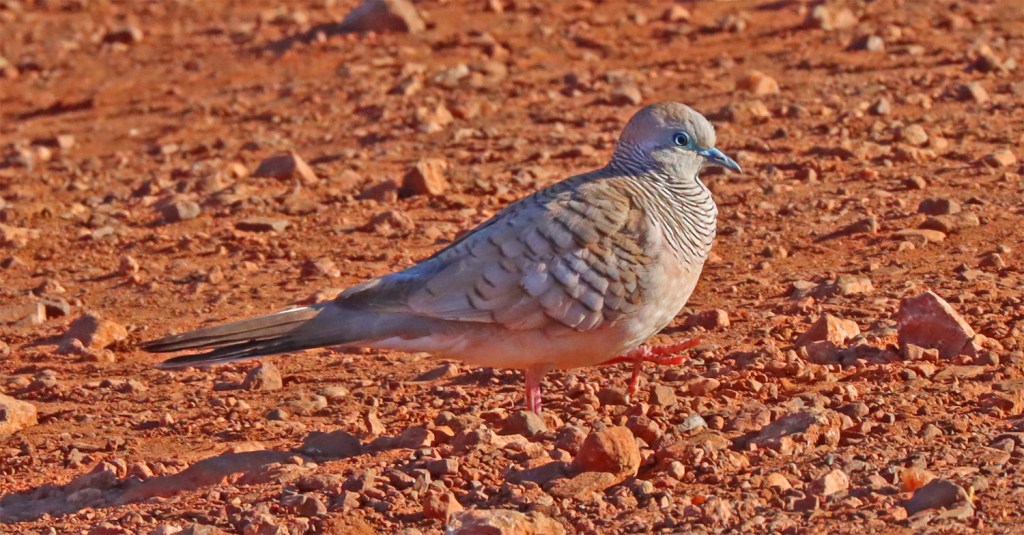
…the dove said there was nothing peaceful at all about this place….
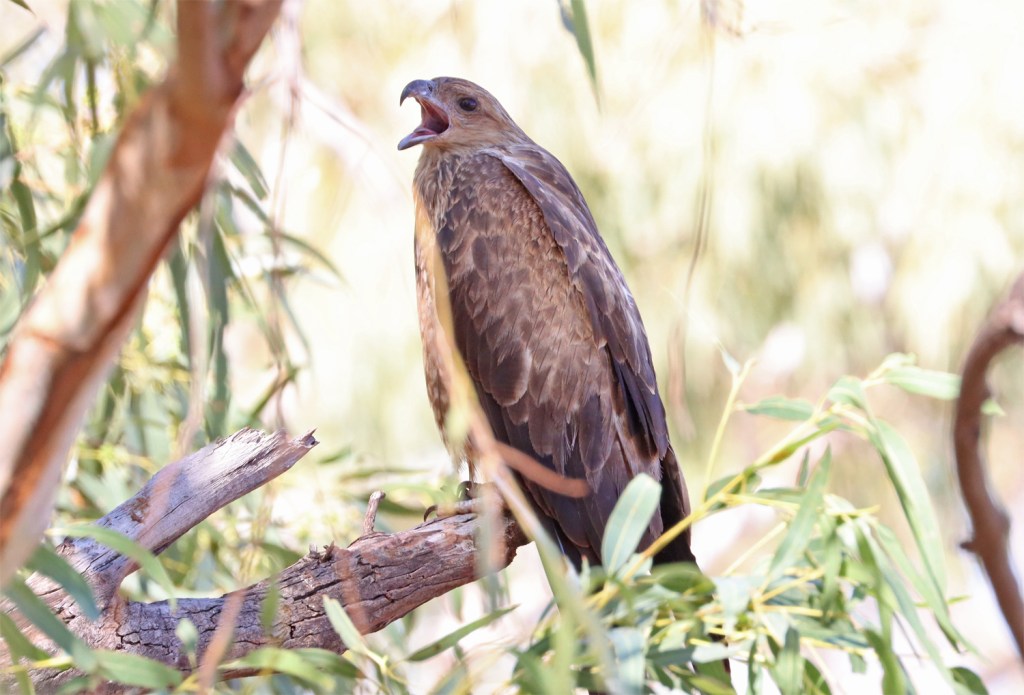
…and the Whistling kite was just over it!
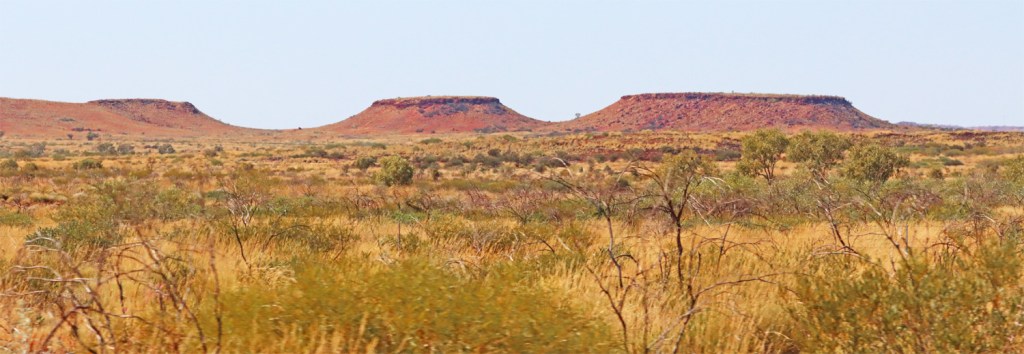
After Robe River, mesas lined the horizon.
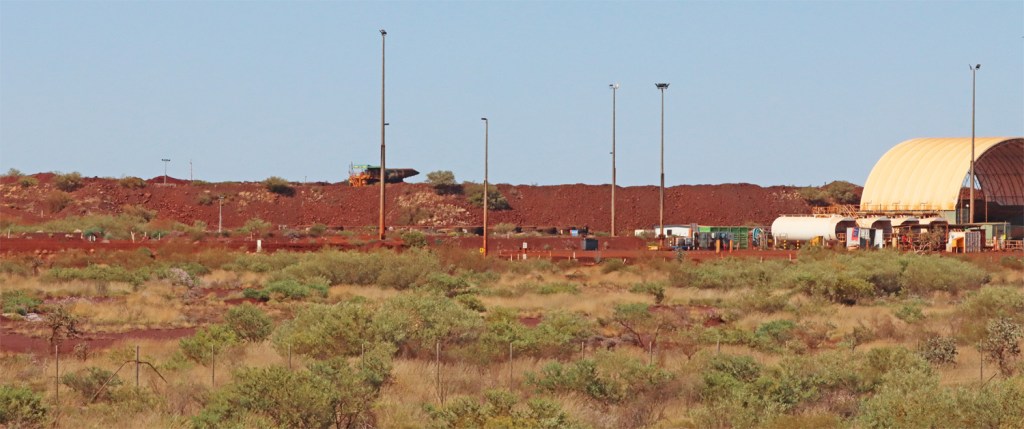
And because we are still in the Pilbara, a mine appeared. This mine is called Mesa A. Jar Jar Binks would approve.
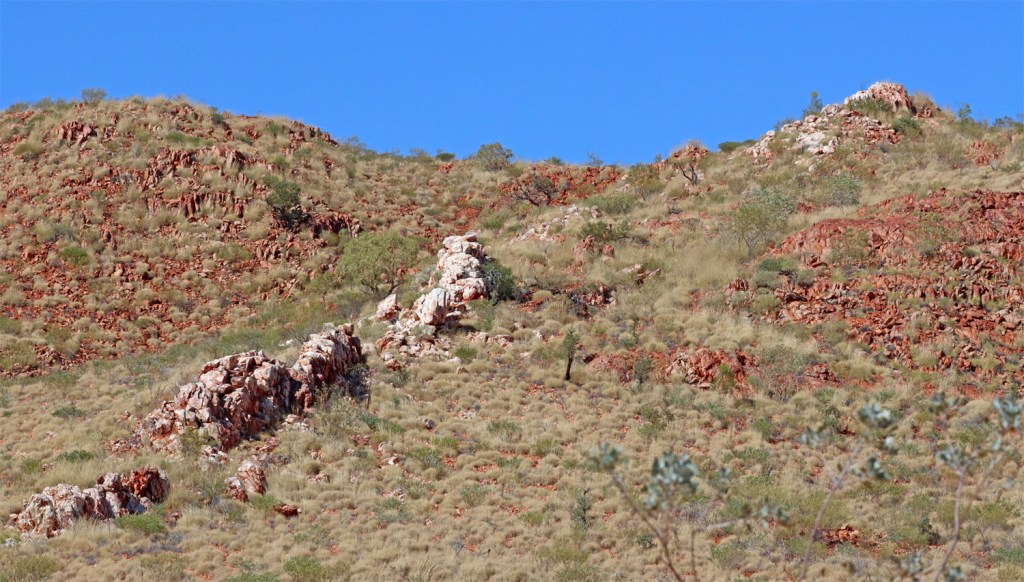
A quartz dyke cuts across the range
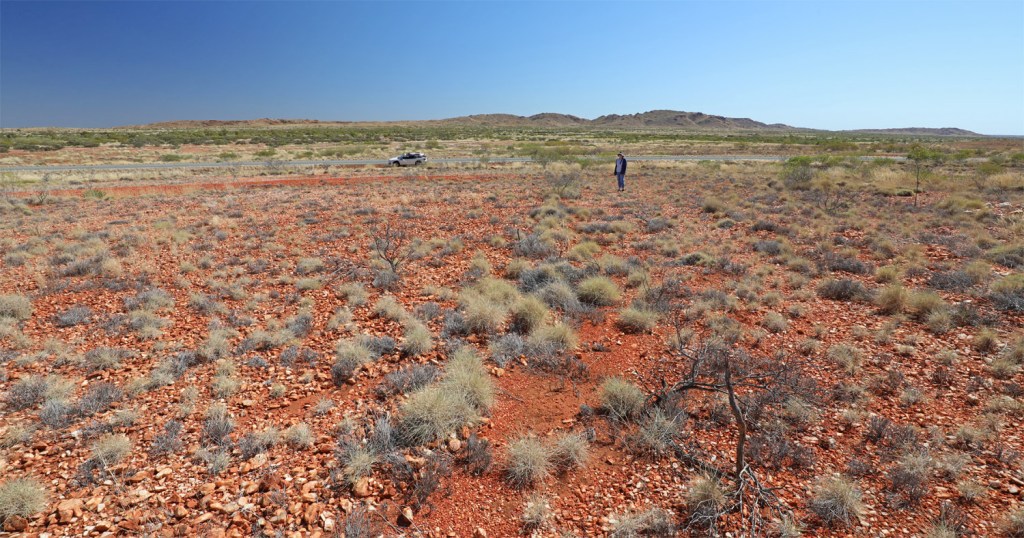
Geological roadside excursion
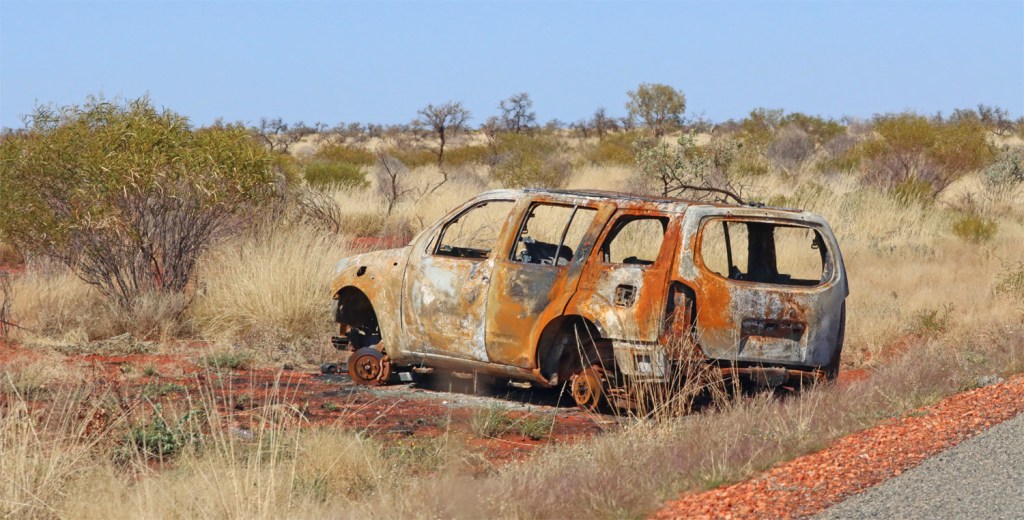
A grim reminder that not everyone finishes the journey and although the road is a major highway, can be quite isolated. There were only two roadhouses (no towns) on todays’ 550km.
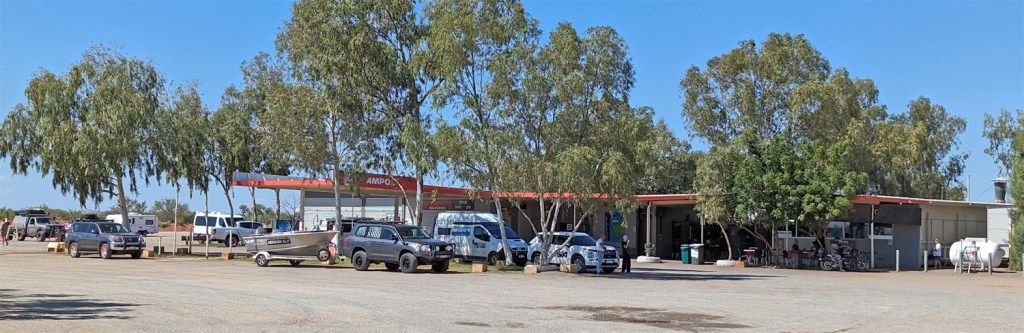
Nanutarra Roadhouse and Ashburton River park area – a welcome and popular stop.
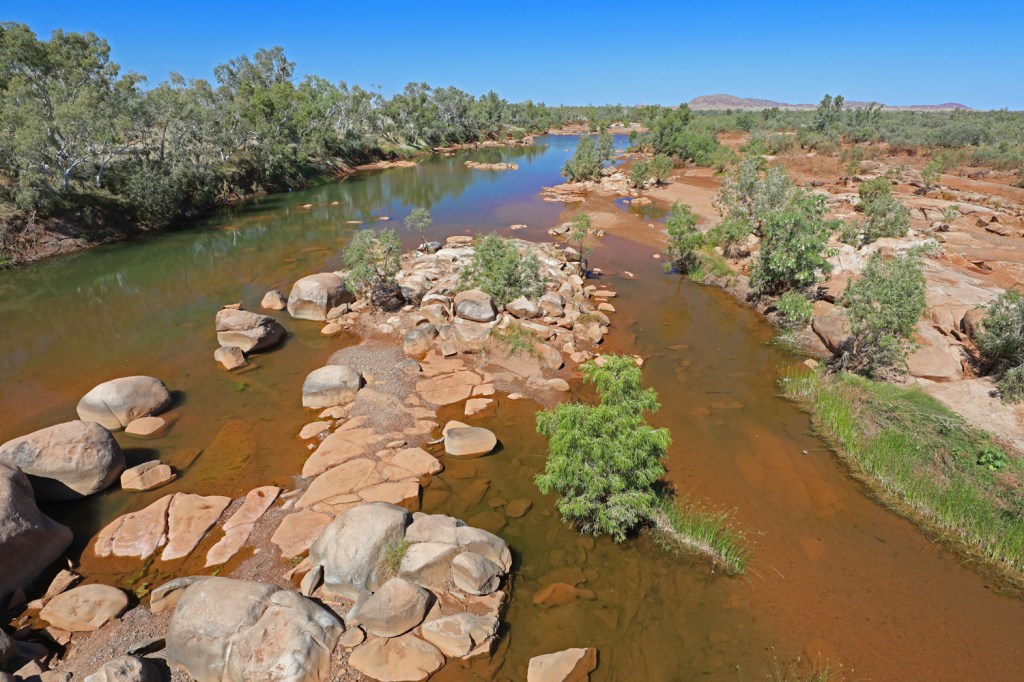
Ashburton River
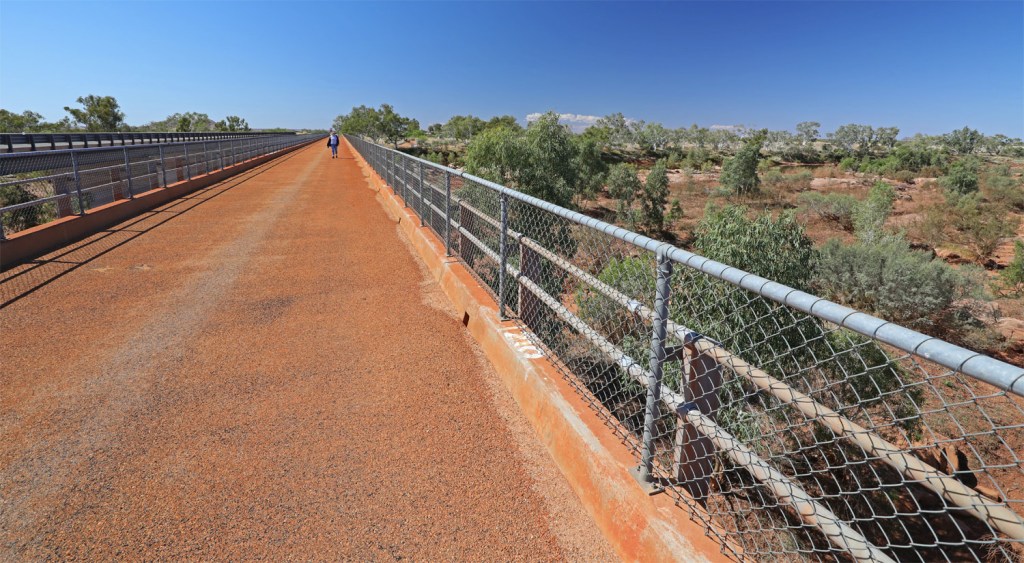
The old Ashburton River bridge (one way) – now a pedestrian bridge and a good place to stretch the legs on the long drive. The bridge is 800 feet long (on a 1960’s brass plaque) which equates to 243m each way.
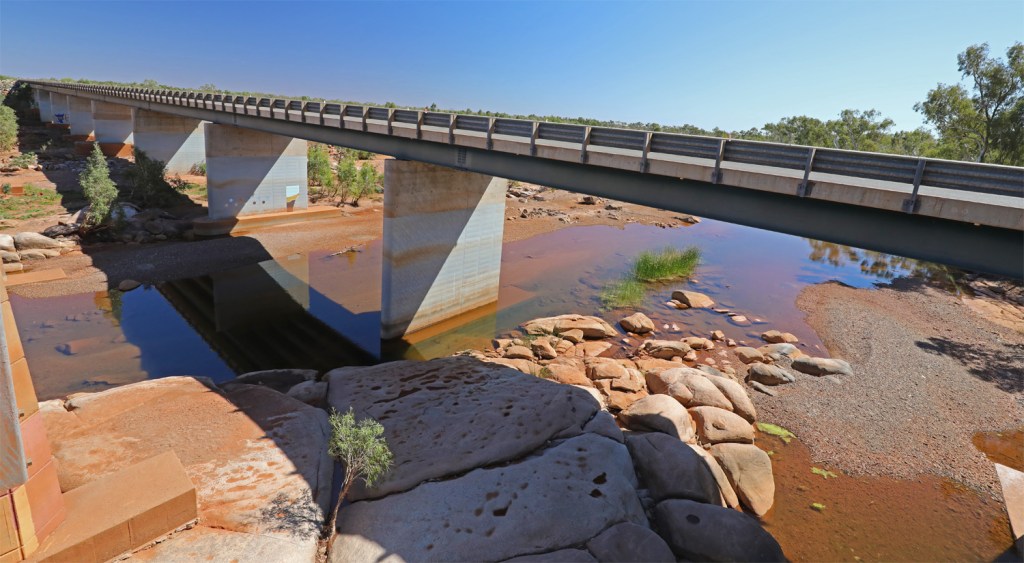
The newer Ashburton River Bridge
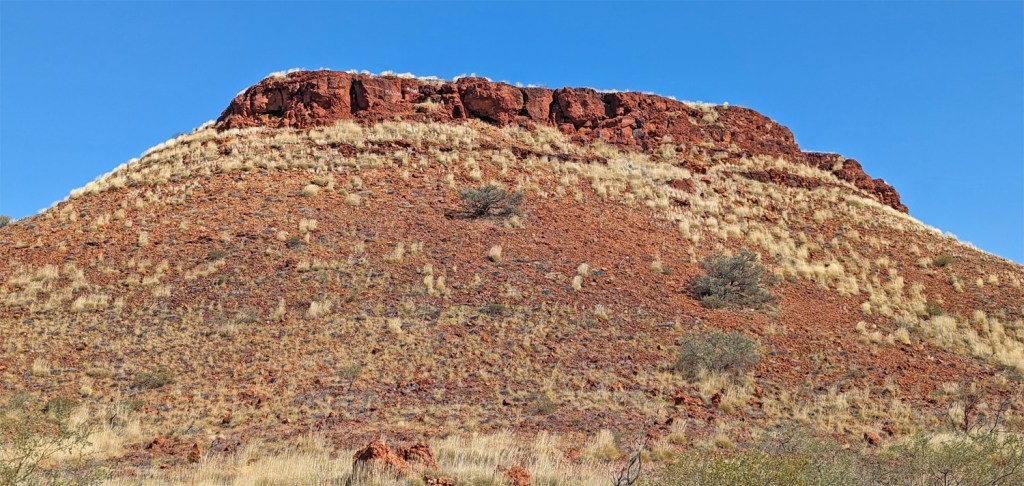
Impressive rocky low ranges south of Nanutarra – marking the end of the Pilbara.
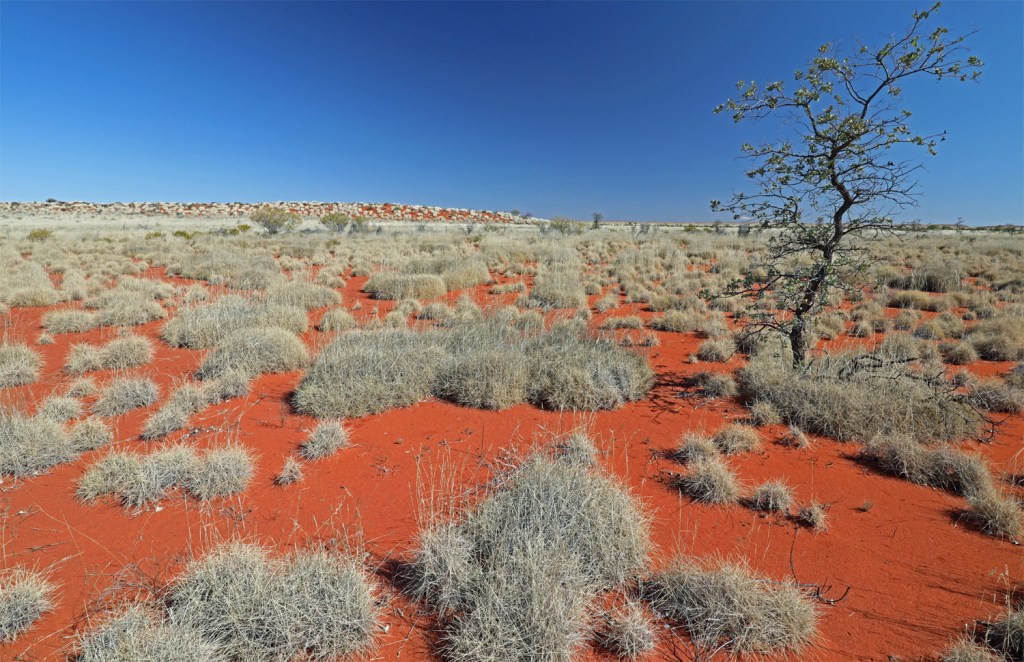
Longitudinal sand dunes marked the start of the Gascoyne Region
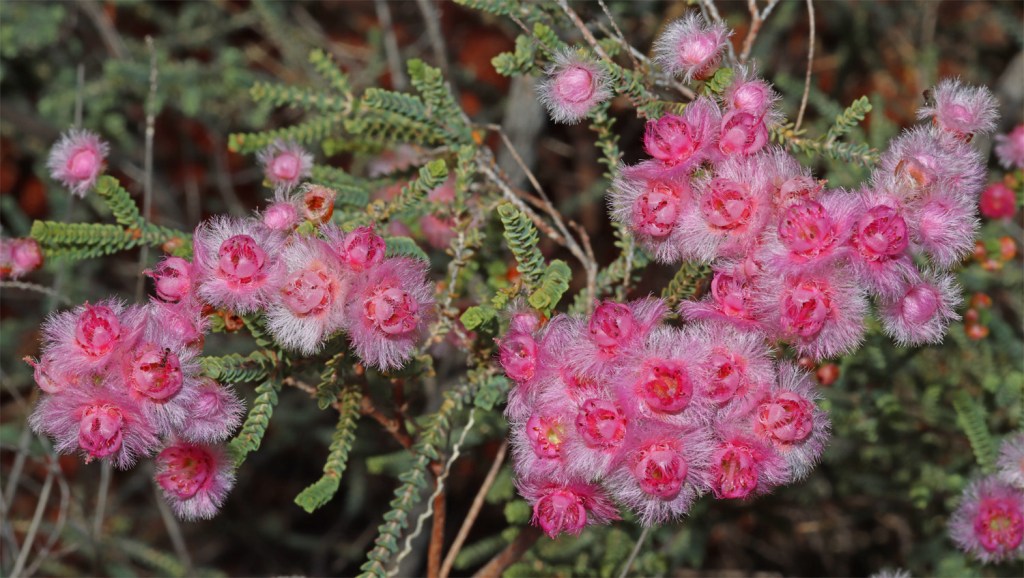
Pink woolly featherflower (Verticordia) growing at the base of a dune.
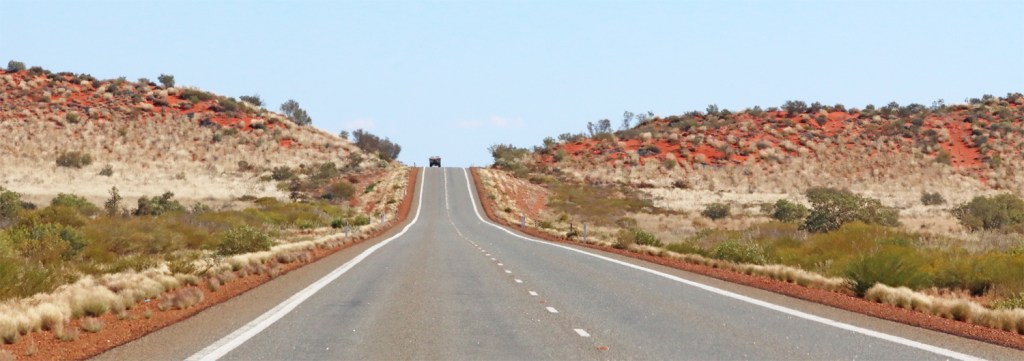
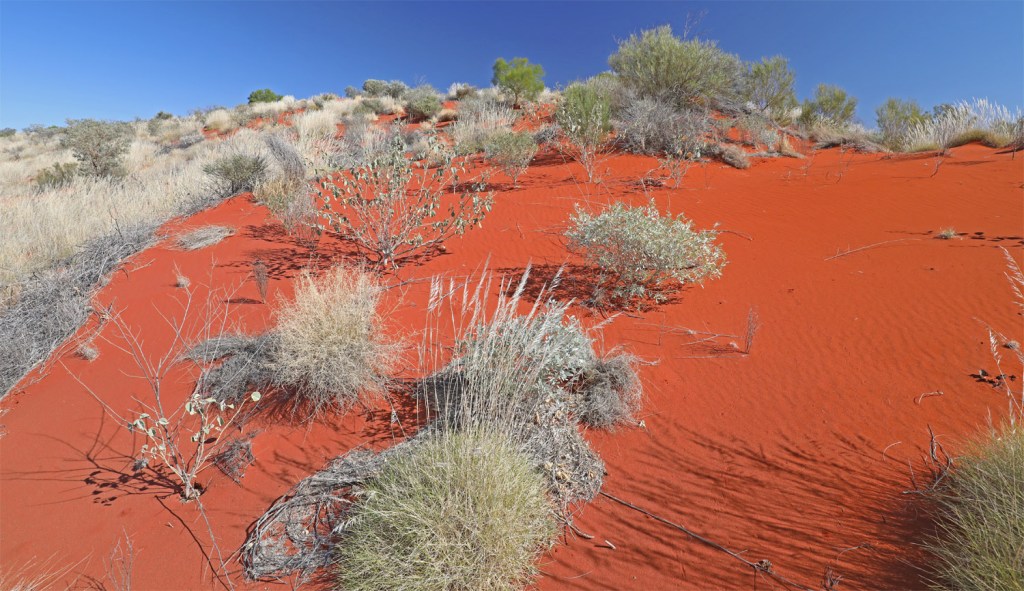
The road passes through a series of dunes. A cutting allows us to stop and climb to the top of the sandy ridge.
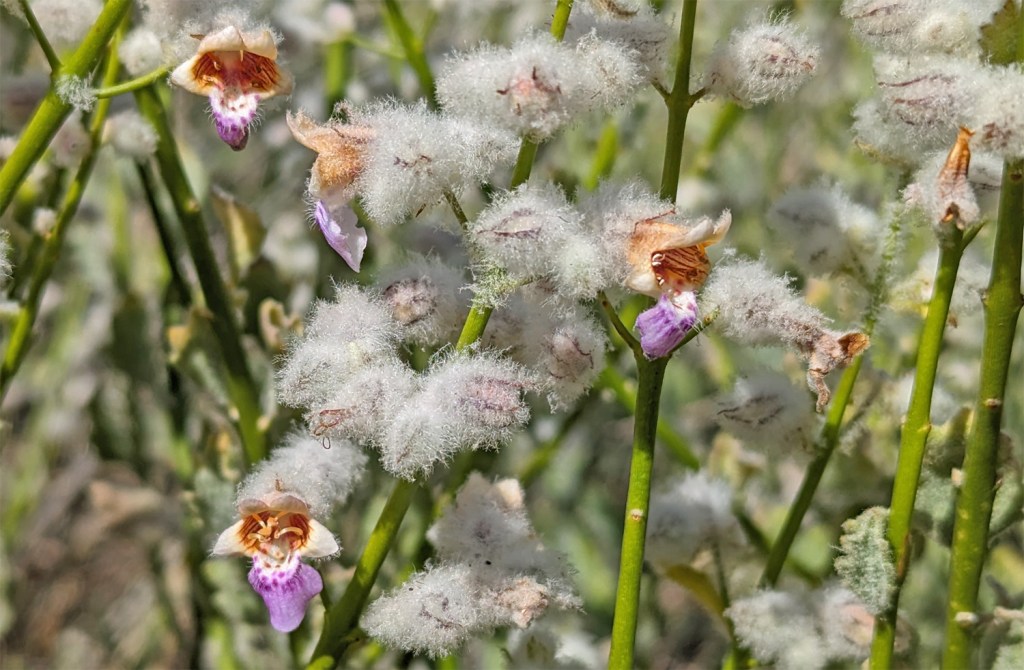
Another interesting plant growing at the base of the dune.

Looking along the ridgeline of the dune
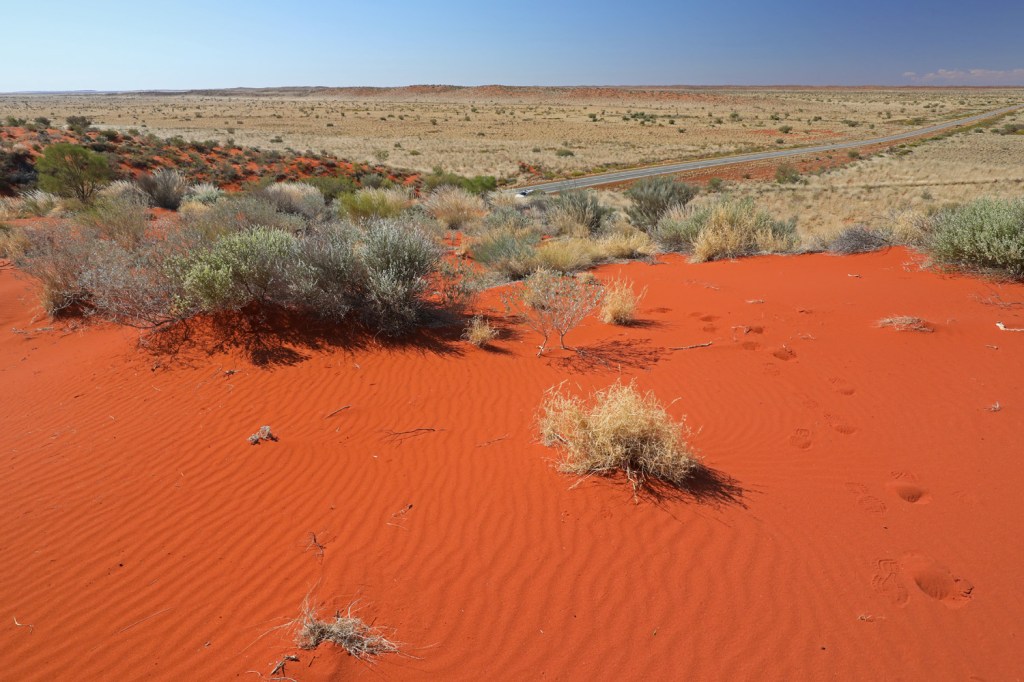
On the way back down
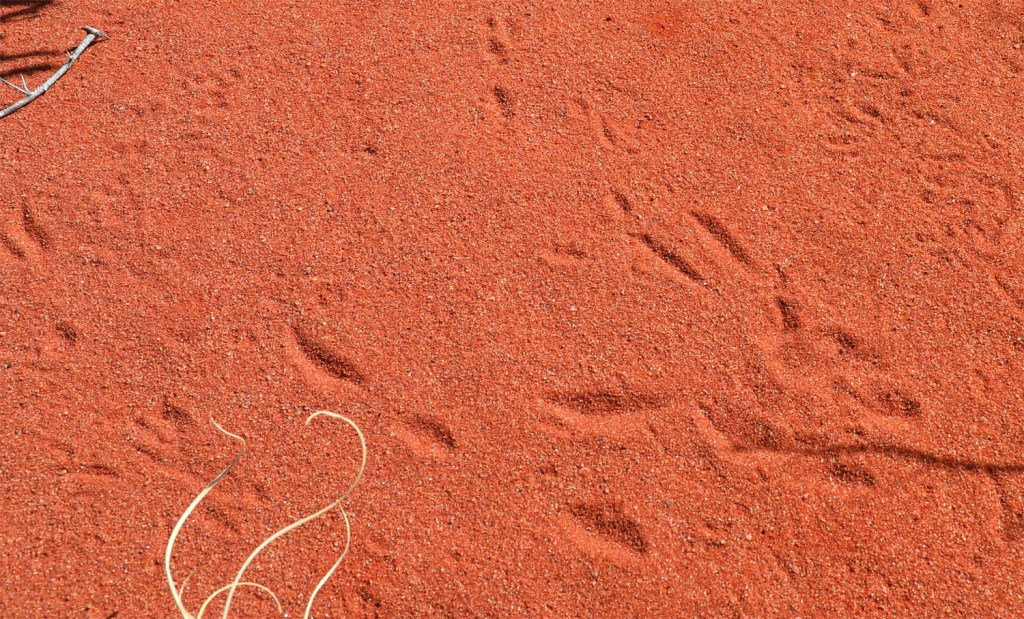
The dunes were covered in tracks.
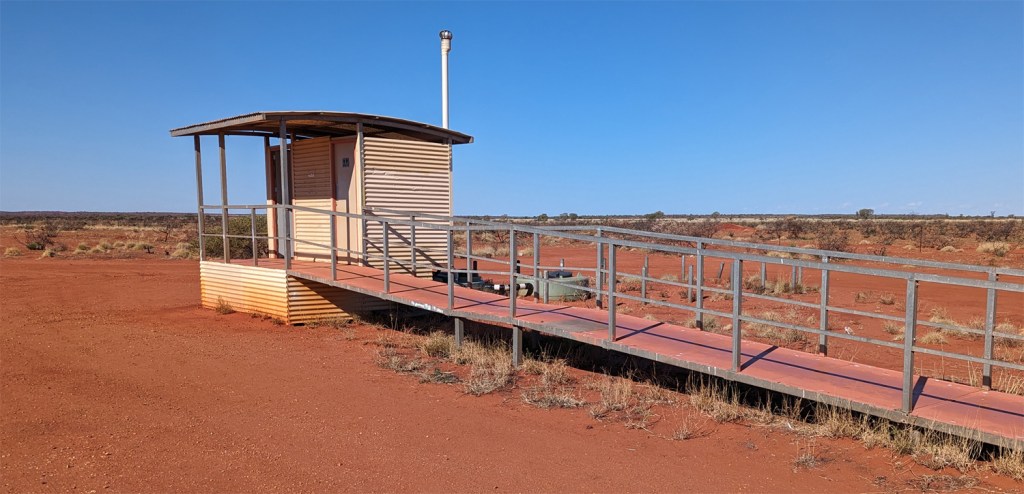
I know many of you have been keenly waiting in anticipation for an outback toilet review – well, wait no longer! This is Giralia Rest Area. The toilet block is up off the ground with good access ramp so no snakes can slither in while in the middle of daily business (huzzah!); vented top minimises vomit-inducing stench so no need to irrigate the sinus cavities after use (bonus!); no toilet paper but that is to be expected (if you don’t carry your own rolls as you travel, you are not in the game). The toilet seat was on the floor but for those with good elevated squatting technique, this is not a biggie. I’ll give it a pass but read below.
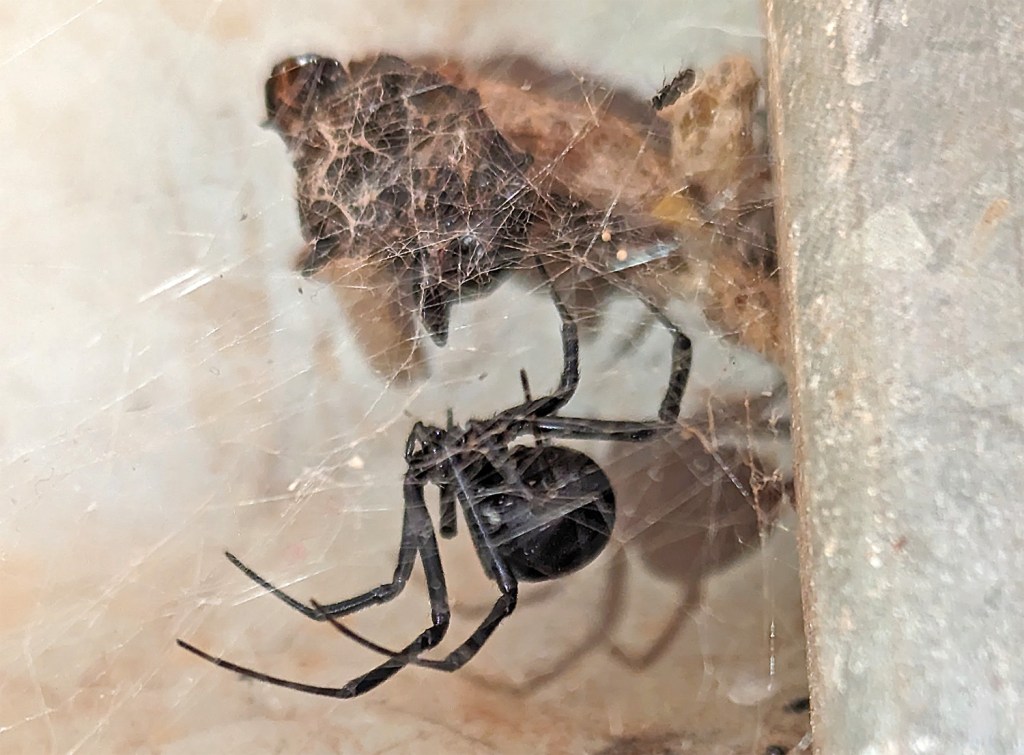
The toilet also had what appears to be an enormous redback spider but it was on the wall near the door and not on the seat so win win all round (for you and the spider). For people like me with an interest in all Australian life forms, this is a real plus but I know some of you are not overly keen about having a poisonous arachnid nearby while contemplating life, the universe and the importance of prime numbers in our daily lives. So we can either add or deduct points depending on your persuasion making this toilet either a pass or fail depending on your position regarding the unassuming Incy-wincy above.
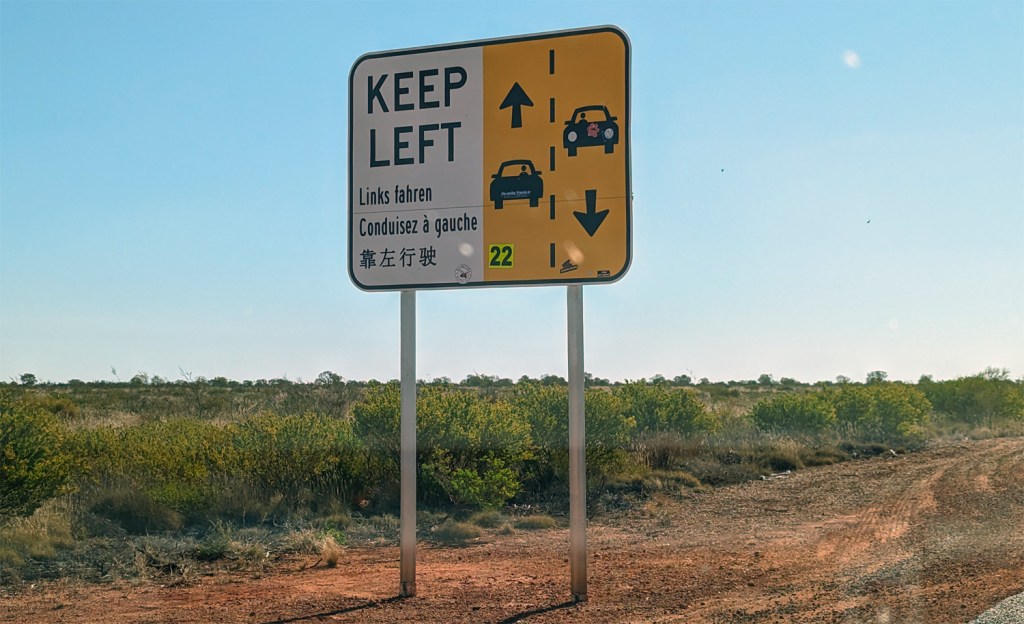
Looks like Exmouth is a haven for international tourists. There were a lot of European backpackers in town. We only had to take evasive manoeuvres once and get off the road when a vehicle came around a curve mostly on our side of the road.
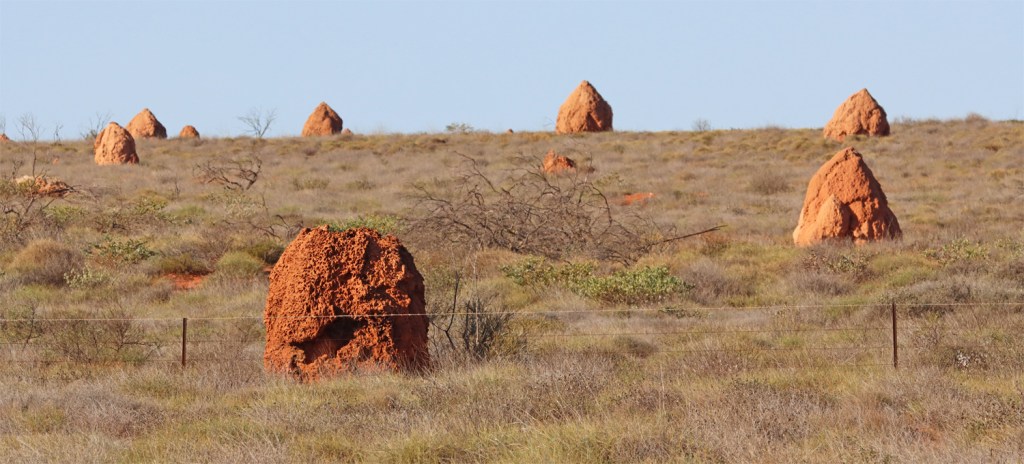
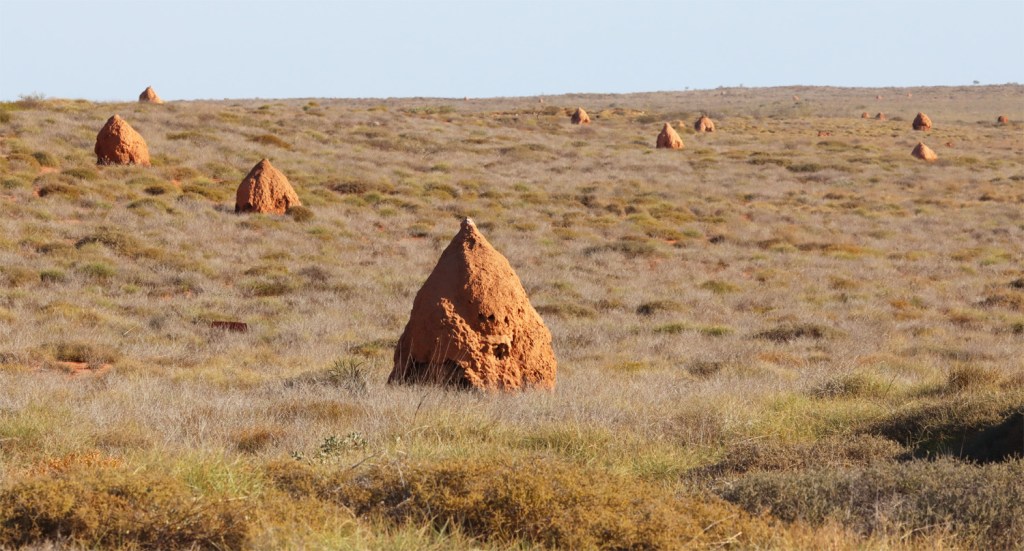
Termite mounds on the road into Exmouth
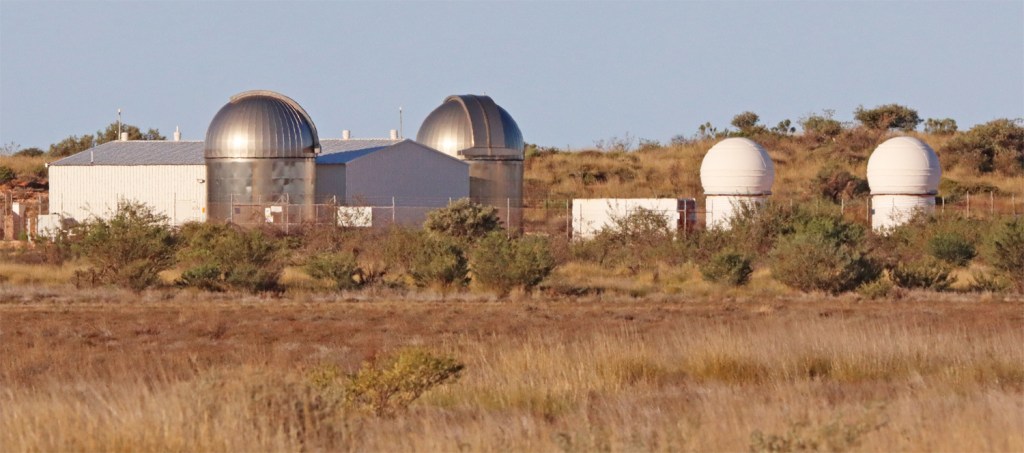
Learmonth Solar Observatory is jointly operated by the Bureau of Meteorology – Australian Space Weather Forecasting Centre and the US Air Force. The observatory is the site of one of six solar velocity imagers in the world-wide GONG (Global Oscillation Network Group) network operated by NSO (US National Solar Observatory). It provides data for helioseismological studies of the interior of the Sun and monitors sunspot and solar activity.
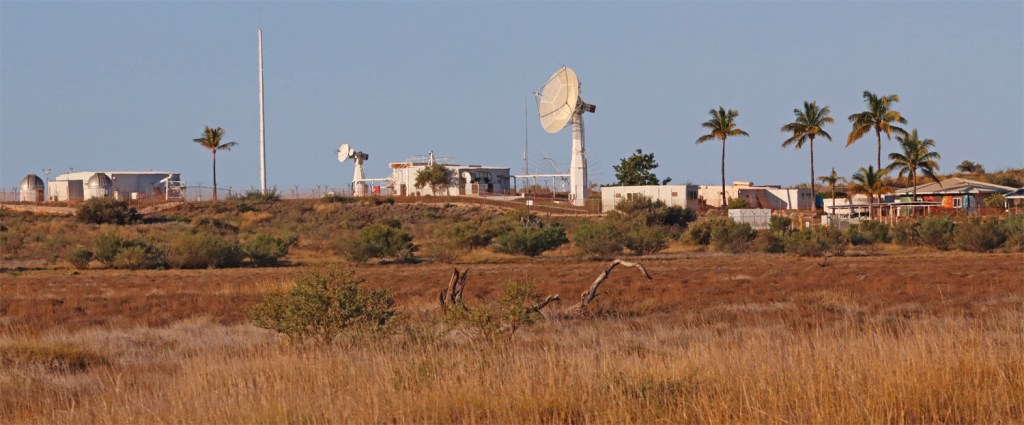
The observatory has optical telescopes, a radio telescope with three parabolic dish antennae to monitor solar radio flux and a solar radio spectrograph. All this study from a third world country! The scientists are here are very clever – you would have to be bright to know so much about the sun.
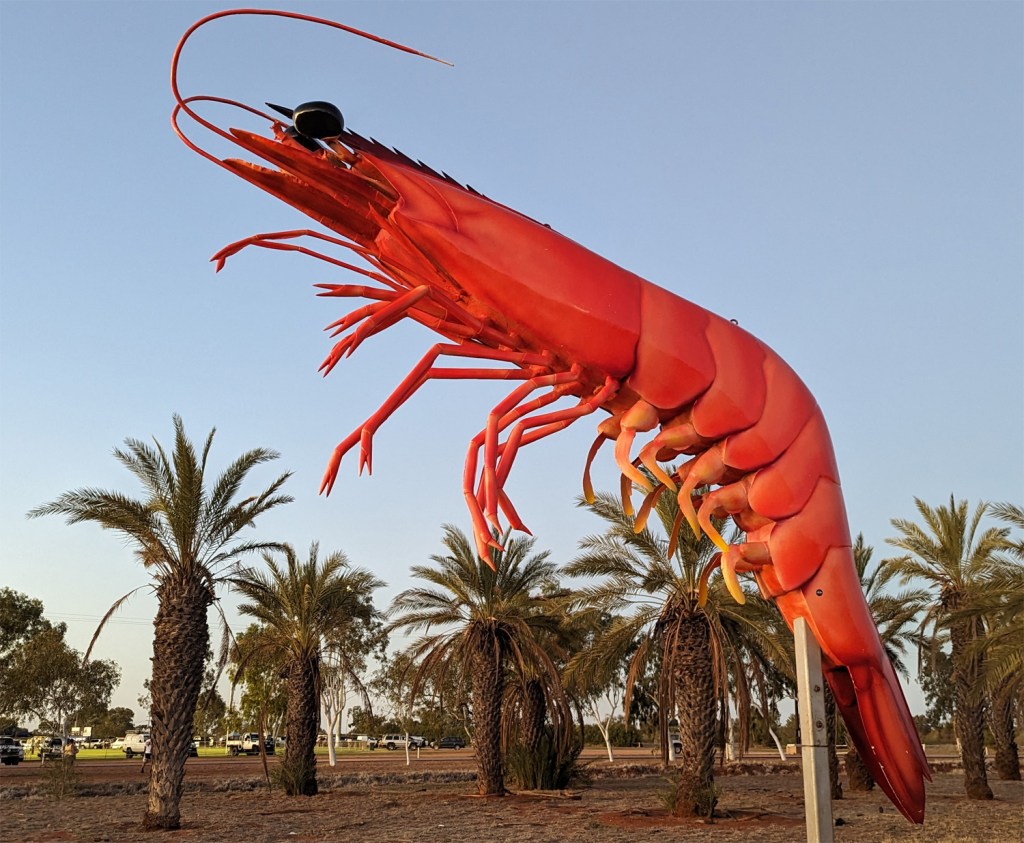
The Big Prawn at Exmouth – the prawn looks upbeat but is not happy that the whale shark gets all the love in town leaving it a bit raw. Despite this, it is safely off the street so it doesn’t become roadkrill.
 imagenau.com