The morning view from our room. A sleep in and slow day looking around Ceduna before we start the Nullarbor crossing tomorrow.
Thevenard – Pinky Point Lookout. Knowing the measurement from the tip of your thumb to the tip of your pinky finger is pretty handy.
At Pinky Point Lookout -“Het Gulden Seepaart” (The Golden Seahorse) – commemorates the visit by the crew of the Dutch Ship to this coastline in 1627. Captain Francois Thijssens was sailing from Cape of Good Hope to Batavia (now Jakarta). On this voyage, he ended up too far to the south and on 26 January 1627 he came upon the coast of Australia, near Cape Leeuwin. Thijssen continued to sail eastwards, mapping more than 1,500 kilometres of Australia’s coast. From what we know, present day South Australia would not be visited again by Europeans for another 165 years.
A Singing honeyeater….singing.
Black headed cormorants
Thevenard is the port for Ceduna – here there is bulk storage of grain, salt, gypsum and mineral sands before shipping.
Beach at Thevenard with one of the many flat offshore islands that keep the waters calm from the Southern Ocean swell.
Australian kestrel on the lookout for a meal.
Denial Bay – Matthew Flinders was in denial here in 1802 when he was sure there would be a big river here. Beach shelters are a common sight in South Australia.
The jetty here sometimes has seals sleeping on it but today was unsealed. There was an oystercatcher convention though.
Sooty oystercatchers
A female Pacific gull soared by.
Mangroves at Denial Bay. There is only one species of mangrove this far south – the grey mangrove. The next inlet west of here at Davenport Creek has the western-most mangroves on the southern Australian coastline.
Mackenzies Ruins – 1880 – ruins of a settlement from a notable pioneer of the district. William McKenzie 1844–1906 was one of the first to settle in the area in 1880 and had many jobs in the community including blacksmith, builder and harbour master. He assisted many new settlers with lots of advice and in many cases chipped in with some physical labour. His slogan was “You can’t grow wheat with hands in your pockets.”
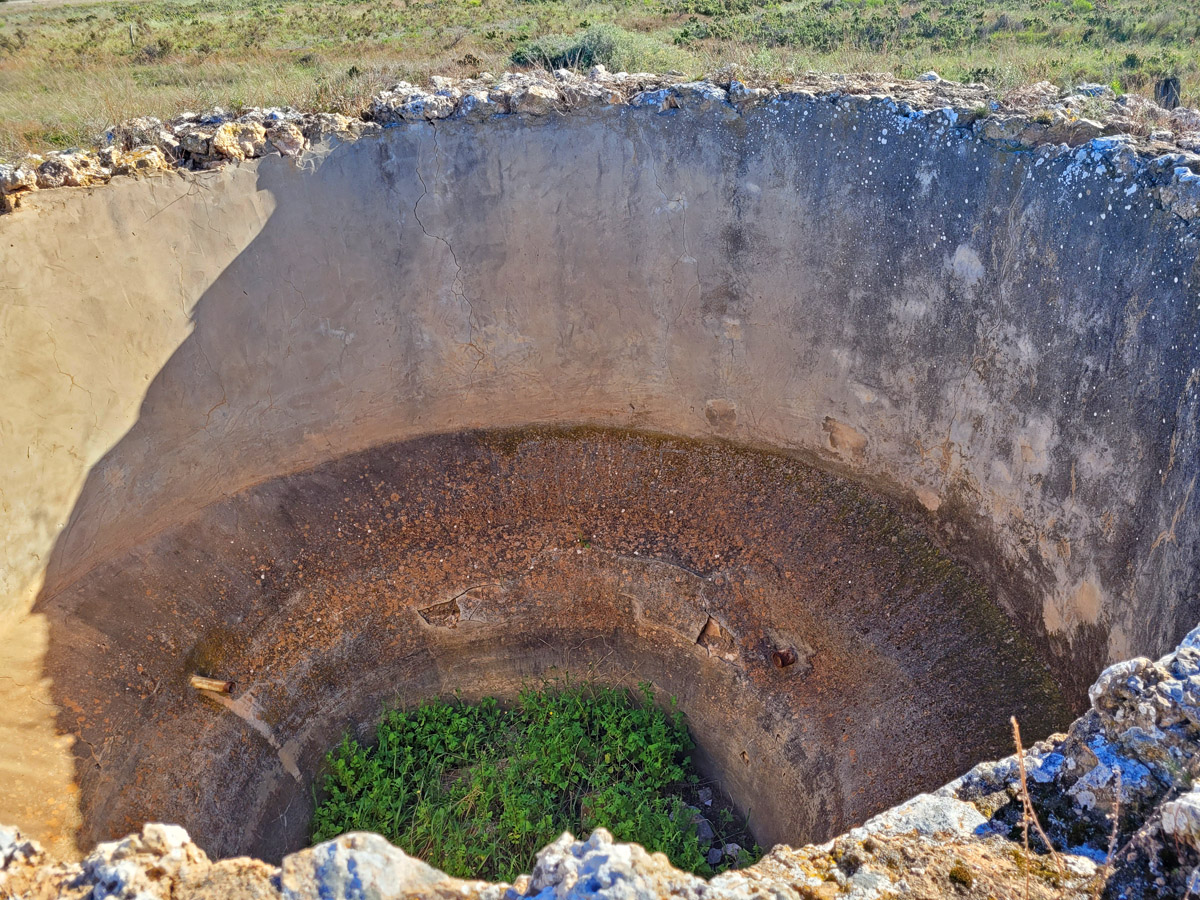
One of several water storage wells metres deep on the property.
I was hoping to see The Big Oyster at a local fish shop but it was taken away for repairs at the end of 2022. It may have pulled a mussel.
The Ceduna Radio Astronomy Observatory is visible west of Ceduna. Things are looking up.
Our evening walk on the Encounter walking trail that skirts Murat Bay at Ceduna
Ptilotus obovatus – a wildflower from arid areas of Australia
The last of the light. Good night from Ceduna.

 The morning view from our room. A sleep in and slow day looking around Ceduna before we start the Nullarbor crossing tomorrow.
 Thevenard – Pinky Point Lookout. Knowing the measurement from the tip of your thumb to the tip of your pinky finger is pretty handy.
 At Pinky Point Lookout -“Het Gulden Seepaart” (The Golden Seahorse) – commemorates the visit by the crew of the Dutch Ship to this coastline in 1627. Captain Francois Thijssens was sailing from Cape of Good Hope to Batavia (now Jakarta). On this voyage, he ended up too far to the south and on 26 January 1627 he came upon the coast of Australia, near Cape Leeuwin. Thijssen continued to sail eastwards, mapping more than 1,500 kilometres of Australia’s coast. From what we know, present day South Australia would not be visited again by Europeans for another 165 years.
 A Singing honeyeater….singing.
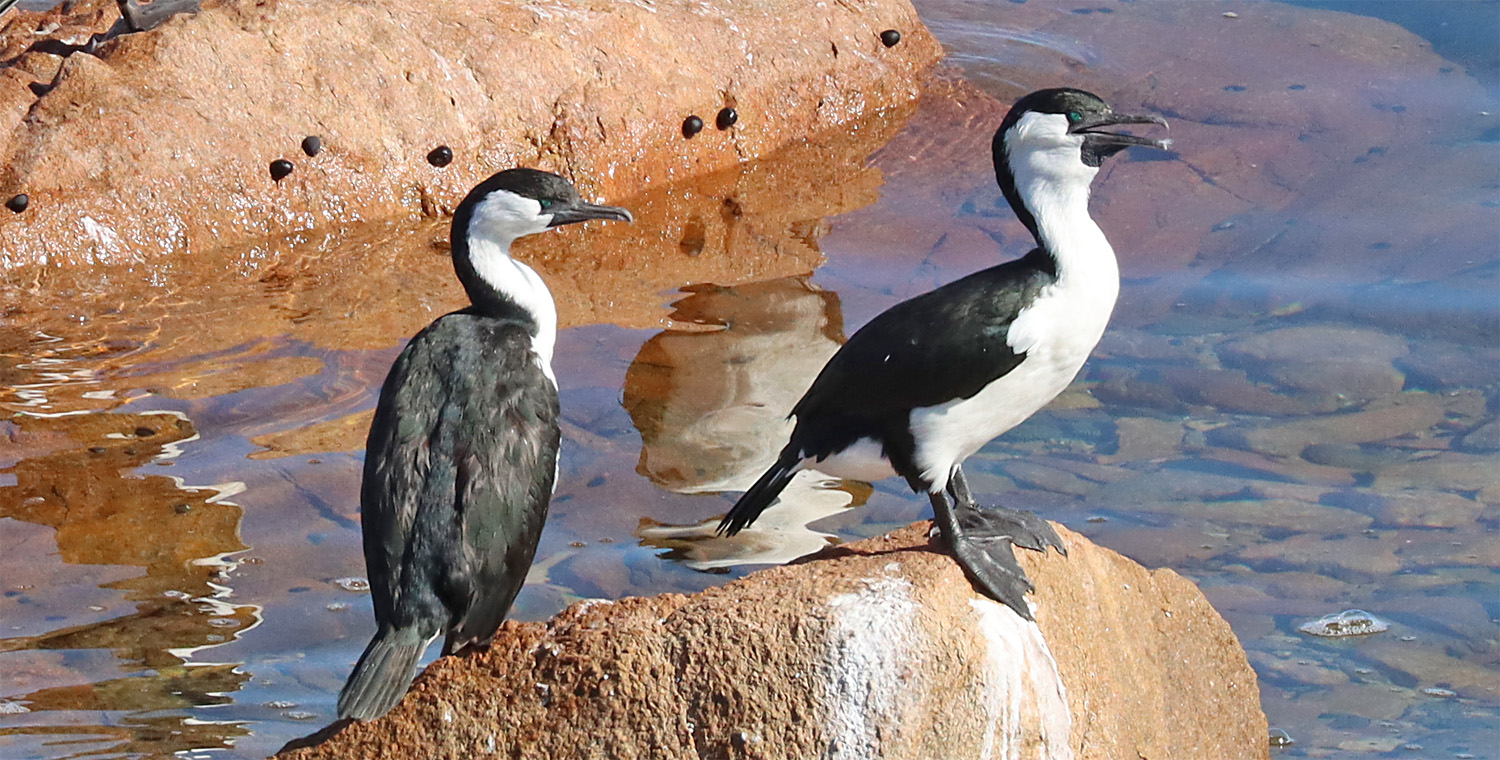 Black headed cormorants
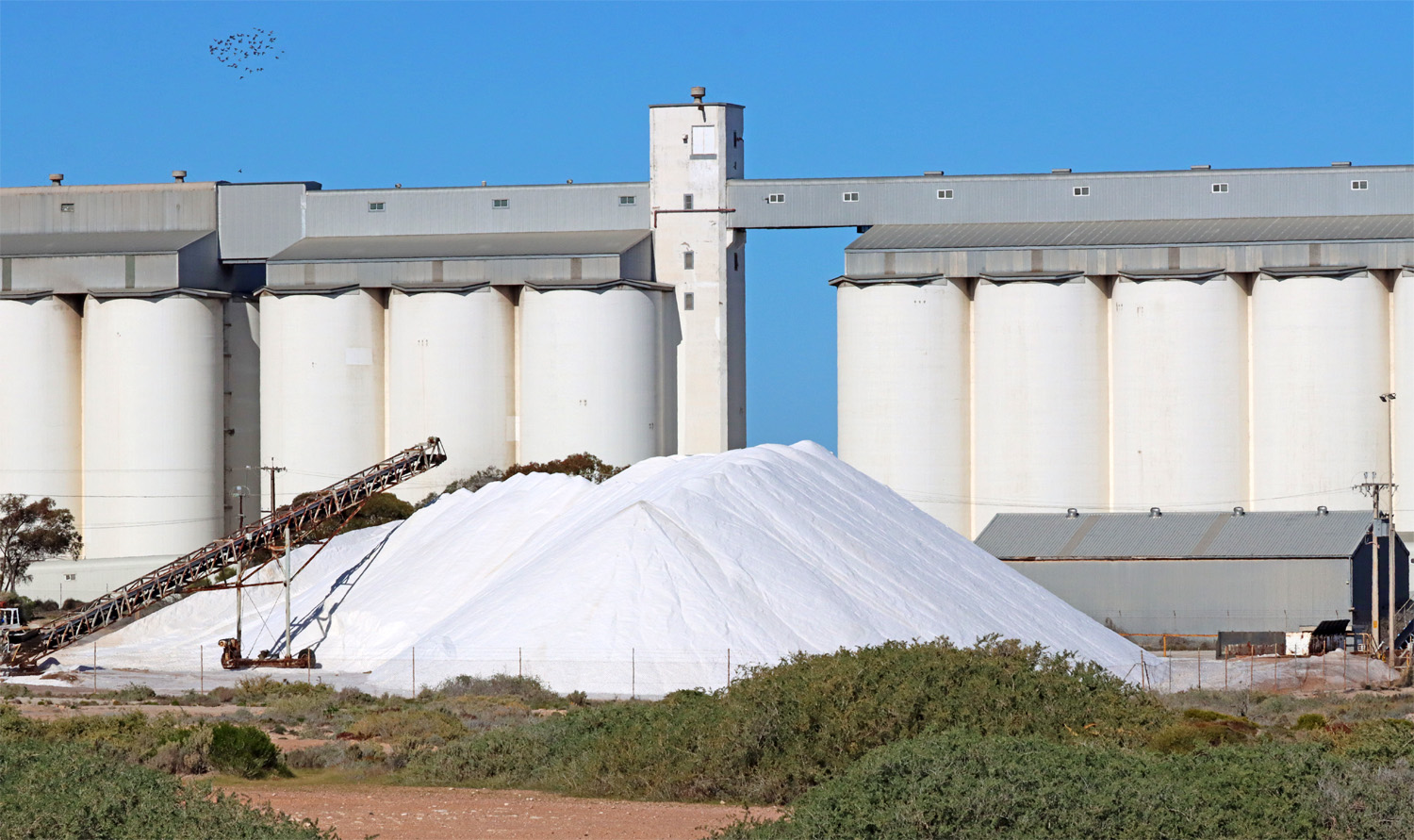 Thevenard is the port for Ceduna – here there is bulk storage of grain, salt, gypsum and mineral sands before shipping.
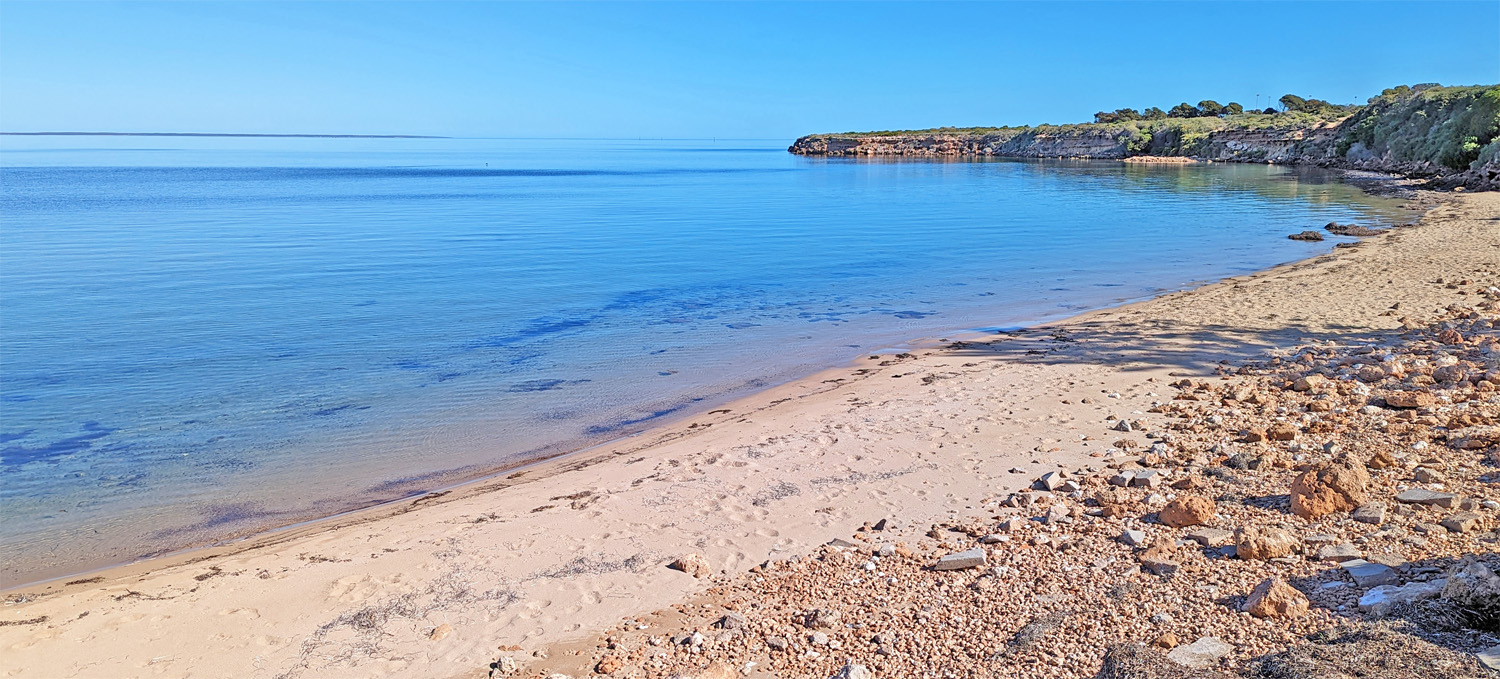 Beach at Thevenard with one of the many flat offshore islands that keep the waters calm from the Southern Ocean swell.
 Australian kestrel on the lookout for a meal.
 Denial Bay – Matthew Flinders was in denial here in 1802 when he was sure there would be a big river here. Beach shelters are a common sight in South Australia.
 The jetty here sometimes has seals sleeping on it but today was unsealed. There was an oystercatcher convention though.
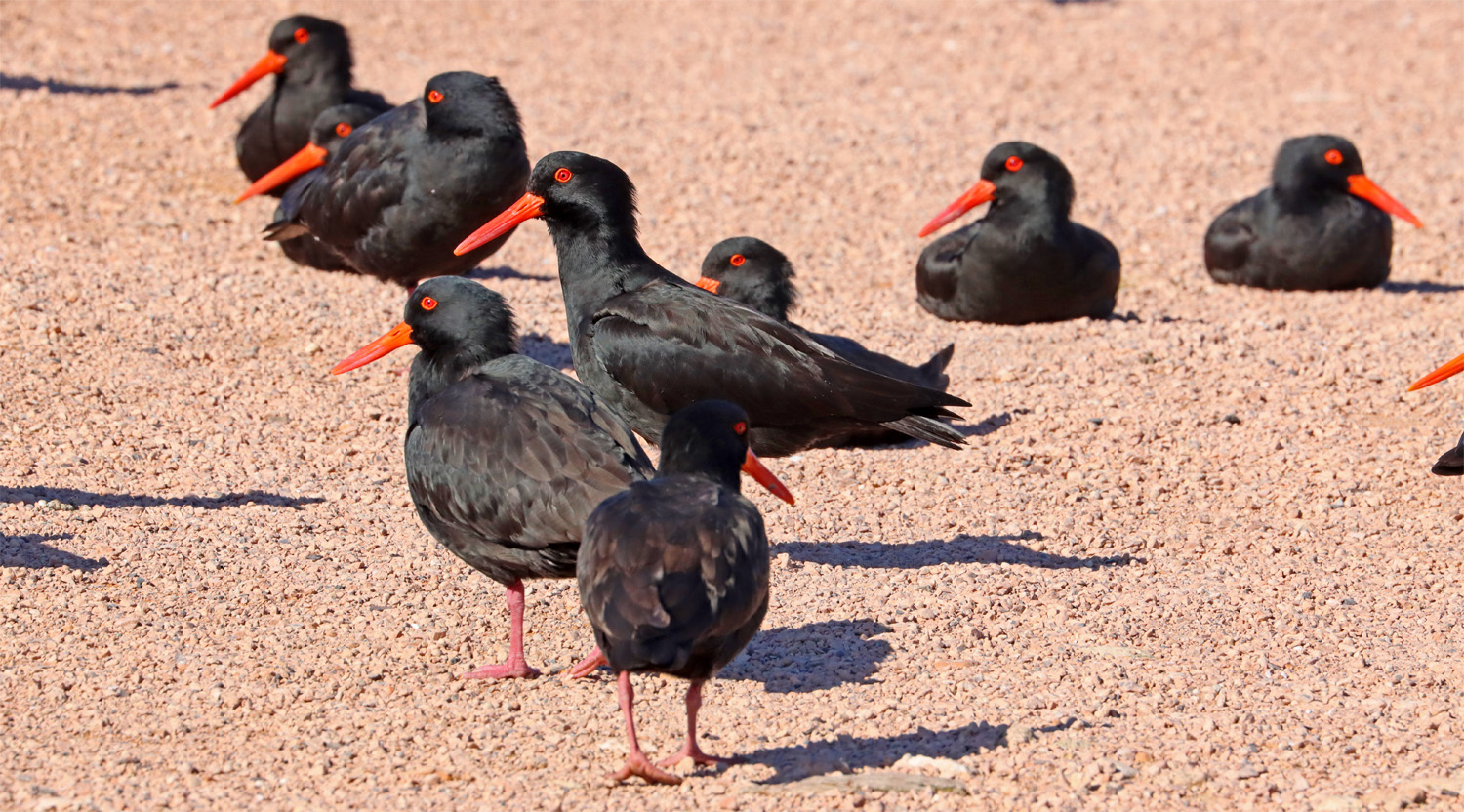 Sooty oystercatchers
 A female Pacific gull soared by.
 Mangroves at Denial Bay. There is only one species of mangrove this far south – the grey mangrove. The next inlet west of here at Davenport Creek has the western-most mangroves on the southern Australian coastline.
 Mackenzies Ruins – 1880 – ruins of a settlement from a notable pioneer of the district. William McKenzie 1844–1906 was one of the first to settle in the area in 1880 and had many jobs in the community including blacksmith, builder and harbour master. He assisted many new settlers with lots of advice and in many cases chipped in with some physical labour. His slogan was “You can’t grow wheat with hands in your pockets.”
 One of several water storage wells metres deep on the property.
 I was hoping to see The Big Oyster at a local fish shop but it was taken away for repairs at the end of 2022. It may have pulled a mussel.
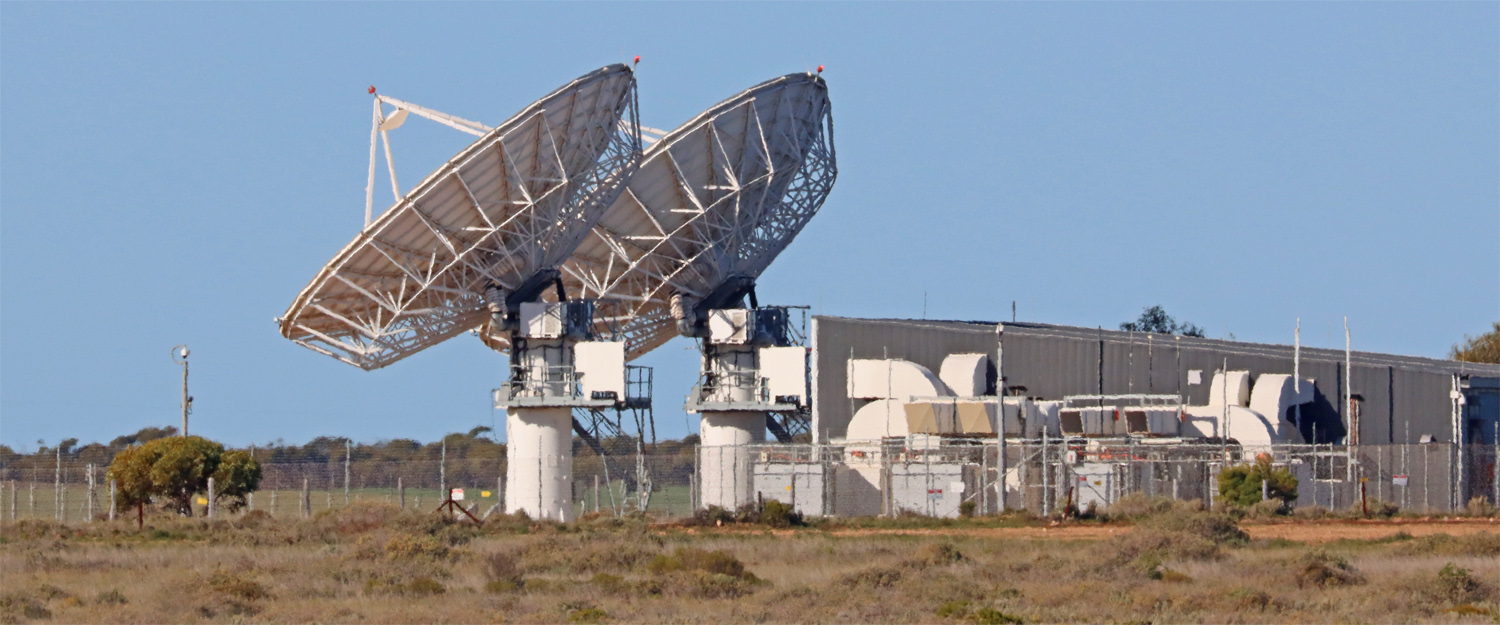 The Ceduna Radio Astronomy Observatory is visible west of Ceduna. Things are looking up.


 Ptilotus obovatus – a wildflower from arid areas of Australia

 imagenau.com