

An early start from Cobar. We are back on the Barrier Highway where goats are the dominant animal species between Cobar and Wilcannia.


The goats breed so much as there are plenty of eligible baaaa-chelors.
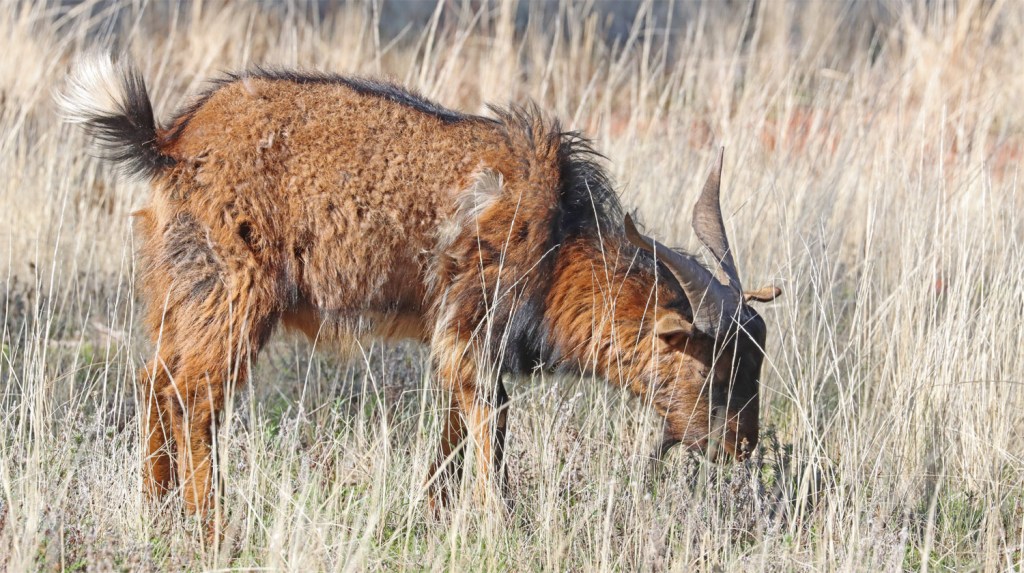
This goat was called Michael
Just bleat it (bleat it), bleat it (bleat it)
No goat wants to be defeated
Eating everything and strong in our fight
Everything here is a tasty bite
Just bleat it
And here is Jacko
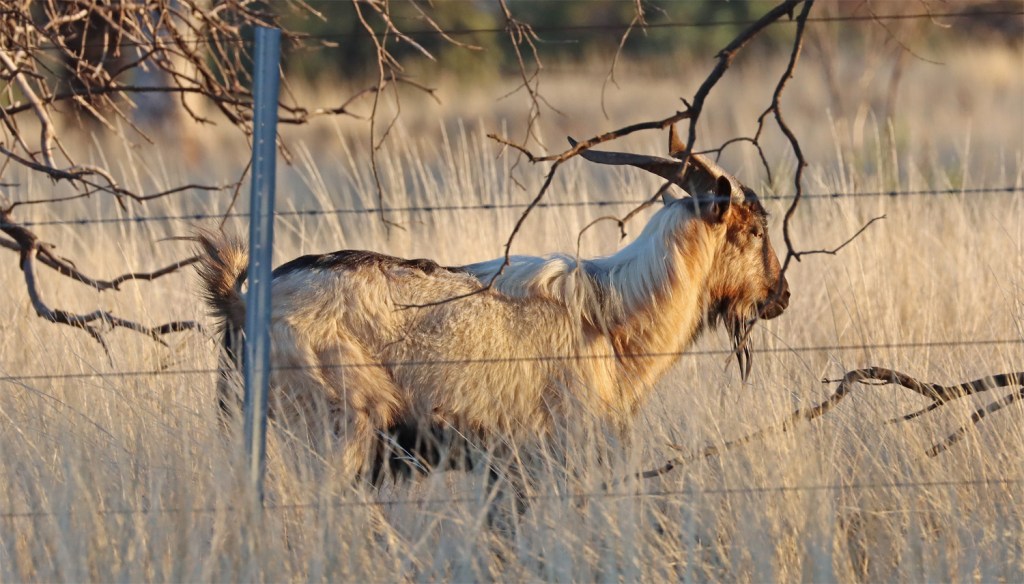
You know I’m baaaad, I’m baaaad
You know it, you know
And the goat world has to answer right now
Just to tell you once again
Who’s baaaaaad?

Our mandatory stop at Emmdale for their exceptionally good carrot cake.

We had passed many trucks like this hauling feed east. Not all the people loading the trucks were willing workers, some of them baled.

The top of the ridgeline at McCulloch’s Range
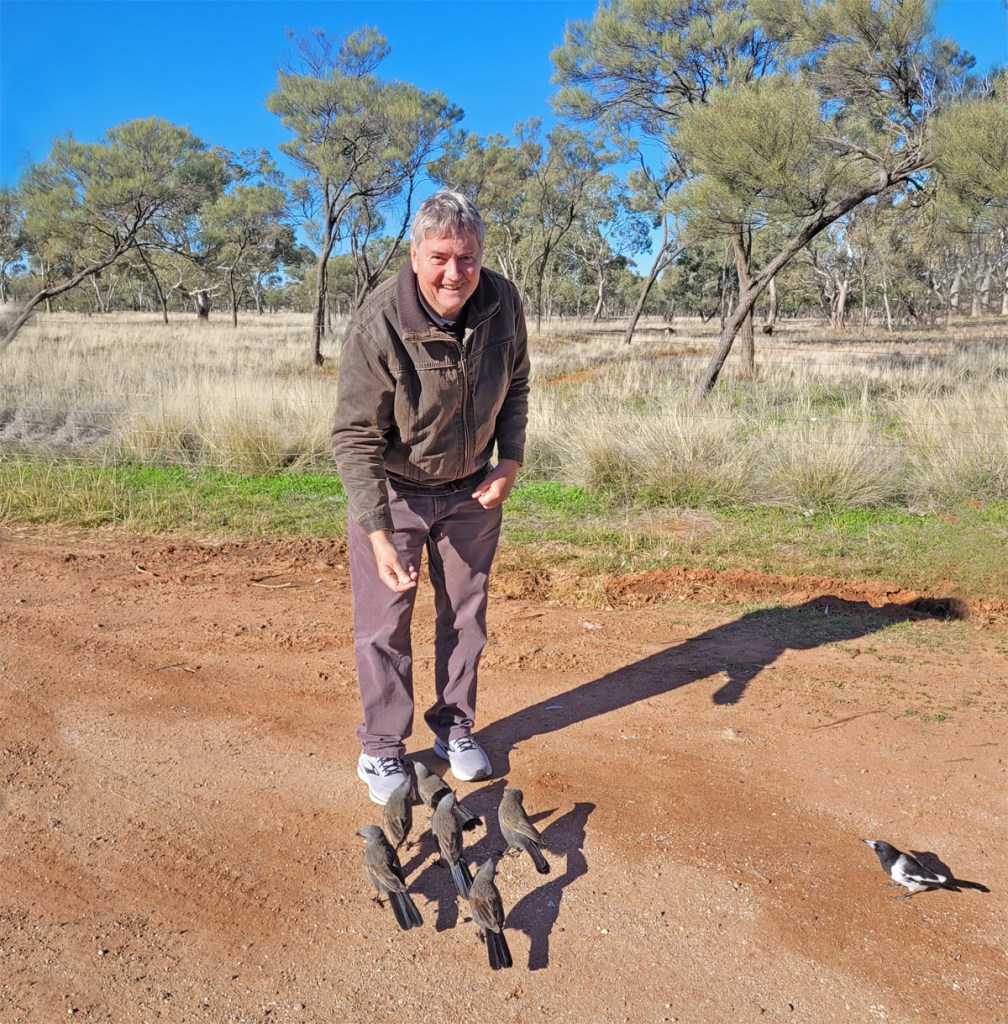
We were greeted at McCulloch’s Rest Area by a noisy flock of Apostle birds and a few Pied butcherbirds.

Apostle bird

The Darling River floodplain as we approach Wilcannia. Wilcannia means “gap in the river bank where flood waters escape” in the local Paarkantyi language.
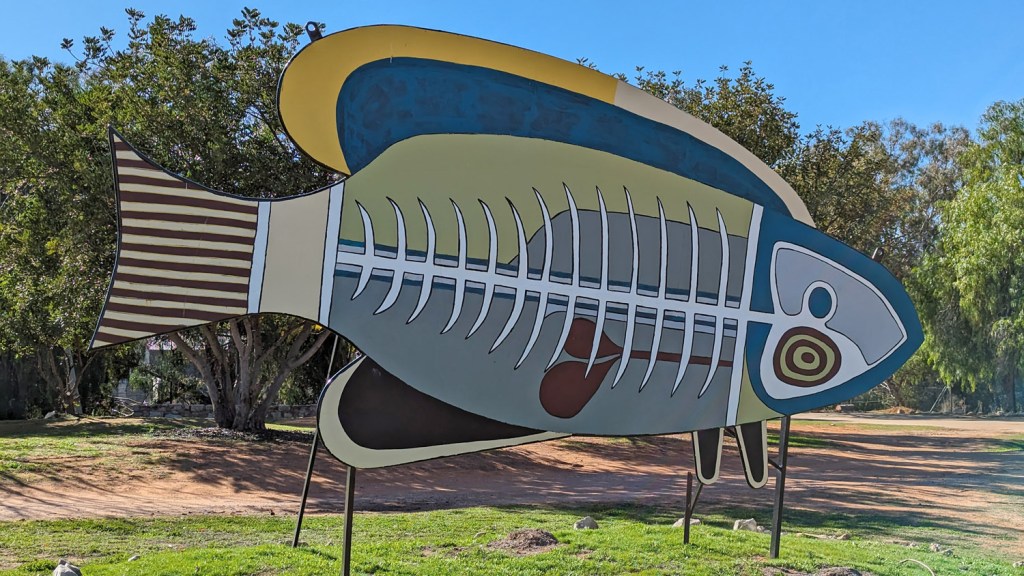
The Wilcannia fish (Parntu in the Paakantyi language). Parntu is a significant creature in the lives of the Paakantyi people providing a ready source of food and important to the social fabric of the Paakantyi community.

The Darling River (Paaka) at Wilcannia
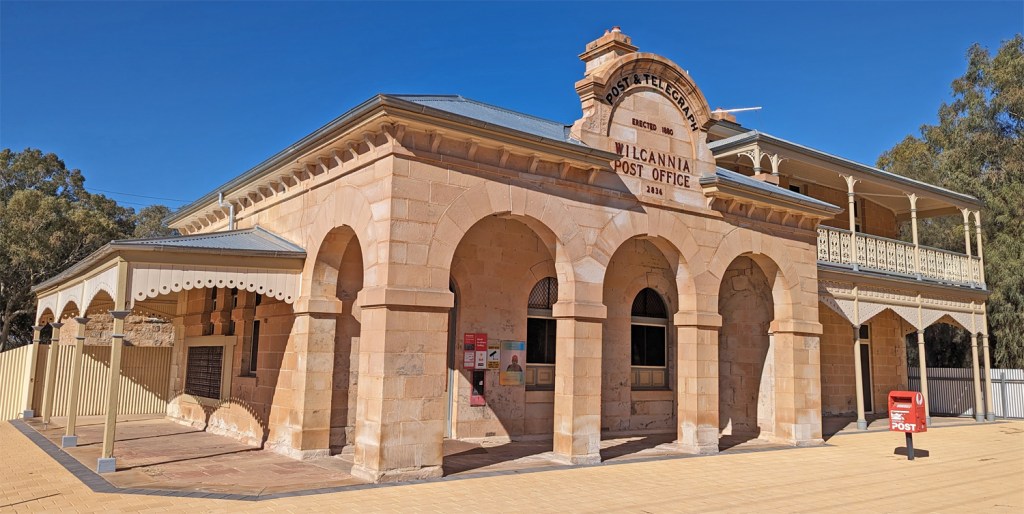
The impressive Wilcannia Post Office
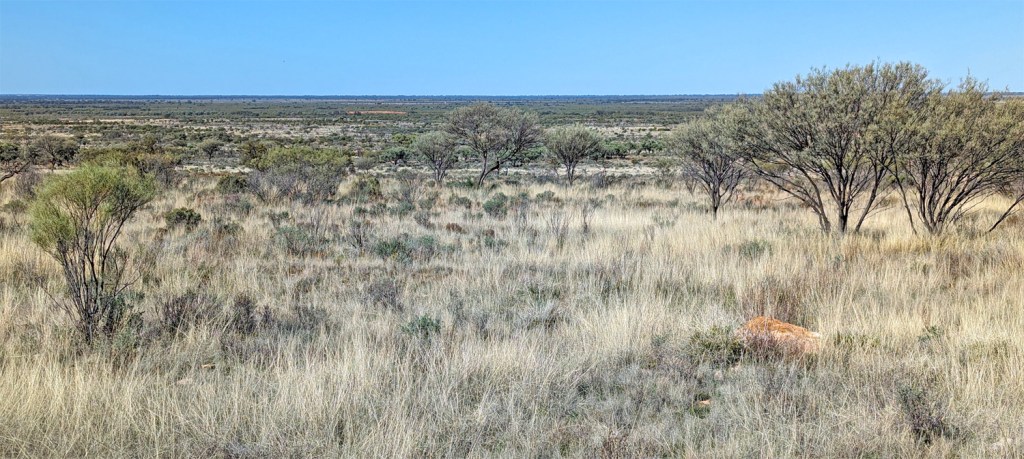
Looking back towards the Darling River from Netallie Hill

Welcome to Netallie

Black kite at Netallie Hill.

Emus near Dolo Hill – emu count today 37.

West towards Broken Hill

In Broken Hill in 2022, we visited the site of the only known attack on Australian soil during World War I by two cameleers. White Rocks Reserve, a natural rocky quartz outcrop on the northern edge of Broken Hill, was the site of the final shootout.
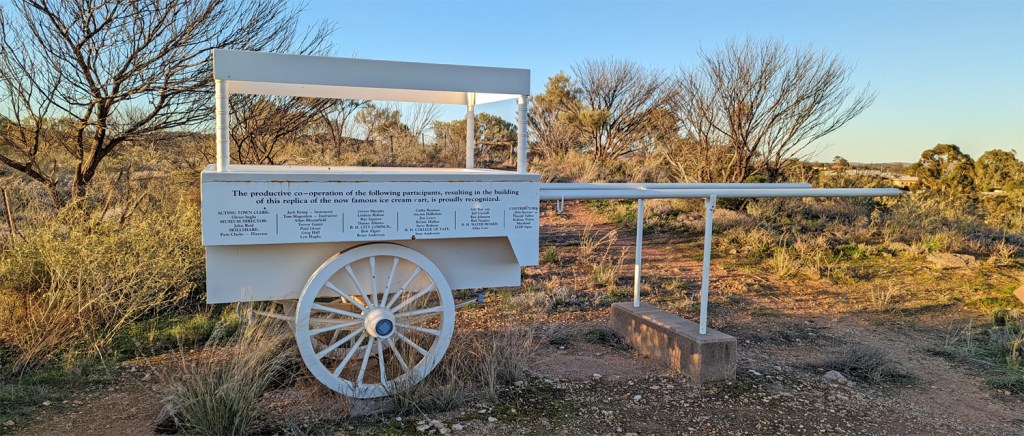
A recreation of the ice cream cart used commercially by one the cameleers that was used to carry weapons to the attack site.

Broken Hill is one of the richest mines in the world for silver, lead and zinc. The JP Keenan Lookout has views across town to the Line of Lode. The lookout is named after Joe Keenan, a local Union President for 41 years.

Trades Hall built in 1898, the Union headquarters is a reminder of the strong history of unionism in Broken Hill. The town was a centre for stong activism for the rights and conditions of workers. The 8 hour day for miners was introduced in 1889 and a 35 hour week in 1920. The Cleaners Union also made sweeping changes.

Broken Hill Post Office and Town Hall

Another excellent meal from the Palace Hotel to finish our day.
 imagenau.com