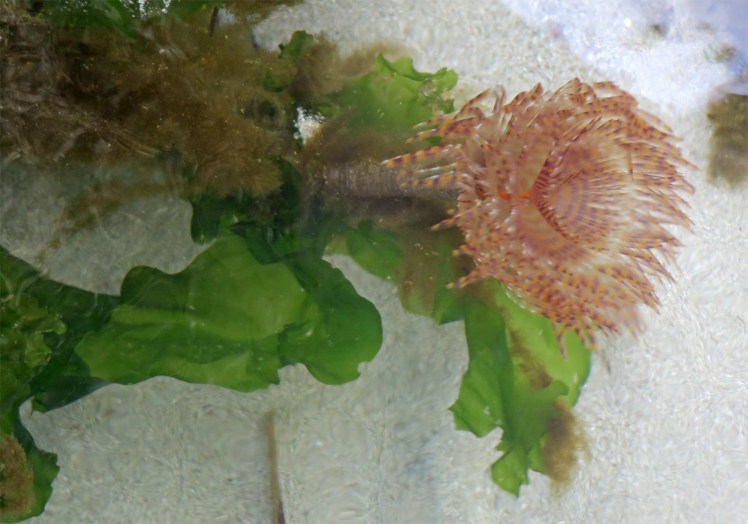
Spencers Gulf has an amazing variety of sea life. Leafy sea dragons, sea horses, giant cuttlefish and great white sharks call this area home. A morning walk on the jetty showed us a glimpse of their world with sea stars, anemones and other creatures living amonst the sea lettuce and seagrass.
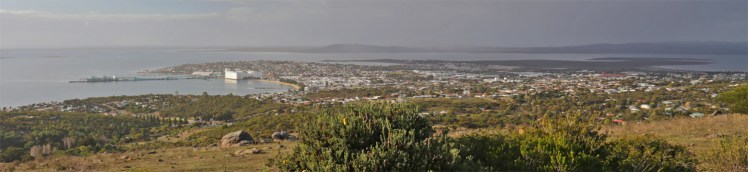
Port Lincoln from Winter Hill lookout.
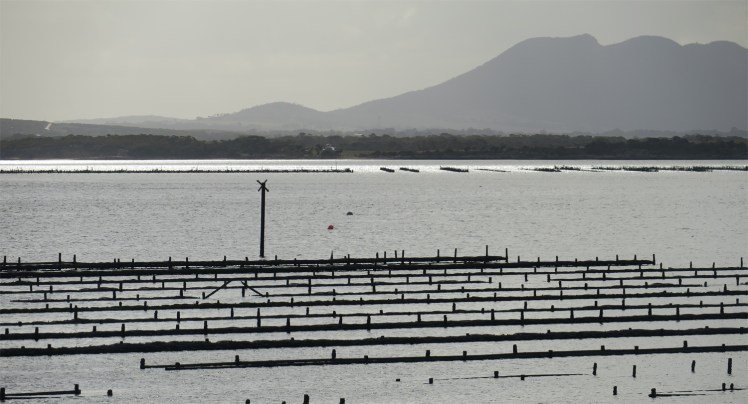
Coffin Bay is only half an hour away – famous Australia-wide for its oysters.
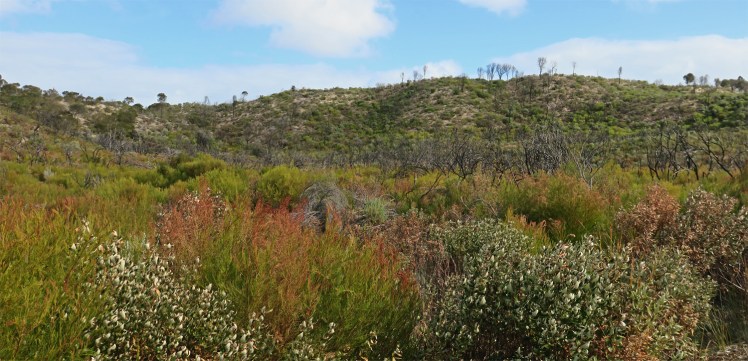
Coffin Bay National Park is a seemingly endless landscape of coastal heaths and vegetated and unvegetated coastal sand dunes. Crumbly limestone is also extensive throughout the park.
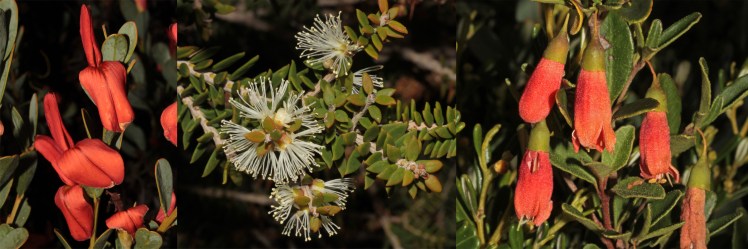
A sample of the wildflowers on display in the park – Bossiaea (?), Melaleuca and Correa.
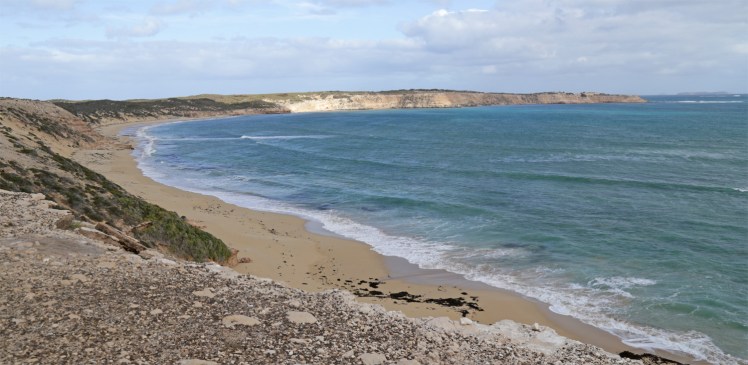
Cape Avoid and Avoid Bay in Coffin Bay National Park.
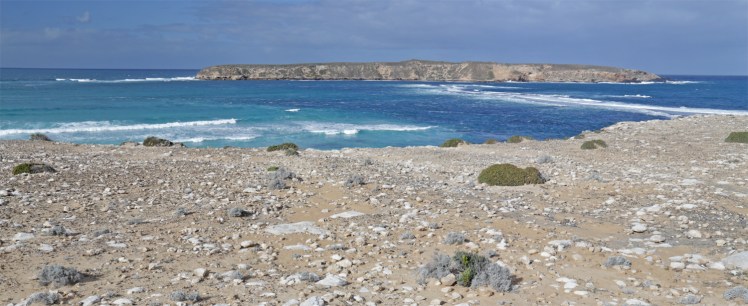
Golden Island with bare limestone headland in the foreground.
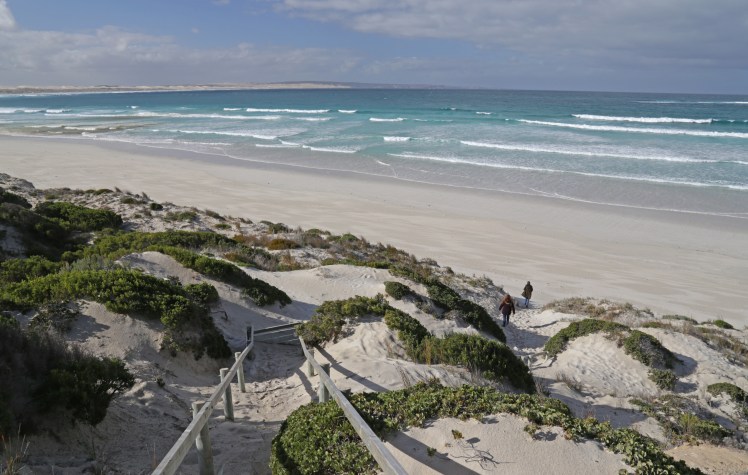
The magificent dunes of Gunyah Beach
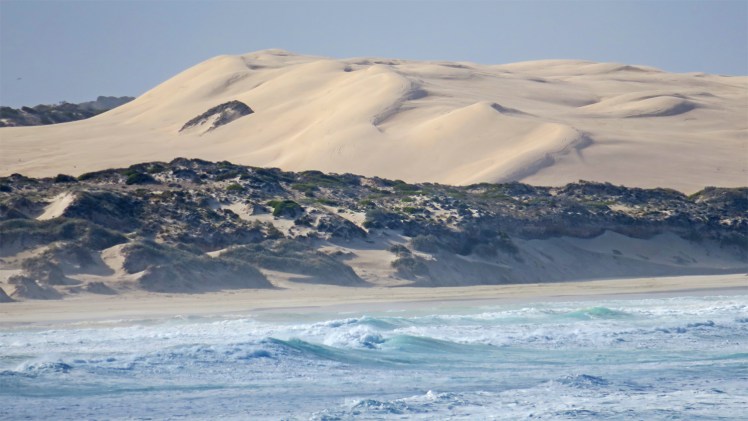
Massive dune landscapes dominate the park
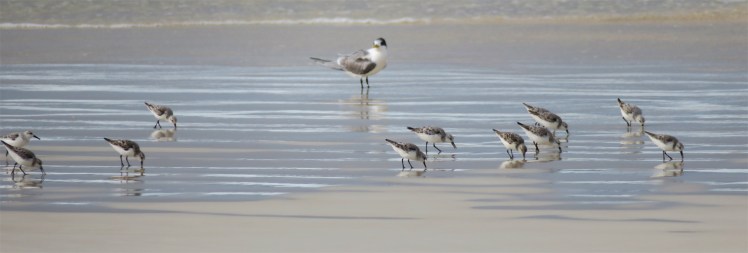
Sanderlings and terns feeding on the pristine beach
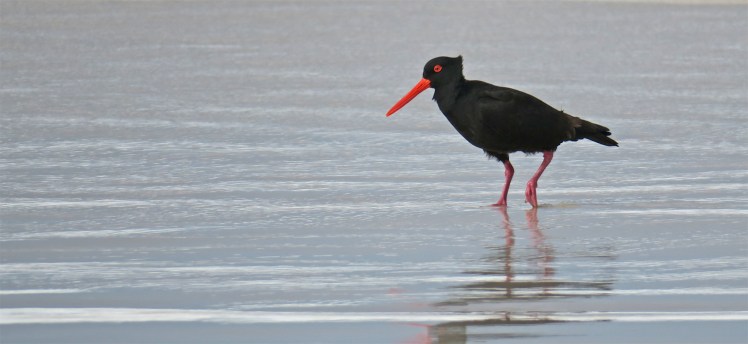
Sooty oystercatcher looking for lunch
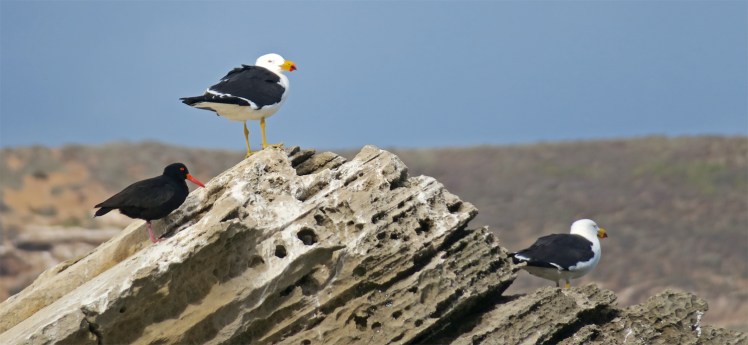
Pacific gulls are common here.
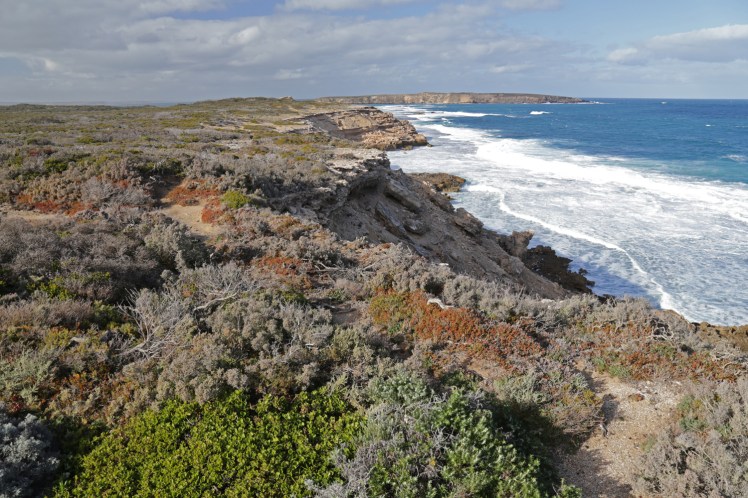
The great Sountern Ocean pounding the coastline of Coffin Bay NP
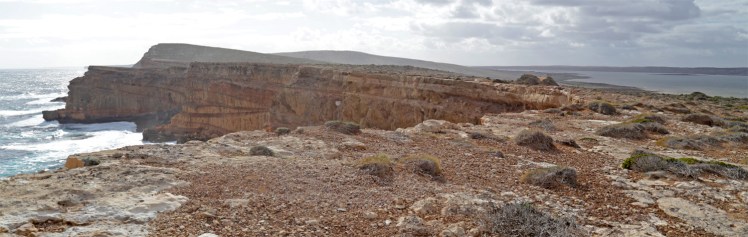
Cummings Lookout on the drive to Elliston
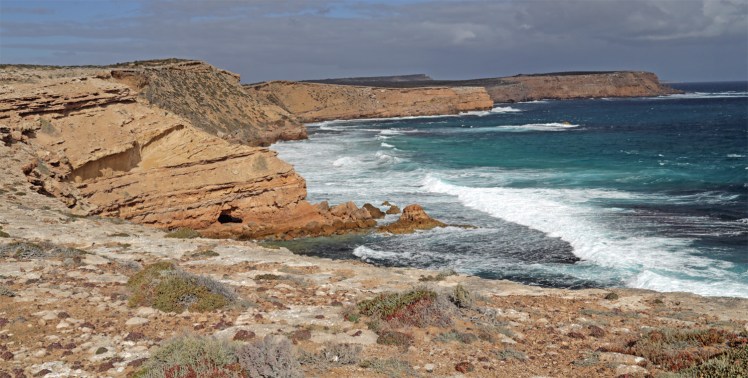
The view south from Cummings Lookout
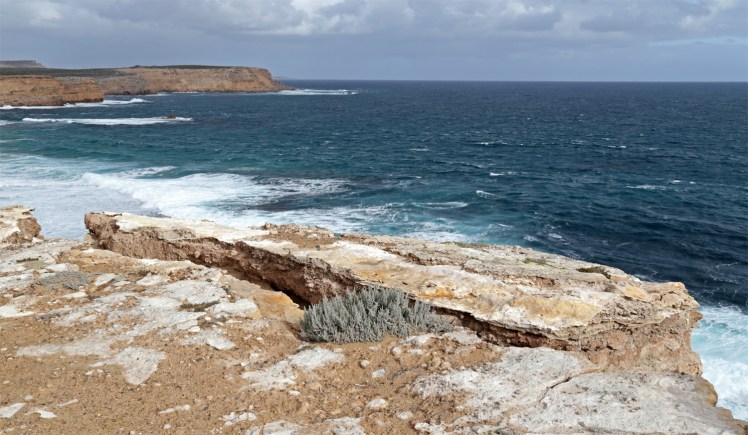
Warning signs are numerous to stay well back from the cliff line. Overhangs formed by erosion of the crumbling limestone are prone to falling into the ocean. The section above is a reminder to heed the advice.
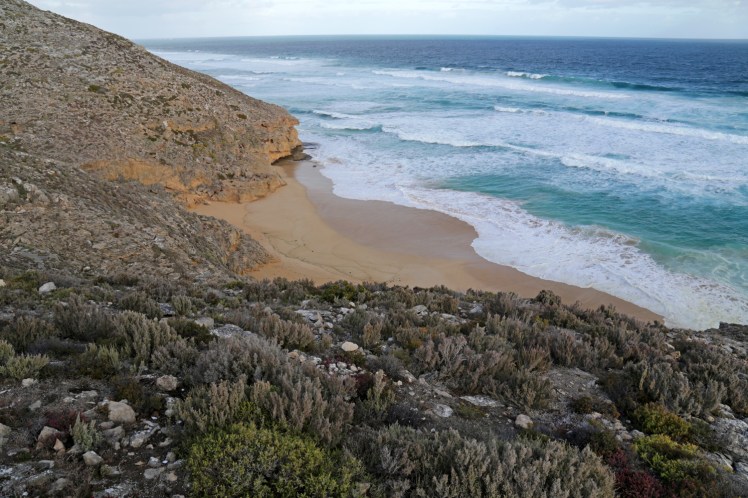
Locks Well beach is reputedly the best beach in Australia for salmon fishing.
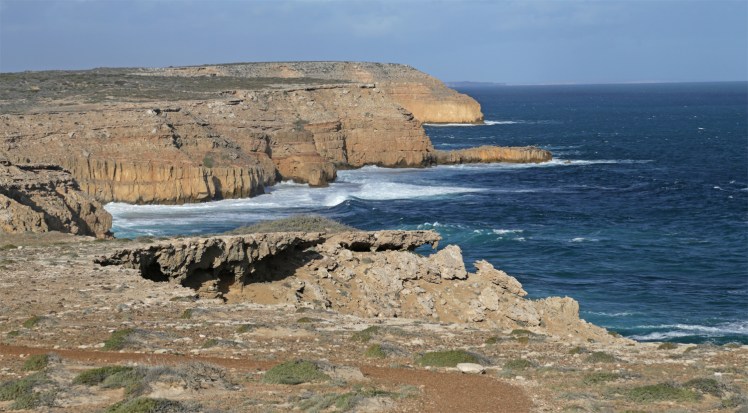
The cliffs at Elliston
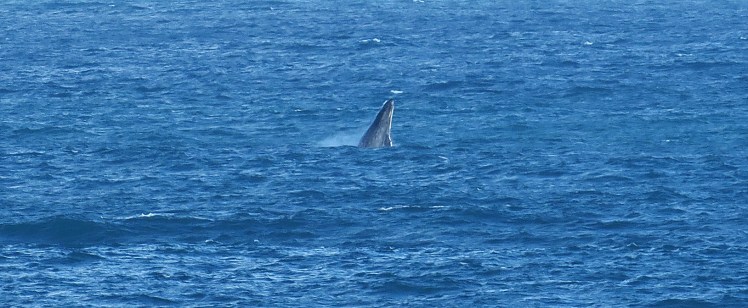
Whales migrate north to this coastline in winter. Humpbacks and southern right whales us the Great Australian Bight as a nursery area.
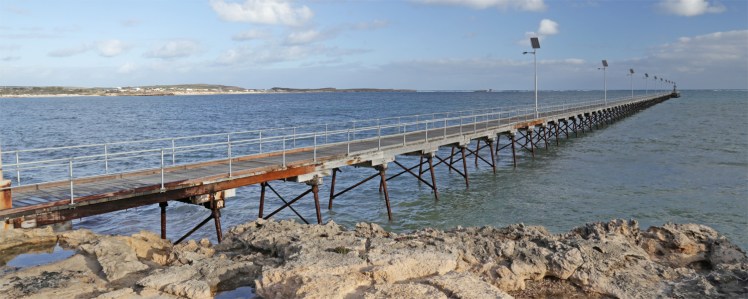
The historic jetty at Elliston. There was a reef area from the collapsed coastline cliff guarding the entrance to the bay. In the early days of European settlement, supply ships from Adelaide could not enter the bay when big swells made it too dangerous.
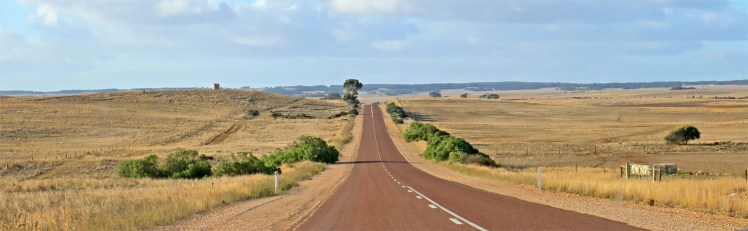
Eyre Penisula farmland with grain and sheep.
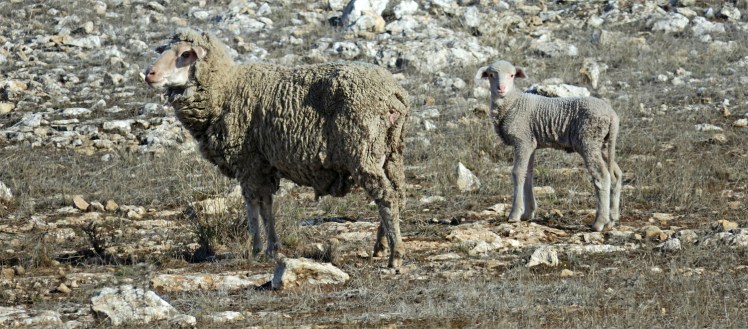
Sheep on the rocky limestone fields.
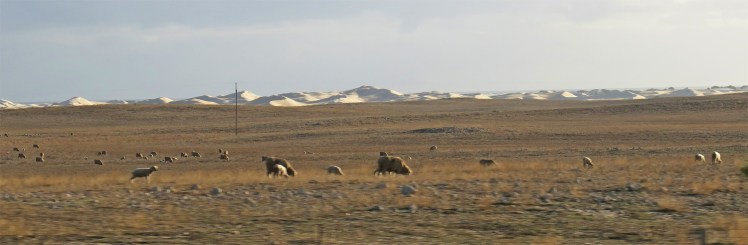
The extensive coastal dunes systems follow much of the coastline for a few hundred kilometres where there are breaks in the cliffs.
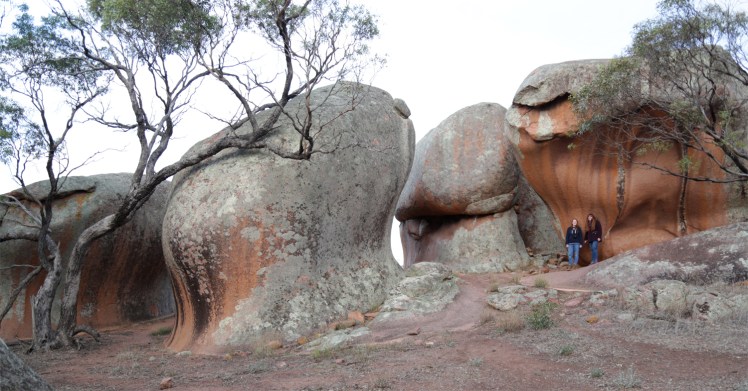
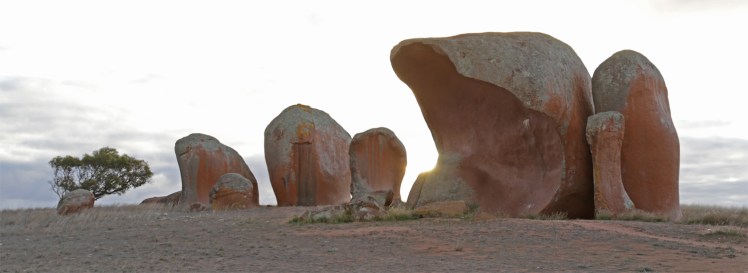
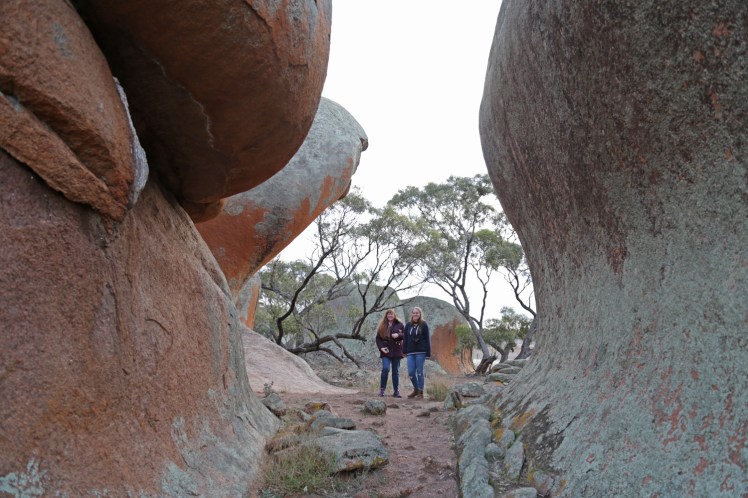
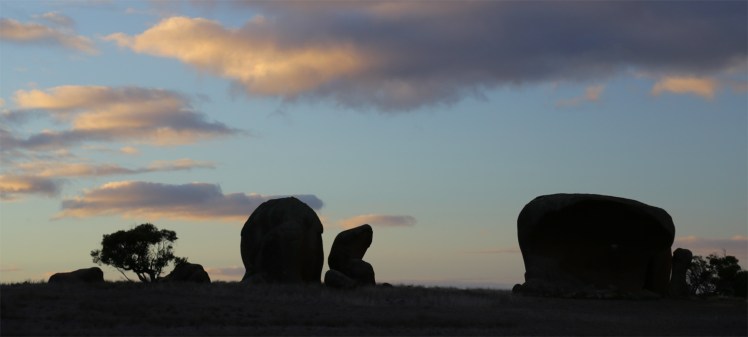
Late in the day, we stopped at Murphy’s Haystacks, granitic inselbergs atop a domed hill.
A late drive into Streaky Bay saw us arrive after dark. A few roos on the road kept our eyes peeled. Earlier we saw a Southern hairy-nosed wombat dead on the side of the road. This species of wombat occurs from Spencers Gulf to the Nullarbor Plain. The combination of kangaroos, emus, wombats and stray sheep make night driving a risky proposition. Emu count today: 23
 imagenau.com